
SAMPLING AND DISPATCH OF SAMPLES
|
|
|
- Bennett Benedict Barrett
- 9 years ago
- Views:
Transcription
1 Eidgenössisches Departement für Verteidigung, Bevölkerungsschutz und Sport VBS SAMPLING AND DISPATCH OF SAMPLES VIROLOGY Please notify us of samples by telephone: (number of reception) or (standby number for emergency investigations in accordance with our service offer). Samples are received on working days (emergency investigations upon telephone request). 1. Overview The analytical service of the Virology section at the SPIEZ LABORATORY comprises human viral pathogens from the risk groups 2, 3 and 4. For each pathogen there are clear regulations pertaining to packaging and dispatch of clinical material (category A or B). Furthermore, already the suspicion of infection with certain virus types must be reported (report by physician within two hours or one day). The following table provides an overview of these requirements; summaries (flowcharts) on how to proceed in the various cases are displayed underneath. It is annually updated based on the Verordnung des EDI über die meldepflichtigen Beobachtungen übertragbarer Krankheiten des Menschen. Pathogen Genus/family Risk group Transport category for clinical samples Reporting obligation (period) Procedure according to flowchart Alpha virus (genus) Alpha virus, togaviridae 2/3 B no 1 Arena virus, new world (genus) Arena virus, arenaviridae 4 1 A 1 yes (2 hours) 4 2 Chikungunya virus Alpha virus, togaviridae 3 B yes (1 week) 1 Dengue virus Flavi virus, flaviviridae 3 B yes (1 day) 1 Dobrava virus Hanta virus, bunyaviridae 3 A/B 2 yes (1 day) 1/2 5 Ebola viruses Ebola virus, filoviridae 4 A yes (2 hours) 4 2 Filovirus (family) Filo viridae 4 A yes (2 hours) 4 2 Flavivirus (genus) Flavi virus, flaviviridae 2-4 B depends on species 1 Tick-borne encephalitis virus Flavi virus, flaviviridae 3 B yes (1 week) 1 Yellow fever virus Flavi virus, flaviviridae 3 B yes (1 day) 1 1/17 Aktenzeichen:323-FachinfoViro\2016

2 Overview (continuation) Pathogen Genus/family Risk group Transport category for clinical samples Reporting obligation (period) Procedure according to flowchart Hanta virus (genus) Hanta virus, bunyaviridae 3 A/B 2 yes (1 day) 1/2 2 Hantaan virus Hanta virus, bunyaviridae 3 1 A yes (1 day) 2 Hendra virus Henipa virus, paramyxoviridae 4 A yes (1 day) 6 2 Influenza A viruses Influenza A virus, orthomyxoviridae 2 B yes (1 week or 2 hours 4 ) 5 1 Japanese encephalitis virus Flavi virus, flaviviridae 3 B yes (1 day) 6 1 Krim Kongo virus Nairo virus, bunyaviridae 4 A yes (2 hours) 4 2 Lassa virus Arena virus, arenaviridae 4 A yes (2 hours) 4 2 Marburg virus Marburg virus, filoviridae 4 A yes (2 hours) 4 2 MERS corona virus Betacorona virus, coronaviridae 3 B yes (2 hours) 4 1 Monkeypox virus Orthopox virus, poxviridae 3 A yes (2 hours) 4 2 Nipah Viurs Henipa virus, paramyxoviridae 3 A yes (1 day) 6 1 O Nyong Nyong virus Alpha virus, Togaviridae 2 B yes (1 day) 6 1 Orthopox virus (genus) Orthopox virus, poxviridae 2-4 A/B 3 yes (2 hours) 4 1/2 3 Puumala virus Hanta virus, bunyaviridae 3 A/B 2 yes (1 day) 1/2 2 Rift Valley fever virus Phlebo virus, bunyaviridae 3 B yes (1 day) 1 Ross River virus Alpha virus, togaviridae 2 B no 1 Sandfly Fever virus Phlebo virus, bunyaviridae 2 B yes (1 day) 6 1 SARS corona virus Betacorona virus, coronaviridae 3 B yes (2 hours) 4 1 Sindbis virus Alpha virus, togaviridae 2 B no 1 St. Louis encephalitis virus Flavi virus, flaviviridae 3 B no 1 Vaccinia virus Orthopox virus, poxviridae 2 B yes (2 hours) 4 1 West Nile virus Flavi virus, flaviviridae 3 B yes (1 week) 1 1 For species within the analytical range of the Virology section of the SPIEZ LABORATORY 2 For haemorrhagic fever: transport category A, procedure according to flowchart 2 3 Smallpox und monkeypox: transport category A, procedure according to flowchart 2; camelpox, cowpox und vaccinia: transport category B, procedure according to flowchart 1 4 in agreement with doctor specialised in infections 5 In the case of a new subtype A(HxNy): first report within 2 hours; in the case of known, not pandemic subtype: reporting by laboratory only 6 Report to the cantonal doctor as special event within 1 day (the laboratory additionally reports to the FOPH) 2/17

3 Overview (continuation) summary presentations on how to send samples 3/17

4 2. Sampling, packaging and dispatch of Category A, UN 2814 samples, ADR 1 packing instructions P 620 (ADR ): [ 1 ADR = regulations concerning the transport of hazardous materials] Preparation: Procure a package prior to sampling that satisfies the requirements for P 620 parcelling for UN 2814 (source: e.g. hazardous goods shop), as well as the needed hazardous freight leaflet example 6.2 (source e.g. Swiss TS). Fill in the order form of the SPIEZ LABORATORY. The following information is mandatory: o Information on the assigning infection specialist: name, complete address, telephone and if applicable fax number o Information about the patient: name, date of birth, sex and complete address o Information about sample: date and time of sampling o Information on the case: case history, special questions Place all the utensils required for sampling and secondary packaging WITHIN the patient isolation area, but external packaging, filled in assignment form and dispatch document (transport papers) OUTSIDE the patient isolation area. Mark sample tubes with surname, first names, date of birth and sex of patient. Sampling: Take a blood sample under the necessary safety precautions Suitable receptacle for sample: Monovette EDTA (red) or Vacutainer EDTA (violet) (Figure: (1)). Secondary packaging of sample WITHIN the patient isolation area: Disinfect surface of sample tube (=primary receptacle) with an alcoholic solution and place tube into a second tube (Figure: (2)). Place the (second) tube into the secondary receptacle (Figure: (4)) which is impermeable for liquids and contains sufficient absorbent material (Figure: (3) to absorb the entire amount of liquid (several primary receptacles can be put into the same secondary container, but each must be wrapped separately). Disinfect the second tube too. 4/17
![1.4.1): [ 1 ADR = regulations concerning the transport of hazardous materials] Preparation: Procure a package prior to sampling that satisfies the requirements for P 620 parcelling for UN 2814](/docs-images/46/21177913/images/page_4.jpg "(source: e.g. hazardous goods shop), as well as the needed hazardous freight leaflet example 6.2 (source e.g. Swiss TS). Fill in the order form of the SPIEZ LABORATORY.")
5 Samples that have been packed and disinfected in this way can be removed from the patient isolation area. External packaging OUTSIDE the patient isolation area: Place the secondary receptacle in the UN certified external package (5) and annex the filled in assignment form (no cooling necessary, transported at environment temperature). Close the external package and mark it as follows: hazard sticker example 6.2 and directly adjacent text UN Attach your address (address of sender incl. telephone number) and address of the SPIEZ LABORATORY (address of recipient incl. telephone number, see below). Hand-over to transport agent: Hand over the sample packed according to UN requirements. Fill in the dispatch document ( transport paper ) jointly with the transport agent. The dispatch document is subsequently attached to the outside of the external package. Make sure that the document Written instructions according to ADR is also in the vehicle; It is normally provided by the transport agent. Ebola suspect samples are NOT allowed to be sent in the same way as normal routine samples to the normally competent laboratory! They must be transported directly from the hospital to the SPIEZ LABORATORY. Transport of samples: 5/17

6 The sample is moved by the transport agent in accordance with UN 2814, Category A. 3. Sampling, packaging and dispatch of Category B, UN 3373 samples, ADR packaging instructions P 650 (ADR ): Preparation: If not available at your institute procure a P 650 packaging prior to sampling that satisfies UN 3373 requirements (source: e.g. hazardous goods shop) as well as the rhomboid label UN 3373 (if not already printed on the package; source e.g. Swiss TS). Fill in the assignment form of the SPIEZ LABORATORY. The following information must be provided: o o o o Information on client: name, complete address, telephone and fax number if applicable Information on patient: name, date of birth, sex and complete address Information on sample: type of sample, sampling date and time Case information: case history, special questions Label a suitable receptacle for sample (cf. table Suitable examination material ) with surname, first name, date of birth and sex of patient. Sampling: Take a sample that is suitable for the desired verification (cf. table Suitable examination material ) with regard to necessary safety precautions. Sample packaging: Disinfect surface of sample tube (=primary receptacle) with an alcoholic solution and place tube into a second tube. Place the primary receptacle into the secondary receptacle and disinfect it too. Place the filled in examination request between the secondary package and the external package. Transport it at environment temperature (no cooling necessary). The external package must be designated as follows: rhombic UN 3373 label with the official designation Biological material, Category B directly adjacent. Transport of samples: Attach your address (sender). Send the package by postal service to the address below. 6/17

7 4. Contact information and addresses SPIEZ LABORATORY Virology section Austrasse 3700 Spiez Tel (reception) or Tel (standby number) Fax /17

8 5. Annex suitable examination material Applies to all materials: immediate transport to lab increases the verification rate. If this is not possible the samples can be temporally stored at 2-8 C. Suitable examination material Pathogen-specific methods Chikungunya virus molecular biology serum Monovette serum (white), serum gel (brown) with separation gel (golden yellow) liquor, heparin (orange), heparin (green) according to the standard technique for according to the standard technique for according to the standard technique for Dengue virus molecular biology serum Monovette serum (white), serum gel (brown), heparin (orange), heparin (green) Dobrava virus molecular biology serum Monovette serum (white), serum gel (brown) urine (medium issue) clean genitals with warm water; do not use the first portion of urine; collect the second portion in a sterile urine beaker. 5 ml 8/17

9 Sampling (with respective safety precautions!) biopsy (kidney) surgical sampling; place small biopsies on gauze pad moistened with a little sterile salt solution to prevent the sample from drying; place large biopsies in without salt solution, use NO formol! culture upon request --, heparin (orange), heparin (green) Ebola virus molecular biology whole blood Tick-borne encephalitis virus according to the standard technique for according to the standard technique for according to the standard technique for as much as possible molecular biology serum Monovette serum (white), serum gel (brown) liquor, heparin (orange), heparin (green) Neutralisation test (total Ig) liquor upon request -- Yellow fever virus molecular biology serum Monovette serum (white), serum gel (brown) -- liquor 1 tube -- 9/17

10 , heparin (orange), heparin (green) neutralisation test (total Ig) upon request -- Hantaan virus molecular biology serum Monovette serum (white), serum gel (brown) urine (medium issue) biopsy (kidney, liver, spleen), heparin (orange), heparin (green) clean genitals with warm water; do not use the first portion of urine; collect the second portion in a sterile urine beaker. surgical sampling; place small biopsies on gauze pad moistened with a little sterile salt solution to prevent the sample from drying; place large biopsies in without salt solution, use NO formol! 5 ml as much as possible Hendra virus molecular biology swab (pharynx) swab in virus transport medium (e.g. UTM [Copan 346C]) liquor urine (medium issue) serum Monovette serum (white), serum gel (brown) Suppress tongue with spatula and wipe location to be tested with swab; then insert the swab into the transport medium for viruses and close well. lumbar puncture clean genitals with warm water; do not use the first portion of urine; collect the second portion in a sterile urine beaker. 5 ml 10/17

11 Influenza A viruses molecular biology respiratory sample (bronchial fluid, bronchoalveolar lavage) Japanese Encephalitis virus swab (Nasopharyngeal, pharynx) swab in viral transport medium (e.g. UTM [Copan 305C or 346C]) bronchial rinsing fluid: collect secretion by rinsing, e.g. with sterile physiological NaCl solution BAL: in accordance with the standard procedure of bronchoalveolar lavage naso-pharyngeal: insert swab (out of especially flexible material) deep into the nose until the back wall of the pharynx ids reached, carefully rotate back and forth and retrieve; Pharynx: Suppress tongue with spatula and wipe location to be tested with swab; After sampling, insert swab into the viral transport medium and close well. molecular biology serum Monovette serum (white), serum gel (brown) liquor, heparin (orange), heparin (green) Krim Kongo virus molecular biology whole blood Lassa virus molecular biology whole blood Marburg virus molecular biology whole blood ml, at leasta2 ml 11/17

12 MERS Corona virus molecular biology Respiratory sample (bronchial rinsing fluid, bronchoalveolar lavage) swab (nasopharyngeal, pharynx) Monkeypox virus molecular biology vesicle/ papule/blister/crust material swab (vesicle/ papule/blister) swab in virus transport medium (e.g. UTM [Copan 305C]) Viral transport medium (e.g. UTM [Copan 346C]) swab in viral transport medium (e.g. UTM [Copan 346C]) bronchial rinsing fluid: collect secretion by rinsing, e.g. with sterile physiological NaCl solution BAL: in accordance with the standard procedure der Bronchoalveolar Lavage naso-pharyngeal: insert swab (out of especially flexible material) deep into the nose until the back wall of the pharynx ids reached, carefully rotate back and forth and retrieve; Pharynx: Suppress tongue with spatula and wipe location to be tested with swab; After sampling, insert swab into the viral transport medium and close well. scrape away some vesicle/ papule/blister/scab material and collect it directly in a receptacle with transport medium wipe location to be tested with a swab; then insert swab into viral transport medium ml, at least 2 ml as much as possible IgG, IgM upon request Nipah virus molecular biology serum Monovette serum (white), serum gel (brown) swab (pharynx) liquor urine (medium issue) swab in viral transport medium (e.g. UTM [Copan 346C]) Suppress tongue with spatula and wipe location to be tested with swab; then insert the swab into the transport medium for viruses and close well. clean genitals with warm water; do not use the first portion of urine; collect the second portion in a sterile urine beaker. 5 ml 12/17

13 O Nyong Nyong virus molecular biology serum Monovette serum (white), serum gel (brown) liquor Puumala virus molecular biology serum Monovette serum (white), serum gel (brown) urine (medium issue) clean genitals with warm water; do not use the first portion of urine; collect the second portion in a sterile urine beaker. biopsy (kidney) surgical sampling; place small biopsies on gauze pad moistened with a little sterile salt solution to prevent the sample from drying; place large biopsies in without salt solution, use NO formol!, heparin (orange), heparin (green) 5 ml as much as possible Rift Valley Fever virus molecular biology serum Monovette serum (white), serum gel (brown) Ross River virus molecular biology serum Monovette serum (white), serum gel (brown) 13/17

14 puncture of the joint liquor sampling in accordance with the standard puncture procedure. Naples, Sicilian and Toscana sandfly fever virus molecular biology serum Monovette serum (white), serum gel (brown) SARS Corona virus molecular biology Respiratory sample (bronchial rinsing fluid, bronchoalveolar lavage) liquor swab (nasopharyngeal, pharynx) swab in viral transport medium (e.g. UTM [Copan 305C]) Sindbis virus molecular biology serum Monovette serum (white), serum gel (brown) liquor bronchial rinsing fluid: collect secretion by rinsing, e.g. with sterile physiological NaCl solution BAL: in accordance with the standard procedure der bronchoalveolar lavage naso-pharyngeal: insert swab (out of especially flexible material) deep into the nose until the back wall of the pharynx is reached, carefully rotate back and forth and retrieve; Pharynx: Suppress tongue with spatula and wipe location to be tested with swab; After sampling, insert swab into the viral transport medium and close well ml, at least 2 ml St. Louis Encephalitis virus molecular biology serum Monovette serum (white), serum gel (brown) 14/17
![bronchoalveolar lavage) liquor swab (nasopharyngeal, pharynx) swab in viral transport medium (e.g. UTM [Copan 305C]) Sindbis virus molecular biology serum Monovette serum (white), serum gel (brown) liquor bronchial rinsing fluid: collect secretion by rinsing, e.](/docs-images/46/21177913/images/page_14.jpg "g. with sterile physiological NaCl solution BAL: in accordance with the standard procedure der bronchoalveolar lavage naso-pharyngeal: insert swab (out of especially flexible material) deep into the")
15 liquor Vaccinia virus molecular biology vesicle/papule/ blister/scab material swab (vesicle/ papule/blister/scab) viral transport medium (e.g. UTM [Copan 346C]) swab in viral transport medium (e.g. UTM [Copan 346C]) scrape away some vesicle/ papule/blister/scab and collect it directly in receptacle with transport medium wipe location to be tested with a swab; then insert swab into viral transport medium. as much as possible IgG, IgM upon request West-Nile virus molecular biology serum Monovette serum (white), serum gel (brown) liquor culture upon request --, heparin (orange), heparin (green) 15/17

16 Genus and family-specific methods Alpha viruses (e.g. Chikungunya, Eastern/Western/Venezuel an Equine Encephalitis, O Nyon Nyong, Ross River, Sindbis,) New World arena viruses (Guanarito, Junin, Machupo, Sabia) Filo viruses (Ebola, Marburg) Flavi viruses (e.g. Dengue, Japanese Encephalitis, FSME, Yellow fever, Japanese Encephalitis, Louping ill, Murray Valley Encephalitis, St. Louis Encephalitis, Usutu, West-Nile, Zika) Hanta viruses (Andes, Dobrava, Hantaan, Puumala, Seoul, Sin Nombre) Orthopox viruses (Camelpox, Cowpox, Monkeypox, Smallpox, Vaccinia) molecular biology upon request molecular biology upon request molecular biology whole blood molecular biology serum Monovette serum (white), serum gel (brown) Liquor IgG, IgM -- species-specific serologies exist for Dengue, FSME, yellow fever, Japanese encephalitis und West-Nile molecular biology upon request --, heparin (orange), heparin (green) molecular biology vesicle/ papule/blister/scab material viral transport medium (e.g. UTM [Copan 346C]) scrape away some vesicle/ papule/blister/scab material and collect it directly in receptacle with transport medium as much as possible 16/17

17 swab (vesicle/ papule/blister/scab) swab in viral transport medium (e.g. UTM [Copan 346C]) serum (early phase) Monovette serum (white), serum gel (brown) (early phase) swab Nasopharyngeal (early phase) swab in viral transport medium (e.g. UTM [Copan 305C]) take a swab from the location to be tested with a swab; then place it into the viral transport medium. insert swab (out of especially flexible material) deep into the nose until the back wall of the pharynx is reached, carefully rotate back and forth and retrieve; then insert swab into the viral transport medium and close well. IgG, IgM upon request July /17
![medium (e.g. UTM [Copan 305C]) take a swab from the location to be tested with a swab; then place it into the viral transport medium.](/docs-images/46/21177913/images/page_17.jpg "insert swab (out of especially flexible material) deep into the nose until the back wall of the pharynx is reached, carefully rotate back and forth and")
Public Health Laboratory Services Branch Centre for Health Protection, Department of Health Hong Kong Special Administrative Region
 Guidelines on Biosafety in the Clinical Laboratory February 2008 (Revised edition) Public Health Laboratory Services Branch Centre for Health Protection, Department of Health Hong Kong Special Administrative
Algorithm for detecting Zika virus (ZIKV) 1
 Algorithm for detecting Zika virus (ZIKV) 1 This algorithm is addressed to laboratories with established capacity (molecular, antigenic and/or serological) to detect dengue (DENV), Zika (ZIKV) 2, and chikungunya
Guidance Document Infectious Substances
 Guidance Document Infectious Substances Note: 1. The following Guidance Document was developed by the ICAO DGP. The original ICAO document reflects references to the ICAO Technical Instructions these have
APPENDIX A GUIDANCE DOCUMENT
 APPENDIX A GUIDANCE DOCUMENT Infectious Substances International Civil Aviation Organization Technical Instructions for the Safe Transport of Dangerous Goods by Air, 2005-2006 Note: This guidance document
Pathogens and toxins that are notifiable to the National Counter Terrorism Security Office. (The Anti-Terrorism, Crime and Security Act 2001)
 Health and Safety Office Pathogens and toxins that are notifiable to the National Counter Terrorism Security Office (The Anti-Terrorism, Crime and Security Act 2001) Document control information Published
Zika Virus. History of Zika virus
 Zika Virus Zika fever is caused by the Zika virus (ZIKV), an arthropod-borne virus (arbovirus). The Zika virus is a member of the Alphavirus genus in the family Togaviridae. It is related to dengue, yellow
STEP-BY-STEP INSTRUCTIONS FOR INVESTIGATIONAL USE. Rapid HCV Antibody Test FOR ORAQUICK RAPID HCV ANTIBODY TEST
 Before performing testing, all operators MUST read and become familiar with Universal Precautions for Prevention of Transmission of Human Immunodeficiency Virus, Hepatitis B Virus, and other Blood-borne
Guidelines for Hand Foot and Mouth Disease HFMD
 Guidelines for Hand Foot and Mouth Disease HFMD Hand, foot, and mouth disease, or HFMD, is a contagious illness caused by different viruses. Infants and children younger than 5 years are more likely to
How to safely collect blood samples from persons suspected to be infected with highly infectious blood-borne pathogens (e.g.
 How to safely collect blood samples from persons suspected to be infected with highly infectious blood-borne pathogens (e.g. Ebola) Step 1: Before entering patient room, assemble all equipment (1 st part)
41 Viral rashes and skin infections
 41 Viral rashes and skin infections Clinical There are several kinds of skin infections caused by viruses, and these are best considered in the four categories that group together similar symptoms for
12 Select Agents. 12.1 Possession, Use, or Transfer of Select Agents
 12 Select Agents Select agents are materials that have been identified by the U.S. Government as agents with potential for use in biological terrorism or warfare. The Department of Health and Human Services
VENOUS BLOOD COLLECTION
 Venous Blood Collection p. 1 of 5 Johns Hopkins Medical Laboratories Department of Pathology Core Lab Clinical Services Zd7: Word: JHH Venous Blood Collection Procedure Signature Date Signature Date Written
How Does a Doctor Test for AIDS?
 Edvo-Kit #S-70 How Does a Doctor Test for AIDS? S-70 Experiment Objective: The Human Immunodefi ciency Virus (HIV) is an infectious agent that causes Acquired Immunodefi ciency Syndrome (AIDS) in humans.
Guidelines for Collection and Transport of Specimen for Laboratory Diagnosis of Pathogenic Leptospira spp.
 Document: Introduction: Guidelines for Collection and Transport of Specimen for Laboratory Diagnosis of Pathogenic Leptospira spp. Leptospirosis is an acute bacterial infection caused by organism belonging
Guidelines for the Safe Transport of Infectious Substances and Diagnostic Specimens
 Distr.: General Orig.: English Guidelines for the Safe Transport of Infectious Substances and Diagnostic Specimens WORLD HEALTH ORGANIZATION Division of Emerging and Other Communicable Diseases Surveillance
The Management of Biomedical Waste in Ontario
 GUIDELINE C-4 The Management of Biomedical Waste in Ontario Legislative Authority: Environmental Protection Act, SO 1990, Part V, Sections 19 and 27; Part XVII, Section 197 Responsible Director: Director,
Infectious Waste Management Plan
 Infectious Waste Management Plan Infectious Waste Management Plan USC Health & Safety Programs Unit 777-5269 POLICY: A. In keeping with the University of South Carolina's policy of providing protection
TRANSPORT 2014. www.aruplab.com/transport SPECIMEN TRANSPORTATION INSTRUCTIONS SEPTEMBER 2014
 TRANSPORT 2014 SPECIMEN TRANSPORTATION INSTRUCTIONS www.aruplab.com/transport SEPTEMBER 2014 Information in this brochure is current as of September 2014. All content is subject to change. Please contact
Blood sampling and transportation Standard Operating Procedure
 Blood sampling and transportation Standard Operating Procedure 1. Rationale for test 2. Requirements 3. Equipment 4. Method for blood taking 5. Instructions for Safe Box and transportation of samples 6.
SCREENING FOR SEXUALLY TRANSMITTED INFECTIONS
 SCREENING FOR SEXUALLY TRANSMITTED INFECTIONS Take history:- History of presenting problem Full sexual history (refer to guideline on sexual history taking) Relevant past medical history, including previous
Guidance on regulations for the Transport of Infectious Substances 2009 2010
 WHO/HSE/EPR/2008.10 Guidance on regulations for the Transport of Infectious Substances 2009 2010 Applicable as from 1 January 2009 EPIDEMIC AND PANDEMIC ALERT AND RESPONSE Guidance on regulations for the
Ambulance Service Patient Care and Transportation Standards
 Ambulance Service Patient Care and Transportation Standards Patient Care A. General Each operator and each emergency medical attendant and paramedic employed by the operator, shall: (a) Ensure that each
Zika Virus. Fred A. Lopez, MD, MACP Richard Vial Professor Department of Medicine Section of Infectious Diseases
 Zika Virus Fred A. Lopez, MD, MACP Richard Vial Professor Department of Medicine Section of Infectious Diseases What is the incubation period for Zika virus infection? Unknown but likely to be several
Microbiology Specimen Collection Instructions. Alphabetical List of Microbiology Tests
 Page 1 of 8 Alphabetical List of Tests Test/Specimen Type Collection Table Referred out Abscess aspirate, wound Acanthamoebae Parasitology Acinetobactor screening Adenovirus Serology AFB Stain only Amoebiasis
PATIENT GUIDE. Care and Maintenance Drainage Frequency: Max. Drainage Volume: Dressing Option: Clinician s Signature: Every drainage Weekly
 PATIENT GUIDE Care and Maintenance Drainage Frequency: Max. Drainage Volume: Dressing Option: Every drainage Weekly Clinician s Signature: ACCESS SYSTEMS Pleural Space Insertion Site Cuff Exit Site Catheter
Precautions for Handling and Disposal of. Dead Bodies
 Precautions for Handling and Disposal of Dead Bodies Department of Health Hospital Authority Food and Environmental Hygiene Department The 10 th edition, 2014 If you have any comment or enquiry, please
PEAC CENTRAL LABORATORY SAMPLING MANUAL
 PEAC CENTRAL LABORATORY SAMPLING MANUAL FINAL REVISED VERSION (9.0) PEAC Clinical Study Final 1.0 2 TABLE OF CONTENTS Page No. 1. PEAC CENTRAL LABORATORY - CONTACT NUMBERS... 3 2. IMPORTANT INFORMATION...
Abstract... i. Committee Membership... iii. Foreword... vii. 1 Scope... 1. 2 Introduction... 1. 3 Standard Precautions... 1. 4 Definitions...
 Vol. 27 No. 26 Replaces H3-A5 Vol. 23 No. 32 Procedures for the Collection of Diagnostic Blood Specimens by Venipuncture; Approved Standard Sixth Edition This document provides procedures for the collection
Safety FIRST: Infection Prevention Tips
 Reading Hospital Safety FIRST: Infection Prevention Tips Reading Hospital is committed to providing high quality care to our patients. Your healthcare team does many things to help prevent infections.
Precautions for Handling and Disposal of Dead Bodies
 Precautions for Handling and Disposal of Dead Bodies Department of Health Hospital Authority Food and Environmental Hygiene Department The 8 th edition This set of guidelines is prepared by Infection Control
Biliary Drain. What is a biliary drain?
 Biliary Drain What is a biliary drain? A biliary drain is a tube to drain bile from your liver. It is put in by a doctor called an Interventional Radiologist. The tube or catheter is placed through your
General Information and Guidelines. Submission of blood tubes
 General Information and Guidelines Submission of blood tubes Note: Do not submit blood samples in syringes (especially with needles attached). Syringes that are submitted to the lab with the needles attached
NHSScotland Guide to the Carriage of Dangerous Goods Regulations with respect to Used Medical Devices
 NHSScotland Guide to the Carriage of Dangerous Goods Regulations with respect to Used Medical Devices December 2013 Contents page 1. Introduction... 3 2. Regulations and enforcement... 4 3. Roles... 5
PATIENT GUIDE. Understand and care for your peripherally inserted central venous catheter (PICC). MEDICAL
 PATIENT GUIDE Understand and care for your peripherally inserted central venous catheter (PICC). MEDICAL Introduction The following information is presented as a guideline for your reference. The best
Recommendations for Environmental Services, Biohazardous Waste Management, and Food and Linen Management for Ebola Virus Disease (EVD)
 Recommendations for Environmental Services, Biohazardous Waste Management, and Food and Linen Management for Ebola Virus Disease (EVD) Provincial Ebola Expert Working Group Revised: Feb. 2, 2015 Contents
All About Your Peripherally Inserted Central Catheter (PICC)
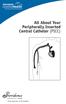 All About Your Peripherally Inserted Central Catheter (PICC) General Information Intravenous (IV) therapy is the delivery of fluid directly into a vein. An intravenous catheter is a hollow tube that is
Learning about Hepatitis C and Chronic Kidney Disease
 Learning about Hepatitis C and Chronic Kidney Disease Hepatitis C and Chronic Kidney Disease If you have chronic kidney disease (CKD), you want to learn all you can about your disease and what you can
Aseptic Technique. A GMP/GTP Training Module
 Aseptic Technique A GMP/GTP Training Module Aseptic Technique The GMP Facility manufactures products for clinical use These products must meet a number of requirements, one of which is that they are sterile
MEDICAL WASTE MANAGEMENT
 MEDICAL WASTE MANAGEMENT Biological Safety INTRODUCTION PURPOSE Regulated medical waste is a designation for wastes that may contain pathogenic microorganisms which was previously termed infectious waste.
Blood Collection and Processing SOP
 Brisbane Breast Bank Blood Collection and Processing SOP Breast Pathology Laboratory University of Queensland Centre for Clinical Research Blood Collection We collect 30ml of blood from patients who have
Procedures and equipment for specimen collection
 Annex 9 Procedures and equipment for specimen collection Clinical specimens General Enclose specimens in a secure container and label the container with a waterproof pen. Place this container in a waterproof
4A. Types of Laboratory Tests Available and Specimens Required. Three main types of laboratory tests are used for diagnosing CHIK: virus
 4. LABORATORY 4A. Types of Laboratory Tests Available and Specimens Required Three main types of laboratory tests are used for diagnosing CHIK: virus isolation, reverse transcriptase-polymerase chain reaction
STANDARD OPERATING PROCEDURE
 TAKING BLOOD FROM INFANTS FOR THE HIV DNA PCR TEST STANDARD OPERATING PROCEDURE ACRONYMS ARV CCMT DBS Antiretrovirals Comprehensive care, management and treatment Dried blood spots This Standard Operating
I-140 Venipuncture for Blood Specimen Collection
 I-140 Venipuncture for Blood Specimen Collection Purpose Obtain a blood specimen by venipuncture for laboratory analysis using aseptic technique. Applies To Registered Nurses Licensed Practical/Vocational
Diagnosing arbovirus infections (and Bill s holiday snaps) David W Smith Division of Microbiology and Infectious Diseases PathCentre
 Diagnosing arbovirus infections (and Bill s holiday snaps) David W Smith Division of Microbiology and Infectious Diseases PathCentre Arboviral illnesses relevant to Australia Polyarthralgia Fever and rash
Pandemic Influenza Cleaning and Disinfection Protocol
 This document has been developed in accordance with current applicable infection control and regulatory guidelines. It is intended for use as a guideline only. At no time should this document replace existing
Travel and transport risk assessment: Recommendations for public health authorities and transport sector
 Travel and transport risk assessment: Recommendations for public health authorities and transport sector Correct at 01 August 2014 1. Summary of epidemiological facts and experience The incubation period
Laboratory Biosafty In Molecular Biology and its levels
 Laboratory Biosafty In Molecular Biology and its levels Workshop 16-17 Oct..2012 Guidelines Does not mean optional Laboratory Biosafety The Laboratory Biosafety Manual is an important WHO publication
Content Sheet 5-1: Overview of Sample Management
 Content Sheet 5-1: Overview of Management Role in quality management system management is a part of process control, one of the essentials of a quality management system. The quality of the work a laboratory
Ambulance Service. Patient Care. and. Transportation Standards
 Ambulance Service Patient Care and Transportation Standards Ministry of Health and Long-Term Care Emergency Health Services Branch Patient Care A. General Each operator and each emergency medical attendant
DIRECTED UMBILICAL CORD BLOOD AND TISSUE COLLECTION IN THEATRE (CELLCARE)
 WOMEN AND NEWBORN HEALTH SERVICE King Edward Memorial Hospital CLINICAL GUIDELINES PERIOPERATIVE GUIDELINES DIRECTED CORD CELL COLLECTION IN THEATRE DIRECTED UMBILICAL CORD BLOOD AND TISSUE COLLECTION
4. Infection control measures
 4. Infection control measures Apart from general hygienic practices and vaccination, staff of institutions should also adopt specific infection control measures against communicable diseases. The measures
Family Cord Blood Stem Cells Bank
 Family Cord Blood Stem Cells Bank Hope for life......evolves from life itself WHAT ARE STEM CELLS AND WHY ARE THEY PRESERVED? Cord blood stem cells are in the greatest percentage haematopoetic stem cells
Parent & Healthcare Professional Instructions for the collection of Maternal & Umbilical Cord Blood
 Parent & Healthcare Professional Instructions for the collection of Maternal & Umbilical Cord Blood 1 2 3 Contents List of Umbilical Cord Blood Collection Kit Thermally insulated transportation box - do
Training on Standard Operating Procedures for Health Care Waste Management Swaziland 12 May, 2011
 Training on Standard Operating Procedures for Health Care Waste Management Swaziland 12 May, 2011 Safe Infectious Waste Handling and Transport Objective Waste Overview Roles and Responsibilities of Waste
Hemoglobin Testing using the Data Management HemoCue Analyzer
 The Johns Hopkins Medical Institutions Hemoglobin Testing using the Data Management HemoCue Analyzer A Self-Study Packet for The Johns Hopkins Hospital Point-of-Care Testing Program Revision: 12/02 copyright
Cold Agglutination Titer detecting Cold Reacting Antibodies
 Objectives: Cold Agglutination Titer detecting Cold Reacting Antibodies 1. Perform a serial dilution to determine the amount of cold reacting antibody present in a patient specimen with the results obtained
Sterile Dressing Change with Tegaderm CHG for Central Venous Catheter (CVC)
 Sterile Dressing Change with Tegaderm CHG for Central Venous Catheter (CVC) The dressing protects your catheter site. It also helps prevent infection at the site. Keep your dressing clean and dry at all
AU680 Every Other Week or Every 3,000 Samples (ISE) Maintenance. AU680 Weekly (Analyzer and ISE) Maintenance
 AU680 Every Other Week or Every 3,000 Samples (ISE) Maintenance Step 1 Action Perform the Manually Clean the ISE Mix Bar, Liquid Level Sensors, Sample Pot and Sample Pot Tubing procedure AU680 Weekly (Analyzer
Sheep@Purdue. Blood Sampling in Sheep AS-557-W
 Sheep@Purdue AS-557-W Blood Sampling in Sheep Becky Mitchell, Animal Sciences Student Mike Neary, Extension Sheep Specialist Gerald Kelly, Manager of Sheep Teaching and Research Flock Purdue University
INFECTION CONTROL POLICY
 INFECTION CONTROL POLICY Infection control is the name given to a wide range of policies, procedures and techniques intended to prevent the spread of infectious diseases amongst staff and service users.
INSTRUCTIONS FOR USE HUMIRA 40 MG/0.8 ML, 20 MG/0.4 ML AND 10 MG/0.2 ML SINGLE-USE PREFILLED SYRINGE
 INSTRUCTIONS FOR USE HUMIRA (Hu-MARE-ah) (adalimumab) 40 MG/0.8 ML, 20 MG/0.4 ML AND 10 MG/0.2 ML SINGLE-USE PREFILLED SYRINGE Do not try to inject HUMIRA yourself until you have been shown the right way
NovaLisa (ZVM0790) Performance Characteristics
 NovaLisa Zika Virus IgM µ-capture ELISA (ZVM0790) Performance Characteristics Table of Contents 1 Introduction... 3 2 Intended Use... 4 3 Principle of the Assay... 4 4 Performance Characteristics... 4
ECDC INTERIM GUIDANCE
 ECDC INTERIM GUIDANCE Interim ECDC public health guidance on case and contact management for the new influenza A(H1N1) virus infection Version 3, 19 May 2009 ECDC intends to produce a series of interim
Managing Regulated Medical Waste in New Mexico
 Managing Regulated Medical Waste in New Mexico Prepared by: Dr. Joe King Camino Real Environmental Research Center Sunland Park, New Mexico History of Medical Waste Regulations 1988 Legislation in response
A Survey of Tier 1 BSAT Personnel Suitability and Occupational Health Programs
 Environmental Health and Safety A Survey of Tier 1 BSAT Personnel Suitability and Occupational Health Programs Presented by: David Gillum, Biosafety Officer Associate Director of Environmental Health and
UK CORD BLOOD AND TISSUE PROCUREMENT PROTOCOL
 UK CORD BLOOD AND TISSUE PROCUREMENT PROTOCOL These instructions must not be followed unless the procurer is trained and acting under an HTA licence or in pursuance of a Third Party Agreement with Cells4Life
MEDICAL DIAGNOSTIC LABORATORIES, L.L.C. 2439 Kuser Road * Hamilton, NJ 08690 Toll Free (877) 269-0090 * Fax (609) 570-1050 www.mdlab.
 FAQ's For Corporate Q1. What are MDL's hours of operation? A1. You may reach us Monday through Friday from 8:00 am to 12:00 midnight EST and Saturday from 9:00 am to 5:00 pm EST. Q2. How long has MDL been
Fact Sheet for Health Care Providers: Interpreting Results from the Aptima Zika Virus Assay. June 17, 2016
 Dear Health Care Provider: Fact Sheet for Health Care Providers: Interpreting Results from the Aptima Zika Virus Assay June 17, 2016 The U.S. Food and Drug Administration (FDA) has issued an Emergency
Shipping of Infectious Substances and Patient Specimens
 Shipping of Infectious Substances and Patient Specimens If you ship infectious substances or patient specimens you should be aware of the International Air Transport Association (IATA) Dangerous Goods
Central Line Blood Draw
 Central Line Blood Draw Welcome to the Central Line dressing blood draw refresher. Please use the navigation below to advance to the next page. The Central Line blood draw module is also available as a
Introduction 1 The system 1 The meter 2 The display 3 The mode 3 The measurement 4 Coding the meter 4 How to obtain a drop of blood 6 Application of
 Introduction 1 The system 1 The meter 2 The display 3 The mode 3 The measurement 4 Coding the meter 4 How to obtain a drop of blood 6 Application of the blood 7 Procedure to test glucose 7 Procedure to
URINE COLLECTION, PREPARATION AND HANDLING
 URINE III-38 URINE COLLECTION, PREPARATION AND HANDLING I. SPECIMEN COLLECTION A. Introduction Laboratory tests requiring urine specimens involve a wide variety of procedures. A basic urinalysis is almost
Diagnostic and Sampling procedures for FMD
 Diagnostic and Sampling procedures for FMD Diagnostic windows 2 Active surveillance for infected animals (including pre-clinical cases) 1 Rapid confirmation of clinical signs Clinical lesions 3 sero-surveillence
Annual Biomedical Waste Code Training
 Annual Biomedical Waste Code Training Provided by: Barbara D. Will, MPH Biomedical Waste Program Supervisor To protect, promote and improve the health of all people in Florida through integrated state,
How to Care for Your Premature Baby s Skin
 The Emily Center How to Care for Your Premature Baby s Skin Child Care/Health Promotion Si usted desea esta información en español, por favor pídasela a su enfermero o doctor. Name of Child: Date: How
Workforce Guidelines: H1N1 Influenza and Flu-like Illness
 Workforce Guidelines: H1N1 Influenza and Flu-like Illness This document provides guidance to University supervisors and employees on how to handle H1N1 influenza (swine flu) and flu-like illness in the
Guy s, King s and St Thomas Cancer Centre The Cancer Outpatient Clinic Central venous catheter: Peripherally inserted central catheter
 Guy s, King s and St Thomas Cancer Centre The Cancer Outpatient Clinic Central venous catheter: Peripherally inserted central catheter This information leaflet aims to help answer some of the questions
Blood Transfusion. There are three types of blood cells: Red blood cells. White blood cells. Platelets.
 Blood Transfusion Introduction Blood transfusions can save lives. Every second, someone in the world needs a blood transfusion. Blood transfusions can replace the blood lost from a serious injury or surgery.
Human Peripheral Blood Mononuclear Cell (PBMC) Manual
 Human Peripheral Blood Mononuclear Cell (PBMC) Manual INSTRUCTION MANUAL ZBM0063.04 SHIPPING CONDITIONS Human Peripheral Blood Mononuclear Cells, cryopreserved Cryopreserved human peripheral blood mononuclear
SARCOIDOSIS. Signs and symptoms associated with specific organ involvement can include the following:
 SARCOIDOSIS Sarcoidosis is a disease that occurs when areas of inflammation develop in different organs of the body. Very small clusters of inflammation, called granulomas, are seen with sarcoidosis. They
Transferring a Broth Culture to Fresh Broth
 Sterile Technique It is very important in microbiology to work with pure cultures. Unfortunately this is difficult. The world around us is covered with microorganisms. Microorganisms are even carried on
Appendix J IBC Biohazard Spill Management Plan
 OVERVIEW Prevention is the most important part of any spill management plan. Be sure to read and understand standard operating procedures (SOP s) and protocols for safe manipulation of biohazards before
INSTITUTIONAL POLICY AND PROCEDURE (IPP)
 HOSPITAL NAME INSTITUTIONAL POLICY AND PROCEDURE (IPP) Department: Manual: Section: TITLE/DESCRIPTION POLICY NUMBER HAZARDOUS WASTE: HANDLING AND DISPOSAL EFFECTIVE DATE REVIEW DUE REPLACES NUMBER NO.
Utah Division of Solid and Hazardous Waste Solid Waste Management Program
 Utah Division of Solid and Hazardous Waste Solid Waste Management Program Mailing Address Office Location Phone (801) 536-0200 P.O. Box 144880 195 North 1950 West Fax (801) 536-0222 Salt Lake City, Utah
1. The Determination of Boiling Point
 1. The Determination of Boiling Point Objective In this experiment, you will first check your thermometer for errors by determining the temperature of two stable equilibrium systems. You will then use
Streptococcus pneumoniae IgG AB (13 Serotypes), MAID... 7
 Volume 12 December 2011 Table of Contents Summary of Test Changes... 3 Test Changes... 6 Human Anti-Mouse AB (HAMA), ELISA... 6 Hepatitis E Antibody (IgG, IgM)... 6 Hepatitis E Antibody (IgG)... 6 Hepatitis
PICC Catheter for IV Therapy
 PICC Catheter for IV Therapy A Patient Guide for: PATIENT PICC A PICC is defined as a Peripherally Inserted Central Catheter. A PICC is a special IV Catheter. It is put in an arm vein and ends in a large
Flushing and Dressing a Peripherally Inserted Central Catheter (PICC Line)
 Flushing and Dressing a Peripherally Inserted Central Catheter (PICC Line) Patient Information Introduction This booklet has been written to provide information to patients with a Peripherally Inserted
These are illnesses which might not only spoil your holiday but might also pose a risk to your life.
 Travel Vaccinations Travel vaccinations are an essential part of holiday and travel planning, particularly if your journey takes you to an exotic destination or 'off the beaten track'. The risks are not
MANITOBA PATIENT SERVICE CENTRE STANDARDS
 MANITOBA PATIENT SERVICE CENTRE STANDARDS February 2015 INTRODUCTION These Standards are derived from Z316.7-12 and are approved by the Council of the College of Physicians and Surgeons of Manitoba. These
PICC & Midline Catheters Patient Information Guide
 PICC & Midline Catheters Patient Information Guide medcompnet.com 1 table of contents Introduction 4 What is a PICC or Midline Catheter? 4 How is the PICC or Midline Catheter Inserted? 6 Catheter Care
HUMULIN 70/30 KwikPen
 1 Instructions for Use HUMULIN 70/30 KwikPen (70% human insulin isophane suspension 30% human insulin injection [rdna origin]) Read the Instructions for Use before you start taking HUMULIN 70/30 and each