
Disordered sleep at night has long been
|
|
|
- Maude Waters
- 9 years ago
- Views:
Transcription
1 Neurology 59 Excessive daytime sleepiness in PD Excessive Daytime Sleepiness (EDS) in Parkinson s disease (PD) is an important issue that warrants serious attention because it can have adverse effects on the quality of life of both the patient and their carers. While many patients will respond to measures designed to treat 24 hour control of PD and improve nocturnal sleep, some may require pharmacological treatment. Dr Doug MacMahon looks at the causes of EDS, its diagnosis and management. DR DOUG MACMAHON is a Consultant Physician at the Royal Cornwall Hospitals NHS Trust Disordered sleep at night has long been recognised as a problem for people with Parkinson s disease (PD). In contrast Excessive Daytime Sleepiness (EDS) is frequently overlooked, even though it is reported by over half of patients and occurs significantly more often in people with PD than among age-matched controls in the general population 1-4. Daytime somnolence can have serious adverse effects on the quality of life, functioning and safety not only of PD patients but also of their carers. Consequently, it is important for all doctors dealing with parkinsonian patients to understand how to manage EDS. Causes of EDS Any prolonged nocturnal sleep disturbance or sleep fragmentation will result in sleepiness the next day in healthy individuals, and many PD patients undoubtedly feel sleepy during the day because they have difficulty in falling asleep and maintaining sleep at night. The problems with nocturnal sleep, reported by an estimated 60 to 98 per cent of PD patients, are due to several factors 5 ; some are specific to PD while others relate to older people in general (Table 1). However as EDS is also reported in PD patients who do not experience disturbed nocturnal sleep 6, it is clear that other causal factors contribute to EDS associated with PD (Table 2). Older PD patients are also affected by general age-related changes in sleep architecture. As people age, they tend to sleep less at night than younger people with more night-time arousal and awakening. In addition, although Rapid-Eye Movement (REM) sleep tends to be preserved in older people, the deepest stages of non-rem sleep are often reduced or absent. There are also agerelated changes in the circadian rhythm of sleep, so that older people go to sleep earlier in the evening and wake earlier in the morning 7. Some PD patients may have comorbid diseases, such as hypothyroidism, that cause daytime sleepiness. They are also likely to be taking several types of drugs that are associated with sleepiness during the day (Table 2). Indeed, reports of sleep attacks in patients treated with dopamine agonists were responsible for an increased awareness of and interest in EDS associated with PD 8,9. These episodes of irresistible sleepiness some patients claimed to have fallen asleep at the wheel while driving 8 are now considered to be a class effect of all dopaminergic drugs, but they may also, like EDS, be intrinsic to PD 12. Recent research has identified changes in march 2006 / midlife and beyond / geriatric medicine
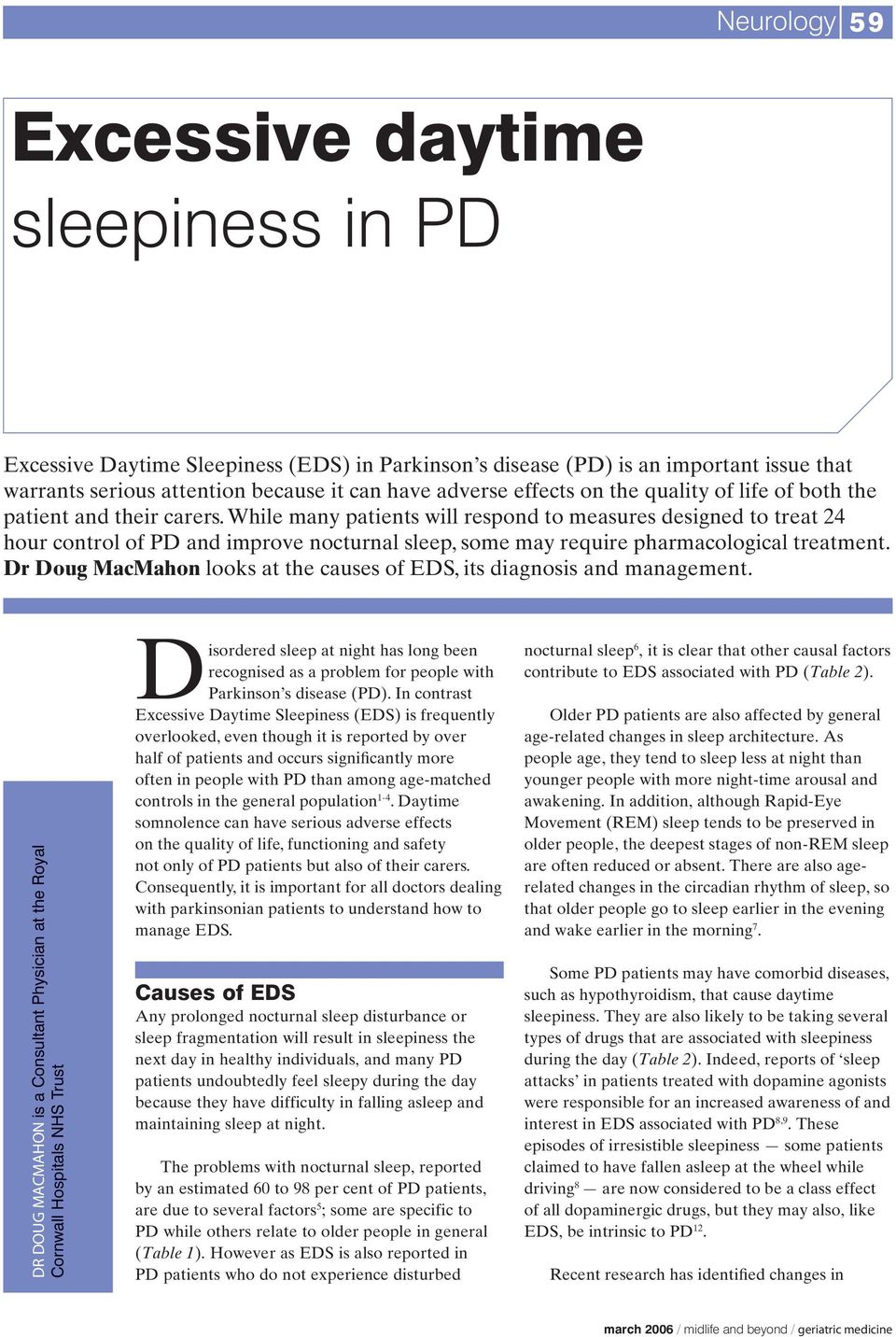
2 60 Neurology Table 1. Causes of nocturnal sleep disturbance in people with PD 5,11 Cause Night-time PD-related symptoms (both motor and non-motor) Examples Classical motor symptoms: tremor, rigidity, cramps, diffi culty turning over in bed Other PD-related symptoms: restless legs syndrome, periodic limb movement disorder, depression, anxiety, dementia, sleep apnoea, nocturia, REM sleep behavioural disorder Comorbid conditions common in older people Cardiac disease, respiratory disease, arthritis, prostatic disease, incontinence, obstructive sleep apnoea Side-effects of medical treatment Insomnia, change in sleep architecture, vivid dreams, nightmares, hallucinations. sleep-wake regulation that are specific to PD and are associated with nocturnal and diurnal sleep problems. PD appears to result in structural changes to the brain that cause insomnia, hypersomnia and disturbed circadian rhythm 13. The disease is also associated with neurochemical changes that affect several neurotransmitters thought to be involved in maintaining the sleepwake cycle. These include not only dopamine 12 which is well known to be deficient in the parkinsonian brain but also a recently discovered neuropeptide called hypocretin 14. The state of wakefulness involves two neuronal pathways. The first arises from the brainstem and is the classical centre of arousal or the Reticular Activating System (RAS). The second is a recently characterised projection from the hypothalamus, Table 2. Causes of EDS in PD 10 > Disturbed sleep at night (see Table 1) > PD-related disturbance in sleep-wake regulation > Age-related changes in sleep architecture and circadian rhythm >Sedation caused by medication, including dopaminergic drugs, other antiparkinsonian drugs (anticholinergics, amantadine), psychotropic drugs > Endocrine dysfunction. which incorporates the sleep-wake switch that ensures that the brain is either on (awake) or off (asleep) 15. The role of hypocretin seems to be to maintain the sleep-wake switch in the on position and prevent inappropriate switching to off. Reduced concentrations of hypocretin are therefore likely to result in narcolepsy with sleep attacks 16. Low levels of this neurotransmitter have indeed been reported in PD patients as well as in people with narcolepsy 14,17, and PD has been associated with narcolepsy (generally without cataplexy) 18. Diagnosing EDS The first step is to ask whether the patient experiences excessive sleepiness during the day. Some health professionals do not enquire routinely about this symptom, since non-motor symptoms have until recently received much less attention than the classical motor symptoms associated with PD 19. Similarly, some patients don t volunteer that they experience EDS because they and their carers may be unaware that their symptoms are related at least in part to their PD and may not be troubled by it. Daytime sleepiness becomes excessive and a problem that deserves further investigation and treatment if episodes of overwhelming tiredness, prolonged daytime naps and unintended sleep adversely affects the patient s or carers daily quality of life, functioning and safety. When evaluating EDS, it is helpful to use the Epworth Sleepiness Scale (ESS). It is a simple eight-item questionnaire that quickly assesses the
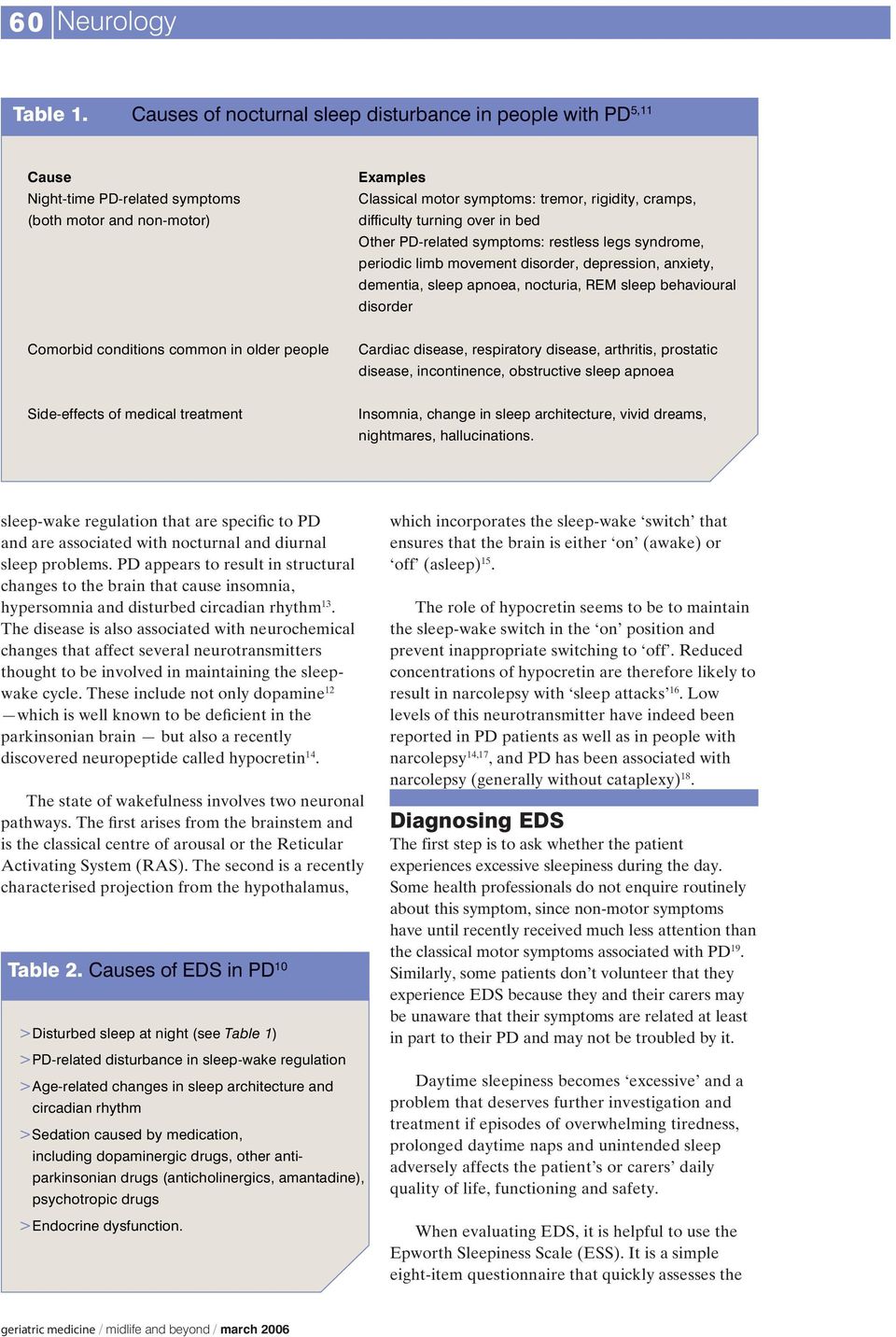
3 62 Neurology likelihood that the patient will fall asleep during a range of daily activities (Table 3) 20, or some exemplary questions derived from it. Patients are asked to rate their chance of dozing during each activity based on a scale of 0 (never fall asleep) to three (high chance of falling asleep). An Epworth score of 11 or more usually confirms that the patient has EDS. Most General Practitioners (GPs) should be aware of the basic principles of managing a sleep disorder, but they may require the local PD service to assess the patient so that they can manage drug treatment and look at the patient s sleep hygiene. Occasionally further specialist sleep clinic assessment or investigation may be required, especially if a primary sleep disorder such as narcolepsy or obstructive sleep apnoea is suspected. The investigation of choice in this context is a polysmnogram, but few physicians have access to such instruments that need a full sleep laboratory and in most cases, a clinical approach will have to suffice. Treating EDS The control of EDS involves a systematic approach (Table 4) designed to overcome sleep disturbance at night and to promote wakefulness during the day. Careful enquiry will help to diagnose PDrelated symptoms and comorbid problems that may be interfering with nocturnal sleep (Table 1). At the same time, reviewing all current medication will help to identify any drug that may be responsible for promoting wakefulness at night and sleepiness during the day. Nonpharmacological approaches designed to improve night-time sleep in the general population are also applicable to PD patients. These measures include simple advice on sleep hygiene that should help to improve nocturnal sleep and reduce daytime sleepiness (Table 5). Adjusting PD medication can also help to improve sleep by controlling PD symptoms at night. Controlled-release levodopa is an option in
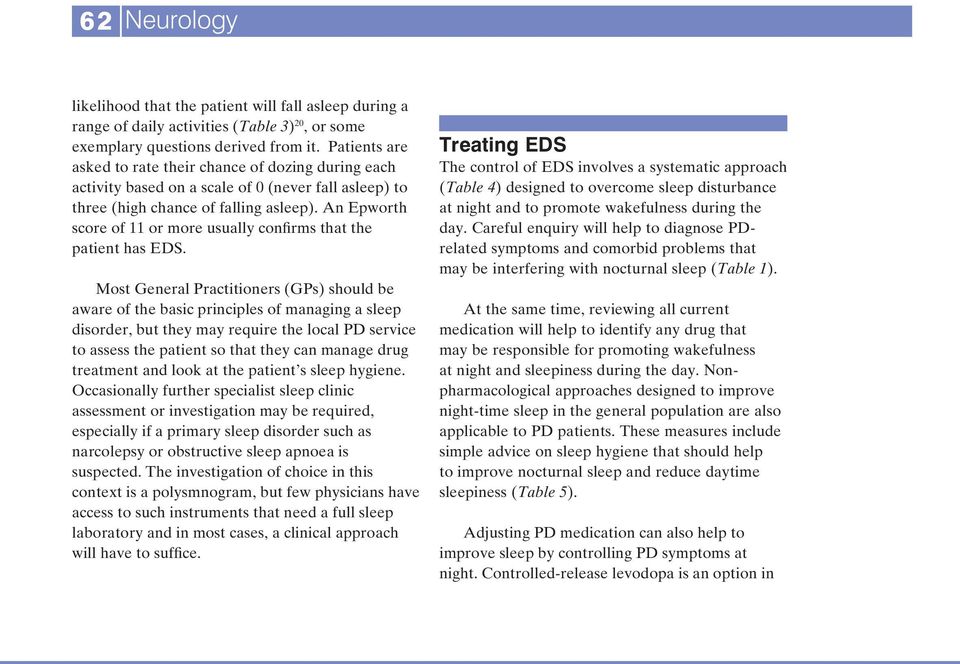
4 Neurology 63 Table 3. The Epworth Sleepiness Scale 20 Situation Chance of dozing (0-3) Sitting and reading Watching television Sitting inactive in a public place, e.g. theatre or a meeting As a passenger in a car for an hour without a break Lying down to rest in the afternoon Sitting and talking to someone Sitting quietly after a lunch when you ve had no alcohol In a car, while stopped in traffi c Total scores range from 0 to 24, 0 = never doze; 3 = high chance of dozing Score 11 indicate EDS. Refer patients with scores 15 to a specialist centre. march 2006 / midlife and beyond / geriatric medicine

5 64 Neurology Table 4. A systematic approach to controlling EDS in PD > Advise patient and carer about sleep hygiene measures (Table 5) > Review all current medication in order to identify iatrogenic causes of nocturnal sleep disturbance or EDS > Consider the possibility of other causes of nocturnal sleep disturbance (see Table 1) > Initiate treatment: adjust PD medication to provide 24-hour control of symptoms; treat other potential causes of disturbed nocturnal sleep; adjust any medication that may be causing sleepiness during the day or sleep disturbance at night; consider modafi nil. some patients with nocturnal akinesia but these drugs may cause vivid dreams or sleep fragmentation in some patients. An evening dose of a longer-acting dopamine agonist such as cabergoline may offer a better option in these patients. However, it can also cause similar problems itself and also has been suggested as a cause of fibrotic ergot-related reactions. Alternatively, altering the timing or dose of nighttime dopaminergic medications can help to prevent problems in falling asleep, parasomnias (such as sleep walking) and nocturnal muscle spasms (myoclonus). Other PD treatments for example, selegiline should not be taken after midday as its metabolites may act as stimulants. Morning doses of stimulant drugs such as dexamfetamine and methylphenidate have been used when EDS persists even when nighttime sleep disturbance and iatrogenic causal factors have been controlled. However, this usage is unlicensed and there are limitations on prescribing these controlled drugs. Amphetamines are also associated with a high potential for abuse, cardiovascular and other adverse effects, and a tendency to decrease total sleep time and REM sleep. Modafinil is an alternative pharmacological treatment for EDS. Chemically and pharmacologically distinct from stimulants, modafinil is a wake-promoting agent that has become a first-line, symptomatic treatment for EDS in narcolepsy and has been shown to relieve Table 5. Sleep hygiene measures > Go to bed only when sleepy > Try to maintain regular hours for sleep and wakefulness > Do not nap during the day, especially close to bedtime > Avoid sleeping-in after a poor night > Use the bed primarily for sleep do not watch television or work in the bedroom > Ensure a comfortable temperature neither too hot nor too cold > Do not lie in bed awake for prolonged periods > If unable to sleep or fall back to sleep within 20 minutes, get up and engage in relaxing activity until drowsy then return to bed. Repeat as necessary (note: this will only be possible in PD patients whose motor symptoms are well controlled at night) > Avoid excessive liquid and heavy meals in the evening > Do not exercise within three to four hours of bedtime > After midday avoid caffeine, alcohol and tobacco. EDS in patients with PD In a seven-week, randomised, placebocontrolled crossover study, modafinil 200mg once daily significantly improved Epworth Scores 22. However in another study, although modafinil was shown to not alter motor symptoms and was well tolerated, it failed to significantly improve EDS in PD compared with placebo 24. When used to treat EDS in PD patients, modafinil is usually administered as a once-daily 200mg dose titrating if necessary to 400mg once daily. However, elderly patients should start on the lower dose of 100mg a day. The agent is generally well tolerated in people with PD and it is not associated with worsening of parkinsonian symptoms 21. Furthermore, since it appears to act selectively on the hypothalamic sleep-wake system, modafinil does not cause the hyperactivity and hyperarousal often seen with amphetamines due to their general effects on the brain 16. Conclusion The quality of life of patients and family carers is an especially important consideration when managing the symptoms of a chronic, progressive illness such as PD.

SLEEP AND PARKINSON S DISEASE
 A Practical Guide on SLEEP AND PARKINSON S DISEASE MICHAELJFOX.ORG Introduction Many people with Parkinson s disease (PD) have trouble falling asleep or staying asleep at night. Some sleep problems are
SLEEP DIFFICULTIES AND PARKINSON S DISEASE Julie H. Carter, R.N., M.S., A.N.P.
 SLEEP DIFFICULTIES AND PARKINSON S DISEASE Julie H. Carter, R.N., M.S., A.N.P. Problems with sleep are common in Parkinson s disease. They can sometimes interfere with quality of life. It is helpful to
Sleep Difficulties. Insomnia. By Thomas Freedom, MD and Johan Samanta, MD
 Sleep Difficulties By Thomas Freedom, MD and Johan Samanta, MD For most people, night is a time of rest and renewal; however, for many people with Parkinson s disease nighttime is a struggle to get the
Medical Information to Support the Decisions of TUECs INTRINSIC SLEEP DISORDERS
 Introduction Excessive daytime sleepiness (EDS) is a common complaint. Causes of EDS are numerous and include: o Intrinsic sleep disorders (e.g. narcolepsy, obstructive sleep apnoea/hypopnea syndrome (OSAHS)
Neurological causes of excessive daytime sleepiness. Professor Adam Zeman Royal Devon and Exeter Hospital University of Exeter Medical School
 Neurological causes of excessive daytime sleepiness Professor Adam Zeman Royal Devon and Exeter Hospital University of Exeter Medical School Excessive daytime sleepiness Physiological sleep deprivation,
SLEEP DISTURBANCE AND PSYCHIATRIC DISORDERS
 E-Resource December, 2013 SLEEP DISTURBANCE AND PSYCHIATRIC DISORDERS Between 10-18% of adults in the general population and up to 50% of adults in the primary care setting have difficulty sleeping. Sleep
Insomnia affects 1 in 3 adults every year in the U.S. and Canada.
 Insomnia What is insomnia? Having insomnia means you often have trouble falling or staying asleep or going back to sleep if you awaken. Insomnia can be either a short-term or a long-term problem. Insomnia
Sleep History Questionnaire
 Sleep History Questionnaire Name Address Daytime Phone Height Evening Phone Weight Weight 5yrs ago Describe your sleep problem: 1. What time do you go to bed? 2. What time do you wake up? 3. What time
Sleep Disorders Center 505-820-5363 455 St. Michael s Dr. 505-989-6409 fax Santa Fe, New Mexico 87505 QUESTIONNAIRE NAME: DOB: REFERRING PHYSICIAN:
 Sleep Disorders Center 505-820-5363 455 St. Michael s Dr. 505-989-6409 fax Santa Fe, New Mexico 87505 QUESTIONNAIRE NAME: DOB: REFERRING PHYSICIAN: PRIMARY CARE PHYSICIAN: Do you now have or have you had:
SLEEP DISORDER ADULT QUESTIONNAIRE
 SLEEP DISORDER ADULT QUESTIONNAIRE Name: Date: Date of Birth (month/day/year): / / Gender: ο Male ο Female Marital Status: ο Never Married ο Married ο Divorced ο Widowed Home Address: City: Zip: Daytime
SLEEP QUESTIONNAIRE. Name: Today s Date: Age (years): Your Sex (M or F): Height: Weight: Collar/Neck Size (inches) Medications you are taking:
 SLEEP QUESTIONNAIRE Name: Today s Date: Age (years): Your Sex (M or F): Height: Weight: Collar/Neck Size (inches) Medications you are taking: Medical conditions: High blood pressure Heart Disease Diabetes
Sleep Medicine. Maintenance of Certification Examination Blueprint. Purpose of the exam
 Sleep Medicine Maintenance of Certification Examination Blueprint Purpose of the exam The exam is designed to evaluate the knowledge, diagnostic reasoning, and clinical judgment skills expected of the
Sleep. Drug and Alcohol Services South Australia. Progressive stages of the sleep cycle. Understanding the normal sleep pattern
 Drug and Alcohol Services South Australia INSOMNIA MANAGEMENT KIT Sleep: Facts and hygiene The Insomnia Management Kit is intended to be used in conjunction with your GP. To access further instructions
Don t just dream of higher-quality sleep. How health care should be
 Don t just dream of higher-quality sleep. How health care should be Many of our patients with sleep disorders don t realize there s another way of life, a better way, until they are treated. Robert Israel,
Why are you being seen at Frontier Diagnostic Sleep Center?
 8425 South 84th Street Suite B Omaha, NE 68127 Phone: 402.339.7378 Fax: 402.339.9455 SLEEP QUESTIONNAIRE NAME: ADDRESS: Last First MI Street Address DATE City State Zip PHONE: ( ) BIRTHDATE: HEIGHT: WEIGHT:
Full name: Male Female
 6700 W. Ninth Ave. Amarillo, TX 79106 Phone (806) 356-5522 www.adcsleepdisorders.com THE EPWORTH SLEEPINESS SCALE Full name: Male Female Date: Age: How likely are you to doze off or fall asleep in the
SLEEP QUESTIONNAIRE THE EPWORTH SLEEPINESS SCALE
 SLEEP QUESTIONNAIRE Patient Name: Height: Weight: Date : My Main Sleep Complaint(s) : Trouble sleeping at night.. yes no Falling asleep.. yes no Staying asleep.. yes no Snoring. yes no Stop breathing yes
A Healthy Life RETT SYNDROME AND SLEEP. Exercise. Sleep. Diet 1. WHY SLEEP? 4. ARE SLEEP PROBLEMS A COMMON PARENT COMPLAINT?
 Diet Sleep Exercise RETT SYNDROME AND SLEEP DR. DANIEL GLAZE, MEDICAL DIRECTOR THE BLUE BIRD CIRCLE RETT CENTER A good night s sleep promotes learning, improved mood, general good health, and a better
THE CENTER FOR SLEEP DISORDERS GW- MEDICAL FACULTY ASSOCIATES SLEEP DISORDERS INVENTORY
 THE CENTER FOR SLEEP DISORDERS GW- MEDICAL FACULTY ASSOCIATES SLEEP DISORDERS INVENTORY Vivek Jain, M.D. Director, The Center for Sleep Disorders GW-Medical Faculty Associates Samuel J. Potolicchio, M.
Reading: Skimming and Scanning
 Reading: Skimming and Scanning Skimming involves quickly glancing through a text to get a general sense of what it is about. You do not actually read the whole piece; you simply look through it, perhaps
Memorial Hospital Sleep Center. Rock Springs, Wyoming 82901. Sleep lab Phone: 307-352- 8229 (Mon - Wed 5:00 pm 7:00 am)
 Memorial Hospital Sleep Center Rock Springs, Wyoming 82901 Sleep lab Phone: 307-352- 8229 (Mon - Wed 5:00 pm 7:00 am) Office Phone: 307-352- 8390 (Mon Fri 8:00 am 4:00 pm ) Patient Name: Sex Age Date Occupation:
Sleep Medicine and Psychiatry. Roobal Sekhon, D.O.
 Sleep Medicine and Psychiatry Roobal Sekhon, D.O. Common Diagnoses Mood Disorders: Depression Bipolar Disorder Anxiety Disorders PTSD and other traumatic disorders Schizophrenia Depression and Sleep: Overview
INF159. Tiredness can kill. Advice for drivers. including drivers with Obstructive Sleep Apnoea Syndrome (OSAS) 2/16
 INF159 Tiredness can kill Advice for drivers including drivers with Obstructive Sleep Apnoea Syndrome (OSAS) 2/16 What if I have a condition causing sleepiness/tiredness during the day? You need to tell
Corporate Medical Policy
 Corporate Medical Policy Polysomnography for Non Respiratory Sleep Disorders File Name: Origination: Last CAP Review: Next CAP Review: Last Review: polysomnography_for_non_respiratory_sleep_disorders 10/2015
INSOMNIA SELF-CARE GUIDE
 INSOMNIA SELF-CARE GUIDE University of California, Berkeley 2222 Bancroft Way Berkeley, CA 94720 Appointments 510/642-2000 Online Appointment www.uhs.berkeley.edu All of us have trouble sleeping from time
How To Avoid Drowsy Driving
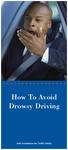 How To Avoid Drowsy Driving AAA Foundation for Traffic Safety Sleepiness and Driving Don t Mix Feeling sleepy is especially dangerous when you are driving. Sleepiness slows your reaction time, decreases
Dr Sarah Blunden s Adolescent Sleep Facts Sheet
 Dr Sarah Blunden s Adolescent Sleep Facts Sheet I am Sleep Researcher and a Psychologist. As a Sleep Researcher, I investigate the effects of poor sleep on young children and adolescents. I also diagnose
Headache and Sleep Disorders 屏 東 基 督 教 醫 院 沈 秀 祝
 Headache and Sleep Disorders 屏 東 基 督 教 醫 院 沈 秀 祝 Sleep Sleeping later Sleep deprivation Excessive Sleep Sleep Migraine Physiology of sleep Headache Clinical, Anatomical, and Physiologic Relationship Between
Name,, Last First MI DOB Age Current Occupation. Home Phone Work phone Cell Phone
 Date / / Name,, Last First MI DOB Age Current Occupation Home Phone Work phone Cell Phone Ethnicity : White Hispanic Asian African American American Indian Pacific Islander Other What is your primary language?
SUMMA HEALTH SYSTEM. Sleep Medicine Services
 SUMMA HEALTH SYSTEM Sleep Medicine Services Contents Why should I be concerned about a sleep disorder? 2 Evaluate Your Daytime Sleepiness 3 Common sleep disorders 5 About sleep studies 6 What to expect
Lewy body dementia Referral for a Diagnosis
 THE Lewy Body society The more people who know, the fewer people who suffer Lewy body dementia Referral for a Diagnosis Lewy Body Dementias REFERRAL FOR A DIAGNOSIS In the UK people with all forms of dementia
5.07.04. Provigil Nuvigil. Provigil (modafinil) / Nuvigil (armodafinil) Description. Section: Prescription Drugs Effective Date: July 1, 2015
 Federal Employee Program 1310 G Street, N.W. Washington, D.C. 20005 202.942.1000 Fax 202.942.1125 5.07.04 Subject: Provigil Nuvigil Page: 1 of 6 Last Review Date: June 19, 2015 Provigil Nuvigil Description
F Be irritable F Have memory problems or be forgetful F Feel depressed F Have more falls or accidents F Feel very sleepy during the day
 National Institute on Aging A Good Night s Sleep Ever since he retired, Edward dreads going to bed at night. He s afraid that when he turns off his light, he will just lie there with his eyes open and
NUVIGIL (armodafinil) oral tablet
 NUVIGIL (armodafinil) oral tablet Coverage for services, procedures, medical devices and drugs are dependent upon benefit eligibility as outlined in the member's specific benefit plan. This Pharmacy Coverage
Parkinson s Disease - A Junior Doctor s Survival Guide
 Parkinson s Disease - A Junior Doctor s Survival Guide Professor Richard Walker Consultant Geriatrician Hon. Professor of Ageing & Interna
Patient Sleep Questionnaire
 Patient Sleep Questionnaire Patient Name: _ Sex: Age: Date: Occupation: _ Usual Work Hours/Days: _ Referring Physician: Family Physician (PCP): Patient s email address: Please complete the following questionnaire
General Information about Sleep Studies and What to Expect
 General Information about Sleep Studies and What to Expect Why do I need a sleep study? Your doctor has ordered a sleep study because your doctor is concerned you may have a sleep disorder that is impacting
building. 2. Enter Turn the on 5305 and begin Building testing and take the elevator/stairs to the third floor, turn right and go into
 SLEEP DISORDERS CENTER St. Joseph Mercy Ann Arbor 5305 Elliott Drive, Ypsilanti, MI 48197 734-712-2276 / Fax 734-712-2967 Sleep Study Information Home Sleep Apnea Testing Dear,, Your are Sleep scheduled
teenagers drowsy driving Staying safe behind the wheel a wellness booklet from the American Academy of Sleep Medicine
 teenagers drowsy driving Staying safe behind the wheel a wellness booklet from the American Academy of Sleep Medicine Dear Reader Sleep isn t just time out from daily life. It is an active state important
Tara Leigh Taylor, MD, FCCP Intensivist, Wyoming Medical Center
 Tara Leigh Taylor, MD, FCCP Intensivist, Wyoming Medical Center Objectives Define the magnitude of the problem Define diagnostic criteria of insomnia Understand the risk factors and consequences of insomnia
MODULE MULTIPLE SLEEP LATENCY TEST (MSLT) AND MAINTENANCE OF WAKEFULNESS TEST (MWT)
 MODULE MULTIPLE SLEEP LATENCY TEST AND MAINTENANCE OF WAKEFULNESS TEST (MWT) MULTIPLE SLEEP LATENCY TEST AND MAINTENANCE OF WAKEFULNESS TEST (MWT) OBJECTIVES: At the end of this module the student must
Diabetes - - people with diabetes often wake up with night sweats, frequent need to urinate, diarrhea or symptoms of hypoglycemia.
 Medical Illnesses that May Disturb Sleep More than 70% of people with medical illnesses suffer from sleep problems. Their trouble sleeping may stem from the disease itself or from the medicines used to
MOH CLINICAL PRACTICE GUIDELINES 2/2008 Prescribing of Benzodiazepines
 MOH CLINICL PRCTICE GUIELINES 2/2008 Prescribing of Benzodiazepines College of Family Physicians, Singapore cademy of Medicine, Singapore Executive summary of recommendations etails of recommendations
Dementia & Movement Disorders
 Dementia & Movement Disorders A/Prof Michael Davis Geriatrician ACT Health & GSAHS ANU Medical School Eastern Dementia Network Aged and Dementia Care Symposium Bateman s Bay, 22 October 2010 Types of Dementia
Quick Read Series. Information for people with seizure disorders
 Quick Read Series Information for people with seizure disorders 2003 Epilepsy Foundation of America, Inc. This pamphlet is designed to provide general information about epilepsy to the public. It does
BCN e-referral Questionnaire Preview: Sleep study, outpatient facility or clinic-based setting
 Sleep studies, outpatient facility or clinic-based setting Blue Care Network provides coverage for attended sleep studies in the outpatient treatment setting for pediatric members and for adult members
CONCORD INTERNAL MEDICINE TESTOSTERONE DEFICIENCY PROTOCOL
 CONCORD INTERNAL MEDICINE TESTOSTERONE DEFICIENCY PROTOCOL Douglas G. Kelling, Jr., MD Carmella Gismondi-Eagan, MD, FACP George C. Monroe, III, MD Revised April 29, 2012 The information contained in this
SLEEP DISTURBANCE AND MULTIPLE SCLEROSIS Abbey J. Hughes, PhD Department of Rehabilitation Medicine University of Washington School of Medicine
 SLEEP DISTURBANCE AND MULTIPLE SCLEROSIS Abbey J. Hughes, PhD Department of Rehabilitation Medicine University of Washington School of Medicine Table of Contents Introduction... 2 Summary of MS Sleep Research...
What is PD? Dr Catherine Dotchin MD MRCP Consultant Geriatrician
 What is PD? Dr Catherine Dotchin MD MRCP Consultant Geriatrician Overview of presentation Case history Video example pre and post treatment Historical review PD in the UK Epidemiology and aetiology Making
Sleep and Brain Injury
 Patient Education Sleep and Brain Injury This handout describes how brain injury may affect sleep. A list of resources is included. Why is sleep important? During sleep, your brain and body recharge. Proper
Parkinson s Disease Symptoms Guide
 Parkinson s Disease Symptoms Guide Some symptoms of Parkinson s disease (PD) are hard for even specialists to detect. Others are obvious even to an untrained eye. Parkinson s symptoms are different for
How to sleep better at night - sleep hygiene. Information for anyone having trouble sleeping
 How to sleep better at night - sleep hygiene Information for anyone having trouble sleeping www.leicspart.nhs.uk mail: [email protected] Aim for a good night s sleep A good night s sleep should
Allergies to Medications: Yes ( ) No ( ) if yes, explain: Allergies to environmental agents: Yes ( ) No ( ) if yes, explain:
 Accredited by the American Academy of Sleep Medicine Sleep History Questionnaire Name: Ht: Wt: Neck Size: Allergies to Medications: Yes ( ) No ( ) if yes, explain: Allergies to environmental agents: Yes
Management of Parkinson s Disease in Primary Care
 Management of Parkinson s Disease in Primary Care Dr June Tan National University Hospital System (NUHS) Division of Neurology Senior Consultant Topics: Diagnosing PD Choice of medication in the de novo
States of Consciousness Notes
 States of Consciousness Notes There s been a lot in the news lately about the new Peace Palace they re building in West L.A., for people to come and meditate and not just Hollywood people! Psych 1 - States
Emergency Room Treatment of Psychosis
 OVERVIEW The term Lewy body dementias (LBD) represents two clinical entities dementia with Lewy bodies (DLB) and Parkinson s disease dementia (PDD). While the temporal sequence of symptoms is different
Benzodiazepine & Z drugs withdrawal protocol
 Benzodiazepine & Z drugs withdrawal protocol Rationale The NSF for Older People has highlighted the issues of dependence, sedation and fall in the elderly when taking these types of medications. It has
An Introduction to Lewy Body Dementia
 An Introduction to Lewy Body Dementia A special publication for people newly diagnosed with Lewy body dementia and those still seeking answers. You don t have to face LBD alone. Increasing Knowledge Sharing
SLEEP DISORDERS IN ASBESTOS-RELATED DISEASES
 SLEEP DISORDERS IN ASBESTOS-RELATED DISEASES Asbestos pleural diseases ie benign asbestos pleural plaques, diffuse pleural thickening, benign asbestos pleurisy, benign asbestos pleural effusions and asbestosis
**Form 1: - Consultant Copy** Telephone Number: Fax Number: Email: Author: Dr Bernard Udeze Pharmacist: Claire Ault Date of issue July 2011
 Effective Shared Care Agreement for the treatment of Dementia in Alzheimer s Disease Donepezil tablets / orodispersible tablets (Aricept / Aricept Evess ) These forms (1 and 2) are to be completed by both
IMPORTANCE OF SLEEP. Essential to your physical health and emotional wellbeing. Helps improve concentration and memory formation
 IMPORTANCE OF SLEEP Essential to your physical health and emotional wellbeing Helps improve concentration and memory formation Allows your body to repair any cell damage that occurred during the day Refreshes
Please have your bed partner assist you with the enclosed questionnaire and bring it, completed, with you to your scheduled sleep appointment.
 Welcome! Please read the following document carefully as it contains pertinent information regarding your sleep study, interpretation of your study, and billing information. On behalf of our staff here
SUMMARY OF RECOMMENDATIONS
 SUMMARY OF RECOMMENDATIONS FOR THE LONG- TERM TREATMENT OF RLS/WED from AN IRLSSG TASK FORCE Members of the Task Force Diego Garcia- Borreguero, MD, Madrid, Spain* Richard Allen, PhD, Baltimore, MD, USA*
Chapter 28. Drug Treatment of Parkinson s Disease
 Chapter 28 Drug Treatment of Parkinson s Disease 1. Introduction Parkinsonism Tremors hands and head develop involuntary movements when at rest; pin rolling sign (finger and thumb) Muscle rigidity arthritis
CENTRAL NERVOUS SYSTEM MANAGEMENT OF PARKINSON S DISEASE
 MANAGEMENT CENTRAL NERVOUS SYSTEM MANAGEMENT OF PARKINSON S DISEASE Parkinson s Disease is classically determined by the triad or rest tremor (usually starting in one arm) with bradykinesia (slowing of
MEDICATION ABUSE IN OLDER ADULTS
 MEDICATION ABUSE IN OLDER ADULTS Clifford Milo Singer, MD Adjunct Professor, University of Maine, Orono ME Chief, Division of Geriatric Mental Health and Neuropsychiatry The Acadia Hospital and Eastern
Sleep Strategies Introduction: 1. Providing a comfortable sleep setting
 Sleep Strategies Introduction: Sleep problems-- either trouble falling asleep, staying asleep, or early morning waking, are common problems in typically developing children and in children with Autism
CPAP Treats Muscle Cramps in Patients with Obstructive Sleep Apnea
 CPAP Treats Muscle Cramps in Patients with Obstructive Sleep Apnea Andrew J Westwood, M.D., MRCP(UK) 1, Andrew R Spector, M.D., 2 Sanford H Auerbach, M.D. 3 1 Columbia University College of Physicians
Cognitive Behavioral Therapy for Insomnia (CBT-I)
 Cognitive Behavioral Therapy for Insomnia (CBT-I) Virginia Runko, PhD, CBSM Behavioral Sleep Medicine Specialist Licensed Psychologist The Ross Center for Anxiety and Related Disorders, Washington DC Workshop
Motor Fluctuations in Parkinson s
 Motor Fluctuations in Parkinson s What are motor fluctuations? Motor fluctuations are associated with longterm use of levodopa (trade names Sinemet or Madopar, Co-careldopa or Co-beneldopa), and usually
DEPRESSION CARE PROCESS STEP EXPECTATIONS RATIONALE
 1 DEPRESSION CARE PROCESS STEP EXPECTATIONS RATIONALE ASSESSMENT/PROBLEM RECOGNITION 1. Did the staff and physician seek and document risk factors for depression and any history of depression? 2. Did staff
Self Assessment: Substance Abuse
 Self Assessment: Substance Abuse Please respond TRUE (T) or FALSE (F) to the following items as they apply to you. Part 1 I use or have used alcohol or drugs for recreational purposes. I use alcohol despite
Asthma, anxiety & depression
 Anxiety and are common in people with asthma. The good news is that there are effective treatments both for asthma and for anxiety and. With careful management, the symptoms of anxiety and can be treated
Ch 7 Altered States of Consciousness
 Ch 7 Altered States of Consciousness Consciousness a state of awareness Altered State of Consciousness involves a change in mental processes in which one is not completely aware Sleep is a state of altered
SLEEP RIGHT SLEEP TIGHT
 SLEEP RIGHT SLEEP TIGHT Natural sleep before medicines Sleep diary What is a sleep diary? A sleep diary is a daily log that can be used to record your sleep-wake pattern. It helps you monitor when you
Iowa Governor s Office of Drug Control Policy
 Iowa Governor s Office of Drug Control Policy medicines or take them in a manner not prescribed, we increase the risk of negative effects. It is estimated that over 35 million Americans are ages 65 and
Older Drivers Guide to Driving Safely
 Fit to Drive Traffic Safety for Older Drivers Are you fit to drive? The aging process may increase your risk of being in a traffic crash, and it affects the severity of injuries you experience. Drivers
Parkinson s Disease (PD)
 Parkinson s Disease (PD) Parkinson s disease (PD) is a movement disorder that worsens over time. About 1 in 100 people older than 60 has Parkinson s. The exact cause of PD is still not known, but research
Having a home sleep study? Rest easy. This booklet is designed to answer common questions you may have concerning your upcoming sleep study.
 Having a home sleep study? Rest easy. This booklet is designed to answer common questions you may have concerning your upcoming sleep study. Your appointment is on: Your doctor suspects you may have a
Benzodiazepines Reviewing long term use: a suggested approach
 NP SPPR National Prescribing Service Ltd No. 4 July 1999 Prescribing Practice Review Reviewing long term use of benzodiazepines, pp1-4 Managing the new patient with insomnia, pp5-6 Enclosed patient material
MEDICATION GUIDE Xyrem (ZĪE-rem) (sodium oxybate) oral solution CIII
 MEDICATION GUIDE Xyrem (ZĪE-rem) (sodium oxybate) oral solution CIII Read this Medication Guide carefully before you start taking Xyrem and each time you get a refill. There may be new information. This
NEW PATIENT CLINICAL INFORMATION FORM. Booth Gardner Parkinson s Care & Movement Disorders Center Evergreen Neuroscience Institute
 NEW PATIENT CLINICAL INFORMATION FORM Booth Gardner Parkinson s Care & Movement Disorders Center Evergreen Neuroscience Institute Date: Name: Referring Doctor: How did you hear about us? NWPF Your Physician:
Part B: 3 3. DIABETES MELLITUS. 3.1.1 Effects of diabetes on driving. 3.1.2 Evidence of crash risk. 3.2.1 Hypoglycaemia
 3. DIABETES MELLITUS Refer also to section 6 Neurological conditions, section 2 Cardiovascular conditions, section 8 Sleep disorders section 10 Vision eye disorders. 3.1 Relevance to the driving task 3.1.1
Depression is a common biological brain disorder and occurs in 7-12% of all individuals over
 Depression is a common biological brain disorder and occurs in 7-12% of all individuals over the age of 65. Specific groups have a much higher rate of depression including the seriously medically ill (20-40%),
Snoring and Obstructive Sleep Apnea (updated 09/06)
 Snoring and Obstructive Sleep Apnea (updated 09/06) 1. Define: apnea, hypopnea, RDI, obstructive sleep apnea, central sleep apnea and upper airway resistance syndrome. BG 2. What are the criteria for mild,
Tired all the time? A self-help guide to managing excessive tiredness
 Tired all the time? A self-help guide to managing excessive tiredness Contents Tired all the time?.......... 3 What is excessive tiredness?......... 3 What causes excessive tiredness?......... 3 How can