
When Your Home is on The Line:
|
|
|
- Sabrina Wade
- 9 years ago
- Views:
Transcription
1 515 Erie Boulevard West Syracuse, NY When Your Home is on The Line: What You Should Know About Home Equity Lines of Credit If you are in the market for credit, a home equity plan is one of several options that might be right for you Before making a decision, however, you should weigh carefully the costs of a home equity line against the benefits Shop for the credit terms that best meet your borrowing needs without posing undue financial risks And remember, failure to repay the amounts you' ve borrowed, plus interest, could mean the loss of your home What is a home equity line of credit? A home equity line of credit is a form of revolving credit in which your home serves as collateral Because a home often is a consumer' s most valuable asset, many homeowners use home equity credit lines only for major items, such as education, home improvements, or medical bills, and choose not to use them for day-to-day expenses With a home equity line, you will be approved for a specific amount of credit Many lenders set the credit limit on a home equity line by taking a percentage (say, 75%) of the home' s appraised value and subtracting from that the balance owed on the existing mortgage For example: Appraisal of home $100,000 Percentage x 75% Percentage of appraised value $ 75,000 Less mortgage debt - $ 40,000 Potential credit line $ 35,000 In determining your actual credit limit, the lender will also consider your ability to repay the loan (principal and interest) by looking at your income, debts, and other financial obligations as well as your credit history Many home equity plans set a fixed period during which you can borrow money, such as 10 years At the end of this "draw period," you may be allowed to renew the credit line If your plan does not allow renewals, you will not be able to borrow additional money once the period has ended Some plans may call for payment in full of any outstanding balance at the end of the period Others may allow repayment over a fixed period (the "repayment period"), for example, 10 years Once approved for a home equity line of credit, you will most likely be able to borrow up to your credit limit whenever you want Typically, you will use special checks to draw on your line Under some plans, borrowers can use a credit card or other means to draw on the line There may be other limitations on how you use the line Some plans may require you to borrow a minimum amount each time you draw on the line (for example, $300) or keep a minimum amount outstanding Some plans may also require that you take an initial advance when the line is set up What should you look for when shopping for a plan? If you decide to apply for a home equity line of credit, look for the plan that best meets your particular needs Read the credit agreement carefully, and examine the terms and conditions of various plans, including the annual percentage rate (APR) and the costs of establishing the plan Remember, though, that the APR for a home equity line is based on the interest rate alone and will not reflect closing costs and other fees and charges, so you' ll need to compare these costs, as well as the APRs, among lenders Variable interest rates Home equity lines of credit typically involve variable rather than fixed interest rates The variable rate must be based on a publicly available index (such as the prime rate published in some major daily newspapers or a US Treasury bill rate) In such cases, the interest rate you pay for the line of credit will change, mirroring changes in the value of the index Most lenders cite the interest rate you will pay as the value of the index at a particular time, plus a "margin," such as 2 percentage points Because the cost of borrowing is tied directly to the value of the index, it is important to find out which index is used, how often the value of the index changes, and how high it has risen in the past It is also important to note the amount of the margin Lenders sometimes offer a temporarily discounted interest rate for home equity lines--an "introductory" rate that is unusually low for a short period, such as 6 months Variable-rate plans secured by a dwelling must, by law, have a ceiling (or cap) on how much your interest rate may increase over the life of the plan Some variable-rate plans limit how much your payment may increase and how low your interest rate may fall if the index drops Some lenders allow you to convert from a variable interest rate to a fixed rate during the life of the plan, or let you convert all or a portion of your line to a fixed-term installment loan Copyright Oak Tree Business Systems, Inc, 2008 All Rights Reserved Page 1 of 5
2 Costs of establishing and maintaining a home equity line Many of the costs of setting up a home equity line of credit are similar to those you pay when you buy a home For example: A fee for a property appraisal to estimate the value of your home; An application fee, which may not be refunded if you are turned down for credit; Up-front charges, such as one or more "points" (one point equals 1 percent of the credit limit); and Closing costs, including fees for attorneys, title search, mortgage preparation and filing, property and title insurance, and taxes In addition, you may be subject to certain fees during the plan period, such as annual membership or maintenance fees and a transaction fee every time you draw on the credit line You could find yourself paying hundreds of dollars to establish the plan And if you were to draw only a small amount against your credit line, those initial charges would substantially increase the cost of the funds borrowed On the other hand, because the lender' s risk is lower than for other forms of credit, as your home serves as collateral, annual percentage rates for home equity lines are generally lower than rates for other types of credit The interest you save could offset the costs of establishing and maintaining the line Moreover, some lenders waive some or all of the closing costs How will you repay your home equity plan? Before entering into a plan, consider how you will pay back the money you borrow Some plans set a minimum monthly payment that includes a portion of the principal (the amount you borrow) plus accrued interest But, unlike with typical installment loan agreements, the portion of your payment that goes toward principal may not be enough to repay the principal by the end of the term Other plans may allow payment of interest only during the life of the plan, which means that you pay nothing toward the principal If you borrow $10,000, you will owe that amount when the payment plan ends Regardless of the minimum required payment on your home equity line, you may choose to pay more, and many lenders offer a choice of payment options Many consumers choose to pay down the principal regularly as they do with other loans For example, if you use your line to buy a boat, you may want to pay it off as you would a typical boat loan Whatever your payment arrangements during the life of the plan--whether you pay some, a little, or none of the principal amount of the loan--when the plan ends, you may have to pay the entire balance owed, all at once You must be prepared to make this "balloon payment" by refinancing it with the lender, by obtaining a loan from another lender, or by some other means If you are unable to make the balloon payment, you could lose your home If your plan has a variable interest rate, your monthly payments may change Assume, for example, that you borrow $10,000 under a plan that calls for interest-only payments At a 10% interest rate, your monthly payments would be $83 If the rate rises over time to 15%, your monthly payments will increase to $125 Similarly, if you are making payments that cover interest plus some portion of the principal, your monthly payments may increase, unless your agreement calls for keeping payments the same throughout the plan period If you sell your home, you will probably be required to pay off your home equity line in full immediately If you are likely to sell your home in the near future, consider whether it makes sense to pay the up-front costs of setting up a line of credit Also keep in mind that renting your home may be prohibited under the terms of your agreement Lines of credit vs traditional second mortgage loans If you are thinking about a home equity line of credit, you might also want to consider a traditional second mortgage loan This type of loan provides you with a fixed amount of money, repayable over a fixed period In most cases, the payment schedule calls for equal payments that pay off the entire loan within the loan period You might consider a second mortgage instead of a home equity line if, for example, you need a set amount for a specific purpose, such as an addition to your home In deciding which type of loan best suits your needs, consider the costs under the two alternatives Look at both the APR and other charges Do not, however, simply compare the APRs, because the APRs on the two types of loans are figured differently: The APR for a traditional second mortgage loan takes into account the interest rate charged plus points and other finance charges The APR for a home equity line of credit is based on the periodic interest rate alone It does not include points or other charges Disclosures from lenders The federal Truth in Lending Act requires lenders to disclose the important terms and costs of their home equity plans, including the APR, miscellaneous charges, the payment terms, and information about any variable-rate feature And in general, neither the lender nor anyone else may charge a fee until after you have received this information You usually get these disclosures when you receive an application form, and you will get additional disclosures before the plan is opened If any term (other than a variable-rate feature) changes before the plan is opened, the lender must return all fees if you decide not to enter into the plan because of the change When you open a home equity line, the transaction puts your home at risk If the home involved is your principal dwelling, the Truth in Lending Act gives you three days from the day the account was opened to cancel the credit line This right allows you to change your mind for any reason You simply inform the lender in writing within the three-day period The lender must then cancel its security interest in your home and return all fees--including any application and appraisal fees--paid to open the account Copyright Oak Tree Business Systems, Inc, 2008 All Rights Reserved Page 2 of 5

3 What if the lender freezes or reduces your line of credit? Plans generally permit lenders to freeze or reduce a credit line if the value of the home "declines significantly" or, when the lender "reasonably believes" that you will be unable to make your payments due to a "material change" in your financial circumstances If this happens, you may want to: Glossary Talk with your lender Find out what caused the lender to freeze or reduce your credit line and what, if anything, you can do to restore it You may be able to provide additional information to restore your line of credit, such as documentation showing that your house has retained its value or that there has not been a "material change" in your financial circumstances You may want to get copies of your credit reports (go to the Federal Trade Commission' s website for information about free copies) to make sure all the information in them is correct If your lender suggests getting a new appraisal, be sure you discuss appraisal firms in advance so that you know they will accept the new appraisal as valid Shop around for another line of credit If your lender does not want to restore your line of credit, shop around to see what other lenders have to offer You may be able to pay off your original line of credit and take out another one Keep in mind, however, that you may need to pay some of the same application fees you paid for your original line of credit Annual membership or maintenance fee An annual charge for access to a financial product such as a line of credit, credit card, or account The fee is charged regardless of whether or not the product is used Annual percentage rate (APR) The cost of credit, expressed as a yearly rate For closed-end credit, such as car loans or mortgages, the APR includes the interest rate, points, broker fees, and other credit charges that the borrower is required to pay An APR, or an equivalent rate, is not used in leasing agreements Application fee Fees charged when you apply for a loan or other credit These fees may include charges for property appraisal and a credit report Balloon payment A large extra payment that may be charged at the end of a mortgage loan or lease Cap (interest rate) A limit on the amount that your interest rate can increase Two types of interest-rate caps exist Periodic adjustment caps limit the interest-rate increase from one adjustment period to the next Lifetime caps limit the interest-rate increase over the life of the loan By law, all adjustable-rate mortgages have an overall cap Closing or settlement costs Fees paid when you close (or settle) on a loan These fees may include application fees; title examination, abstract of title, title insurance, and property survey fees; fees for preparing deeds, mortgages, and settlement documents; attorneys' fees; recording fees; estimated costs of taxes and insurance; and notary, appraisal, and credit report fees Under the Real Estate Settlement Procedures Act, the borrower receives a good faith estimate of closing costs within three days of application The good faith estimate lists each expected cost as an amount or a range Credit limit The maximum amount that may be borrowed on a credit card or under a home equity line of credit plan Equity The difference between the fair market value of the home and the outstanding balance on your mortgage plus any outstanding home equity loans Index The economic indicator used to calculate interest-rate adjustments for adjustable-rate mortgages or other adjustable-rate loans The index rate can increase or decrease at any time See chart Selected Index Rates for ARMs over an 11-year period in the Consumer Handbook on Adjustable Rate Mortgages for examples of common indexes that have changed in the past Interest rate The percentage rate used to determine the cost of borrowing money, stated usually as a percentage of the principal loan amount and as an annual rate Margin The number of percentage points the lender adds to the index rate to calculate the ARM interest rate at each adjustment Minimum payment The lowest amount that you must pay (usually monthly) to keep your account in good standing Under some plans, the minimum payment may cover interest only; under others, it may include both principal and interest Points (also called discount points) One point is equal to 1 percent of the principal amount of a mortgage loan For example, if a mortgage is $200,000, one point equals $2,000 Lenders frequently charge points in both fixed-rate and adjustable-rate mortgages to cover loan origination costs or to provide additional compensation to the lender or broker These points usually are paid at closing and may be paid by the borrower or the home seller, or may be split between them In some cases, the money needed to pay points can be borrowed (incorporated in the loan amount), but doing so will increase the loan amount and the total costs Discount points (also called discount fees) are points that you voluntarily choose to pay in return for a lower interest rate Security interest If stated in your credit agreement, a creditor' s, lessor' s, or assignee' s legal right to your property (such as your home, stocks, or bonds) that secures payment of your obligation under the credit agreement Transaction fee Fee charged each time a withdrawal or other specified transaction is made on a line of credit, such as a balance transfer fee or a cash advance fee Variable rate An interest rate that changes periodically in relation to an index, such as the prime rate Payments may increase or decrease accordingly Copyright Oak Tree Business Systems, Inc, 2008 All Rights Reserved Page 3 of 5
4 Federal Agency Contacts For additional information or to file a complaint about a bank, savings and loan, credit union, or other financial institution, contact one of the following federal agencies, depending on the type of institution All phone numbers in this list that begin with the area code 800, 866, 877, and 888 are toll free State-chartered bank members of the Federal Reserve System Federal Reserve Consumer Help PO Box 1200 Minneapolis, MN Phone: TDD: Fax: ConsumerHelp@FederalReservegov Federally insured state-chartered banks that are not members of the Federal Reserve System Federal Deposit Insurance Corporation (FDIC) Consumer Response Center 2345 Grand Blvd, Suite 100 Kansas City, MO Phone: 877-ASK-FDIC ( ) consumeralerts@fdicgov National banks and national-bank-owned mortgage companies Office of the Comptroller of the Currency (OCC) Customer Assistance Group 1301 McKinney Street, Suite 3450 Houston, TX Phone: Fax: customerassistance@occtreasgov Also see Answers & Solutions for Customers of National Banks Savings and loan associations 2 Office of Thrift Supervision (OTS) Consumer Affairs 1700 G Street NW Washington, DC Phone: TDD: Federally chartered credit unions National Credit Union Administration (NCUA) Office of Public and Congressional Affairs 1775 Duke Street Alexandria, VA Phone: Fax: consumerassistance@ncuagov For state-chartered credit unions, contact the regulatory agency in the state in which the credit union is chartered 1 Finance companies, stores, auto dealers, mortgage companies, and other lenders, and credit bureaus Federal Trade Commission (FTC) Consumer Response Center Pennsylvania Avenue NW Washington, DC Phone: 877-FTC-HELP ( ) TDD: Also see Fighting Back Against Identity Theft Fair lending and fair housing issues US Department of Justice (DOJ) 950 Pennsylvania Avenue NW Washington, DC Phone: Complaints involving housing discrimination Complaints involving other matters Department of Housing and Urban Development (HUD) Office of Fair Housing and Equal Opportunity 451 7th Street SW Washington, DC Phone: TDD: Brokerage firms, mutual fund companies, and investment advisers Securities and Exchange Commission (SEC) Complaint Center 100 F Street NE Washington, DC Phone: Fax: Commodity brokers, commodity trading advisers, commodity pools, and introducing brokers Commodity Futures Trading Commission (CFTC) Division of Enforcement st Street NW Washington, DC Phone: Footnotes 1 National banks are banks with "National" in their name or "NA" after the name 2 Federally chartered and some state-chartered associations 3 Credit unions with "Federal" in their name Small businesses Small Business Administration (SBA) Consumer Affairs 409 3rd Street SW Washington, DC Phone: 800-U-ASK-SBA ( ) TDD: answerdesk@sbagov Copyright Oak Tree Business Systems, Inc, 2008 All Rights Reserved Page 4 of 5
5 Check List Ask your lender to help fill out this check list Basic Features Plan A Plan B Fixed annual percentage rate % % Variable annual percentage rate % % Index used and current value Amount of margin Frequency of rate adjustments Amount/length of discount (if any) Interest rate caps and floor Length of plan Draw period Repayment period Initial fees Appraisal fee Application fee Up-front charges, including points Closing costs Repayment Terms During the draw period Interest and principal payments Interest only payments Fully amortizing payments When the draw period ends Balloon payment Renewal available Refinancing of balance by lender Copyright Oak Tree Business Systems, Inc, 2008 All Rights Reserved Page 5 of 5

Home Equity Lines of Credit
 The Federal Reserve Board What you should know about Home Equity Lines of Credit Board of Governors of the Federal Reserve System www.federalreserve.gov 0708 i What You Should Know about Home Equity Lines
brochure, you are entitled to a refund of any fee you may have already paid.
 HOME EQUITY EARLY DISCLOSURE IMPORTANT TERMS OF OUR HOME EQUITY LINE OF CREDIT PLAN This disclosure contains important information about our Home Equity Line of Credit Plan. You should read it carefully
Home Equity Lines of Credit
 The Federal Reserve Board What you should know about Home Equity Lines of Credit Board of Governors of the Federal Reserve System www.federalreserve.gov 0412 What You Should Know about Home Equity Lines
The Federal Reserve Board
 The Federal Reserve Board What you should know about Home Equity Lines of Credit Board of Governors of the Federal Reserve System What You Should Know about Home Equity Lines of Credit 1 More and more
WHAT YOU SHOULD KNOW ABOUT HOME EQUITY LINES OF CREDIT
 WHAT YOU SHOULD KNOW ABOUT HOME EQUITY LINES OF CREDIT More and more lenders are offering home equity lines of credit. By using the equity in your home, you may qualify for a sizable amount of credit,
HOME EQUITY LINE OF CREDIT
 Creditor: STANFORD FEDERAL CREDIT UNION HOME EQUITY LINE OF CREDIT This disclosure contains important information about our Home Equity Line of Credit. You should read it carefully and keep a copy for
What is a home equity line of credit?
 More and more lenders are offering home equity lines of credit. By using the equity in your home, you may qualify for a sizable amount of credit, available for use when and how you please, at an interest
This booklet was initially prepared by the Board of Governors of the Federal Reserve System. The Consumer Financial Protection Bureau (CFPB) has made
 This booklet was initially prepared by the Board of Governors of the Federal Reserve System. The Consumer Financial Protection Bureau (CFPB) has made technical updates to the booklet to reflect new mortgage
8195 Southpark Lane, Littleton, CO 80120 Phone: 303-471-7625
 8195 Southpark Lane, Littleton, CO 80120 Phone: 303-471-7625 What you should know about home equity lines of credit: This disclosure was initially prepared by the Board of Governors of the Federal Reserve
HOME EQUITY LINES OF CREDIT
 HOME EQUITY LINES OF CREDIT WHAT YOU SHOULD KNOW ABOUT HOME EQUITY LINES OF CREDIT: More and more lenders are offering home equity lines of credit. By using the equity in your home, you may qualify for
Alaska USA Home Equity Line of Credit (HELOC) Application
 Property legal description Alaska USA Home Equity Line of Credit (HELOC) Application Property street address Estimated value Sales price (if applicable) Requested loan amount Do you intend to occupy this
HOME EQUITY LOAN APPLICATION
 SECTION A - LOAN INFORMATION Please check appropriate box. 339 Hogan Road Bangor, ME 04401 (207) 947-0374 Fax (207) 262-9585 www.bangorfederal.com HOME EQUITY LOAN APPLICATION Application Date: Member
What You Should Know About Home Equity Lines of Credit and Important Terms of FlexEquity SM
 What You Should Know About Home Equity Lines of Credit and Important Terms of FlexEquity SM Effective March 1, 2008 The Housing Financial Discrimination Act of 1977 Fair Lending Notice It is illegal to
Consumer Handbook on Home Equity Lines of Credit
 Consumer Handbook on Home Equity Lines of Credit The Housing Financial Discrimination Act of 1977 Fair Lending Notice (CALIFORNIA RESIDENTS ONLY) It is illegal to discriminate in the provision of or in
How To Get A Home Equity Line Of Credit
 A GUIDE TO HOME EQUITY LINES OF CREDIT Call or visit one of our offices today to see what products in this guide we have to offer you! TABLE OF CONTENTS Introduction What is a home equity line of credit
Home Equity Line of Credit Booklet. Important Account Documents- Please Keep for your Records
 Home Equity Line of Credit Booklet Important Account Documents- Please Keep for your Records January 2014 What you should know about your home equity lines of credit This booklet was initially prepared
EquiFlex SM Home Equity Line of Credit Agreement and Disclosure Effective 03.31.2016
 EquiFlex SM Home Equity Line of Credit Agreement and Disclosure Effective 03.31.2016 Important Terms of our EquiFlex SM Home Equity Lines of Credit This disclosure contains important information about
The Federal Reserve Board
 The Federal Reserve Board Consumer Handbook on Adjustable-Rate Mortgages Board of Governors of the Federal Reserve System www.federalreserve.gov 0412 Table of contents Consumer Handbook on Adjustable-Rate
The Federal Reserve Board
 The Federal Reserve Board A Consumer s Guide to Mortgage Refinancings Board of Governors of the Federal Reserve System www.federalreserve.gov 0412 A Consumer s Guide to Mortgage Refinancings i Table of
CONSUMER HANDBOOK ON ADJUSTABLE RATE MORTGAGES
 CONSUMER HANDBOOK ON ADJUSTABLE RATE MORTGAGES This booklet was originally prepared by the Federal Reserve Board and the Office of Thrift Supervision in consultation with the following organizations: American
CONSUMER HANDBOOK ON ADJUSTABLE RATE MORTGAGES
 CONSUMER HANDBOOK ON ADJUSTABLE RATE MORTGAGES Federal Reserve Board Office of Thrift Supervision This booklet was originally prepared in consultation with the following organizations: American Bankers
The Card You Pick Can Save You Money
 The Card You Pick Can Save You Money 1 Introduction Smart consumers comparison shop for credit, whether they're looking for a mortgage, an auto loan, or a credit card. Comparison shopping is important
CONSUMER HANDBOOK ON ADJUSTABLE RATE MORTGAGES Federal Reserve Board Office of Thrift Supervision
 CONSUMER HANDBOOK ON ADJUSTABLE RATE MORTGAGES Federal Reserve Board Office of Thrift Supervision This booklet was prepared in consultation with the following organizations: American Bankers Association
Consumer Handbook on Adjustable Rate Mortgages
 Consumer Handbook on Adjustable Rate Mortgages Federal Reserve Board Office of Thrift supervision EQUAL HOUSING OPPORTUNITY This booklet was prepared in consultation with the following organizations: American
Home Equity Line of Credit Application
 Home Equity Line of Credit Application Please provide the following documents when submitting your completed application for a home equity LiNe of CReDit. 2 years tax returns (must be signed copies), current
Home Equity Disclosure Booklet
 Home Equity Disclosure Booklet People s United Bank peoples.com Effective June 2015 L0014 6/15 00 1 Home Equity Disclosure TITLE PRODUCT* PAGE SECTION I. When Your Home is on the Line HELOC 3 SECTION II.
Consumer handbook on adjustable-rate mortgages
 Consumer handbook on adjustable-rate mortgages January 2014 This booklet was initially prepared by the Board of Governors of the Federal Reserve System and the Office of Thrift Supervision in consultation
Obtain Information from Several Lenders
 Shopping around for a home loan or mortgage will help you to get the best financing deal. A mortgage--whether it s a home purchase, a refinancing, or a home equity loan--is a product, just like a car,
IMPORTANT INFORMATION WORKSHEET & REQUIRED DOCUMENTS HOME EQUITY LINE OF CREDIT PACKET
 IMPORTANT INFORMATION WORKSHEET & REQUIRED DOCUMENTS HOME EQUITY LINE OF CREDIT PACKET All loans against the homestead are limited to a maximum of 80% of the market value of the property and the Home Equity
The Federal Reserve Board
 The Federal Reserve Board A Consumer s Guide to Mortgage Settlement Costs Board of Governors of the Federal Reserve System www.federalreserve.gov 0412 The Federal Reserve Board and the Office of Thrift
Interest-Only Mortgage Payments and Payment-Option ARMs Are They for You?
 Board of Governors of the Federal Reserve System Federal Deposit Insurance Corporation National Credit Union Administration Office of the Comptroller of the Currency Office of Thrift Supervision Interest-Only
Looking for the Best Mortgage?
 Looking for the Best Mortgage? Shop, Compare, Negotiate Shopping around for a home loan or mortgage will help you to get the best financing deal. A mortgage whether it s a home purchase, a refinancing,
Home Equity Loans and Credit Lines HELOC
 Home Equity Loans and Credit Lines HELOC If you re thinking about making some home improvements or looking at ways to pay for your child s college education, you may be thinking about tapping into your
Mortgage Loans. Understand the Terms of Your Loan before You Sign. Mortgage Loans. Standard Home Equity Loans or Second Mortgages
 Mortgage Loans Understand the Terms of Your Loan before You Sign This brochure can help you determine what is best for your situation, become familiar with mortgage loan terms, and learn what is involved
Dear Customer, There is a a $90 recording fee which may be paid at closing.
 Dear Customer, Thank you for your interest in applying for a Home Equity Line of Credit. Certain applications might require additional information, which will be requested upon receipt and review of your
Choosing and Using Credit Cards
 A WorkLife4You Guide Choosing and Using Credit Cards Chances are you ve gotten your share of preapproved credit card offers in the mail, some with low introductory rates and other perks. Many of these
Adjustment Date - The date on which the interest rate changes for an adjustable-rate mortgage (ARM).
 Glossary A Adjustable Rate Mortgage - An adjustable rate mortgage, commonly referred to as an ARM, is a loan type that allows the lender to adjust the interest rate during the term of the loan. Generally,
Is now a good time to refinance?
 Is now a good time to refinance? Our Business Is The American Dream At Fannie Mae, we are in the American Dream business. Our Mission is to tear down barriers, lower costs, and increase the opportunities
Home Equity Loans and Lines of Credit
 Home Equity Loans and Lines of Credit At Bank of America, our goal is to meet your needs better than any other bank. That means providing the most helpful financial products and services and offering
Mortgage Fraud. Table of Contents. Home Equity Scams Choosing a Loan Home Equity Dos Home Equity Don ts
 Mortgage Fraud Table of Contents Home Equity Scams Choosing a Loan Home Equity Dos Home Equity Don ts Reverse Mortgages Home Loan Law HOEPA Prevents For more information on Mortgage Fraud visit: You could
A Glossary of Bank Terms
 A Glossary of Bank Terms Below you will find key words and definitions to help you better understand the terms used in the financial services industry. ABA American Bankers Association. Account Ownership
Mortgage Loans. Understand the Terms of Your Loan Before You Sign...
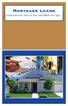 Mortgage Loans Understand the Terms of Your Loan Before You Sign... This brochure can help you become familiar with basic mortgage loans, determine what terms are best for your situation, and identify
RESIDENTIAL MORTGAGE PRODUCT INFORMATION DISCLOSURE
 RESIDENTIAL MORTGAGE PRODUCT INFORMATION DISCLOSURE Whether you are buying a house or refinancing an existing mortgage, this information can help you decide what type of mortgage is right for you. You
A CONSUMER GUIDE TO MORTGAGE-RELATED COMPLAINTS
 A CONSUMER GUIDE TO MORTGAGE-RELATED COMPLAINTS Real Estate MATTERS A CONSUMER GUIDE TO MORTGAGE-RELATED COMPLAINTS INTRODUCTION...1 WHO IS MY LENDER?... 1 WHAT SHOULD I DO IF I HAVE A DISPUTE WITH MY
MORTGAGE BANKING TERMS
 MORTGAGE BANKING TERMS Acquisition cost: Add-on interest: In a HUD/FHA transaction, the price the borrower paid for the property plus any of the following costs: closing, repairs, or financing (except
Guide to Purchasing a Home
 Your journey to homeownership starts at your credit union. Purchasing your first home is a big decision, and it may even seem overwhelming. Rest assured Beacon Credit Union is here to assist you in understanding
Participant Guide Building: Knowledge, Security, Confidence FDIC Financial Education Curriculum
 Your Own Home Building: Knowledge, Security, Confidence FDIC Financial Education Curriculum TABLE OF CONTENTS Page To Rent or Own 1 Steps Involved in Buying a Home 2 Am I Ready to Buy a Home? 3 Patricia
Welcome. 1. Agenda. 2. Ground Rules. 3. Introductions. Your Own Home 2
 Your Own Home Welcome 1. Agenda 2. Ground Rules 3. Introductions Your Own Home 2 Objectives If you are a pre-homebuyer: Explain the advantages and disadvantages of renting versus owning a home Identify
Outstanding mortgage balance
 Using Home Equity There are numerous benefits to owning your own home. Not only does it provide a place to live, where you can decorate as you want, but it also provides a source of wealth. Over time,