
CASE STUDY EXAMPLE INTRODUCTION HISTORY
|
|
|
- Chester Gordon
- 9 years ago
- Views:
Transcription
1 CASE STUDY EXAMPLE INTRODUCTION Craniosacral Therapy is a gentle, hands-on form of manual therapy which addresses dysfunction within the craniosacral system, which follows the movement and flow of cerebrospinal fluid within the ventricles of the brain, the dural tube, and the central nervous system surrounding the spinal and cranial nerves. The therapist uses specific techniques to help restore physiological balance of the nervous system, the brain and cranial bones. Homeostasis is restored to the patient through restoring optimal functioning of these areas. When restriction or dysfunction in these areas has been corrected or relieved, a patient may also experience an improvement of their physical, mental, emotional and spiritual well being. Dr. John E. Upledger, founder of Craniosacral Therapy, has written multiple accounts where this has occurred, e.g. Craniosacral Therapy II: Beyond the Dura (Upledger, 1987); SomatoEmotional Release and Beyond (Upledger, 1990); Craniosacral Therapy: Touchstone for Natural Healing (Upledger, 2001); Your Inner Physician and You (Upledger, 1997). Within these texts Dr. Upledger has described numerous case examples from his osteopathic practice about how Craniosacral Therapy treats not only the physiological symptoms of disease but also the emotional components that contribute to and aggravate an injury, symptom or illness. Thus he and other practitioners of this method recognize there is a strong correlation between the physical and emotional aspects of dis-ease. They stipulate that therapists need to consider the emotional implications of recurring chronic pain, injury or illness and explore what may underline any resistance to the healing process. Scientific research studies of this genre continue to be challenging. Emotional energy is unique to each individual situation and experience, therefore it is difficult to measure and quantify. It is stipulated here that emotion may not always play a direct part in the healing of a physical injury, as many physical injuries are able to resolve with a prescribed form of treatment on a physical level. However this case study seeks to describe and explain what occurred with a patient who had a simple orthopedic injury that did not recover after following the prescribed physical therapy technique. An unexpected review of the historical memory of the occurrence that was underlying the injury provided an opportunity for the patient to release the emotional content of a painful personal loss experience. This meaning making provided a relevant backdrop to the history and content of their injury. In the patient s mind once they were able to emote and make meaning of their experience they were able to identify the root cause of their chronic injury and subsequently made remarkable improvements. HISTORY This case involves a 38 year old adult female who presented, to this author and therapist, with a chronic 2 nd degree left ankle sprain. It had occurred in November 2002 when she stepped awkwardly off of a street curb and twisted it 11 months prior to this therapeutic experience. This patient is a successful

2 trial attorney who enjoys running as a stress-relieving, leisure activity. She is an intelligent, selfproclaimed left brain, linear thinker who deals in facts and statistics. She was a recently divorced mother of two at the time of her initial visit. Although her job does confine her to a desk at times, it also requires a lot of activity as well, which includes standing for long periods of time. She presented in excellent health, with no other significant medical history, nor previous ankle injury. Except for the Caesarean births of both of her children, she had never undergone any previous surgical procedures. The patient reported being happy and content in her life, and stated that she enjoys an active lifestyle that involves sports, cooking and travel. Upon initial onset of the injury, the patient stated that pain and swelling of her left ankle had occurred immediately and that she was initially unable to bear weight on her left foot. She sought medical attention at a local hospital emergency room. X-rays were negative and physical assessment determined soft tissue damage to the lateral aspect of her ankle. She was initially treated with ice, an ace wrap, crutches and mild pain medications (Tylenol with codeine). She was instructed to continue ice applications, elevate when possible and two weeks later was referred to physical therapy. Traditionallybased physical therapy was conducted for 2 months, three times per week consisted of ice, whirlpool bath, ultrasound treatments, exercise and ambulation skills. The patient progressed, was eventually able to ambulate without an assistive device and regained some of her ankle range of motion, but continued to complain of ankle tightness and intermittent pain when engaging in activities such as running, stair climbing and prolonged periods of standing. These activities could also produce minor ankle swelling on occasion if she did any of them to an extreme or repetitively. She would ice her ankle when this occurred although she had stopped the prescribed medication after the initial two week period. TESTS AND MEASUREMENTS After 9 months without any formal treatment, the patient was referred to this therapist. She stated that her ankle felt 85% healed but was seeking a 100% recovery. Upon initial evaluation, pain was elicited mostly with manual pressure applied at the extreme ends of the available range of motion. On a 0-10 scale, the patient stated it was a 5. She also stated that her ankle pain could increase to a 7/8 with the aforementioned activities. There was minor tenderness upon palpation of the left lateral malleolus, and no visible edema was present. Goniometric measurements to determine available range of motion were as follows: Dorsiflexion- Active: 10 degrees Passive: 20 degrees Plantarflexion Active: 25 degrees Passive: 28 degrees Inversion Active: 10 degrees Passive: 20 degrees (with pain level of 5) Eversion Active: 10 degrees Passive: 10 degrees (with pain level of 5)

3 A standard Manual Muscle Testing procedure was performed to assess the patient s ankle strength. The patient was placed lying on a table; applicable positions were assumed to ensure that each motion was against gravity when resistance was applied. The results were as follows: Dorsiflexion 4 (good) Plantarflexion 4 (good) Inversion 3 (fair) Eversion 2+ (poor plus) with pain elicited at the end of the range, level 5 on the 0-10 scale Evaluation of the patient s gait showed no obvious deviations, although she subjectively stated that her ankle felt tight and stiff. The patient was successfully able to stand solely and balance well on her left foot. She was able to perform darting motions and quickly change directions when instructed to, although reported a pain level of 5 on a scale of 0-10 when doing so. She could also perform such activities as hopping and skipping, but with discomfort after repetition over one minute, citing a pain level of 3 on a scale of TREATMENT With the patient exhibiting good ankle strength and high-functioning ADL s, the treatment plan commenced with a focus on increasing the limited range of motion. Suspecting possible joint capsule swelling or inflammation, ice treatments were also applied. Manual strength exercises, based on PNF (proprioceptive-neuromuscular facilitation) patterning techniques, were also employed to upkeep the patient s lower leg muscular strength, as well as supporting any gains in range of motion. The basis for treatment rationale was the standard, documented physical therapy protocol for such an injury and the symptoms presented. The goal was to increase the patient s range of motion to normal and see a resultant decrease in pain level. After 3 weeks, 3 times per week, for 45 minutes treatment sessions of the above treatment plan only minimal changes were observed. Trace degrees of range of motion were noted improved, in dorsiflexion and plantarflexion only. The patient subjectively reported no change at all in her pain levels. Seeking other possible treatment options, this therapist, who is trained in Craniosacral Therapy, commenced with the Direction of Energy or V-spread technique (Sutherland, 1930; Upledger 1986). The left ankle of the patient was held passively between the therapist s hands. The therapist directed energy from one hand through to the other hand. This technique was employed for 30 minutes during one treatment session. Tissue release signs demonstrated during this technique were heat and a Therapeutic Pulse (pulsing sensations, faster than a normal pulse which may describe a positive tissue response to circulation). These were noted in the ankle bone area during the treatment technique described. A brief reevaluation of the patient s ankle at the end of the session showed no significant change in the original objective findings, however the patient subjectively reported that the ankle felt a little looser.

4 The patient returned for her next session two days later, reporting that after the last treatment session she felt she had finally started to see some improvement, but that her ankle was still not 100%. She stated that her ankle did not feel as stiff as it had previously. Objectively, there were still no measureable increases in range of motion. With the patient lying supine, treatment commenced once again with the Direction of Energy technique in the exact manner as the previous session. Several minutes into its application, the patient s ankle began to gently move as tissue spontaneously began unwinding. The Regional Tissue Release technique was used to follow and support this process. The patient s mood was upbeat, and a light conversation between patient and therapist ensued. Several more minutes into the treatment, the patient grew quiet. It was noted that this was concurrent with a stopping of her Craniosacral Rhythm (CSR), otherwise known as a Significance Detector. This indicated that the patient s body was experiencing a significant therapeutic occurrence. Within the next 2-3 minutes, the previously upbeat patient began to sob quietly. The therapist held a respectful presence for the patient s therapeutic process while continuing with the Direction of Energy technique. A few minutes later, the patient spoke and started to tell the story of her ankle injury in more depth than she had previously. When the injury was sustained, the patient had stepped off of the curb that was directly in front of the courthouse where she had just finalized her divorce from her now exhusband. She stated that she had never cried or emoted in any way regarding this life-changing event. She was surprised to find herself so moved to release these emotions at this time. The patient s emotional release and story recantation lasted approximately 15 minutes in total. Her Craniosacral Rhythm restarted after sharing this story. Regional Tissue Release of her ankle resumed for approximately 5 more minutes before the session was completed. The patient returned after 3 days time, reporting a marked improvement in her ankle symptoms. She stated that for the first time since her injury, she had been completely pain free all weekend. The usual tight stiffness she experienced was also gone. She stated that she had not done anything out of the ordinary in the previous 3 days, except that because her ankle felt so good, she had gone for a long run; something that previously would have caused her more pain and probably swelling, neither of which occurred. The patient also apologized for crying and stated that she could not believe that she had gotten so emotional during the last session. She said that she had left feeling lighter, happier and with a sense of relief. The therapist reassured her that this was not inappropriate to the session. When the discussion turned to the concept of a physical and emotional injury connection, the patient stated that although her left brain had a hard time grasping it, she felt that that explained exactly what had happened with her ankle healing.

5 Subjectively, the patient reported a 0 on the pain scale of 0-10 in all of her ADL s, including standing for extended periods of time, stair climbing, running and quick response darting movements. The patient stated that her ankle felt like new again, and that it felt 100%. Goniometric measurements showed a significant improvement to normal ranges, for the first time in the patient s treatment term, in her ankle range of motion. RESULTS Goniometric re-measurements of available range of motion were as follows: Dorsiflexion- Active: 15 degrees Passive: 20 degrees Plantarflexion Active: 30 degrees Passive: 35 degrees Inversion Active: 35 degrees Passive: 35 degrees (with no pain) Eversion Active: 15 degrees Passive: 15 degrees (with no pain) Dorsiflexion Plantarflexion Inversion Eversion Fig. 1 Active Left ankle Range of Motion pre- and post-craniosacral Therapy Key : Pretreatment examination= blue Post treatment examination = red Manual strength testing also improved significantly. Dorsiflexion 5 (normal) Plantarflexion 5 (normal) Inversion 4 (good) Eversion 4 (good) with no pain elicited

6 Dorsiflexion Plantarflexion Inversion Eversion Fig. 2 Standard Manual Muscle Testing pre- (blue) and post-craniosacral therapy (red) Subjectively, the patient reported a 0 on the pain scale of 0-10 in all of her ADL s, including standing for extended periods of time, stair climbing, running and quick response darting movements. The patient stated that her ankle felt like new again, and that it felt 100%. DISCUSSION Patients with ankle sprains are not traditionally treated with Craniosacral Therapy techniques. Most commonly such orthopedic and sports injuries are treated with the standard physical therapy protocol of exercise, ultrasound, cold and/or heat. To further the discussion, it appears that full recovery was not wholly, or at least readily, attained without the release of the emotional component that related to this patient s injury. Whereas the connection of emotion to a physical injury may be purely objective, the concept is clearly described with clinical examples in such references as SomatoEmotional Release and Beyond (Upledger, 1990). This book, as well as other literature such as Alice Lindsay MS, LMT, CST-D s SomatoEmotional Release: A Whole-Person Treatment (Dade Palms, 2006), retells countless treatment encounters where patients have spontaneously (meaning with no conscious forethought by therapist or patient) emoted during treatment. With varying degrees, both positive subjective and objective improvements have resulted. One may choose to call this coincidence, but the frequency of occurrence and significant results afterward may lead this to be a naïve conclusion. The inherent difficulty in measuring and quantifying such outcomes is wherein the problem lies. How do we measure emotion and its connection to the healing of physical injury? How do we differentiate physical and emotional energy, and the affect each may have on the healing process? To date, anecdotal evidence is our most powerful voice in support of this concept. It is not the premise of this case study to infer that all injuries, ankle or otherwise, necessitate emotional release for full recovery. The numbers of cases where orthopedic injuries have fully healed without emotional release are countless. On the contrary, it is stipulated, however, that the unsolicited, spontaneous release of

7 subjective emotion while physical treatment is underway, may be necessary in some cases for full healing to take place. The basis of the criteria, however, is to date determined, and seemingly prompted by, the patient s own non-conscious awareness in some way. Further case documentation and study of this little-explored territory of healing is highly recommended. REFERENCES Upledger, John E., D.O., F.A.A.O. (1983). Craniosacral Therapy. Seattle, WA: Eastland Press. Upledger, John E., D.O., F.A.A.O. (1987). Craniosacral Therapy II Beyond the Dura. Seattle, WA: Eastland Press. Upledger, John E., D.O., O.M.M. (1990). SomatoEmotional Release and Beyond. Palm Beach Gardens, FL: UI Publishing, Inc. Peeling, Becky, APR. (2003, Spring). Craniosacral Therapy: Following the Body s Cues. Spa Life, 12(2), 93 Lindsay, Alice (Ali) D., MS, LMT, CST-D. (2006, Summer). SomatoEmotional Release: A Whole-Person Treatment. Dade Palms, 12. Retrieved from Upledger, John E., D.O., O.M.M. (1997). Your Inner Physician and You. Berkeley, CA: North Atlantic Books Upledger, John E., D.O., O.M.M. (2001). CranioSacral Therapy: Touchstone for Natural Healing. Berkeley, CA: North Atlantic Books

8 Improved chronic ankle injury results from V-spread tissue release and spontaneous emotional release. Author(s) name(s): i.e. John Jones, MS, LMT and Sally Smith, PTA Author(s) Affiliation(s): i.e. University of New Mexico Medical Center Abstract A case study of a 38 year old female who sustained a 2 nd degree ankle sprain is treated with traditional physical therapy applications of ice, ultrasound and exercise for a duration of 2 months with some symptom improvements. Eleven months later, continued ankle pain and symptoms causes her to seek further treatment to recover more ankle flexibility and stamina. After more traditional therapy techniques and no change, therapist offers Craniosacral technique of V-spread, Direction of Energy. This treatment subsequently elicits an emotional release of relevant history that explains more of the injury and its recurring symptoms. On release of emotions and meaning making by patient, they experience a full recovery of all ankle functions, strength and movements This case study provides supportive evidence that some injuries may have both a physical and emotional component. In order for these injuries to heal, both the physical and emotional content of the injury need to be addressed and released. Key words: Craniosacral Therapy, chronic ankle sprain, emotional release, Direction of Energy, Regional Tissue Release

A compressive dressing that you apply around your ankle, and
 Ankle Injuries & Treatment The easiest way to remember this is: R.I.C.E. Each of these letters stands for: Rest. Rest your ankle. Do not place weight on it if it is very tender. Avoid walking long distances.
Self Management Program. Ankle Sprains. Improving Care. Improving Business.
 Ankle Sprains Improving Care. Improving Business. What is an ankle sprain? Ligaments attach to the ankle bones and allow for normal movement and help prevent too much motion within the joint. Ankle sprains
SCRIPT NUMBER 82 SPRAINED ANKLE (TWO SPEAKERS)
 SCRIPT NUMBER 82 SPRAINED ANKLE (TWO SPEAKERS) PROGRAM NAME: HEALTH NUGGETS PROGRAM TITLE: SPRAINED ANKLE PROGRAM NUMBER: 82 SUBJECT: PATHOLOGY, CAUSES, DIAGNOSIS, TREATMENT, PREVENTION OF SPRAINED ANKLES
Physiotherapy in Rheumatoid Arthritis. Information for patients Gina Wall Senior Physiotherapist
 Physiotherapy in Rheumatoid Arthritis Information for patients Gina Wall Senior Physiotherapist What do Physiotherapists do? We conduct assessments by asking detailed questions about your symptoms, medical
GALLAND/KIRBY INTERVAL DISTANCE RUNNING REHABILITATION PROGRAM
 GALLAND/KIRBY INTERVAL DISTANCE RUNNING REHABILITATION PROGRAM PHASE I: WALKING PROGRAM Must be able to walk, pain free, aggressively (roughly 4.2 to 5.2 miles per hour), preferably on a treadmill, before
Acute Low Back Pain. North American Spine Society Public Education Series
 Acute Low Back Pain North American Spine Society Public Education Series What Is Acute Low Back Pain? Acute low back pain (LBP) is defined as low back pain present for up to six weeks. It may be experienced
Recent Injuries. www.physiofirst.org.uk
 Recent Injuries www.physiofirst.org.uk A recent or acute injury can occur suddenly during any activity, from tripping over the kerb, to making the bed, to playing sport. In some cases, an acute injury
.org. Herniated Disk in the Lower Back. Anatomy. Description
 Herniated Disk in the Lower Back Page ( 1 ) Sometimes called a slipped or ruptured disk, a herniated disk most often occurs in your lower back. It is one of the most common causes of low back pain, as
Running Injury Prevention Tips & Return to Running Program
 Department of Rehabilitation Services Physical Therapy The intent of these guidelines is to provide the athlete with a framework for return to sports activity following injury. These guidelines should
Ankle Sprain. Information and Rehabilitation. Grade II. Grade I. Grade III
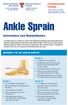 514-412-4400, ext. 23310 2300 Tupper street, C-831, Montreal (Quebec) H3H 1P3 Ankle Sprain Information and Rehabilitation An ankle sprain is a stretch or a tear of the ligaments (bands of tissue that hold
Wrist Fracture. Please stick addressograph here
 ORTHOPAEDIC UNIT: 01-293 8687 /01-293 6602 UPMC BEACON CENTRE FOR ORTHOPAEDICS: 01-2937575 PHYSIOTHERAPY DEPARTMENT: 01-2936692 GUIDELINES FOR PATIENTS FOLLOWING WRIST FRACTURE Please stick addressograph
Therapeutic Canine Massage
 Meet our Certified Canine Massage Therapist, Stevi Quick After years of competitive grooming and handling several breeds in conformation, I became interested in training and competing with my dogs in the
Sports Injury Treatment
 Sports Injury Treatment Participating in a variety of sports is fun and healthy for children and adults. However, it's critical that before you participate in any sport, you are aware of the precautions
Healing the Invisible Wound. Recovery and Rehabilitation from a Post Traumatic. Stress Injury. By Dr. Amy Menna
 Healing the Invisible Wound Recovery and Rehabilitation from a Post Traumatic Stress Injury By Dr. Amy Menna Post Traumatic Stress Disorder can affect anyone. It is a term used to describe a reaction to
Case Studies: Treatment of 2nd Degree Ankle Sprains Using Modalities Including Kinesio-Tape
 Case Studies: Treatment of 2nd Degree Ankle Sprains Using Modalities Including Kinesio-Tape University of Hawaii Athletic Department, Athletic Trainer KTA Instructor Jayson M. Goo protocols. Ankle sprains
ILIOTIBIAL BAND SYNDROME
 ILIOTIBIAL BAND SYNDROME Description The iliotibial band is the tendon attachment of hip muscles into the upper leg (tibia) just below the knee to the outer side of the front of the leg. Where the tendon
Back & Neck Pain Survival Guide
 Back & Neck Pain Survival Guide www.kleinpeterpt.com Zachary - 225-658-7751 Baton Rouge - 225-768-7676 Kleinpeter Physical Therapy - Spine Care Program Finally! A Proven Assessment & Treatment Program
OUTPATIENT PHYSICAL AND OCCUPATIONAL THERAPY PROTOCOL GUIDELINES
 OUTPATIENT PHYSICAL AND OCCUPATIONAL THERAPY PROTOCOL GUIDELINES General Therapy Guidelines 1. Therapy evaluations must be provided by licensed physical and/or occupational therapists. Therapy evaluations
Westmount UCC 751 Victoria Street South, Kitchener, ON N2M 5N4 519-745-2273 Fairway UCC 385 Fairway Road South, Kitchener, ON N2C 2N9 519-748-2327
 K-W URGENT CARE CLINICS INC. Westmount UCC 751 Victoria Street South, Kitchener, ON N2M 5N4 519-745-2273 Fairway UCC 385 Fairway Road South, Kitchener, ON N2C 2N9 519-748-2327 OPEN Mon-Fri 8am-5pm, Sa
Elbow Injuries and Disorders
 Elbow Injuries and Disorders Introduction Your elbow joint is made up of bone, cartilage, ligaments and fluid. Muscles and tendons help the elbow joint move. There are many injuries and disorders that
Knowing about your Ankle Sprain
 Knowing about your Ankle Sprain Knowing about ankle sprain Ankle sprain is a common injury amongst sports such as netball, basketball, rugby and soccer. Sprains can also happen with everyday activities
PLANTAR FASCITIS (Heel Spur Syndrome)
 PLANTAR FASCITIS (Heel Spur Syndrome) R. Amadeus Mason MD Description Plantar fascitis is characterized by stiffness and inflammation of the main fascia (fibrous connective [ligament-like] tissue) on the
Herniated Cervical Disc
 Herniated Cervical Disc North American Spine Society Public Education Series What Is a Herniated Disc? The backbone, or spine, is composed of a series of connected bones called vertebrae. The vertebrae
world-class orthopedic care right in your own backyard.
 world-class orthopedic care right in your own backyard. Patient Promise: At Adventist Hinsdale Hospital, our Patient Promise means we strive for continued excellence in everything we do. This means you
Chiropractic for Kids: Getting the Word Out
 To Your Health January, 2010 (Vol. 04, Issue 01) microsoft windows xp sp3 download Chiropractic for Kids: Getting the Word Out By Dr. Elise Hewitt Marlena was at her wit s end. Her first child had been
.org. Posterior Tibial Tendon Dysfunction. Anatomy. Cause. Symptoms
 Posterior Tibial Tendon Dysfunction Page ( 1 ) Posterior tibial tendon dysfunction is one of the most common problems of the foot and ankle. It occurs when the posterior tibial tendon becomes inflamed
UK HealthCare Sports Medicine Patient Education December 09
 LCL injury Description Lateral collateral knee ligament sprain is a sprain (stretch or tear) of one of the four major ligaments of the knee. The lateral collateral ligament (LCL) is a structure that helps
CHA SERIES. Key Chiropractic Concepts for the CHA. Ontario Chiropractic Association. Treatment That Stands Up.
 CHA SERIES Key Chiropractic Concepts for the CHA AGENDA Welcome & Introductions About Chiropractic Terminology ABOUT CHIROPRACTIC You will get lots of questions about the profession & chiropractic care
YOUR GUIDE TO TOTAL HIP REPLACEMENT
 A Partnership for Better Healthcare A Partnership for Better Healthcare YOUR GUIDE TO TOTAL HIP REPLACEMENT PEI Limited M50 Business Park Ballymount Road Upper Ballymount Dublin 12 Tel: 01-419 6900 Fax:
Adult Forearm Fractures
 Adult Forearm Fractures Your forearm is made up of two bones, the radius and ulna. In most cases of adult forearm fractures, both bones are broken. Fractures of the forearm can occur near the wrist at
Chiropractor Compliance Summary Documentation Compliance Criteria for Chiropractic Claims Submitted to the Funds
 Chiropractor Compliance Summary Documentation Compliance Criteria for Chiropractic Claims Submitted to the Funds Date: April 23, 2012 Source Information: Medicare Policy Purpose The United Mine Workers
ESSENTIALPRINCIPLES. Wrist Pain. Radial and Ulnar Collateral Ligament Injuries. By Ben Benjamin
 ESSENTIALPRINCIPLES Wrist Pain Radial and Ulnar Collateral Ligament Injuries By Ben Benjamin 92 MASSAGE & BODYWORK FEBRUARY/MARCH 2005 Ulnar Collateral Ligament Radial Collateral Ligament Right wrist,
Whiplash Associated Disorders WAD. What a whiplash injury is and what you should do about it
 Whiplash Associated Disorders WAD What a whiplash injury is and what you should do about it Page 2 Whiplash Injury What is it and what to do about it? Dr. G. McMorland, DC As a chiropractor in Calgary,
UNDERSTANDING STRESS AND YOUR BODY
 UNDERSTANDING STRESS AND YOUR BODY Life s demands create stress and although some stress may be good, too much can cause health problems. Most people equate stress with high blood pressure, a heart attack
.org. Plantar Fasciitis and Bone Spurs. Anatomy. Cause
 Plantar Fasciitis and Bone Spurs Page ( 1 ) Plantar fasciitis (fashee-eye-tiss) is the most common cause of pain on the bottom of the heel. Approximately 2 million patients are treated for this condition
Sports Injuries of the Foot and Ankle. Dr. Travis Kieckbusch August 7, 2014
 Sports Injuries of the Foot and Ankle Dr. Travis Kieckbusch August 7, 2014 Foot and Ankle Injuries in Athletes Lateral ankle sprains Syndesmosis sprains high ankle sprain Achilles tendon injuries Lisfranc
CHIROPRACTIC WELLNESS AWARENESS ONE FREE MASSAGE SESSION
 CHIROPRACTIC WELLNESS AWARENESS Do you want to have a healthy body? Do you like to maintain your high energy level? Do you want to be stress-less? Do you like to be pain free? Please call Conrad Nieh D.C.
Fact Sheet: Occupational Overuse Syndrome (OOS)
 Fact Sheet: Occupational Overuse Syndrome (OOS) What is OOS? Occupational Overuse Syndrome (OOS) is the term given to a range of conditions characterised by discomfort or persistent pain in muscles, tendons
American Chiropractic Association. Commentary on Centers for Medicare and Medicaid Services (CMS)/PART. Clinical Documentation Guidelines
 American Chiropractic Association Commentary on Centers for Medicare and Medicaid Services (CMS)/PART Clinical Documentation Guidelines DISCLAIMER The American Chiropractic Association provides this commentary
THERAPEUTIC USE OF HEAT AND COLD
 THERAPEUTIC USE OF HEAT AND COLD INTRODUCTION Heat and cold are simple and very effective therapeutic tools. They can be used locally or over the whole body, and the proper application of heat and cold
STRESS. Health & Wellness The Newsletter About Achieving and Maintaining Optimal Well-being UNDERSTANDING AND YOUR BODY. www.neorthopt.
 Health & Wellness The Newsletter About Achieving and Maintaining Optimal Well-being UNDERSTANDING STRESS AND YOUR BODY Life s demands create stress and although some stress may be good, too much can cause
J F de Beer, K van Rooyen, F Lam, D Bhatia FROZEN SHOULDER
 J F de Beer, K van Rooyen, F Lam, D Bhatia FROZEN SHOULDER Frozen Shoulder is a condition with no known cause in the majority of cases, with spontaneous onset. It is most common in females (40-50 years)
Goals of Rehabilitating Cranial Cruciate Ligament Rupture (CCL) (aka ACL in people)
 Goals of Rehabilitating Cranial Cruciate Ligament Rupture (CCL) (aka ACL in people) California Animal Rehabilitation (CARE) www.calanimalrehab.com Heather Oxford, DVM, MPH, CVA, CCRT Jessica H. Waldman,
Cast removal what to expect #3 Patient Information Leaflet
 Cast removal what to expect #3 Patient Information Leaflet SM466 Now your cast is off, self help is the key! Follow the advice given to you by your doctor and the staff in the clinic. Your skin will be
X-Plain Rheumatoid Arthritis Reference Summary
 X-Plain Rheumatoid Arthritis Reference Summary Introduction Rheumatoid arthritis is a fairly common joint disease that affects up to 2 million Americans. Rheumatoid arthritis is one of the most debilitating
Spine Care Centre (SCC) protocols for Multiple Sclerosis Update 1 August 2015
 Spine Care Centre (SCC) protocols for Multiple Sclerosis Update 1 August 2015 Introduction Multiple sclerosis (MS) affects nerves in the brain and spinal cord, causing a wide range of symptoms including
Herniated Lumbar Disc
 Herniated Lumbar Disc North American Spine Society Public Education Series What Is a Herniated Disc? The spine is made up of a series of connected bones called vertebrae. The disc is a combination of strong
Cervical Spondylosis (Arthritis of the Neck)
 Copyright 2009 American Academy of Orthopaedic Surgeons Cervical Spondylosis (Arthritis of the Neck) Neck pain is extremely common. It can be caused by many things, and is most often related to getting
Integrated Manual Therapy & Orthopedic Massage For Low Back Pain, Hip Pain, and Sciatica
 Integrated Manual Therapy & Orthopedic Massage For Low Back Pain, Hip Pain, and Sciatica Assessment Protocols Treatment Protocols Treatment Protocols Corrective Exercises By Author & International Lecturer
INFORMATION FOR YOU. Lower Back Pain
 INFORMATION FOR YOU Lower Back Pain WHAT IS ACUTE LOWER BACK PAIN? Acute lower back pain is defined as low back pain present for up to six weeks. It may be experienced as aching, burning, stabbing, sharp
Massage Therapy & Multiple Sclerosis
 Massage Therapy & Multiple Sclerosis National Massage Therapy Awareness Week October 2008 Presented by the Massage Therapist Association of Saskatchewan, Inc. MTAS Inc., 2008 Researched & written by Cynthia
COMPREHENSIVE PAIN REHABILITATION CENTER OUTPATIENT PROGRAMS
 COMPREHENSIVE PAIN REHABILITATION CENTER OUTPATIENT PROGRAMS Our comprehensive whole-person rehabilitative services help patients return to an active lifestyle. THE MAYO CLINIC COMPREHENSIVE PAIN REHABILITATION
TOTAL HIP REPLACEMENT
 TOTAL HIP REPLACEMENT 2 Causes of Hip Pain Arthritis is the leading cause of disability in the United States, and the most frequent cause of discomfort and chronic hip pain. In fact, it s estimated that
Off the shelf orthoses are commonly used to treat conditions such as foot and ankle sprains, minor shoulder injuries and to provide back support.
 Orthotic Bracing: Why and How Orthotic braces, or orthoses, are used to provide support to a weakened body part or joint. While many times they are worn for a short period of time, usually after an injury
Herniated Disk in the Lower Back
 Nader M. Hebela, MD Fellow of the American Academy of Orthopaedic Surgeons http://orthodoc.aaos.org/hebela Cleveland Clinic Abu Dhabi Cleveland Clinic Abu Dhabi Neurological Institute Al Maryah Island
New York State Workers' Comp Board. Mid and Lower Back Treatment Guidelines. Summary From 1st Edition, June 30, 2010. Effective December 1, 2010
 New York State Workers' Comp Board Mid and Lower Back Treatment Guidelines Summary From 1st Edition, June 30, 2010 Effective December 1, 2010 General Principles Treatment should be focused on restoring
Predislocation syndrome
 Predislocation syndrome Sky Ridge Medical Center, Aspen Building Pre-dislocation syndrome, capsulitis, and metatarsalgia are all similar problems usually at the ball of the foot near the second and third
What Are Bursitis and Tendinitis?
 Bursitis and tendinitis are both common conditions that cause swelling around muscles and bones. They occur most often in the shoulder, elbow, wrist, hip, knee, or ankle. A bursa is a small, fluid-filled
Chapter 5. Objectives. Normal Ankle Range of Motion. Lateral Ankle Sprains. Lateral Ankle Sprains. Assessment of Lateral Ankle Sprains
 Objectives Chapter 5 Assessment of Ankle & Lower Leg Injuries Review the following components of injury assessment related to the ankle and lower leg Stress tests Special tests Normal Ankle Range of Motion
ACL Reconstruction Rehabilitation Program
 ACL Reconstruction Rehabilitation Program 1. Introduction to Rehabilitation 2. The Keys to Successful Rehabilitation 3. Stage 1 (to the end of week 1) 4. Stage 2 (to the end of week 2) 5. Stage 3 (to the
L5 S1 Extruded Disc Relieved with Cox Technic Decompression Spinal Adjusting
 1 L5 S1 Extruded Disc Relieved with Cox Technic Decompression Spinal Adjusting submitted by Joseph d'angiolillo DC 11 Clyde Road, Suite 103 Somerset, NJ 08873 (732) 873 2222 This is a case study of a patient
First Year. PT7040- Clinical Skills and Examination II
 First Year Summer PT7010 Anatomical Dissection for Physical Therapists This is a dissection-based, radiographic anatomical study of the spine, lower extremity, and upper extremity as related to physical
OCCUPATIONAL THERAPY
 OCCUPATIONAL THERAPY This document is subject to change. Please check our web site for updates. This provider manual outlines policy and claims submission guidelines for claims submitted to the North Dakota
Medical Treatment Guidelines Washington State Department of Labor and Industries
 Complex regional pain syndrome (CRPS) Formerly known as reflex sympathetic dystrophy 1. Introduction This bulletin outlines the Department of Labor and Industries guidelines for diagnosing and treating
Arthritis in Children: Juvenile Rheumatoid Arthritis By Kerry V. Cooke
 Reading Comprehension Read the following essay on juvenile rheumatoid arthritis. Then use the information in the text to answer the questions that follow. Arthritis in Children: Juvenile Rheumatoid Arthritis
DENVER CHIROPRACTIC CENTER GLENN D. HYMAN, DC, CSCS
 DENVER CHIROPRACTIC CENTER GLENN D. HYMAN, DC, CSCS Are you in the right place? Please read this before proceeding with paperwork: At Denver Chiropractic Center, we specialize in treating muscles with
July 2012 Exercise Away Your Knee Pain It seems counterintuitive, but when it hurts to move
 Exercise Away Your Knee Pain It seems counterintuitive, but when it hurts to move your knee, the best thing you can do is move your knee. A 2009 study in the British Medical Journal found that supervised
Whiplash Associated Disorder
 Whiplash Associated Disorder Bourassa & Associates Rehabilitation Centre What is Whiplash? Whiplash is a non-medical term used to describe neck pain following hyperflexion or hyperextension of the tissues
What are Core Muscles?... 2. A Healthy Lumbar Spine...3. What is Low Back Pain?...4. Rehabilitation...6. Stages of Rehabilitation...
 Table of Contents What are Core Muscles?... 2 A Healthy Lumbar Spine...3 What is Low Back Pain?...4 Rehabilitation...6 Stages of Rehabilitation...7 Pain Management....................... 8 Heat/Ice What
July 2003. Pre-approved Framework Guideline for Whiplash Associated Disorder Grade I Injuries With or Without Complaint of Back Symptoms
 Financial Services Commission of Ontario Commission des services financiers de l Ontario July 2003 Pre-approved Framework Guideline for Whiplash Associated Disorder Grade I Injuries With or Without Complaint
REHABILITATION OF TENDON AND LIGAMENT INJURIES
 REHABILITATION OF TENDON AND LIGAMENT INJURIES Carol Gillis, DVM, PhD, DACVSMR Equine Ultrasound & Rehabilitation [email protected] www.equineultrasound.com 803-522-1700 The first step to healing
Spine University s Guide to Transient Osteoporosis
 Spine University s Guide to Transient Osteoporosis 2 Introduction The word osteoporosis scares many people because they ve heard about brittle bone disease. They may know someone who has had it or seen
Information on the Chiropractic Care of Lower Back Pain
 Chiropractic Care of Lower Back Pain Lower back pain is probably the most common condition seen the the Chiropractic office. Each month it is estimated that up to one third of persons experience some type
Throughout this reference summary, you will find out what massage therapy is, its benefits, risks, and what to expect during and after a massage.
 Massage Therapy Introduction Massage therapy is the manipulation of the soft tissues of the body, including the skin, tendons, muscles and connective tissue by a professional, for relaxation or to enhance
Brachial Plexus Palsy
 Patient and Family Education Brachial Plexus Palsy A Therapy Guide for Your Baby Brachial Plexus Palsy is caused by trauma to the nerves of the arm. This trauma may have caused muscle weakness, lack of
Screening Examination of the Lower Extremities BUY THIS BOOK! Lower Extremity Screening Exam
 Screening Examination of the Lower Extremities Melvyn Harrington, MD Department of Orthopaedic Surgery & Rehabilitation Loyola University Medical Center BUY THIS BOOK! Essentials of Musculoskeletal Care
ACL RECONSTRUCTION POST-OPERATIVE REHABILITATION PROGRAMME
 ACL RECONSTRUCTION POST-OPERATIVE REHABILITATION PROGRAMME ABOUT THE OPERATION The aim of your operation is to reconstruct the Anterior Cruciate Ligament (ACL) to restore knee joint stability. A graft,
Massage Therapy Helps Back Pain By Susan Jackson Grubb, NCMT, CNMT
 1 By Susan Jackson Grubb, NCMT, CNMT Absenteeism, lost wages and reduced productivity due to low back pain are costly to people, companies, and corporations. It is estimated that eighty percent of Americans
15 things you might not know about back pain
 15 things you might not know about back pain Mary O Keeffe (University of Limerick), Dr Kieran O Sullivan (University of Limerick), Dr Derek Griffin (Tralee Physiotherapy Clinic) Managing back pain costs
.org. Knee Arthroscopy. Description. Preparing for Surgery. Surgery
 Knee Arthroscopy Page ( 1 ) Arthroscopy is a common surgical procedure in which a joint (arthro-) is viewed (-scopy) using a small camera. Arthroscopy gives doctors a clear view of the inside of the knee.
Herniated Disk. This reference summary explains herniated disks. It discusses symptoms and causes of the condition, as well as treatment options.
 Herniated Disk Introduction Your backbone, or spine, has 24 moveable vertebrae made of bone. Between the bones are soft disks filled with a jelly-like substance. These disks cushion the vertebrae and keep
The Physiotherapy Pilot. 1.1 Purpose of the pilot
 The Physiotherapy Pilot 1.1 Purpose of the pilot The purpose of the physiotherapy pilot was to see if there were business benefits of fast tracking Network Rail employees who sustained injuries whilst
MANAGING BACK PAIN GETTING YOU BACK INTO ACTION MANAGING BACK PAIN. www.healthcare-rm.com
 H E A L T H R I S K M A N A G E M E N T MANAGING BACK PAIN MANAGING BACK PAIN GETTING YOU BACK INTO ACTION GETTING YOU BACK INTO ACTION www.healthcare-rm.com Who is this for? CONTENTS Introduction about
Hand Injuries and Disorders
 Hand Injuries and Disorders Introduction Each of your hands has 27 bones, 15 joints and approximately 20 muscles. There are many common problems that can affect your hands. Hand problems can be caused
How To Cover Occupational Therapy
 Guidelines for Medical Necessity Determination for Occupational Therapy These Guidelines for Medical Necessity Determination (Guidelines) identify the clinical information MassHealth needs to determine
BACK PAIN MEASURES GROUP OVERVIEW
 2014 PQRS OPTIONS F MEASURES GROUPS: BACK PAIN MEASURES GROUP OVERVIEW 2014 PQRS MEASURES IN BACK PAIN MEASURES GROUP: #148. Back Pain: Initial Visit #149. Back Pain: Physical Exam #150. Back Pain: Advice
Physical & Occupational Therapy
 In this section you will find our recommendations for exercises and everyday activities around your home. We hope that by following our guidelines your healing process will go faster and there will be
Name: Birthdate: Age: Address: City, State, ZIP: Preferred Phone # (Home)(Cell)(Work): Marital Status: M S W D
 Be Fit Physical Therapy & Pilates, LTD Patient Registration Form Date: Name: Birthdate: Age: Address: City, State, ZIP: Preferred Phone # (Home)(Cell)(Work): Marital Status: M S W D Secondary Phone# (Home)(Cell)(Work):
Muscular Dystrophy and Multiple Sclerosis. ultimately lead to the crippling of the muscular system, there are many differences between these
 Battles 1 Becky Battles Instructor s Name English 1013 21 November 2006 Muscular Dystrophy and Multiple Sclerosis Although muscular dystrophy and multiple sclerosis are both progressive diseases that ultimately
1 of 6 1/22/2015 10:06 AM
 1 of 6 1/22/2015 10:06 AM 2 of 6 1/22/2015 10:06 AM This cross-section view of the shoulder socket shows a typical SLAP tear. Injuries to the superior labrum can be caused by acute trauma or by repetitive
Chapter 4 Physiological Therapeutics. 3 Therapeutic Ultrasound
 Chapter 4 Physiological Therapeutics 3 Therapeutic Ultrasound Therapeutic Ultrasound PHYSIOLOGIC EFFECTS OF ULTRASOUND 1. Increased collagen extensibility 5. Increased nerve conduction velocities 2. Increased
Rotator Cuff Repair Protocol
 Rotator Cuff Repair Protocol Anatomy and Biomechanics The shoulder is a wonderfully complex joint that is made up of the ball and socket connection between the humerus (ball) and the glenoid portion of
Cervical Whiplash: Considerations in the Rehabilitation of Cervical Myofascial Injury. Canadian Family Physician
 Cervical Whiplash: Considerations in the Rehabilitation of Cervical Myofascial Injury 1 Canadian Family Physician Volume 32, September 1986 Arthur Ameis, MD Dr. Ames practices physical medicine and rehabilitation,
Sciatica Yuliya Mutsa PTA 236
 Sciatica Yuliya Mutsa PTA 236 Sciatica is a common type of pain affecting the sciatic nerve, which extends from the lower back all the way through the back of the thigh and down through the leg. Depending
UK HealthCare Sports Medicine Patient Education December 09
 Meniscus tear Description The meniscus is a C-shaped cartilage structure in the knee that sits on top of the lower leg bone (tibia). Each knee has two menisci, an inner and outer meniscus. The meniscus