
MORTGAGE FORECLOSURE DEFENSE
|
|
|
- Clemence Bell
- 10 years ago
- Views:
Transcription
1 MORTGAGE FORECLOSURE DEFENSE FOR CVLS VOLUNTEER PRO BONO ATTORNEYS Patricia Nelson Matthew Hulstein Tracy Walsh

2 INTRODUCTION Defending the average foreclosure in court isn t glamorous, but utterly vital. While policy work is necessary to challenge banking institutions and practices, lowincome families lose their homes daily while we wait for politicians to negotiate or for the courts to get it right. Many lenders and their counsel treat foreclosure as a summary proceeding. It is not. Foreclosure is a lawsuit just like any other, and defendants have rights. They have the right to insist that lender s counsel follow the rules of civil procedure. They have the right to conduct discovery. They have the right to be properly reviewed for loss mitigation. They deserve to have an attorney help them enforce all of their rights. Their home is at stake. Attorneys, legal aid and private alike, often rebuff foreclosure defense work as either too complicated or hopeless. It is neither. Hopefully, the following materials will demystify the foreclosure process and you will realize it is a litigation proceeding like any other (with its own twists and turns, of course). Given enough time, most borrowers can recover from temporary financial setbacks and save their home. SCOPE OF THIS MANUAL This manual is intended to help you understand the basic framework of foreclosure defense. With this manual and support from a CVLS attorney, you will be 2

3 able to confidently and competently defend a foreclosure. As with any area of the law, there are infinite nuances, defenses, issues and strategies apparent to those with enough wisdom. This manual will not and cannot cover it all, and shouldn t substitute for your own research. Instead, this manual will focus on understanding the basic process, and identifying and solving the most common and pertinent issues. GOVERNING LAW Illinois Mortgage Foreclosure Law (IMFL) A mortgage foreclosure case is a statutory process consisting of ten steps: (1) Precomplaint; (2) Complaint; (3) Jurisdiction; (4) Judgment; (5) Redemption; (6) Sale; (7) Confirmation of Sale; (8) Possession; and (9) Surplus or Deficiency. These definite steps follow in a logical order and are set forth and governed by the Code of Civil Procedure at Illinois Mortgage Foreclosure Law (IMFL) 735 ILCS 5/ , et. seq. Illinois Supreme Court Rules Two Illinois Supreme Court Rules are specifically applicable to mortgage foreclosures and can be used to bolster a defense. Sup. Ct. Rule 113 requires Plaintiffs to attach all assignments of the mortgage note to the Complaint, showing chain of title of the debt. Sup. Ct. Rule 114 requires Plaintiffs to file an affidavit attesting to their compliance with all available loss mitigation programs before Judgment of Foreclosure is entered. 3

4 Cook County Local Rules Local Rule 7.3 expands on the requirements of publication service set out in 735 ILCS 5/2-206 and requires that all affidavits for service of summons by publication in mortgage foreclosure cases sets forth with particularity the action taken to demonstrate an honest and well directed effort to ascertain the whereabouts of the defendant(s) Local Rule 21 provides for and governs the Circuit Court of Cook County Mortgage Foreclosure Mediation Program; a free mediation service for eligible foreclosure defendants. Cook County Standing Orders The Mortgage Foreclosure section has a uniform standing order for all mortgage foreclosure cases, judges and courtrooms. It has specific information regarding court calls, emergency motions, courtesy copies, etc. Be sure to consult the most recent standing order available prior to appearing. It can have dire consequences if not. For example, if you fail to deliver a courtesy copy of your pleading within the required time, your case will be stricken from the call. 4

5 IMPORTANT CONCEPTS, DEFINITIONS, ACRONYMS AND LINGO UNIQUE TO FORECLOSURE Most areas of law are laden with acronyms, legal constructs and lingo unique to that area. Foreclosure defense is no different. Below is a list of invaluable foreclosure concepts, definitions and lingo. Mortgage vs. Note: A mortgage and note are two individual documents although in practice they are often lumped together and referred to as the mortgage. In reality, the mortgage is the document which grants a security interest in the property to the lender. The note is a promise to pay the sum due on the loan. In other words, the mortgage allows the lender to take the property back if the borrower does not pay on the debt in the note. One of the homeowners may have signed the mortgage but not the note. This means that homeowner is not obligated to make the mortgage payment, but if it is not paid, that homeowner could lose their interest in the property through foreclosure. Mortgagor vs. Mortgagee: Contrary to intuition, in the foreclosure world, the lender is referred to as the mortgagee and the borrower is referred to as the mortgagor. The homeowner (mortgagor) is the grantor of the security interest to the lender (mortgagee). 5

6 Borrower vs. Homeowner: In practice, these terms are often used interchangeably. For consistency, in this manual, the Homeowner will refer to someone who is on title to the property and the borrower will refer to someone who has signed the note. Lenders, Banks, Plaintiffs, Owners, Investors, Servicers and Trusts: These terms in practice are often used as synonyms but each has a distinct and different role in the foreclosure process. Lender and Bank refer to the banking institution that owns the note and has the right to enforce it. It can either refer to the original lending institution, or the institution that currently holds the note. When mortgages are bought and sold, they are often lumped together in pools and sold as a package to investors under a trust agreement. The terms Owners or Investors refer to the ultimate beneficiaries of a mortgage pooled trust (or the trustee acting on their behalf). Servicers contract with owners to provide the ins and outs of the daily servicing of the loans (collecting and applying payments, escrow functions, and evaluation for loss mitigation). Most of the big servicers in the industry (Chase, Bank of America, Wells Fargo) can also be owners of notes. It is possible, and somewhat frequent, that one banking entity is both the owner and the servicer of the note. 6

7 The named Plaintiff can be either the owner, servicer, or their agent. (735 ILCS 5/ (b), 1504(a)(3)(N). See also Mortg. Elec. Registration Sys., Inc. v. Barnes, 406 Ill. App. 3d 1, 7-8 (App. Ct. 1st Dist. 2010) (stating that Illinois [f]oreclosure [l]aw indicates that the legal holder of the indebtedness, a pledgee, an agent, or a trustee may file the case ). Pooling and Servicing Agreements (PSAs): Servicers enter into a contract with the owner of the pool of loans. The terms of the contract can bind the servicer on certain loss mitigation parameters. The servicer is bound by these agreements and cannot agree to alternatives that are not authorized under the agreement. PSAs rarely prohibit specific loss mitigation options, but can limit certain parameters such as interest rates that can be offered. Pooling and Service agreements can be found at ( Assignment, Endorsement, Allonges: When ownership of a note is transferred, it can be accomplished either by assignment or endorsement. Assignment is akin to a bill or sale stating that ownership of the note is transferred from one entity to another. Assignments do not have to be in writing nor recorded. Strosberg v. Brauvin Realty Servs., 295 Ill. App. 3d 17, 30 (App. Ct. 1st Dist. 1998) ( In Illinois, oral assignments are valid, unless expressly prohibited by statute. ) (citing Charles Poch, Inc. v. Nat l Tire Servs., Inc. (In re National Tire Servs., Inc.), 201 B.R. 788 (Bankr. N.D. Ill. 1996), Buck v. Ill. Nat l Bank & Trust Co., 79 Ill. App. 2d 101 (App. Ct. 2d Dist. 1967)). 7

8 Notes are bearer paper, therefore, they can be endorsed (and ownership transferred) directly on the document itself. A blank endorsement means that the transferring entity endorsed the note, but did not state who the note is transferred to. Since notes are bearer paper, physical possession of a note that is endorsed in blank begets ownership of that note. 810 ILCS 5/3-109, 205(b) An allonge is a separate piece of paper attached to the note which provides for endorsements when it is impracticable to fit the endorsements onto the document itself. Lenders and their Attorneys: This is the one area of law where sometimes you deal with the attorney, and sometimes you deal directly with the client. The most frustrating part is that the lender and their attorney rarely speak to each other. In practice, you will need to speak to the attorney regarding the specifics of litigation and directly to the lender regarding loss mitigation. You should get permission from the attorney to speak directly to the lender. Loss Mitigation: Loss Mitigation is a catch-all term encompassing the options to both retain and relinquish the property; loan modification, reinstatement, repayment plans, forbearance agreements, deed in lieu of foreclosure, etc. It is the process of negotiation (application, offer, acceptance) between the borrower and the lender to prevent or solve the foreclosure. Dignified Exit: Dignified Exit is another catch-all term encompassing the options to relinquish the property; deed in lieu, consent judgment, etc. 8

9 Reinstatement. Reinstatement is the borrower s right to pay all funds owed to bring the mortgage current, and then to resume making scheduled payments. The amount will include all of the arrearages plus any attorney s fees and costs that have been incurred. The borrower has 90 days from the date of service to reinstate the loan, and may only be allowed to reinstate once every five years. 735 ILCS 5/ In practice, lenders rarely refuse to accept reinstatement beyond the 90 day period. Redemption. Redemption is the borrower s right to pay off the loan in full and prevent the property from being sold through the foreclosure. The borrower has the right to redeem up to seven months from the date they are served 90 days from the date of judgment, whichever is later. This means that the borrower either sells the home or refinances to pay off the loan completely. 735 ILCS 5/ Possession During the Foreclosure: The borrower has the right to possession of the property during the foreclosure. 735 ILCS 5/ Once the foreclosure sale has been approved by the court, the homeowner has 30 days to vacate the property. Condominium Association Fees: Homeowner associations can take possession of the property much quicker than a foreclosing bank. If the homeowner does not pay the association dues (regardless of whether a foreclosure has been filed), the association has the right under the Forcible Entry and Detainer Act (735 ILCS 5/9-101, et seq.) to evict the homeowner and take physical possession of the unit. 9

10 HUD Certified Counselors: The US Department of Housing and Urban Development certifies not-for-profit housing counseling agencies to assist borrowers facing or in foreclosure. They are completely free, regardless of income. They help the borrower assess their situation, work out a budget, prioritize debts, evaluate loss mitigation options, and submit loss mitigation applications directly to most servicers through a loan portal. A list of local HUD offices is provided at Home Affordable Modification Program (HAMP): HAMP is a federal program established to help eligible home owners modify their loans. Servicers follow a specified sequence of steps in order to reduce the monthly payment to no more than 31% of the borrower s gross monthly income. The modification sequence requires first reducing the interest rate (subject to a rate floor of 2%), then if necessary extending the term of the loan up to a maximum of 40 years, and then if necessary forbearing principal. GSE Fannie Mae / Freddie Mac: GSE stands for Government Sponsored Enterprise. These are traditionally privately held corporations (Fannie and Freddie recently having gone public) with public purposes created by the US Congress to reduce the cost of capital for certain sectors such as homeowners. GSEs carry the implicit backing of the federal government but are not direct obligations of the US government. Fannie Mae and Freddie Mac (the owners of most mortgage obligations) are examples of GSEs. 10

11 FHA: The Federal Housing Administration provides mortgage insurance on loans made by FHA-approved lenders. FHA mortgage insurance provides lenders with protection against losses as the result of homeowners defaulting on their mortgage loans. The lenders bear less risk because FHA will pay a claim to the lender in the event of a homeowner's default. National Mortgage Settlement: In early 2012, the federal government and 49 attorneys general entered into a joint settlement with the five largest mortgage servicers (Ally/GMAC, Bank of America, Citi, JPMorgan Chase, Wells Fargo). The agreement culminated after investigators found that the servicers routinely signed foreclosure related documents outside the presence of a notary public and without really knowing whether the facts they contained were correct ( robosigning ). The settlement provides for loan modifications with principal forgiveness for some homeowners. CFPB Rules: In January 2014, new rules regarding loan origination and servicing were promulgated by the federal Consumer Finance Protection Bureau. The rules were made a part of Regulation X under The Real Estate and Settlement Procedures Act. Prior to these rules, there were no uniform rules regarding loss mitigation servicing practices. The new rules are found at 12 CFR Second Mortgages: Second mortgages are inferior lienholders and will be named as defendants in the foreclosure, but they rarely participate. When the foreclosure sale is 11

12 approved, their security interest in the property is foreclosed, but they can still file suit against the borrower for the unpaid balance on the note. Deficiency Judgment: A personal deficiency judgment is a judgment against the borrower for the amount the lender doesn t recover after the foreclosure sale (if the property sells for less than what is owed). In order for the lender to get a personal deficiency judgment, the judge must order it as part of the final order approving sale. By custom, the judges in Cook County rarely grant them, and instead, grant only in rem deficiency judgments. Surplus: A surplus is the opposite of a personal deficiency judgment. It is the amount of funds left over if the property sells at the foreclosure sale for more than is owed on the note. The borrower is generally entitled to the surplus proceeds and can easily petition the court pro se to receive the funds. Final and Appealable Order: A Judgment of Foreclosure is not a final and appealable order. Only the Order Approving Sale is final and appealable. EMC Mortg. Corp. v. Kemp, 982 N.E. 2d 152, 154 (Ill. 2012). Chapter 7 vs. Chapter 13 Bankruptcy: Filing bankruptcy can stay foreclosure proceedings so that the foreclosure cannot proceed in Chancery court until the Bankruptcy court lifts the stay or the debtor is discharged from bankruptcy. 12

13 When a borrower files Chapter 13, all of the client s debt, including the mortgage arrearages, will be consolidated and the client will make one payment to the trustee to pay those debts through an approved plan. The plan usually lasts 5 years. The borrower will have to make their regularly scheduled mortgage payment in addition to the consolidated debt payment to the trustee during those 5 years. After completion of the plan, the arrearages will be considered repaid in full, and the borrower will continue making their monthly mortgage payment. The foreclosure case will be stayed until the bankruptcy is discharged or the stay is lifted. Chapter 7 bankruptcy releases liability of most debt without any repayment. If the debt on the note is made part of the bankruptcy estate, the debt will be discharged through the bankruptcy. Once discharged, the borrower will no longer have any personal liability on the note. However, the lien created by the mortgage is not affected, and the lender may still pursue a foreclosure to foreclose the security interest regardless of the discharge. In order to stay a foreclosure, bankruptcy needs to be filed before the actual foreclosure sale of the property. It will not stay the foreclosure if it is filed after sale, even if it is before the sale has been approved by the court. Colon v. Option One Mortgage Corp., (7 th Cir., February 11, 2003), 319 F.3d

14 ASSESSING YOUR CASE CLIENT COUNSELING AND REMEDIES Can you ever win a foreclosure case? You are a lawyer, of course the answer is yes and no. It all depends on how you define win. Rarely will you get the complaint dismissed so the client walks away free and clear. That is not how you should define winning a foreclosure case. The only way to properly define a win is through your client s eyes. What is it that they want? When is it legitimate to mount a defense on their behalf? Defining what your client desires is essential in deciding how to defend the foreclosure. In order to determine your legal course of action, you must determine who you are representing, what led to your client s current position, what they want from here on out, whether that is reasonable, and what tools you can use to effectuate that outcome. Who is your client? Your client(s) can be anyone with an interest in title to the property or with personal liability on the note. If you represent more than one person, a potential conflict of interest can easily arise. For example, if two siblings are on title to the property but only one signed the note, the note signor may be most interested in reducing the potential for a deficiency judgment while the other may be interested in remaining in the property as long as possible. Be sure to discuss the issues independently with each and if their interests align, have them execute a joint representation agreement. 14

15 What led to the default on the note? There are a multitude of legitimate reasons borrowers fall behind on their mortgage payments; loss of employment, health issues, paying off other debt, increase in property taxes, adjustable interest rates, etc. Before counseling your client on possible remedies, you must determine whether the hardship is temporary or permanent. For example, if your client s loss of income is permanent, you may need to explore dignified exit options even though your client is focusing on a robosigning issue. If your client s loss of income is temporary, you may not have to construct a detailed litigation strategy, because you know your client should be approved for a loss mitigation program. As a result, what does your client really want in the end? And, is that objective reasonable? You must determine what your client ultimately wants from your representation, even if their answer is an array of possibilities or riddled with conditions. Failure to set a clear goal in foreclosure defense often presents a trap because it is so easy to get lost in the details and the issues. For example, your client may want to ultimately keep the house. While you litigate discovery or standing issues, rather than focusing on loss mitigation, your client gets further and further behind on the mortgage, making a loan modification more expensive if not impossible. While you have represented your client well in court, you have ultimately lost the battle. In the end, does your client want: 15

16 1. To keep the home are they expecting to walk away for free, to get principal forgiveness? Can they afford a loan modification? 2. To relinquish the home if so, when? Do they have reason to be concerned about a deficiency judgment? 3. Time Is their need temporary, such as time to get their finances straightened out, to sell the home, etc., so that they can ultimately stay. Or, do they want as much time in the home as possible knowing they will leave in the end? 4. Punitive action against the bank Has the bank s alleged wrongdoing given rise to a counter-claim that would provide a punitive remedy? Or, does your client want their day in court to expose the bank s actions to the judge? To determine whether your client s objective is reasonable, you will need to evaluate the available remedies and apply them to your client s case. AVAILABLE RETENTION OPTIONS Reinstatement: Borrowers have the statutory right to pay all past due amounts to bring the mortgage current and resume making regularly scheduled payments. The reinstatement amount will include all of the arrearages (missed payments) plus any attorney s fees and costs that have accrued. Statutorily, the borrower has 90 days from the date of service to reinstate the loan, and may only be allowed to reinstate once every five years. 735 ILCS 5/ In practice, 16

17 however, lenders almost always accept reinstatement at any time before the property has been sold to a third party. Is reinstatement reasonable? Factors to consider: Does your client have the money? Will the lender still accept reinstatement past the mandatory statutory date? Can your client resume making regular payments? Even if they can, do they want to explore whether they are eligible to lower their payment with a loan modification? Loss Mitigation: Depending on who owns and services the loan, the servicer may offer various loss mitigation options. To be enforceable, all loss mitigation agreements must be in writing. See FDIC v. O'Malley, (1994), 163 Ill.2d 130, 643 N.E.2d 825. Loan Modification: A loan modification is a permanent restructuring of the loan. There are only three variables in any loan that can be adjusted; the interest rate, the total balance, and the length (term) of the loan. Adjusting these three variables allows the loan to be technically reinstated and the foreclosure will be dismissed once the modification becomes permanent. The government requires certain servicers to offer loan modifications according to programs and guidelines developed by the Treasure Department. There are a multitude of programs and an infinite number of nuances to each of these programs. Almost all require the borrower to make three trial payments before a permanent modification is offered. 17

18 Is a loan modification reasonable? To assess whether your servicer offers a particular program and whether your client qualifies, you will need to evaluate your case using the CVLS Advocate Workbook available from your CVLS support attorney. Forbearance: A forbearance agreement allows the borrower to make a reduced payment or no payment at all for a specified time. During the forbearance period, the foreclosure case will not move forward in court. However, the borrower will continue to be reported delinquent to the credit bureaus and arrearages will continue to accrue. At the end of the forbearance, you will need to redefine your client s goals. If the borrower wants to keep the property and has the financial ability, they will have to apply for a loan modification. Is a forbearance reasonable? Factors to consider: Is your client s inability to pay temporary? Is it reasonable that their income will increase during the forbearance period? Repayment Plan: Some lenders allow the borrower to catch up on missed payments through a repayment plan. Typically, the borrower is required to make their regular monthly mortgage payment plus 1/6 th or 1/12 th of the arrearages so that the loan is brought fully current within 6 or 12 months. Sometimes, lenders will allow, or even require a borrower to make a down payment to reduce the arrearages paid back over time. Is a repayment plan reasonable? 18

19 Factors to consider: Can your client afford to make their regular payment in addition to paying on the arrearages? Are the terms of the current note so advantageous that a loan modification would be moot? Bankruptcy: Chapter 7 will temporarily stay the foreclosure proceedings, but will not cure the default and eventually the foreclosure will proceed. However, the borrower has unsecured debt payments making a loan modification unaffordable, Chapter 7 followed by an application for a loan modification may be an option. Is a Chapter 7 Bankruptcy reasonable? Factors to consider: Will elimination of the client s other debt make a loan modification affordable? Will a discharge in bankruptcy be a bar to eligibility for a loan modification? In addition, the borrower must meet the means test for bankruptcy, which is beyond the scope of this manual. CVLS can provide a consultation with a bankruptcy attorney to better evaluate this option. A Chapter 13 bankruptcy will stay the foreclosure proceedings while the borrower makes their regular mortgage payments plus a payment to the bankruptcy trustee to pay back the arrearages and other debt. A loan modification can be effectuated while in Chapter 13. Is a Chapter 13 Bankruptcy reasonable? Factors to consider: The borrower will be in their Chapter 13 plan for 5 years. Over 80% of people default on their plan. Can your client really afford to make payments for 5 years? Is there a less drastic option a Chapter 7 in combination with a loan modification? The details of Chapter 13 bankruptcy are beyond the scope of this manual. 19

20 CVLS can provide a consultation with a bankruptcy attorney to better evaluate this option. When to file a Bankruptcy If either Chapter 7 or Chapter 13 bankruptcy is a potential option for your client, it needs to be prepared for and cannot be effective at the last minute. In order to stay the foreclosure, the bankruptcy needs to be filed before the actual sale of the property. It will not stay the foreclosure if it is filed after sale, even if it is before the sale has been approved by the court. A debtor can not file between sale and confirmation according to the law set forth in the decision in Colon v. Option One Mortgage Corp., (7 th Cir., February 11, 2003), 319 F.3d 912. AVAILABLE RELINQUISHMENT OPTIONS Are any relinquishment options reasonable? Factors to consider for any option: 1. How much time can your client expect to remain in the home with and without a relinquishment option? Refer to the Sample Foreclosure Timeline in Appendix A to this manual to help you evaluate. 2. What are your client s available, realistic, alternative housing possibilities? Make sure your client has done their research and has a concrete plan before you move forward. 3. What is the likelihood of a deficiency judgment? 20

21 In Cook County, judges do not regularly grant deficiency judgments but you cannot guarantee this to your client. What is your client s risk tolerance on this issue? 4. What is the impact of a deficiency judgment on your client? If your client has already been discharged in bankruptcy, they have no personal liability on the note and a deficiency judgment is meaningless. Is your client judgment proof? For example: if your client receives only Social Security Disability and doesn t anticipate that changing, then a deficiency judgment is meaningless because it is uncollectable. 5. What is the potential impact on your client s credit score? Most damage to the credit score is done during the first three months of missed payments. The difference between a dignified exit option and a judgment of foreclosure is minimal, usually less than 20 points depending on where the credit score was before default. 6. Did your client actually have a hardship? Your client must apply for any dignified exit option, they are not automatic. Therefore, your client must have endured a financial hardship and not have engaged in a strategic default. 7. Potential Tax Consequences. Currently, any forgiven debt is potentially taxable as income to your client. Prior, the Mortgage Forgiveness Debt Relief Act exempted tax liability on forgiven debt for primary residences. That law expired at the end of 2013 and has yet to be renewed. Client specific tax considerations are beyond the scope of this manual. 21
22 However, CVLS has volunteer tax attorneys available for individual consults with you and your client. Deed in Lieu of foreclosure: 735 ILCS 5/ This option allows the homeowner to deed the property back to the bank. In exchange, the lender agrees to forego any personal deficiency judgment. This is not an option when there are other liens on the property, as the lender take title subject to the other liens. Usually, the homeowner will be need to: place the property on the market for sale for 90 days, negotiate an exit date, and leave the property in broom swept condition. Sometimes, the lender may offer a financial incentive, termed cash for keys or relocation assistance in exchange for the execution of the deed in lieu. Is a deed in lieu of foreclosure reasonable? Additional factors to consider: Will the bank agree to waive deficiency? When can your client move? Is it more financially advantageous to allow the foreclosure to proceed and save the money the client would be using to rent another home? Consent Judgment: 735 ILCS 5/ This alternative is similar to a deed in lieu, but used when there are other liens on the property. The agreement will grant title to the lender upon entry of an agreed Judgment of Foreclosure. You can negotiate an exit date for your client in the consent judgment. The statute provides for a mandatory waiver of deficiency judgment. The second lien holder is bound by the judgment if they receive proper notice and do not object. However, the foreclosure only eliminates the second lien 22
23 holders security interest. They still have the option to sue the borrower directly for liability on the note. Is a Consent Judgment reasonable? Additional Factors to consider: This option is unavailable if there is a US tax lien against the property. Is your client willing to risk a future collection suit by the second lien holder? They are rare but they do exist. Short Sale: This is an alternative whereby your client has a contract for sale to a third party and the sale price will not cover the outstanding mortgage. The foreclosure process will proceed in court until the sale has closed. The lender must agree to accept a lesser amount than is due. A waiver of deficiency is not automatic and must be negotiated. In the past, it was difficult to get an answer from the bank as to whether they would accept the offer without losing the buyer. Now, 735 ILCS 5/ (b) requires lenders to accept or reject the offer for short sale within 90 days. Is a Short Sale reasonable? Additional Factors to consider: The sale must be an arms-length transaction and your client will most likely have to sign an affidavit to that effect no short sales to family members. The lender has to accept the short sale offer. If there is a second mortgage, the first lender will have to agree to take even less than the sale proceeds if the second lienholder is going to agree to waive deficiency. Allowing the foreclosure to proceed: This can be a legitimate and viable option for many homeowners. After exploring all of the potential retention and relinquishment options 23
24 with your client, the best option may be to do nothing. The homeowner still needs an attorney to help evaluate this as an option and to advise throughout the process. Is allowing the foreclosure to proceed reasonable? Additional Factors to consider: Your client will have a significant amount of time in the property without paying the mortgage. ASSESSING YOUR LEGAL STRATEGY Once you have decided that your client s objective is legitimate and reasonable, you must determine what tools can you use to help reach their objective. PURSUIT OF RETENTION AND RELINQUISHMENT OPTIONS IS SIMULTANEOUS TO THE LEGAL DEFENSE Without a defense attorney, foreclosure cases proceed through plaintiff counsel s conveyor belt. Most foreclosure plaintiff firms are large operations where cases are handled on an automated system. This means that they are immediately deemed to be on the default track. An attorney rarely makes any substantive decision regarding the case. Rather, support staff automatically generate form pleadings and schedule routine motions that take the case seamlessly from service to judgment to sale. Whether you want to pursue a retention or relinquishment option, you will need to get the case off of plaintiff s conveyor belt. This will allow you to pursue loss mitigation or the like. Unlike other areas of practice, pursuing settlement options and 24
25 litigating the case work independently in foreclosure. You must pursue both your settlement option and your legal defense simultaneously. The legal defense of the case should be determined on the client s objectives and the decided alternative to foreclosure. The negotiation of the alternatives is often done directly with the lender. This can be frustrating because plaintiff s counsel rarely communicates with the lender to discover what alternatives are being discussed. It is important to keep written record of all communication with the lender to show to the court and plaintiff s counsel if necessary. MEDIATION One way to derail the conveyor belt and to pursue a loss mitigation option without mounting a substantive legal defense is to utilize the Circuit Court of Cook County Mortgage Foreclosure Mediation Program. The program is free and available to Cook County homeowners who live in a single family home or in a building with 4 or less units. In addition, the homeowner must have been previously denied a loan modification. It is a very useful program if you believe your client was wrongfully denied or if the denial is based on a lack of documents that you know you provided. A sample Motion for Mediation and Mediation Referral Order are provided in the Appendix. When the case is sent to mediation, all discovery and pending motions are usually stayed. The foreclosure will not proceed until the case is removed from mediation and returned to the trial call. 25
26 TAKING PLAINTIFF S ATTORNEY FEES INTO ACCOUNT All mortgage documents provide for payment of attorney s fees to enforce the contract to be levied against the borrower. For loan modification purposes, that means the bank s attorney s fees will be added to the arrearages, and most likely recapitalized into the loan. Always keep in mind that plaintiff s counsel fees will be assessed to your client under the terms of the mortgage. It may or may not be worth it to lodge certain defenses if the only result is that your client will end up paying more to reinstate. THE STATUTORY FORECLOSURE PROCESS In order to determine what defenses are available and when, you must understand the statutory foreclosure process. A summary timeline of the process is provided in the Appendix for quick reference. PRE-COMPLAINT As a matter of practice, lenders do not usually file foreclosure until the borrower has missed at least 3 payments. However, the new CFPB rules prohibit filing for foreclosure until the borrower is at least 120 days in default. 12 CFR (f)(1)-(2). In addition, a lender cannot file the foreclosure complaint until it has properly evaluated a complete loss mitigation application. Id. Each mortgage contract contains its own definition of default and acceleration. The mortgage contract establishes the requirements for notices that must be sent to the 26
27 borrower. Failure to send these notices means that the lender has failed to fulfill a condition precedent to filing the foreclosure action. This can provide you with an affirmative defense (addressed below) or a material issue of fact to preclude summary judgment if your client can attest they did not receive a requisite notice and the lender cannot prove the notice was sent. In addition, 735 ILCS 5/ requires Plaintiff to send a Grace Period Notice informing the borrowers that they are delinquent on their mortgage and advising them to seek housing counseling services within 30 days. Plaintiff is prohibited from filing for 30 days post notice. STATUTORY COMPLAINT The IMFL is the exclusive procedure to foreclose mortgages in Illinois. 735 ILCS 5/ (a)(1). Thus, to make a prima facie claim for foreclosure, the Plaintiff need only follow the pleading requirements prescribed by the statute at 735 ILCS 5/ See Bank of New York Mellon v. Thompson, No , 2013 IL App (1st) , at *4 (Ill. App. Ct. March 29, 2013). See also Ocwen Fed. Bank, FSB v. Harris, 2000 U.S. Dist. LEXIS 16649, 7 (N.D. Ill. 2000). This means that as long as Plaintiff s complaint substantially follows section 1504(a) s form complaint, Plaintiff will have met its pleading burden. 735 ILCS 5/ (b). Further, if Plaintiff complies with the form complaint in 1504(a), the allegations listed in section 1504(c) and 1504(d) are deemed and construed to be part of the complaint. This is true even though these allegations are not explicitly pleaded. Id. at 27
28 1504(c),(d). As any allegation that is not denied is admitted pursuant to 735 ILCS 5/2-610(b), it is important to answer these deemed and construed allegations. You can see how we have incorporated answers to these 1504 (c) and (d) allegations in our sample answer and affidavit in the Appendix. For foreclosures filed on or after May 1, 2013, Plaintiff also must follow the requirements of Illinois Supreme Court Rule 113(b). Therefore, be sure to verify that Plaintiff has attached a current copy of the note, including all endorsements and allonges prior to answering the complaint. It is important to ensure Plaintiff has met its entire pleading burden, as all defects in pleadings are waived if you fail to raise an objection in the trial court. 735 ILCS 5/2-612(c). JURISDICTION One key element in every foreclosure is jurisdiction. The reason is twofold. First, because the service of process tolls the beginning of the rights of reinstatement and redemption. Second, because borrowers often seek the help of an attorney only after judgment has been entered, and often times after the property has been sold. The only way to attack, is by alleging lack of jurisdiction. If the Court lacks jurisdiction over the Defendant, the judgment is void rather than voidable and can be attacked at any time. JoJan Corporation v. Brent, (1st Dist., August 25, 1999, modified on rehearing October 20,1999), 307 Ill.App.3d 496, 718 N.E.2d 539, 240 Ill.Dec Since lack of personal jurisdiction can have such dire consequences for the Plaintiff, the IMFL was recently amended to limit the time for contesting jurisdiction. 28
29 Section 5/ imposes a 60 day deadline for contesting jurisdiction from the earlier of: the date your client filed an appearance; or the date your client participated in a hearing without filing an appearance. In addition, if your client has already filed a responsive pleading or motion (other than requesting additional time to answer or appear), they waive all objections to personal jurisdiction. 735 ILCS 5/ Before objecting to personal jurisdiction, be careful to review the court file thoroughly and look for the preambles in court orders that recite who appeared and participated in that court date to ensure that your client hasn t already waived objecting to jurisdiction. MOTIONS TO QUASH PERSONAL OR SUBSTITUTE SERVICE In cases where defendants are personally served, the return of the sheriff on a summons cannot be lightly set aside, and courts have held that when a defendant is served personally, evidence of the defendant alone is insufficient to impeach the return of service. Davis v. Dresback, 81 Ill However, unlike personal service, no presumption of validity of service arises from serving a member of defendant's family at his usual place of abode. Sullivan v. Bach, 100 Ill. App. 3d 1135, When a serving officer attests that the defendant was served at his usual place of abode, he is attesting to a matter outside of his own personal knowledge and that attestation cannot be accepted as proof, nor can it be treated as evidence of the fact. Trust Co. v. Sutherland Hotel Co., 389 Ill. 67, 73, 58 N.E.2d 860; Lewis v. West Side Trust & Sav. Bank, 377 Ill. 384, 36 N.E.2d
30 The portion of the return in which the serving officer attests to the usual place of abode of the defendant may be attacked by affidavit. Hiram Walker Distributing Co. v. Giacone, 339 Ill.App. 279, 89 N.E.2d 748; Mahler v. Segel, 333 Ill.App. 138, 76 N.E.2d 795; Abelson v. Steffke Freight Co., 1 Ill.App.2d 461, 118 N.E.2d 26; Albers v. Bramberg, 308 Ill.App. 463, 32 N.E.2d 362. Furthermore, the general rule is that when the return is challenged by affidavit and there are no counter-affidavits, the return itself is not even evidence, and, absent testimony by the deputy, the affidavits must be taken as true and the purported service of summons quashed." Harris v. American Legion John T. Shelton Post No. 838 (1973), 12 Ill. App. 3d 235, 237 (See also Sullivan v. Bach (1981), 100 Ill. App. 3d 1135, ; Clinton Co. v. Eggleston (1979), 78 Ill. App. 3d 552, In order for substitute service to be proper, the individual served must be a member of the defendant s family or household. 735 ILCS 5/2-203 Courts have considered service upon a roommate to be properly considered service upon a family member under the statute where the roommate resided in the home of defendant, ate in the same kitchen, had use of the entire house, and helped in household chores, the court found that the roommate could properly be considered a member of the family of defendant under the statute. Sanchez v. Randall, 31 Ill. App. 2d 41 (Ill. App. Ct. 1st Dist. 1961) In other instances where service has been upheld as valid, courts have based determinations of validity of substitute service on the existence of a landlord-tenant relationship, holding a landlord and tenant to be members of the same residence for the purpose of substitute service under certain circumstances. Edward Hines Lumber Co. v. 30
31 Smith (1961), 29 Ill. App. 2d 35 (where service on defendant's resident landlord was valid); Sanchez v. Randall (1961), 31 Ill. App. 2d 41 (where service on defendant's resident tenant was valid); see also Race v. Oldridge (1878), 90 Ill ATTACKING PUBLICATION SERVICE Publication service is common place in foreclosures, yet the court looks at it with suspicion when the issue is raised, and are willing to entertain motions to vacate foreclosure judgments for lack of jurisdiction. When a summons cannot be personally served on a given defendant, personal jurisdiction may be achieved through service by publication only if certain requirements are met. See 735 ILCS 5/2-206(a), which requires that diligent inquiry be made. The court in Cook County takes the matter seriously, and has adopted an even stricter Circuit Court Rule. Pursuant to 735 ILCS 5/2-206(a), due inquiry shall be made to find the defendant(s) prior to service of summons by publication. In mortgage foreclosure cases, all affidavits for service of summons by publication shall be accompanied by a sworn affidavit by the individuals making "due inquiry" setting forth with particularity the action taken to demonstrate an honest and well directed effort to ascertain the whereabouts of the defendants(s) by inquiry as full as circumstances permit prior to placing any service of summons by publication." Circuit Court of Cook County Rule 7.3 See also City of Rockford v. LeMar, (2nd Dist. 1987), 157 Ill.App.3d 350, 510 N.E.2d 128, Home Savings Association v. Powell,(1st Dist. 1979) 73 Ill.App.3d 915, 392 N.E.2d 31
32 598, 29 Ill.Dec. 901, Household Finance v. Velvet, 227 Ill.App.3d 453, 592 N.E.2d 98, First Bank and Trust Company of O'Fallon v. Janet King, (5th Dist., March 17, 2000), 311 Ill.App.3d 1053, 726 N.E.2d 621, 244 Ill.Dec DISMISSING OR STRIKING ALLEGATIONS IN THE COMPLAINT If Plaintiff has not complied with the statutory pleading requirements, consider filing a motion to strike certain paragraphs or the entire complaint pursuant to Illinois Code of Civil Procedure As you re looking over the allegations in the complaint, make sure Plaintiff is pleading facts that may be admitted or denied. Often legal conclusions slip into the allegations. Plaintiff Claims to be Mortgagee For instance, a Plaintiff might plead: Plaintiff is the mortgagee pursuant to 735 ILCS 5/ Mortgagee is a term of art in the IMFL. It alternately refers to the holder of the indebtedness or the agent or the successor of the holder. See 735 ILCS 5/ Therefore, this Plaintiff has pleaded a legal conclusion, not a fact to which you can respond. Plaintiff must meet its burden of providing you with the information you need to reasonably be put on notice of its capacity. See 735 ILCS 5/2-603, 612(b). Motion to Dismiss vs. Affirmative Defenses Some defense attorneys file Motions to Dismiss pursuant to 735 ILCS 5/2-619 when Plaintiff fails to meet the requirements of a condition precedent; others mount an affirmative defense. Although 5/2-619 provides for motions to dismiss, in practice, 32
33 affirmative defenses seem to be more successful in Cook County for a couple of reasons. First, judges in Cook County do not favor dismissing foreclosure complaints and will strain logic to refuse. Second, the purpose of the affirmative defense or motion to dismiss is rarely to have the complaint actually dismissed. That doesn t solve your client s problem. If the case is dismissed, then it is difficult to keep the lender active in negotiations, and you will no longer have an attorney as a representative of the bank. Proper Acceleration as a Condition Precedent You must carefully read the provisions of the mortgage and note that may call for acceleration, and compare those with copies of the letters of acceleration that your client received or that you obtained through discovery. The terms of acceleration under the mortgage and note are conditions precedent to filing a foreclosure. If the note is not properly accelerated, you can file a Motion to Dismiss or mount a motion to dismiss. FHA Condition Precedent FHA loans have special servicing requirements, including a counseling notice mailed to the mortgagor and solicitation for a face-to-face meeting with the borrower within 90 days of default. 24 C.F.R. Section et. seq. Failure to comply with these rules is an affirmative defense. Bankers Life v. Denton, 120 Ill. App. 3d 576, 458 N.E. 2d 203 (3d Dist. 1983) and FNMA v. Moore, (N.D.Il.,1985) 609 F.Supp
34 ANSWERING THE COMPLAINT Additional Time to Answer Once you ve determined you want to proceed forward with answering the complaint, determine if you have sufficient time to answer. You may have counterclaims or affirmative defenses you d like to research. Or perhaps you were retained a couple days before (or after) the deadline to respond. If you need more time, you may want to file a motion for an extension of time pursuant to Illinois Supreme Court Rule 183. It is important that you indicate what good cause is compelling the need for additional time. The Illinois Supreme Court has held that good cause is a prerequisite to relief, and that the burden of establishing good cause rests on the party seeking relief under Rule 183. Vision Point of Sale, Inc. v. Haas, 226 Ill. 2d 334, 353 (2007). You should lay out the required information in an affidavit that you can incorporate into your motion. While you are waiting for your motion presentment date, continue to work on drafting your answer. Come the presentment date, it would be great to step up with a prepared answer and only be asking the judge for leave to file the answer instanter. Filing an Amended Answer If your client has previously answered the complaint, but you have spotted a claim or defense that should have been raised, you can file a motion for leave to file an amended answer. In your motion, you should indicate what meritorious defense or claim your client has that you would like to raise. You can also indicate that principles of judicial efficiency mandate that your client be allowed to resolve all matters related to the 34
35 foreclosure action at the same time. It is wise to attach a copy of your proposed answer as an exhibit to the motion and incorporate it into the motion. This way you can also point out that you are not unduly prejudicing Plaintiff with undefined delay your answer is already prepared. CVLS Standard Prepared Answers As several Plaintiff firms are frequent players on the 28 th floor of the Daley Center, we have prepared standard answers for the most frequent plaintiff s firms. A prepared standard answer to a Codilis & Associates complaint is in our Appendix. However, ask your CVLS support attorney if your opposing counsel is one of the firms for which we have created a standard answer. Whether we have a standard answer or not, be sure to read the comment sections in the standard answer provided in the Appendix to guide you in responding to the allegations in your particular Complaint. In particular: 1. Check in with your clients and ask the date on which they made their last payment. If this date does not coincide with the default date pleaded in the complaint, be sure to deny this and follow the instructions in the standard answer. 2. Ask your clients if they are familiar with the banks whose names appear in the complaint and exhibits. If your client has been working with a different servicer, be sure to follow the standard answer s instructions regarding capacity responses. 3. Ask if your clients recall receiving notices of acceleration and default. Proposed responses regarding all of these issues are also provided in our standard answers. 35
36 Verifying your Answer Generally, we do not recommend verifying your answer because once an answer is verified, it is very difficult and likely impossible to change your responses if needed. However, you may wish to verify your answer if your answer contains counter-claims or affirmative defenses. This way, if Plaintiff fails to verify its answer to your claims or defenses, you can move to strike Plaintiff s answer. Keep in mind, if the Plaintiff (not the Plaintiff s attorney) has verified its complaint, then your answer must be verified as well. 735 ILCS 5/2-605(a). AVAILABLE DEFENSES AND COUNTER-CLAIMS As in any civil lawsuit, once a complaint for foreclosure is filed, the defendant is able to respond with defenses and counterclaims. This section will briefly touch upon claims you should keep in mind as you litigate the foreclosure. Wherever applicable, we have included law specifically applicable to foreclosure cases and possible pitfalls to avoid. When pleading claims and defenses in the answer, each claim or defense should be separately identified with requested relief following each count. 735 ILCS 5/2-603, 608. As a practical matter, if your client has a valid defense, she will still need to make some form of payment once the dust settles and should pay her usual mortgage payment into either a client trust account or an escrow account. 36
37 Finally, keep agency issues in mind. The foreclosing Plaintiff may only be a servicer, not the actual holder of the indebtedness. To succeed on your defense or claim, you may need to add additional parties, claiming agency to get through the principal or visa-versa. Defenses Defenses to a contract action are also defenses in a collection on a note (i.e. a foreclosure). 810 ILCS 5/3-305(a). For general defenses, the burden of proof remains with the Plaintiff. To raise the defense, the Defendant simply has to deny an element of the Plaintiff s claim and support the denial with some evidence. For affirmative defenses, the burden of proof is initially on the Defendant. After making a prima facie case of a particular defense, the burden then shifts to the Plaintiff to disprove it. The distinction lies in the pleading, not in the nature of the defense itself. See 735 ILCS 5/2-613(d) for pleading affirmative defenses in the answer. For a convenient list of affirmative defenses: IL-IPICIV , Ill. Pattern Jury Instr.-Civ (2012). The remedy for many of these defenses is rescission, something that is impossible in a foreclosure action because the Defendant used the borrowed funds to purchase their home. Possible defenses most often at issue and their elements include: Lack of Capacity to Contract The legal presumption is that all persons of mature age are sane, but after they have been adjudged insane the presumption is reversed until it is rebutted by evidence that they have become sane. Stoltze v. Stoltze, 393 Ill. 433, 443 (Ill. 1946). If there has 37
38 been no adjudication of mental disability, a Defendant claiming a contract is void for lack of capacity must show: 1. Insufficient mental ability to appreciate the effect of what he is doing, or 2. Be unable to exercise his will with reference thereto People v. Kinion, 105 Ill. App. 3d 1069 (3d Dist. 1982). If the person lacked capacity to contract, the contract is voidable. A person who was incompetent can still enforce the contract under an estoppel theory. Unconscionability Traditionally, courts have drawn a distinction between procedural and substantive unconscionability. Procedural unconscionability refers to a situation where a term is so difficult to find, read, or understand that the plaintiff cannot fairly be said to have been aware he was agreeing to it, and also takes into account a lack of bargaining power. Substantive unconscionability refers to those terms which are inordinately one-sided in one party's favor. Razor v. Hyundai Motor Am., 222 Ill. 2d 75, 100, (Ill. 2006). Illinois follows a sliding scale approach. Id. Lack of either procedural or substantive unconscionability can be counterbalanced by excessive unconscionability of the alternative type. Id. However, a contract can be invalidated for being unconscionable under just one of the grounds. Both are not required. Id. For mortgage loans, study the terms of the loan carefully. How was interest calculated? Where hidden terms disclosed in the HUD-1 Settlement or TILA disclosure? How was the loan marketed? Did the borrower understand what she was signing? It s 38
39 unlikely that a 30 year, fixed-rate loan at a prime interest rate would be deemed unconscionable. Be sensitive for this for more exotic, higher-cost loans. Misrepresentation/Fraud, elements: 1. Misrepresentation of material fact; 2. Made for the purpose of inducing the other party to act; 3. Known to be false by the maker, or not actually believed by him on reasonable grounds to be true, but reasonably believed to be true by the other party; and 4. Was relied upon by the other party to his detriment. Jordan v. Knafel, 378 Ill. App. 3d 219, 229 (1st Dist. 2007). The lines between unconscionability and fraud are very blurry. The best course of action is to plead everything if there is any indication of overreaching on behalf of the lender and vulnerability on the part of the borrower. Standing Standing is a party s ability to be a plaintiff in a lawsuit. The doctrine of standing is designed to preclude persons who have no interest in a controversy from bringing suit. The doctrine assures that issues are raised only by those parties with a real interest in the outcome of the controversy. Glisson v. City of Marion, 188 Ill. 2d 211, 221, 720 N.E.2d 1034, 1039 (1999). In Federal court, a Plaintiff must affirmatively show standing in its initial complaint. In Illinois state court, standing is an affirmative defense that can be waived if a defendant does not raise it in a timely manner. Nationwide Advantage Mortgage Co. v. Ortiz, 2012 IL App (1st) , 975 N.E.2d 178, 184 (June 6, 2012) (holding a Defendant waives the defense in foreclosure if not raised before judgment is 39
40 entered.).a party must have standing on the date it files suit. See Deutsche Bank Nat. Trust Co. v. Gilbert, 2012 IL App (2d) , 982 N.E.2d 815, 819, as modified on denial of reh g (Dec. 28, 2012), appeal pending (May 2013) ( [A] party either has standing at the time the suit is brought or it does not. An action to foreclose upon a mortgage may be filed by a mortgagee, i.e., the holder of an indebtedness secured by a mortgage, or by an agent or successor of a mortgagee. ). A Plaintiff cannot obtain standing after the suit commences. That lawsuit would need to be dismissed and a new suit filed. In foreclosure, the Plaintiff must be able to enforce the note the borrowers signed that the mortgage secures. 735 ILCS 5/ The ability to enforce the note carries with it the ability to foreclose the mortgage. When the instruments are transferred, the mortgage follows the note, and a mortgage without a note is a nullity. Elvin v. Wuchetich, 326 Ill. 285, 157 N.E. 243 (1927). The ultimate question is whether the foreclosing party has the right to enforce the note. A word of caution: standing is not a strong affirmative defense it is often raised but seldom wins. Even if a defendant succeeds, the plaintiff need only get rights to the note and file a new foreclosure the default remains and needs to be addressed. For a thorough analysis and guide to the issue of standing, see How to analyze and argue standing in the Appendix. Counterclaims / Third Party Claims Counterclaims do not defeat the Plaintiff s cause of action but seek separate relief. They are their own causes of action that will survive if Plaintiff dismisses its lawsuit. If 40
41 the Defendant hopes to get performance beyond monetary damages, the Defendant must plead the claim and additional elements for affirmative relief (such as an injunction or specific performance on a contract.) Possible claims and their elements include: Breach of Contract, elements: 1. Offer and acceptance; 2. Consideration; 3. Definite and certain terms; 4. Performance by the plaintiff of all required conditions; 5. Breach; and 6. Damages. Wigod v. Wells Fargo Bank, N.A., 673 F.3d 547 (7th Cir. 2011). Oral agreements are likely unenforceable. All credit agreements and agreements concerning real estate must be in writing under the Illinois Credit Agreements Act (815 ILCS 160/2) and the Statute of Frauds (740 ILCS 80/1 (contracts with performance that takes over a year must be a signed writing). If you have an oral representation upon which you client relied, it may be possible to recoup under unjust enrichment or fraud. Claims for promissory estoppel will also be precluded by the statute of frauds. McInerney v. Charter Golf, Inc., 176 Ill. 2d 482, 492 (Ill. 1997). A party seeking enforcement or damages might be able to claim equitable estoppel if they can show fraud or concealment. Id. If you have a contract that is in writing but not perfectly accepted, you may be able to claim ratification as a defense. Finally, breach of contract will only recover damages. The remedy is to award compensatory damages to place the borrower in the position she would have been in but 41
42 for the breach. If the borrower wishes performance on the contract, she must also plead a claim for specific performance and show: 1. The existence of a valid, binding, and enforceable contract; 2. Compliance by the plaintiff with the terms of the contract, or proof that the plaintiff is ready, willing, and able to perform the contract; and 3. The failure or refusal of the defendant to perform his part of the contract. Hoxha v. LaSalle Nat. Bank, 365 Ill. App. 3d 80, 85 (1st Dist. 2006). Specific performance is an equitable remedy that is left the discretion of the trial court, so you should make it clear why monetary damages cannot make the Defendant whole in a foreclosure action. For example, your client might claim that the lender breached its agreement to accept payments or honor a modification and that is why she is in default. The proper pleading would be a breach of contract action seeking specific performance: that the loan be de-accelerated and the lender ordered to resume accepting payments. Common law fraud, elements: 1. Statements of material facts were made; 2. Defendants must have known or believed such statements to be untrue; 3. Plaintiffs had a right to rely or were justified in relying upon those statements; 4. The statements were made for the purpose of inducing plaintiffs to act or rely upon them; and 5. Plaintiffs were damaged as a result of their reliance upon said statements. Prime Leasing, Inc. v. Kendig, 332 Ill.App.3d 300, 309 (1st Dist. 2002). Common law fraud is difficult to plead because you must show an intent to defraud. The easier course may be to plead a violation of ICFA (below). Regardless, you 42
43 may still want to include a common law fraud count if you are already pleading an ICFA violation. Also, Illinois follows the economic loss doctrine which prevents a borrower from recovering damages that are purely economic if there was no intent in the misrepresentation. Moorman Mfg. Co. v. Nat'l Tank Co., 91 Ill. 2d 69, 88 (1st Dist. 1982). Fraud claims also have a heightened pleading standard. A successful common law fraud complaint must allege, with specificity and particularity, facts from which fraud is the necessary or probable inference, including what misrepresentations were made, when they were made, who made the misrepresentations and to whom they were made. Connick v. Suzuki Motor Company, Ltd., 174 Ill.2d 482, (1996). Violation of Illinois Consumer Fraud and Deceptive Business Practices Act (ICFA, UDAP, or Statutory Fraud) The Illinois Consumer Fraud and Deceptive Business Practices Act (ICFA for short) is a remedial statute to protect consumers from deceptive or unfair business practices. The act actually contains two causes of action for deceptive or unfair business practices that should be plead separately. 815 ILCS 505/2; 505/10. In addition to an unfair or deceptive business practice, the Plaintiff must show actual damages and causation. 505/10. Unfair Business Practice 1. Offends public policy; 2. Is immoral, unethical, oppressive, or unscrupulous, or 43
44 3. Whether it cause substantial injury to consumers. Boyd v. U.S. Bank, N.A., ex rel. Sasco Aames Mortgage Loan Trust, Series , 787 F. Supp. 2d 747, 751 (N.D. Ill. 2011) Deceptive Business Practice 1. A deceptive act or practice by the business; 2. the business intent that the borrower rely on the deception; and 3. the occurrence of the deception was during a course of conduct involving trade or commerce Robinson v. Toyota Motor Credit Corp., 775 N.E.2d 951 (Ill. 2002). Allegations of deceptive business practices are held to the same heighted pleading standards as common law fraud claims. Boyd v. U.S. Bank, 787 F. Supp. 2d 747, 751 (N.D. Ill. 2011). In Boyd v. U.S. Bank and later Wigod v. Wells Fargo Bank, N.A., 673 F.3d 547 (7 th Cir. 2011), the Seventh Circuit has held that violations of the Making Home Affordable program can be the unfair business practice for an ICFA claim. You should be very clear in your pleadings that you are pleading a violation of ICFA, not MHA as numerous courts have held borrowers have no private right of action under MHA. Truth in Lending Act (TILA; 15 USC): Two remedies: damages (1640) and rescission (1635). The Truth in Lending Act (TILA) is a disclosure statute, the purpose of which is to ensure borrowers are fully aware of the cost of credit. 15 U.S.C.A TILA is a 44
45 complex statute with its own body of case law. Treatises are available if you find yourself in a TILA claim. This section is merely to aid in spotting the issue. TILA requires lenders to violation of the Act should result in either the debtor s right to rescind the note and mortgage, or damages paid to the debtor, or both. Carthan- Ragland v. Standard Bank and Trust Co., 897 F.Supp.2d 706, 709 (N.D. Ill. 2012). Additionally, a request for rescission and damages can be filed as part of the same claim. Id. TILA Rescission If a lender fails to provide the notice of a borrower s right to rescind or fails to disclose a material cost of the transaction on the TILA disclosure, the borrower has the right to rescind the contract within three years of the closing. 15 USC 1635(a) and (f). The three years is a statute of repose, not limitations, so the expiring of the time will be an absolute bar, whether or not the borrower was aware of the violation. Rescission voids the mortgage lien, so it can be a complete defense to a foreclosure. However, rescission is not available for loans used for the initial purchase of the home. Id. TILA rescission is also not like common law rescission. The entire contract is not voided. The borrower will still owe the underlying obligation. But the cost of the transaction (including interest) is voided and disgorged. Even if a borrower discovers a violation, she must still properly exercise her right to rescind. There are three steps: the borrower mails a notice of rescission to the creditor, the creditor acknowledges the mailing and takes steps to remove the lien, and the borrower must then pay back the underlying funds. 45
46 TILA Damages A lender s TILA violations could give rise to actual damages, statutory damages, and attorneys fees. 15 USC Statutory damages are capped to twice the finance charge but not less than $400 and not more than $4,000. A borrower might also be able to raise TILA non-compliance as a defense to a foreclosure through recoupment or a set off under 1640(k) regardless of the usual statute of limitations. Real Estate and Settlement Procedures Act (RESPA) RESPA regulates mortgage lending and servicing through disclosures and certain fee prohibitions. 12 USC 2601 et seq. The most familiar RESPA requirements are the HUD-1 settlement statement and responding to qualified written requests. RESPA also regulates fees, servicing, and managing escrow accounts. Regulations pursuant to RESPA include the new NOE and RFI procedures and loss mitigation review found at 12 CFR ,.36, and.41 respectively. RESPA contains numerous requirements, and the availability of a private right of action depends upon the requirement allegedly violated. Even if a certain requirement is not actionable, the borrower can bootstrap the violation with a NOE (which is actionable) and/or use the violation to plead a state-law ICFA claim.12 USC 2603(a) and (b). Plaintiff s Response: Holder in Due Course Doctrine In response to a borrower s defense, a lender may claim they are a holder in due course (HDC) which cuts off the borrower s defenses. Under the UCC, an HDC is a holder of the debt obligation who obtained it: 46
47 (i) for value, (ii) in good faith, (iii) without notice that the instrument is overdue or has been dishonored or that there is an uncured default with respect to payment of another instrument issued as part of the same series, (iv) without notice that the instrument contains an unauthorized signature or has been altered, (v) without notice of any claim to the instrument described in Section 3-306, and (vi) without notice that any party has a defense or claim in recoupment stated in Section 3-305(a). 810 ILCS 5/ The HDC status will cut off defenses except for the real defenses in 3-305(a)(1): a defense of the obligor based on (i) infancy of the obligor to the extent it is a defense to a simple contract, (ii) duress, lack of legal capacity, or illegality of the transaction which, under the law, nullifies the obligation of the obligor, (iii) fraud that induced the obligor to sign the instrument with neither knowledge nor reasonable opportunity to learn of its character or its essential terms, or (iv) discharge of the obligor in insolvency proceedings. Id. at 305(a). To ward off your claims, the lender may claim that they had nothing to do with the violation (which could be the case, given the complexity of mortgage lending and servicing). To counter these claims, you need to be able to show that the lender was on notice of your defense. For example, if you are claiming unconscionability based on the loan terms, the lender was aware of those terms when it acquired the 47
48 note. Also, certain TILA and HUD disclosures are required to be transferred with the loan. You also may claim that the lender was aware of the violation or complicity through an agency relationship. DISCOVERY Effective use of discovery is essential in a foreclosure lawsuit. Mortgage origination, servicing, and foreclosure are all heavily regulated and require numerous forms, disclosures, and notices. Also, parties must rely almost entirely on paper to prove their case there are no trials in foreclosure and most issues end at summary judgment. Fortunately, you have numerous tools at your disposal. This section covers traditional discovery : requests for documents, interrogatories, requests to admit, and motions to compel. Regulatory discovery meaning Notices of Error and Requests for Information (formally Qualified Written Requests) under RESPA will be touched on briefly. Depositions can be very useful in a foreclosure. For example, you might want to depose Rule 191(a) and 114 affiants. However, depositions are very involved and go beyond the scope of this manual. They might also be prohibitively expensive for our lowincome clients. If there is someone you want to depose, reach out to your CVLS support attorney. Timing and Procedure It is important to get your traditional discovery requests out soon after filing your responsive pleading. Parties cannot initiate discovery until all defendants have appeared or the time to appear has expired. Ill. Sup. Ct. R. 201(d). If you are contesting personal 48
49 jurisdiction, you can get discovery concerning that particular issue without having to appear. Id. at 201(l)(1 and 2). Time is not on your side. Outstanding discovery requests will not defeat a motion for summary judgment without a Rule 191(b) affidavit. Also, judges in Cook County are typically unsympathetic to delayed discovery disputes. At the same time, servicers are notoriously bad at responding to discovery requests so issuing discovery can buy your client breathing space to pursue loss mitigation options. Check the Supreme Court Rules and the court s standing procedure before drafting and sending out discovery. Briefly, Rule 201: General precepts; 214: Requests to Produce Documents; 213: Interrogatories; 216: Requests to Admit; and : Depositions. Most discovery happens between the parties and outside of the court s supervision unless there is a breakdown in the proscribed procedure. Id. at 201(m); 201(k). The scope of what is discoverable is very broad, but should be targeted towards acquiring information relevant to the case. Id. at 201(b). Objections to discovery requests must be specific, and information not covered by the objection must still be produced. Common objections include relevance, privilege, work-product doctrine, vague or over-broad requests, and information not being in the party s possession/control. When a responding party objects, the requesting party can move the court under the rule governing that type of discovery for an order overruling those objections (Rules 214 for production of documents; 213(d) for interrogatories; and 216(c) for requests to admit). This motion is different from a motion to compel under Rule 219(a). Parties must also affirmatively supplement their discovery responses to keep everything up-to-date. 49
50 Discovery usually follows a sequence from broad to most specific: 1) interrogatories, 2) request for documents, 3) requests to admit, and finally 4) depositions. For example, you may learn through an interrogatory that a document exists and who has it, then request that document, then use a request to admit to prove its authenticity, and finally use it in deposition and/or dispositive motion. CVLS has standard mortgage foreclosure Interrogatories and Request for Production of Documents for your use. The requests cover the basic issues in a foreclosure and presuppose standing and loss mitigation are subject to litigation. CVLS also includes a notated request that indicates what documents you should expect to receive and the regulatory authority concerning those documents. Our requests do not anticipate any additional defenses or claims (like breach of contract, fraud, etc.). You will need to amend our requests if your case includes those issues. Take the time to think through the elements of each claim/defense and write down all the documents you may need to support it. Then work with your client to ensure you have as much information as possible before sending out your requests. To properly request discovery, only file the certificate of service with the court. Id. at 201(m). The requests themselves are not filed with the court, but should be time stamped and then mailed to all parties entitled to notice. Id. Make sure you retain a copy of your request with a time stamp on it. After you ve filed it, mark in your calendar when their responsive deadline runs. You may request regulatory discovery at any time, and it may be very helpful to correct minor errors that litigation is ill-suited to address. Such discovery can also help get information without wasting interrogatories or requests to admit. Keep in mind it 50
51 occurs outside of the confines of the lawsuit, and your judge may only get involved if you are able to translate a regulatory violation into a traditionally-pled counterclaim. Regulatory discovery will be addressed briefly after the traditional, litigation-based forms. Requests for Production of Documents The term request to produce documents is self-explanatory: you re asking the other party to produce certain documents. The term document in the rule includes, but is not limited to, papers, photographs, films, recordings, memoranda, books, records, accounts, communications and all retrievable information in computer storage. Id. at 201(b). The request must be in writing and indicate what documents are requested, where they should be produced, and when they should be produced. Id. at 214. The requests must be specific so the responding party can know what documents you want. For example, All documents in the possession of plaintiff, plaintiff's counsel or any other person who is plaintiff's agent or representative that reflect, refer or relate to [a doctor] is too broad. Martinez v. Pfizer Laboratories Div., 216 Ill. App. 3d 360, 365 (1st Dist. 1991). A good rule of thumb is if you don t know what you re trying to get with your request, it s probably overbroad. There is no limit to the number of requests, but a party can ask the court to cut off discovery if they are becoming repetitive. Requests for documents can only be served on parties. Ill. Sup. Ct. R. 214 at cmt. This can be an issue in a foreclosure as are there can be numerous actors who may not be parties to the case (sub-servicers, trustees, originators, title insurance companies, etc.). However, party must turn over all documents within its control, which includes documents in an agent s possession. Thompson v. Illinois Power Co., 237 Ill. App. 3d 51
52 273, 286 (5th Dist. 1992). Parties can obtain documents from non-parties through subpoenas. Ill. Sup. Ct. R. 204(a)(4). The time in which the party must produce the documents must be reasonable but no shorter than 28 days. Id. at 214. If you are the producing party and cannot make the requested deadline, it s worth a call/ to the other side to get an extension (unless it s a request to admit, then timing should be strictly complied with). If there are courtordered discovery deadlines, a Rule 183 motion for an extension of time should be filed before the deadline. Documents must be produced as they are kept in the usual course of business or organized and labeled to correspond with the categories in the request. Id. Finally, the producing party must include an affidavit of completeness. Id. When you receive the requested documents, separate them into categories that make the most sense to you. We recommend: origination (TILA disclosure and HUD-1 settlement, loan application, title insurance, etc.); standing (transfer of servicer/holder notices, assignments, etc.); servicing (payment schedule, interest rate notices, escrow account, communications log, etc.); loss mitigation (approvals/denials, solicitations, notices, etc.); and preconditions to foreclosure (default notice, acceleration notice, faceto-face solicitation if FHA-insured loan, etc.). If you believe any documents are missing based on your request, reach out to opposing counsel per Rule 201(k). If their responses raise new requests, you can send out an additional requests to produce documents. Interrogatories Interrogatories are written questions one party asks another party. Ill. Sup. Ct. R The responding party must answer the questions under oath. Drafting and responding to interrogatories is far easier than other forms of discovery. Typically, parties 52
53 use them to collect readily-accessible information like names of potential deponents and witnesses, addresses, etc. Rule 213(f) was recently added for interrogatories concerning potential witnesses. If your case does proceed to trial, consult this rule very carefully. Parties can only serve interrogatories on other parties. Id. at (a). Interrogatories should be simple, concise questions that can be answered with factual statements. The goal is to force the responding party into clear answers. Poorly drafted interrogatories will lead to incomplete and evasive answers. You are limited to 30 interrogatories absent the parties agreement or court order. Id. at (c). Since you re limited to 30, you shouldn t use them all up in the first request. You must file the certificate of service with the court, and the interrogatories must be sent to all parties entitled to notice. Id. at (d). The answering party must respond with answers or objections within 28 days. The party must include the interrogatory before each response and sign and swear to the answers. Id. The party should also use the attestation clause contained in the Court s comment to Rule 213(j). A party can opt to produce a document rather than provide a written answer. Id. at 213(e). A party must answer interrogatories fully and in good faith to the extent of the actual knowledge and information available to the party or his attorney. Smith v. Realcoa Const. Co., Inc., 13 Ill. App. 3d 254, 259 (1st Dist. 1973). Answers to interrogatories are evidentiary, not judicial admissions. They will not remove a fact from issue, but they can be used to the same extent as an affidavit. Id. at (h). For example, you can use them to support or contest a motion to dismiss or for summary judgment. 53
54 Requests to Admit Requests to admit are used to take certain facts out of issue. They are like heightened interrogatories. The requesting party can ask the responding party to admit to truth of any specified relevant fact or the genuineness of any relevant documents. Ill. Sup. Ct. R. 216 (a) and (b). Requests to admit are quasi-discovery a mix between discovery and pleading. Requests to admit are the most powerful but underused form of discovery. For example, you could ask a lender to admit it received payments under a trial period plan and didn t send out a permanent modification. Or you could ask them to admit that a mortgage note was not transferred or assigned to them before the foreclosure was filed. Requests that seek to authenticate documents should go through all the questions normally required for authentication. Asking the party to admit the document is genuine is insufficient. You should also attach a copy of the document with the request to admit. Id. at (b). Parties can only serve requests to admit on other parties, and each party is limited to 30 without further agreement or court order. Id. at (b) and (f). The requesting party must also include a special notice under Rule 216(g): A party must: (1) prepare a separate document which contains only the requests and the documents required for genuine document requests; (2) serve this document separate from other documents; and (3) put the following warning in a prominent place on the first page in 12-point or larger boldface type: WARNING: If you fail to serve the response required by Rule 216 within 28 days after you are served with this document, all the facts set forth in the requests will be deemed true 54
55 and all the documents described in the requests will be deemed genuine. Id. at (g). As the warning implies, the requests are deemed admitted if the party on which the requests were served does not respond within 28 days. Id. at (c). Similar to answering a pleading, the responding party must admit, deny, or raise an objection. Id. Each option can be done in whole or in part. Any request not denied or objected to is admitted. Id. Like answers, pleading insufficient information without a denial is an admission. The party, not the attorney, must verify the responses. Failure to comply will result in an admission. Technically, objections need not be verified. Because the responses must be verified, requests to admit have an investigation requirement that other discovery rules don t have. Unlike interrogatories, responses to requests to admit are judicial admissions and can take a fact entirely out of issue. Unlike Federal Rule 36, Illinois Rule 216 is not selfexecuting. If a party fails to respond within 28 days, the other party must introduce the admission through a motion to dismiss or for summary judgment. Working through Discovery Disputes, 201(k), and Motions to Compel Courts hate wading into discovery disputes, especially foreclosure judges. At the same time, you are entitled to the information you ve requested, and cases should be decided on their merits by the facts. The best way to avoid not getting the information you need is carefully tailoring your requests and working closely and collegially with opposing counsel to make sure they re fulfilled. Rule 201(k) says as much: 55
56 The parties shall facilitate discovery under these rules and shall make reasonable attempts to resolve differences over discovery. Every motion with respect to discovery shall incorporate a statement that counsel responsible for trial of the case after personal consultation and reasonable attempts to resolve differences have been unable to reach an accord or that opposing counsel made himself or herself unavailable for personal consultation or was unreasonable in attempts to resolve differences. Ill. Sup. Ct. R. 201(k). If you feel opposing counsel is not being forthright in a discovery response, you should send a certified letter requesting an over-the-phone or in-person 201(k) conference. The letter should specify the issues you hope to work through. For example, you may believe a certain objection isn t applicable or that they do have a certain document. If you can t resolve your differences, you may bring a motion to compel their responses through 219(a). This should not be taken lightly. The moving party is entitled to attorneys fees if the party who refused lacked substantial justification for the refusal, but if the motion lacks substantial justification the moving party may need to pay the other side s fees. Id. The motion should include you original request, any 201(k) communications, and your affidavit detailing everything you ve done to resolve your differences. Regulatory Discovery The Consumer Fraud and Protection Bureau (CFPB) recently released new mortgage servicing regulations amending RESPA s qualified written request procedure. 56
57 Under Section 2605(e) of the RESPA statute, a qualified written request must include 1) the borrower s name and account number, 2) reasons for the belief of the borrower, to the extent applicable, that the account is in error or 3) sufficient detail to the servicer regarding other information sought by the borrower. Now the CFPB has split the traditional Qualified Written Request under Regulation X (or QWR for short) into two requests: a Notice of Error ( NOE ) and a Request for Information ( RFI ). Both of these documents can be used outside the traditional discovery process to gather information about the foreclosure case. NOEs can also help correct minor errors in servicing through much less hassle than traditional litigation. Both NOEs and RFIs must be sent in writing to the servicer to a designated representative to be effective. The servicers must inform you of where these requests can be sent. The recommended procedure is to send the request via certified mail and fax with a copy to opposing counsel. Once you send the request, keep a careful eye on the timing requirements. Notices of Error (NOEs) Reg. X, 12 CFR covers NOEs. The NOE must be sent in writing to the servicer to be effective. The error asserted must relate to servicing and fall within ten enumerated categories (although there is a catchall section for any other error relating to the servicing of a borrower s mortgage loan. ) Id. at (b). In its official interpretation, the CFPB suggested this last category could include errors concerning loss mitigation, though the loss mitigation rules under TILA may be seen as more appropriate. See Section-by-Section analysis, (b)(11). The difference is, violations of the loss 57
58 mitigation rules will not create a private right of action, but a violation of the NOE provisions will. The official interpretation also describes areas that are not appropriate for NOEs: origination, underwriting, or sale/securitization of the mortgage loan. Only servicing is covered. Other exceptions to compliance include duplicative or overbroad NOEs. Id. at 2605(k)(1)(C). With this exception, the CFPB seemed to target form QWRs that pro se litigants (and some private counsel) often downloaded and sent to servicers as a fishing expedition. Once a servicer receives an NOE, it must acknowledge receipt within 5 business days (d). Generally, the servicer must then respond to the notice of error 30 days. Id. at (e)(3). Certain errors have shorter response times. Id. at (b)(6) and (e)(3)(i)(b). A servicer has two options for its response: A) correct the error and inform the borrower with an effective date of the correction, or B) conduct a reasonable investigation and provide the borrower with a written explanation that there was no error. Id. at (e)(1). A servicer can extend the 30 day response deadline by 15 business days with notice to the borrower. Id. at (e)(3)(ii). The borrower can also request the documents the servicer relied on to arrive at its decision. Id. at (e)(4). Requests for Information (RFIs) Regulation X governs requests for information (RFIs). Unlike NOEs and the old QWRs, RFIs are not limited to the servicing of the mortgage loan. The only limitation is that the borrower cannot seek a payoff figure through an RFI (a). That needs to be requested under the traditional Regulation Z. The borrower also cannot request the entire mortgage servicing file which would certainly be overbroad. In 58
59 addition to claiming over-breadth, a servicer doesn t have to respond to requests that seek irrelevant, confidential, proprietary, or privileged information. Like NOEs, a servicer must acknowledge receipt of a RFI within 5 business days (c). The servicer must then respond within 30 days with either A) the requested information, B) a statement (after a reasonable investigation) that the servicer doesn t have the requested information. Id. at (d). There is a shorter, 10 day response deadline for requests for contact information for the owner/assignee of the loan. Id. at (d)(2)(i)(a). The servicer can extend the 30 day deadline by 15 days with notice to the borrower but cannot extend the 10 day deadline. Id. at (d)(2)(ii). Enforcement A servicer s failure to comply with the NOE and RFI procedure could give you a counterclaim under RESPA. Although the CFPB s new loss mitigation and servicer duty regulations may not prove a private right of action, you could use a NOE to try correct a servicer mistake and use the NOE to bootstrap the underlying violation into the actionable provision of RESPA. To plead a RESPA violation under 2605(e), a borrower must show: 1) the servicer is a loan servicer of a federally related mortgage loan, 2) borrower sent servicer a qualified written request (either an NOE or RFI), 3) the servicer failed to adequately respond with in the statutory period, and 4) actual damages caused by the violation or statutory damages (limited to $1,000). See 12 USC 2605(f)(3) for damages. JUDGMENT Judgment of foreclosure is almost always entered at the same time as an order for default judgment or summary judgment. Unlike most areas of law, the word judgment 59
60 in foreclosure practice does not signify a final and appealable order. Rather, judgment of foreclosure means in practical terms, the beginning of the end. This is why it is especially important to use your time outside of court wisely during this final period, and to stave off judgment inside court for as long as possible prior to it. In foreclosure practice, the final order is the Order Approving Sale. Redemption Judgment of foreclosure begins tolling of the redemption period. The IMFL provides that a homeowner will have the later of either: (a) 7 months from the date of service or (b) three months from the date of judgment for his/her redemption period. 735 ILCS 5/ The judgment order will specifically indicate on what date the redemption period ends. After the redemption period expires, the plaintiff may proceed with a properly-noticed judicial sale. The redemption period is a final chance to engage in further loss mitigation prior to a foreclosure sale. Discovery in Preparation for Responding to Motions for Summary Judgment If you receive early notice of the motion for summary judgment, it would be wise to serve discovery on the plaintiff prior to the motion s presentment date. You could move to depose the affiants in the plaintiff s supporting documentation. You could serve requests for production of documents and interrogatories specific to the information plaintiff is relying upon to obtain judgment. Further, now would be an especially helpful time to serve requests to admit facts on the plaintiff if you haven t already done so. If plaintiff defaults on your requests to admit, you could move the court to deem those 60
61 responses admitted. Any obtained admissions could be entered as evidence to prove to the court that summary judgment is not appropriate at this time, if at all. Responding to Motions for Summary Judgment Procedural Requirements To move for summary judgment, plaintiff must comply with the court s procedural rules. These rules include attaching a timely notice of motion for the following motions: default or summary judgment, motion for judgment of foreclosure, motion to appoint a selling officer, and any other relief the plaintiff is seeking. Pursuant to Illinois Supreme Court Rule 137, each motion must contain and identified attorney signature. Plaintiff must include affidavits of military service that are current within six months for defendants, a prove-up affidavit that is attached and incorporated by reference within the motion for judgment, an affidavit of attorney s fees and costs, and an Illinois Supreme Court Rule 114 loss mitigation affidavit if a defendant has filed an appearance, answer, or other responsive pleading. It is certainly worth examining the judgment packet to make sure all the procedural requirements have been met. If plaintiff s motions are incompliant, on the judgment presentment date, you may request that the court set a date certain for plaintiff to file an amended motion packet prior to setting a deadline for you to respond to the motion. Additionally, you may indicate in your response that these deficiencies prohibit the court from entering summary judgment in favor of plaintiff. In practice, if the court requires that you set a briefing schedule on a motion for summary judgment that fails to attach a Rule 114 affidavit, be sure to insist you receive the Rule 114 affidavit prior to your response deadline. 61
62 Response Brief In your response, first be sure to remind the court of the high bar plaintiff must meet to qualify for summary judgment, and that the court should construe all pleadings and entered evidence against the movant and in favor of the non-movant. Summary judgment is only proper where all pleadings, admissions, depositions, and affidavits on file, held in the light most favorable to the non-movant, demonstrate: (1) there is no genuine issue as to any material fact and (2) the movant is entitled to judgment as a matter of law. General Casualty Insurance Co. v. Lacey, 199 Ill.2d 281, 284 (Ill. 2002). If your client pleaded counter-claims or any defenses, you should certainly raise these as issues of material fact that foreclose summary judgment in favor of plaintiff. Also, consider moving for default or summary judgment on your own pleadings. If your pleadings don t indicate any affirmative matters on behalf of your client, but some have arisen over the course of the lawsuit, be sure to highlight these issues of material fact for the court. Provide any documentary evidence and expressly incorporate all possible affidavits into your response to demonstrate to the court that this case is not appropriate for summary judgment. Unfortunately your client may not have affirmative matters to refute summary judgment. In this case, your only option is to prove to the court that plaintiff has failed to meet its burden to show there are no issues of material fact and that plaintiff is not entitled to judgment as a matter of law. To do this, you may and should enter evidence before the court. At this stage the court is weighing the evidence presented in the case to date. Your words as an attorney can help sway the court as to the evidence s credibility or weight; however, your arguments are useless to provide the court with counter- 62
63 evidence. Have your client provide the court with one or more affidavits, questioning the information contained in the plaintiff s affidavits. If your client has recently received a transfer of service letter or a letter indicating that his/her loss mitigation application is still being reviewed, attach those letters and an affidavit from your client. Think about who you might call to testify if the case were to go to trial. You may present all relevant affidavits to show that there are issues of material fact before the court or that plaintiff is not entitled to judgment. Attacking Plaintiff s Affidavit(s) To attack plaintiff s motion for summary judgment, be sure to thoroughly analyze the attached prove-up affidavit. Pursuant to Illinois Supreme Court Rule 191(a), affidavits submitted in support of a motion for summary judgment shall be made on the personal knowledge of the affiants; shall set forth with particularity the facts upon which the claim, counterclaim, or defense is based; shall have attached thereto sworn or certified copies of all papers upon which the affiant relies; shall not consist of conclusions but of facts admissible in evidence; and shall affirmatively show that the affiant, if sworn as a witness, can testify competently thereto. Ill. Sup. Ct., R. 191(a). Often the submitted affidavits fail to meet these strict standards. For instance, the affidavits frequently fail to attach sworn or certified copies of documents that were purportedly consulted to arrive at the factual matters in the affidavit. Make sure that the affiant is indeed providing the court with facts and not conclusions. The affidavit might only contain an itemized list of charges to your client without specifying from where the values came. It is important to remember that the affiant is substituting for a witness who could have been cross-examined at trial. Make any and all objections to conclusory or 63
64 inconsistent statements. If service has transferred several times, look to see if the affiant only provided servicing information for the most recent servicer. An employee from Bank A likely cannot testify about Bank B s servicing equipment or business practices. Additionally, keep in mind that Rule 191(a) requires that plaintiff provide affidavits from more than one affiant if a single affiant cannot competently testify regarding all relevant information. Your Client s Rule 191(b) Affidavit To put these evidentiary failings before the court, have your client submit a Rule 191(b) affidavit to counter plaintiff s Rule 191(a) affidavit. In the affidavit, point out the reasons why the prove-up affidavit is not credible. List the discovery your client has served on plaintiff and whether or not that information remains outstanding, and elaborate on your efforts to obtain the information. Have your client indicate the specific information s/he would need to be able to fully respond to the motion for summary judgment and why s/he has been unable to acquire the information. Then file a motion to strike the plaintiff s prove-up affidavit for failing to meet Rule 191 s standards. Attach and incorporate your client s 191(b) affidavit to this motion. Moreover, in your response brief to the motion for summary judgment, you may include a brief in support of your motion to strike plaintiff s affidavit. In practice, filing this motion and brief may buy your client additional time in the foreclosure suit. On the previously-set summary judgment hearing date, if plaintiff hasn t responded to your motion, the court may set up a briefing schedule to allow for plaintiff to respond and you to reply in support of your motion to strike. 64
65 Rule 114 Just like the prove-up affidavits, Rule 114 affidavits may be void of factual or accurate information. Rule 114 contains a sample affidavit. Take a look and see if the one you ve been provided with contains all the information it should. Next, check to make sure the information is accurate and that it contains only facts and not simply conclusions. If the alleged facts of the affidavit are untrue, or if you can allege noncompliance with applicable loss mitigation programs, it is essential to have your client submit a counter-affidavit. Consider attaching your counter-affidavit to a Motion to Stay Proceedings Pursuant to Rule 114. In practice, if your calendar allows for piggy-backing of motions, notice this motion up for the same court date as the summary judgment presentment date. This way you can put the outstanding loss mitigation issues before the court and hopefully force plaintiff to respond to your application. Rule 114 requires that Plaintiff attest that all loss mitigation programs have been complied with before judgment is entered. However, the court may enter partial judgment by entering judgment on liability but not entering a foreclosure judgment. The difference is that only the entry of a foreclosure judgment begins the tolling of the redemption period. So, even if judgment on liability is entered, the property cannot be sold until Plaintiff submits an affidavit asserting compliance with all loss mitigation programs. The Appendix contains sample Rule 191(b) and Rule 114 affidavits, a motion to strike and its brief in support, and a response to a motion for summary judgment. See the following cases for further information as well: Robidoux v. Oliphant, 201 Ill. 2d 324 (Ill. 2002); Cole Taylor Bank v. Corrigan, 230 Ill. App. 3d 122, (2d Dist. 1992); and Harris Bank-Hinsdale v. Caliendo, 235 Ill.App.3d 1013 (1992). 65
66 SALE Notice of Sale Plaintiffs routinely schedule the sale date for the day after the redemption expires. The notice and conduct of the sale is set forth in 735 ILCS 5/ The selling officer can continue the sale for less than 60 days without sending a new notice, simply by announcing the continuance at the sale. Extending the Sale Date Often times, clients only contact CVLS when they receive the notice of sale and often only a few days before. If you intend to represent them, you cannot let the sale go forward. Certain defenses will still apply, such as service issues, however, once the sale proceeds, there may be a third party purchaser, who will fight any delay in the process, making your job that much harder. This is the one time in the process when plaintiff s attorneys are most agreeable. Often, they are under pressure to get a judgment entered, but once that is done, they are not under as much pressure to get the property sold, as their clients may end up being the high bidder. A phone call or letter to plaintiff s counsel with a specific reason for your request will often get you at least one postponement of the sale. If that fails, you can file an emergency motion to stay the sale. This is an equitable request and not statutorily provided for. The court will want to see documentation of a workout or a sale that is in the process. 66
67 Prerequisites for Filing an Emergency Motion First and foremost, you must indeed have an emergency on your hands. See Nagel v. Gerald Dennan & Co., 272 Ill. App. 3d 516, (1st Dist. 1995) for a description of what constitutes an emergency. Prior to filing an emergency motion, you must be counsel of record, so make sure you have filed an appearance in the case. Check the court s standing order and your assigned judge s standing order for any information regarding emergency motions. In the standing orders you can find the hearing times for emergency motions and any judgespecific requirements for filing an emergency motion. If time warrants, contact opposing counsel and see if s/he will agree to provide you with the relief you are seeking. No matter what response you receive, write opposing counsel s response into your motion. If opposing counsel declines your proposal, you can show the judge you were reasonable and attempted all avenues prior to requesting the Court s relief and time. If opposing counsel assents, you can write that into your motion, letting the judge know that as long as the Court will allow it, both sides simply need a court-ordered memorialization of the agreement. If you are moving to stay a foreclosure sale, check 735 ILCS 5/ to make sure there was proper notice regarding the sale. Find out the date on which the foreclosure sale was first published. Opposing counsel will need to republish notice of the sale if the sale is postponed sixty or more days after the original sale was scheduled. By offering to waive further publication of the sale, counsel may cede to your request. (Note: Counsel might reasonably object to your offer out of concern for failure to comply 735 ILCS 5/1507(c)(4). Nonetheless, this is something you can affirmatively offer as a 67
68 compromise.) Additionally, you want to call opposing counsel to obtain his/her fax number to serve him/her with your motion. Content of Your Emergency Motion Inform the court of all relevant facts and circumstances, including when the case was filed, the date your client formally appeared, the judgment date, the originallyscheduled sale date, and whether there have been any previous stays. Further, because you are requesting equitable relief, it is important to show the Court that you deserve and need the Court to exercise its discretion in your favor. Do this by providing the court with a general trajectory of the case, detailing your client s endeavors throughout the case. You want to be sure to avert any suspicions of dilly-dallying on the part of your client. Further, be sure to remind the Court that plaintiff s interest remains secured in the property so there is no undue prejudice to plaintiff in granting your motion. You may supplement your motion by adding affidavits from yourself, your client, sale contracts, proof of submission of short sale packets, etc. as exhibits in support of your motion. Obtaining a Court Hearing for Your Emergency Motion You need the Court s permission to file an emergency motion. To do this, bring four stapled copies of your unfiled, proposed (1) emergency motion and order and (2) notice of emergency motion to the judge s reception area on the 28 th floor. Ask the receptionist to speak with the assigned judge s law clerk to review a proposed emergency motion. The law clerk will come out to the reception area to review your motion and determine if the matter is truly an emergency according to the assigned judge. The 68
69 clerk will briefly read your motion and may ask you to verbally describe the situation necessitating the emergency. The clerk may take your motion back to confer with the assigned judge regarding whether the judge will grant you a hearing date. Once the clerk and/or judge has made a determination on whether to allow your emergency motion to be heard, the clerk will tell you the date and time at which you may present your motion before the court. Write this information onto each of your notices of emergency motion. If allowed, your motion will likely be heard within the next week. The clerk will also provide you with an order on your proposed emergency motion. Prior to this practice, when the Court denied an emergency motion presentment date, the practitioner could not appeal the denial because there was no order to appeal. Now the court administers formal orders permitting or denying the opportunity to present the emergency motion. Filing Your Emergency Motion Once you ve obtained a presentment date, take all four of your copies of your notice of emergency motion and motion down to room 802. File stamp all four copies of your notice of motion and motion. Place one copy for the court in the black receptacle. Practice pointer: Then bring one file-stamped copy of your notice of motion and motion back up to the 28 th floor and leave it with the receptionist as a courtesy copy for the judge. You must provide the Court with your courtesy copy no later than 3:30 P.M. on the day prior to presentment. It takes the pressure off if you simply provide the Court with its copy prior to leaving the building. You now have one copy for your records and one copy to serve on opposing counsel. 69
70 Serving Your Emergency Motion You must serve all parties who have appeared with file-stamped copies of the notice, motion, and all attachments by fax or personal delivery no later than 4:00 P.M. on the court day prior to presentment of your motion. It is good practice to also send all appearing parties the order entered on the emergency motion. If you personally drop off your motion, ask the receptionist for a delivery receipt, or at least ask the receptionist his/her name. If you have counsel s address, it is a good idea to also counsel with copies of the notice of motion, motion, and proposed order. Bring all fax confirmation sheets, printouts, and delivery receipts to the hearing to show the Court that you properly served opposing parties with your motion. Arguing Your Emergency Motion before the Court Judges are generally inclined to grant a stay of a foreclosure sale at least once. If this is your first time asking for a stay, be sure to state that upfront to the judge. If you are requesting a subsequent stay, be sure to detail your efforts from the previous stay up through this point. As you may not have any legal arguments in an emergency situation, it is good to make any equitable arguments you can, reminding the Court that this is a court of equity. The Court will most likely be interested in your opponents response as your motion will be succinct and the relief requested will be clear. Your opponent probably will not be fully apprised of both sides efforts (or lack thereof) in the case. Use this to your advantage by elaborating on your and your client s hard work. Inform the Court that you are willing to waive objection to further publication of the judicial sale. 70
71 Lastly, should opposing counsel be absent during the hearing, check Circuit Court of Cook County Rule 2.2 to provide correct notice to opposing counsel of what the judge has ordered and remember to file proof of service with the court within 48 hours after the hearing. VACATING A FORECLOSURE SALE Once a foreclosure sale is held, the lender will bring a motion to confirm the sale. If the court confirms the sale, the court accepts the highest bidder s offer and conveys the property to that party via judicial deed. There are two procedural modes to void the sale. One is to respond to the motion to confirm the sale alleging one of four bases to vacate. The other is to bring a motion to vacate the sale for violating the Making Home Affordable Program. confirm: Responding to the Lender s 1508(a, b) Motion to Confirm the Sale: There are four (and only four) bases to vacate the sale in response to a motion (i) a notice required in accordance with subsection (c) of Section was not given, (ii) the terms of sale were unconscionable, (iii) the sale was conducted fraudulently, (iv) justice was otherwise not done. 1508(b); MERS v. Barnes, 406 Ill. App. 3d 1, 8 (1 st Dist. 2010) ( Defendant did not argue or present evidence that any of those four grounds existed to justify setting aside the sale. ) 71
72 If one of those elements are not shown, the court has no discretion and shall confirm the sale. 1508(b). Mere inadequacy of price alone is not sufficient cause for setting aside a judicial sale. Deutsche Bank Nat. v. Burtley, 371 Ill. App. 3d 1, 8 (2006). The borrower must often show some type of fraud or deceit to vacate a sale under this provision. For example, if the lender assures a borrower a sale will not go forward on a certain date but the sale proceeds, the borrower could use that misstatement to vacate the sale. Citicorp Sav. of Illinois v. First Chicago Trust Co. of Illinois, 269 Ill. App. 3d 293, (1st Dist. 1995). Of course, if the lender has failed to follow basic procedure in bringing the motion, that objection should be raised as well. Justice not otherwise being done is a very amorphous phrase that a trial court may use as a catchall to void sales that might not be voidable under the prior three grounds. There is scarce case law on the meaning of the phrase, so the best practice is to argue the facts and law as forcefully as possible in hopes the court agrees it would be unjust to confirm the sale. Bringing a Motion to Vacate the Sale for Violating MHA under 1508(d-5): Under 1508(d-5), a borrower can bring her own motion after the sale but before confirmation to void the sale if the sale was held in violation of the MHA program. The borrower must show by a preponderance of the evidence: (i) the mortgagor has applied for assistance under the Making Home Affordable Program established by the United States Department of the Treasury pursuant to the Emergency Economic Stabilization Act of 2008, as amended by the American Recovery and Reinvestment Act of 2009, and (ii) the mortgaged real estate was sold in material violation of the program s requirements for proceeding to a judicial sale. 1508(d-5); CitiMortgage, Inc. v. Johnson, 2013 IL App (2d) , 993 N.E.2d 563, 565 (July 26, 2013). 72
73 Read the second element carefully: the violation must be material and specifically in derogation of the program s requirements for proceeding to a judicial sale. And the program must be Making Home Affordable. A minor violation not related to the sale might not cut it (though it could be used as evidence that the proper review did not take place before the sale occurred). If you can show these two elements, the court shall set aside the sale. There is no discretion here. Still 1508(b) s justice not otherwise being done can be a fall back if you are unable to show a clear violation of MHA, even though what constitutes an injustice is left to the discretion of the court. Common Loss Mitigation/Sale Issues There are several sources of authority concerning how loss mitigation review affects the lender s ability to hold a judicial foreclosure sale: the MHA program, Settlements, and the new CFPB servicing regulations. MHA violations are the most common of the three, and MHA is the only program specifically referenced in the IMFL. Almost every major mortgage servicer is a MHAparticipant. To check, go to the official MHA webpage at: Even if the servicer is a MHA-participant, the version of MHA could vary depending on who is involved in the mortgage. If neither Fannie Mae nor Freddie Mac invest in the loan and the loan is not FHA-insured, the Non-GSE MHA Guide controls. That Guide is by far the most comprehensive, accessible, and borrower-friendly. It can also be found on the MHA-website: If Fannie, Freddie, or the FHA 73
74 back the loan, that version of MHA controls. Those versions of regulations can be found on their various websites via all-regs: s/mortgagee. Even if you do not have a strict violation of the MHA program under 1508(d-5), you could still argue confirming the sale would be result in justice not otherwise being done under 1508(b)(iv). Settlements provide the second source of authority for servicing and loss mitigation. Presently, six major servicers have settled global claims of fraud with the Federal and State governments under the National Mortgage Settlement: Bank of America, Chase, Citi, GMAC, Wells Fargo, and Ocwen. Part of this settlement is the servicers agreement to take on heightened servicing standards. These standards are in addition to the standards imposed by MHA. The settlement is entered as a consent judgment for each servicer, available on the National Mortgage Settlement website: The servicing standards are attached to each consent judgment as Exhibit A. Finally, nearly all mortgage servicers are subject to the new CFPB loss mitigation rules under the newly-amended Regulation X under RESPA. The new loss mitigation rules only regulate the review for loss mitigation they do not create any new loss mitigation programs (like HAMP, HAFA, Hardest Hit, etc.). The new rules are found at 12 CFR The rules and compliance guides can be found at the CFPB website: 74
75 The same basic argument runs through all three loss mitigation schemes: once a borrower properly submits an application for loss mitigation some set time before a sale, the lender must review the application and, if necessary, suspend the sale to complete that review. Also before even scheduling the sale, most programs require the servicer to certify that it has complied with all loss mitigation requirements and that there is no review pending. If they cannot certify this, the sale cannot even be scheduled. Each application can only have three results: approval, denial, or request for additional documents. If the lender ignores an application, it is technically still under review. In the Appendix is a chart for the requirements for each scheme: Non-GSE MHA, Fannie, Freddie, FHA, NMS, and CFPB. The CFPB should be considered the floor any more borrower-friendly timeline should be applied. This chart is simply a reference guide. It is no substitute for going to the actual program guidelines/regulations and working through the necessary analysis. What to Include in the Brief or Motion Whether you are responding to a motion to confirm under 1508(b) or filing your own affirmative motion after the sale but before confirmation under 1508(d-5), your filing should show three basic things: that the servicer participates in a certain loss mitigation program, that your client applied for loss mitigation before the sale, and that the sale occurred (hopefully in violation of some regulation) while the review was pending. The most straight-forward way to organize your brief/motion is: I. Client applied for loss mitigation, and II. Lender violation loss mitigation requirements by failing to review the application and proceeding to sale. Your evidence should include: Proof of servicer-participation in a loss mitigation program, e.g.: 75
76 o Signed MHA servicer participation agreement, found on the US Treasury website: Programs/housing/mha/Pages/contracts.aspx; o NMS consent judgment for that servicer: o Print out from Fannie/Freddie website showing Fannie/Freddie invests in the subject loan: ; ; o Referencing the FHA number on the note attached to the complaint; o Screenshot from the servicer website soliciting applications for a program. Proof that your client applied for loss mitigation: o Your client s affidavit, could include: Attestation that they sent the application; Phone conversations with bank representatives; Attestation that they never received a denial letter; o The application itself (be sure to redact sensitive information per Illinois Supreme Court Rule 138!); If you are arguing under the CFPB regulations, you may need to prove the application was complete. o Proof of submission (sent , fax confirmation, postage, etc.); and o Correspondence from bank concerning the application (if available). Printouts of the various servicing rules concerning review and sale. To bolster your argument, try also show that your client would qualify for a loss mitigation option on the numbers if the lender had reviewed the application properly. Countering the Lender s Main Argument: They Were Already Reviewed and Denied Many borrowers in foreclosure apply for modifications numerous times before they are approved. Perhaps their income situation improved or perhaps they were denied for failure to complete the application in time. Oftentimes, the lender will use these 76
77 denials to argue: No violation here! They were already reviewed and denied. They are not entitled to a re-review. This argument may be semi-persuasive, but it finds no support in the regulations. A borrower can always apply after a denial given a change in circumstances (which is never defined and can be anything). The only instances in which they could be ruled out for a modification is if the loan was previously modified under HAMP and the borrower defaulted on that modification. There really is no term re-apply in any of the regulations. Each application must be treated as its own application and fully and separately reviewed under each program s requirements. SURPLUS AND DEFICIENCIES The Motion to Confirm the Sale should have attached the Report of Sale and Distribution which will confirm who was the successful bidder, and whether the amount paid will leave a deficiency or a surplus. Deficiency Judgments A deficiency means that the price paid at sale did not cover the amount of the judgment plus costs. Plaintiff can only obtain a deficiency judgment against the borrower if it was specifically requested in the prayer for relief in the Complaint or the Complaint was amended with Supreme Court Rule 105 notice. See Heritage Standard Bank and Trust Co. v. Heritage Standard Bank and Trust Company, (2nd Dist. 1986), 149 Ill.App.3d 563, 500 N.E.2d 60, and Barkley Properties, Inc. v. Balcor Pension Investors, II, (1st Dist. 1992), 227 Ill.App.3d 992, 592 N.E.2d 63.). 77
78 Deficiency judgments are not normally granted in Cook County, despite the language of the statute, that the court SHALL enter a deficiency judgment. 735 ILCS 5/ (e). They are routinely granted in other counties in the state. Even when they are granted, it is rare that that lenders attempt to collect. Surplus. A surplus means that the bid for the property was sufficient to pay the judgment and fees, and money is left over. Pursuant to 735 ILCS 5/ , the selling officer holds the surplus until further order of court. In Cook County, however, Circuit Court Rule 7.1(d) requires the officer to deposit the surplus with the clerk of the court. The borrower must then petition the court for the surplus. However, if your client wants to challenge the foreclosure in any way, they cannot at the same time accept the benefit of the foreclosure and receive the surplus. B. Mortgage, L.L.C. v. Burgholzer, (2 nd Dist., April 23, 2003), 339 Ill. App. 3d 911; 791 N.E.2d 565; 274 Ill. Dec
79 Sample Foreclosure Timeline APPENDIX clients CLSP fee waiver form for CVLS Appearance for CVLS volunteers Motion for Mediation Mediation Referral Order Answer to Complaint to Foreclose Mortgage Motion to Quash Substitute Service (with supporting affidavit and brief) Motion to Quash Publication Service (with supporting affidavit and brief) Motion to Strike allegation that Plaintiff is mortgagee Motion to Dismiss for Failure to Meet Condition Precedent Motion for Extension of Time to Answer Motion for Leave to File an Amended Answer How to Analyze and Argue Standing Mortgage Foreclosure Standard Request to Produce Documents Mortgage Foreclosure Standard Interrogatories Request to Admit Sample 201(k) letter Motion to Compel Notice of Error (NOE) Request for Information (RFI) Emergency Motion to Stay the Foreclosure Sale Response to Motion for Summary Judgment sample Rule 191(b) affidavit Motion to Strike Plaintiff s Affidavit 79
80 Response to Motion to Confirm Sale Motion to Vacate Sale Chart of Loss Mitigation / Sale Interactions 80
81 SAMPLE FORECLOSURE TIMELINE January-April Borrower misses three payments. Lender sends acceleration and grace period notices. May Plaintiff files Complaint if 120 since delinquency. (postponed if borrower submits full loss mitigation package) July Case Management Date: Defendant files an Answer and Appearance and presents a Motion for Mediation. Judge continues the case for 30 days for status on loss mitigation. November First mediation results in further document requests and a second mediation. Y E A R O N E June Borrower is served via personal service. The 7 month redemption period begins to toll. Borrower sees a HUD approved housing counselor and submits a loss mitigation application. August Borrower receives a denial of loan modification. At the second case management date, the Court enters the Mediation Referral Order. December Second Mediation results in no agreement, the denial is confirmed. 81
82 January Case is returned to the trial call from the mediation call. March - April Borrower comes to CVLS. We file an appearance, Motion for Leave to file an Amended Answer. The Court grants leave and we file the Amended Answer. June Lender has failed to respond to discovery and CVLS sends a 201(k) letter. August The Court grants CVLS 28 days to respond to the Motion for Summary Judgment and Plaintiff 14 days to reply. December The parties agree to enter and continue all motions while the lender completes its review of the second loss mitigation application. Y E A R T W O February Borrower has a financial change in circumstances and submits another loss mitigation application. May CVLS propounds Request to Produce and Interrogatories on Plaintiff. Borrower submits additional requested documents to the bank for the loss mitigation application. July Without responding to discovery, Plaintiff files a Motion for Summary Judgment, including a Rule 114 affidavit asserting borrower has been denied for all options. September CVLS files a response to the Motion for Summary Judgment with a Rule 191(b) affidavit, and a Motion to Compel 82
83 January Plaintiff reviews again for loss mitigation and issues a denial. April Summary Judgment is entered. The redemption period begins to toll. August Plaintiff files a Motion to Approve the Sale. Y E A R T H R E E March Plaintiff finally responds to discovery, revealing no issues to CVLS. July The redemption period expires and the property is sold at foreclosure auction. September The sale is confirmed with possession stayed by statute for 30 days. 83
84 84
To help you better understand the foreclosure process, these definitions are presented in a logical order, rather than alphabetical order.
 FORECLOSURE GLOSSARY NOTICE: This glossary of legal words and phrases related to foreclosure is provided to you by the Clermont County Common Pleas Court to help you better understand your legal problem
Home Mortgage Foreclosures in Maine
 Home Mortgage Foreclosures in Maine Find more easy-to-read legal information at www.ptla.org Important Note: This is very general information about home mortgage and foreclosure rules in Maine. It is not
3/24/15. Daniel P. Lindsey 312.347.8365 [email protected]. } Collection action (on a note) } Enforcing a security instrument (mortgage)
 Daniel P. Lindsey 312.347.8365 [email protected] } Note } Mortgage } Default } Acceleration } Foreclosure } Reinstatement } Redemption } Lien priority (senior/junior, first/second) } HELOC (Home
CODING: Words stricken are deletions; words underlined are additions. hb0087-00
 1 2 3 4 5 6 7 8 9 10 11 12 13 14 15 16 17 18 19 20 21 22 23 24 25 26 27 28 A bill to be entitled An act relating to mortgage foreclosures; amending s. 95.11, F.S.; revising the limitations period for commencing
I m behind in my mortgage payments, what should I do?
 FORECLOSURES This handout was prepared by Legal Services of Greater Miami, Inc.(LSGMI) with support from the Institute for Foreclosure Legal Assistance. LSGMI represents homeowners in foreclosure and homeowners
CHAPTER 2013-137. Committee Substitute for Committee Substitute for House Bill No. 87
 CHAPTER 2013-137 Committee Substitute for Committee Substitute for House Bill No. 87 An act relating to mortgage foreclosures; amending s. 95.11, F.S.; revising the limitations period for commencing an
PATHS OF A FORECLOSURE IN NEW YORK STATE
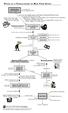 PATHS OF A FORECLOSURE IN NEW YORK STATE BORROWER DELINQUENT 2-3 months late with mortgage payments Lender sends notices, bills, letters to borrower stating that he/she is delinquent Borrower has multiple
2015 IL App (1st) 143589-U. No. 1-14-3589 IN THE APPELLATE COURT OF ILLINOIS FIRST JUDICIAL DISTRICT
 2015 IL App (1st) 143589-U SIXTH DIVISION September 11, 2015 No. 1-14-3589 NOTICE: This order was filed under Supreme Court Rule 23 and may not be cited as precedent by any party except in the limited
Compliance & Foreclosure
 Compliance & Foreclosure June 19th, 2015 Hilton Hotel, Dedham, MA Erika J. Hoover, Esq. Compliance Counsel Life of a foreclosure default to post sale Pre-foreclosure compliance issues Obsolete mortgages
Florida Foreclosure/Real Estate Law. E-Book. A Simple Guide to Florida Foreclosure/Real Estate Law. by: Florida Law Advisers, P.A.
 Florida Foreclosure/Real Estate Law E-Book A Simple Guide to Florida Foreclosure/Real Estate Law by: Florida Law Advisers, P.A. 1 Call: 800-990-7763 Web: www.floridalegaladvice.com TABLE OF CONTENTS INTRODUCTION...
PATHS OF A FORECLOSURE IN NEW YORK STATE
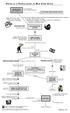 PATHS OF A FORECLOSURE IN NEW YORK STATE BORROWER DELINQUENT 2-3 months late with mortgage payments 90-DAY PRE-FORECLOSURE NOTICE Lender sends notices, bills, letters to borrower stating that he/she is
v. VERIFIED ANSWER TO FORECLOSURE COMPLAINT
 SUPREME COURT OF THE STATE OF NEW YORK COUNTY OF v. Plaintiff, Index No. VERIFIED ANSWER TO FORECLOSURE COMPLAINT Defendant(s). Defendant answers as follows: I generally deny each allegation of the Complaint,
CHAPTER 702 FORECLOSURE OF MORTGAGES, AGREEMENTS FOR DEEDS, AND STATUTORY LIENS. 702.06 Deficiency decree; common-law suit to recover deficiency.
 Florida Foreclosure is Judicial. Notice of Foreclosure Florida foreclosure begins when the lender files a lawsuit (Lis Pendens) against the homeowner. The homeowners must be notified of the legal action
Common Mortgage and Foreclosure Terms
 H ELP FOR N EW Y ORK S TATE H OMEOWNERS C ONCERNED A BOUT F ORECLOSURE Common Mortgage and Foreclosure Terms Talking about mortgages can feel like speaking a foreign language and is even more confusing
I. RETURN INTEGRITY & ACCURACY TO FORECLOSURE AND BANKRUPTCY PROCEEDINGS
 I. RETURN INTEGRITY & ACCURACY TO FORECLOSURE AND BANKRUPTCY PROCEEDINGS A. Put an end to robosigning - signing affidavits filed with the court without personal knowledge. Affidavits/sworn statements utilized
The 8 Fastest Ways to STOP FORECLOSURE in 48 Hours or Less
 The 8 Fastest Ways to STOP FORECLOSURE in 48 Hours or Less Copyright Notice All rights reserved. No part of this publication may be reproduced or transmitted in any form or by any means electronic or mechanical.
ADVANCED ISSUES IN FORECLOSURE MAZYAR HEDAYAT ESQ.
 ADVANCED ISSUES IN FORECLOSURE MAZYAR HEDAYAT ESQ. Page 1 of 13 The Process! Illinois foreclosures governed by Illinois Mortgage Law (735 ILCS 5/15 or IMFL)! process takes on average 9 months, but can
FORECLOSURE. I don t think I can make my mortgage payments but I don t want to go through a foreclosure. What are some of my options?
 FORECLOSURE When you borrow money to buy a house or land, the creditor usually takes a security interest in the property you buy. This means that if you don t pay, the creditor can foreclose upon (or take
PATHS OF A FORECLOSURE IN NEW YORK STATE
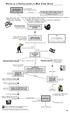 PATHS OF A FORECLOSURE IN NEW YORK STATE BORROWER DELINQUENT 2-3 months late with mortgage payments if S/P or N/T 90-DAY PRE-FORECLOSURE NOTICE* for all subprime and non-traditional loans (as defined by
Glossary of Foreclosure Fairness Mediation Terminology
 Glossary of Foreclosure Fairness Mediation Terminology Adjustable-Rate Mortgage (ARM) Mortgage repaid at the rate of interest that increases or decreases over the life of the loan based on market conditions.
January 9, 2006. The Self Help Legal Center. Southern Illinois University School Of Law Carbondale, IL 62901 (618) 453-3217
 January 9, 2006 The Self Help Legal Center Southern Illinois University School Of Law Carbondale, IL 62901 (618) 453-3217 2 TABLE OF CONTENTS Table of Contents 2 Disclaimer 3 Warning to all readers 4 Who
TEN LOOPHOLES THAT CAN STOP FORCLOSURE FAST
 TEN LOOPHOLES THAT CAN STOP FORCLOSURE FAST Copyright Notice All rights reserved. No part of this publication may be reproduced or transmitted in any form or by any means electronic or mechanical. Any
OPTIONS IN FORECLOSURE
 Section II: KEEPING YOUR HOME OPTIONS IN FORECLOSURE Deciding whether or not to keep your home is something that only you, the homeowner, can determine. The best housing counselors will ask what you d
Illinois Official Reports
 Illinois Official Reports Appellate Court CitiMortgage, Inc. v. Bukowski, 2015 IL App (1st) 140780 Appellate Court Caption CITIMORTGAGE, INC., Plaintiff-Appellee, v. ANNA BUKOWSKI and KATHERINE D. BUKOWSKI,
An Overview of Foreclosure
 An Overview of Foreclosure While the rising number of foreclosures is an alarming national trend, the real hardship is for any individual or family who knows the threat of foreclosure firsthand. Unfortunately,
LEARN ABOUT YOUR RIGHTS AND OPTIONS IN A FORECLOSURE
 Helpful Agencies Here are some agencies which may lead you to lawyers who can help you: Lake County Bar Association 7 North County Street Waukegan, IL 60085 847-244-3140 www.lakebar.org Prairie State Legal
2015 IL App (1st) 150001-U. No. 1-15-0001 IN THE APPELLATE COURT OF ILLINOIS FIRST JUDICIAL DISTRICT
 2015 IL App (1st) 150001-U FOURTH DIVISION December 31, 2015 No. 1-15-0001 NOTICE: This order was filed under Supreme Court Rule 23 and may not be cited as precedent by any party except in the limited
Consensus of Judges on Multnomah County Court Foreclosure Panel
 Consensus of Judges on Multnomah County Court Foreclosure Panel The judges who serve on the Multnomah County Court s Foreclosure Panel have been presented with the following recurring issues, which over
Misc. Docket No. f ( '9256
 IN THE SUPREME COURT OF TEXAS Misc. Docket No. f ( '9256 FINAL APPROVAL OF AMENDMENTS TO TEXAS RULES OF CIVIL PROCEDURE 735 AND 736 ORDERED that: 1. Pursuant to Section 22.004 of the Texas Government Code,
11 LC 14 0449ER A BILL TO BE ENTITLED AN ACT
 House Bill 338 By: Representative Bryant of the 160 th A BILL TO BE ENTITLED AN ACT 1 2 3 4 5 6 7 8 9 10 11 12 13 14 15 16 To amend Title 44 of the Official Code of Georgia Annotated, relating to property,
FOR SALE. Sheeley Moving Co. AVOIDING FORECLOSURE & FORECLOSURE SCAMS
 FAIR HOUSING UNIVERSITY FOR SALE Sheeley Moving Co. AVOIDING FORECLOSURE & FORECLOSURE SCAMS WHAT IS FORECLOSURE When a lender takes possession of a house from a homeowner who has not met the mortgage
FARM LEGAL SERIES June 2015 Mortgage Foreclosures
 Agricultural Business Management FARM LEGAL SERIES June 2015 Mortgage Foreclosures Phillip L. Kunkel, Jeffrey A. Peterson, Jason Thibodeaux Attorneys, Gray Plant Mooty INTRODUCTION If a farm debtor is
How To Avoid Foreclosure
 For most families, a home is a place to live and raise children; it s a plan for the future, and also a source of pride. The Town of Davie promotes home preservation. Your home is not only a significant
BANKRUPTCY ISSUES RELATED TO MORTGAGE FORECLOSURES
 TABAS FREEDMAN Attorneys One Flagler Building 14 Northeast First Avenue, Penthouse Miami, Florida 33132 Telephone 305.375.8171 Facsimile 305.381.7708 www.tabasfreedman.com Gary M. Freedman [email protected]
IN THE SUPREME COURT OF THE STATE OF ILLINOIS
 M.R. 3140 IN THE SUPREME COURT OF THE STATE OF ILLINOIS Order entered February 28, 2013. The effective dates of Supreme Court Rules 113 and 114, as adopted February 22, 2013, are revised from March 1,
Foreclosure Report Survey of State Foreclosure Laws
 Foreclosure Report Survey of State Foreclosure Laws State: Alabama Statutory citation: Ala. Code 35-10-1 to 35-10-30 and 6-5-247 to 6-5-256 Most Common Method of Foreclosure: Non-judicial; Power of Sale
SHORT SALES Frequently Asked Questions
 SHORT SALES Frequently Asked Questions This factsheet is provided for information purposes only. It is not a substitute for advice from legal, accounting, housing, or real estate professionals. Please
A Guide To Understanding The Community Association Collection And Foreclosure Process
 A Guide To Understanding The Community Association Collection And Foreclosure Process What is the initial demand letter? What is a Claim of Lien? What is a thirty (30) day letter? How do you foreclose
IN THE CIRCUIT COURT OF COOK COUNTY, ILLINOIS COUNTY DEPARTMENT CHANCERY DIVISION
 IN THE CIRCUIT COURT OF COOK COUNTY, ILLINOIS COUNTY DEPARTMENT CHANCERY DIVISION Harris, NA f/k/a Harris Trust and ) and Savings Bank ) ) Plaintiff ) ) 09 CH 43873 v. ) ) Judge Jesse G. Reyes Ernest Taylor;
SUPREME COURT County of : State of New York VERIFIED ANSWER TO FORECLOSURE COMPLAINT. Defendant(s). Defendant answers as follows: General Denial.
 SUPREME COURT County of : State of New York v. Plaintiff, Defendant(s). Index No.: VERIFIED ANSWER TO FORECLOSURE COMPLAINT Defendant answers as follows: General Denial. Plaintiff, upon information and
NC General Statutes - Chapter 53 Article 21 1
 Article 21. Reverse Mortgages. 53-255. Title. This Article shall be known and may be cited as the Reverse Mortgage Act. (1991, c. 546, s. 1; 1995, c. 115, s. 1.) 53-256. Purpose. It is the intent of the
FTC FACTS for Consumers
 ftc.gov FEDERAL TRADE COMMISSION FOR THE CONSUMER 1-877-FTC-HELP FTC FACTS for Consumers Mortgage Payments Sending You Reeling? Here s What to Do T he possibility of losing your home because you can t
Appeal Bonds, Sureties, and Stays
 Appeal Bonds, Sureties, and Stays Appellate Lawyers Association April 22, 2009 Brad Elward Peoria Office The Effect of a Judgment A judgment is immediately subject to enforcement and collection. Illinois
Massachusetts Law and Limitation of Actions Challenging Foreclosure
 Massachusetts Law and Limitation of Actions Challenging Foreclosure October 30, 2015 Sarah McKee 9 Chadwick CT Amherst, MA 01002-2825 413.256.6129 [email protected] 1 Why Foreclosed Property Owners
Insight from Carlton Fields
 Insight from Carlton Fields 2011 Nuts and Bolts of the Florida By Kathleen S. McLeroy Introduction Florida is a judicial foreclosure state. Mortgage foreclosures in Florida are judicial proceedings, and
FTC FACTS for Consumers
 ftc.gov FEDERAL TRADE COMMISSION FOR THE CONSUMER 1-877-FTC-HELP FTC FACTS for Consumers Mortgage Payments Sending You Reeling? Here s What to Do T he possibility of losing your home because you can t
Case 2:06-cv-13665-MOB-VMM Document 9 Filed 03/02/2007 Page 1 of 9 UNITED STATES DISTRICT COURT EASTERN DISTRICT OF MICHIGAN SOUTHERN DIVISION
 Case 2:06-cv-13665-MOB-VMM Document 9 Filed 03/02/2007 Page 1 of 9 UNITED STATES DISTRICT COURT EASTERN DISTRICT OF MICHIGAN SOUTHERN DIVISION In re: CARLA CRAIG-LIKELY, Debtor, / CARLA CRAIG-LIKELY, v.
PUBLIC CHAPTER NO. 353
 ~tate of m:ennessee PUBLIC CHAPTER NO. 353 HOUSE BILL NO. 493 By Representative Sargent Substituted for: Senate Bill No. 601 By Senator Johnson AN ACT to amend Tennessee Code Annotated, Section 6-55-202
Home Equity Conversion Mortgage (Reverse Mortgage) This Mortgage ("Security Instrument") is given on (date). The Mortgagor is (Name), of
 Home Equity Conversion Mortgage (Reverse Mortgage) This Mortgage ("Security Instrument") is given on (date). The Mortgagor is (Name), of (street address, city, county, state, zip code), hereafter called
COLORADO FORECLOSURE LAWS
 COLORADO FORECLOSURE LAWS Orten Cavanagh & Holmes, LLC Community Association Attorneys Denver Phone 720.221.9780 Fax 720.221.9781 Toll Free 888.841.5149 Colorado Springs Phone 719.457.8420 Fax 719.457.8419
Frequently Asked Questions Foreclosure
 Frequently Asked Questions Foreclosure What is a Foreclosure? How Can I Avoid A Foreclosure Once a Complaint Has Been Filed Against Me? Where is a Foreclosure Complaint Filed? What Should You Do if Served
Effective Foreclosure Time Line Management Reference Guide
 Effective Foreclosure Time Line Management Reference Guide A foreclosure time line is the number of days it takes to process a foreclosure, from the due date of the last paid installment (DDLPI) to the
Local Rules 2084-1 through 2084-26 govern chapter 13 practice in cases filed after October 16, 2005.
 RULE 2084-1. SCOPE CHAPTER 13 RULES Local Rules 2084-1 through 2084-26 govern chapter 13 practice in cases filed after October 16, 2005. RULE 2084-2. FILING REQUIREMENTS (a) Application to Pay Fee in Installments.
DELINQUENT ASSESSMENT COLLECTION
 Salvatori, Wood, & Buckel ATTORNEYS AT LAW 9132 Strada Place, Fourth Floor, Naples, FL 34108-2683 John D. Humphreville Tel: 239.552.4100 Direct Dial: 239.552.4107 Fax: 239.649.1706 [email protected] Web:
Poll: Domestic Violence in Foreclosure: The Foreclosure Process, Defenses and Alternatives for Survivors. Do you consider yourself: advocate; or
 Domestic Violence in Foreclosure: The Foreclosure Process, Defenses and Alternatives for Survivors Karen Merrill Tjapkes Legal Aid of Western Michigan (616) 774-0672 ext. 120 [email protected]
CHAPTER 32-19 FORECLOSURE OF REAL ESTATE MORTGAGES BY ACTION
 CHAPTER 32-19 FORECLOSURE OF REAL ESTATE MORTGAGES BY ACTION 32-19-01. Action to foreclose mortgage on real estate authorized. The plaintiff shall bring an action in district court for the foreclosure
Homeownership Preservation Toolkit
 Homeownership Preservation Toolkit A guide to understanding and avoiding foreclosure Sponsored and Endorsed by Loveland Berthoud Association of REALTORS CONSUMER CREDIT COUNSELING SERVICE OF NORTHERN COLORADO
BANKRUPTCY FILING (CHAPTERS 7 AND 13) AND ITS EFFECT UPON THE FORECLOSURE PROCESS
 BANKRUPTCY FILING (CHAPTERS 7 AND 13) AND ITS EFFECT UPON THE FORECLOSURE PROCESS by Steven C. Lindberg Freedman Anselmo Lindberg & Rappe LLC September, 2001 Since it has been widely predicted that some
Short Sale Seller Advisory
 Short Sale Seller Advisory Short Sale Seller Advisory Recent economic challenges have resulted in many homeowners needing to sell their home but owing more on their home than the home is worth. This advisory
Missouri Small Claims Court Handbook. The Missouri Bar Young Lawyers' Section
 Missouri Small Claims Court Handbook The Missouri Bar Young Lawyers' Section TABLE OF CONTENTS I. INTRODUCTION TO THE SMALL CLAIMS COURT...1 Page II. THINGS TO CONSIDER BEFORE BRINGING A CLAIM...1 A. WHO
TEXAS RULES OF CIVIL PROCEDURE
 TEXAS RULES OF CIVIL PROCEDURE PART V - RULES OF PRACTICE IN JUSTICE COURTS Adopted by the Supreme Court of Texas Justice Court, Pct 1 1 of 24 TABLE OF CONTENTS SECTION 1. GENERAL... 6 RULE 523. DISTRICT
Chapter 30 Home Equity Conversion Mortgages. 47-30-103. Authorized lenders Designation Application.
 Chapter 30 Home Equity Conversion Mortgages 47-30-101. Short title. 47-30-102. Definitions. 47-30-103. Authorized lenders Designation Application. 47-30-104. Compliance Noncomplying loans unenforceable
UNITED STATES BANKRUPTCY COURT EASTERN DISTRICT OF MICHIGAN SOUTHERN DIVISION
 UNITED STATES BANKRUPTCY COURT EASTERN DISTRICT OF MICHIGAN SOUTHERN DIVISION In Re: Jason D. Misleh, Case Number: 15-41721 Debtor. Chapter 13 Honorable Mark A. Randon / I. INTRODUCTION OPINION AND ORDER
This chapter shall be known and may be cited as the "Home Equity Conversion Mortgage Act."
 Source: http://www.lexisnexis.com/hottopics/tncode/ 47-30-101. Short title. This chapter shall be known and may be cited as the "Home Equity Conversion Mortgage Act." HISTORY: Acts 1993, ch. 410, 2. 47-30-102.
2014 IL App (1st) 131387. No. 1-13-1387 IN THE APPELLATE COURT OF ILLINOIS FIRST JUDICIAL DISTRICT
 2014 IL App (1st) 131387 THIRD DIVISION September 10, 2014 No. 1-13-1387 IN THE APPELLATE COURT OF ILLINOIS FIRST JUDICIAL DISTRICT DEUTSCHE BANK NATIONAL TRUST, ) Appeal from the ) Circuit Court of Plaintiff-Appellee,
NINTH JUDICIAL CIRCUIT, IN AND FOR ORANGE COUNTY, FLORIDA
 ADMINISTRATIVE ORDER NO. 2009-02 IN THE CIRCUIT COURT OF THE NINTH JUDICIAL CIRCUIT, IN AND FOR ORANGE COUNTY, FLORIDA ADMINISTRATIVE ORDER GOVERNING MANDATORY CIRCUIT COURT MEDIATION FOR OWNER-OCCUPIED
Blispay Card agreement
 Blispay Card agreement 1. Definitions 2. How Blispay Card works 3. Making payments 4. Fees and interest 5. When things go wrong 6. Arbitration Provision 7. Legal 8. Communications and information sharing
Case 5:06-cv-00503-XR Document 20 Filed 09/28/06 Page 1 of 7 UNITED STATES DISTRICT COURT WESTERN DISTRICT OF TEXAS SAN ANTONIO DIVISION
 Case 5:06-cv-00503-XR Document 20 Filed 09/28/06 Page 1 of 7 UNITED STATES DISTRICT COURT WESTERN DISTRICT OF TEXAS SAN ANTONIO DIVISION UNITED STATES OF AMERICA, VS. Plaintiff, HENRY D. GOLTZ, EVANGELINA
IN THE SUPREME COURT OF THE STATE OF ILLINOIS
 M.R. 3140 IN THE SUPREME COURT OF THE STATE OF ILLINOIS Order entered February 22, 2013. Effective March 1, 2013, Supreme Court Rules 99.1, 113 and 114 are adopted, as follows. New Rule 99.1 Rule 99.1.
2016 IL App (3d) 140583-U. Order filed January 8, 2016 IN THE APPELLATE COURT OF ILLINOIS THIRD DISTRICT A.D., 2016
 NOTICE: This order was filed under Supreme Court Rule 23 and may not be cited as precedent by any party except in the limited circumstances allowed under Rule 23(e)(1). 2016 IL App (3d) 140583-U Order
Case 10-33583-bjh11 Doc 31 Filed 12/07/10 Entered 12/07/10 18:18:45 Desc Main Document Page 1 of 10
 Document Page 1 of 10 Eric A. Liepins ERIC A. LIEPINS, P.C. 12770 Coit Road Suite 1100 Dallas, Texas 75251 Ph. (972) 991-5591 Fax (972) 991-5788 ATTORNEYS FOR DEBTOR IN THE UNITED STATES BANKRUPTCY COURT
Foreclosure Options. Know Your Rights! Your Trusted Real Estate Resource
 Foreclosure Options Know Your Rights! Kirk Russell Managing Broker John L. Scott Firm [email protected] 206.390.5640 Your Trusted Real Estate Resource If you re listed with a license Realtor,
The National Mortgage Settlement: What Every Consumer Bankruptcy Lawyer Needs To Know About It
 The National Mortgage Settlement: What Every Consumer Bankruptcy Lawyer Needs To Know About It Presented by: John Rao, Esq., National Consumer Law Center, NACBA Vice President, and Professor Katherine
MEMORANDUM. Cash for Keys Agreements. James Smith, Reporter. May 17, 2012
 MEMORANDUM Cash for Keys Agreements James Smith, Reporter May 17, 2012 Cash for keys agreements are used in two sectors in the context of residential mortgage foreclosures. First, lenders have offered
IN THE CIRCUIT COURT OF THE THIRTEENTH JUDICIAL CIRCUIT IN AND FOR HILLSBOROUGH COUNTY, FLORIDA GENERAL CIVIL DIVISION
 IN THE CIRCUIT COURT OF THE THIRTEENTH JUDICIAL CIRCUIT IN AND FOR HILLSBOROUGH COUNTY, FLORIDA GENERAL CIVIL DIVISION Plaintiff(s), v. Defendant(s). / CASE NO.: GENERAL CIVIL DIVISION: UNIFORM FINAL JUDGMENT
Tired of the Foreclosure Threat?
 Y o u r R e a l E s t a t e S t r e s s R e l i e f Tired of the Foreclosure Threat? Learn about the 6 options available to you when you are facing foreclosure Loan Modification Foreclosure Prevention
[Space Above This Line For Recording Data] which has the address of
![[Space Above This Line For Recording Data] which has the address of](/thumbs/25/4793700.jpg "[Space Above This Line For Recording Data] which has the address of") FORM 3C.8 HOME EQUITY CONVERSION: MODEL MORTGAGE FORM [Space Above This Line For Recording Data] State of [see note 1] MORTGAGE THIS MORTGAGE ( Security Instrument ) is given on, 20. The mortgagor is,
FORM 3C.8 HOME EQUITY CONVERSION: MODEL MORTGAGE FORM [Space Above This Line For Recording Data] State of [see note 1] MORTGAGE THIS MORTGAGE ( Security Instrument ) is given on, 20. The mortgagor is,
CHRISTMAN & FASCETTA, LLC FLAT FEE AGREEMENT AND HOURLY FEE PROVISIONS
 CHRISTMAN & FASCETTA, LLC FLAT FEE AGREEMENT AND HOURLY FEE PROVISIONS, (hereinafter referred to as client or you ), hereby engages the Law Offices of Christman & Fascetta, LLC to prepare and file a Chapter
CIVIL PRACTICE AND PROCEDURE GARNISHMENT CHAPTER 77
 CIVIL PRACTICE AND PROCEDURE GARNISHMENT CHAPTER 77 77.01 Right to writ of garnishment.--every person or entity who has sued to recover a debt or has recovered judgment in any court against any person
Foreclosure Prevention Guide
 Foreclosure Prevention Guide 8 Ways to Stop Your Foreclosure in Today s Challenging Economy About Foreclosure Foreclosure begins when a Homeowner is unable to make their mortgage payments on the scheduled
NC General Statutes - Chapter 93A Article 2 1
 Article 2. Real Estate Education and Recovery Fund. 93A-16. Real Estate Education and Recovery Fund created; payment to fund; management. (a) There is hereby created a special fund to be known as the "Real
Foreclosure Overview
 Foreclosure Overview Foreclosure is the legal action that your financial institution can use to take back your home when you miss your monthly mortgage payments. When this happens, you lose your house,
ASSEMBLY BILL No. 597
 AMENDED IN ASSEMBLY APRIL 14, 2015 california legislature 2015 16 regular session ASSEMBLY BILL No. 597 Introduced by Assembly Member Cooley February 24, 2015 An act to amend Sections 36 and 877 of, and
Foreclosure. in Alberta. Financial Series. Property foreclosure can be a complicated and confusing experience for
 sd Financial Series Foreclosure in Alberta Property foreclosure can be a complicated and confusing experience for You should not rely on this booklet for legal advice. It provides general information on
FAQ for Tenants & Their Attorneys. 1. How much notice must California tenants receive if evicted because of foreclosure?
 FAQ for Tenants & Their Attorneys 1. How much notice must California tenants receive if evicted because of foreclosure? Answer: Usually 90 days. CCP 1161b(a) provides that a tenant or subtenant in possession
HOME MORTGAGE MODIFICATION
 HOME MORTGAGE MODIFICATION Individuals in bankruptcy cases assigned to Judge Waites, including joint debtors, may seek court approval of consensual modifications of home mortgage loans in one or more of
Central Mortgage Company
 Central Mortgage Company Dear Borrower Are you struggling with your mortgage payment? We are concerned about your missed or potentially missed mortgage payment and want you to be aware of assistance available
Saving Your Home from Foreclosure
 NEW YORK STATE BAR ASSOCIATION Saving Your Home from Foreclosure (For quick guide on where to go for help, see back cover) New York State Bar Association 1 Introduction In 2008, New York State made some
UNDERSTANDING THE COLLECTION PROCESS FOR COMMUNITY ASSOCIATIONS
 UNDERSTANDING THE COLLECTION PROCESS FOR COMMUNITY ASSOCIATIONS 1. PRE-LITIGATION BY: MULCAHY LAW FIRM, P.C. Almost every community association has problems in collecting unpaid assessments. Most associations
AVOID FORECLOSURE HOW TO A CONSUMER GUIDE. Open mail from your mortgage company. Can you afford your home? Contact your mortgage company
 HOW TO AVOID FORECLOSURE A CONSUMER GUIDE Open mail from your mortgage company Can you afford your home? Contact your mortgage company Keeping or not keeping your home What happens if you do not contact
2015 IL App (5th) 140227-U NO. 5-14-0227 IN THE APPELLATE COURT OF ILLINOIS FIFTH DISTRICT
 NOTICE Decision filed 10/15/15. The text of this decision may be changed or corrected prior to the filing of a Petition for Rehearing or the disposition of the same. 2015 IL App (5th 140227-U NO. 5-14-0227
UNITED STATES BANKRUPTCY COURT NORTHERN DISTRICT OF ILLINOIS EASTERN DIVISION MEMORANDUM OPINION
 UNITED STATES BANKRUPTCY COURT NORTHERN DISTRICT OF ILLINOIS EASTERN DIVISION In re: ) Case No. 04 B 26948 ) VICTOR AND LINDA WILSON, ) Chapter 13 ) Debtors. ) Judge Pamela S. Hollis MEMORANDUM OPINION
SMALL CLAIMS COURT IN ARKANSAS
 SMALL CLAIMS COURT IN ARKANSAS Note: The information contained in this publication is designed as a useful guide to remind you of your rights as a citizen of this state. You should not rely totally on
GENERAL ASSEMBLY OF NORTH CAROLINA 1991 SESSION CHAPTER 546 HOUSE BILL 22
 GENERAL ASSEMBLY OF NORTH CAROLINA 1991 SESSION CHAPTER 546 HOUSE BILL 22 AN ACT TO REGULATE REVERSE MORTGAGES. The General Assembly of North Carolina enacts: Section 1. Chapter 53 of the General Statutes