
Obstetrical Emergencies
|
|
|
- Marianna Reed
- 10 years ago
- Views:
Transcription
1 Date: July 18, 2014 Page 1 of 5 Obstetrical Emergencies Purpose: To provide the process for the assessment and management of the patient with an obstetrical related emergency. Pre-Medical Control 1. Follow General Pre-hospital Care Protocol 2. Assessment Information A. History: a. Past Medical History: previous births, previous complications b. Current History: duration of gestation (weeks), whether single or multiple births are expected. B. Specific Objective Findings: vital signs, assess contractions C. Determine whether to transport or remain at scene due to imminent delivery. Indications of impending imminent delivery may include: a. Multiples pregnancy, strong regular contractions, every 2 minutes or less; ruptured membrane, bloody show, sensation of need to push or bear down, crowning. 3. General Management A. Utilize universal precautions B. Evaluate and maintain airway, provide oxygen and support ventilation as needed. 4. Evaluate for signs of Pre-eclampsia/Eclampsia/HELLP Syndrome (Hemolysis Elevated Liver Enzymes Low Platelet counts) Signs include a. BP 160/110 or higher (preeclampsia) b. Marked peripheral edema (preeclampsia) c. Constant right upper quadrant pain (HELLP) d. Visual changes or impairment (HELLP) e. Diminished level of consciousness (eclampsia) f. Seizure (eclampsia) A. Immediate transport B. If seizure occurs, administer Magnesium Sulfate 2 gm over 10 minutes IV/IO until seizure stops. Administration of Magnesium Sulfate is best accomplished by adding Magnesium Sulfate 2gm to 100 or 250 ml of NS and infusing over approximately 10 minutes. C. If seizure does not stop after Magnesium, then administer Benzodiazepine as specified below. D. If an IV has not been established administer Midazolam 10 mg IM, if patient is actively seizing. E. If an IV has already been established and Midazolam IM has not been administered, administer Midazolam, Lorazepam, or Diazepam slow IV push until seizure stops, per MCA selection.

2 Date: July 18, 2014 Page 2 of 5 X Medication Options: (Choose One) Midazolam 5 mg IV/IO OR Lorazepam - 4 mg IV/IO OR Diazepam - 10 mg IV/IO or rectally If seizure persists, per MCA selection, repeat Midazolam, Lorazepam or Diazepam at the same dose or contact medical control for further instructions. Post-Medical Control F. If seizure persists, administer additional Magnesium Sulfate 2 gms IV/IO, if available. 5. MANAGEMENT OF NORMAL DELIVERY SPECIALIST/ A. Obtain vascular access, if time permits. B. Have oxygen, suction, and other needed equipment readily available for care of the newborn. C. If signs of newborn delivery are imminent, and there is no time to transport, prepare for delivery. a. Try to find a place for maximum privacy and cleanliness. b. Place patient in position of comfort for impending delivery (laying on left side or on hands and knees). a. Monitor patient for signs of hypotension. If signs develop, position patient so weight of uterus is to patient s left side. c. Drape if possible, using clean sheets. d. Encourage mother to relax and take slow deep breaths through her mouth. e. Reassure her throughout procedure. f. As baby s head begins to emerge from vagina, support it gently with hand and towel to prevent an explosive delivery. a. Routine suction of the nose and mouth at the perineum is no longer recommended. g. After head is delivered look and feel to see if cord is wrapped around baby s neck. a. If the cord is around neck and loose, slide gently over the head DO NOT TUG.

3 Date: July 18, 2014 Page 3 of 5 b. If the cord is around neck and snug, clamp the cord with 2 clamps and cut between the clamps. Once this is done delivery should be expedited. h. As the shoulders deliver, carefully hold and support the head and shoulders as the body delivers, usually very suddenly and the baby is very slippery! Note the time of delivery. i. Clear the airway only if necessary. If the newborn is vigorous (strong respiratory effort, good muscle tone, and a heart rate > 100 bpm), there is no need to suction the airway, even if meconium was in the amniotic fluid or there was meconium staining. D. If there is visible meconium in the airway and the newborn is having difficulty breathing, has poor muscle tone, or has a heart rate less than 100bpm a. Suction the airway. b. refer to the Pediatric Newborn Assessment, Treatment and Resuscitation Protocol for management: Page 3, 9. C. a and b. E. Prevent heat loss a. Place baby on mother (preferably skin to skin). b. Stimulate the baby c. Dry baby off and remove all wet linen. F. Evaluate respirations a. If the baby does not breathe spontaneously, stimulate by gently rubbing its back or thumping the soles of its feet. If still no response, initiate management per Pediatric Newborn Assessment, Treatment and Resuscitation Protocol. b. If spontaneous breathing begins, administer oxygen for a few minutes until baby s color is pink G. Cord Clamping a. The umbilical cord should not be cut immediately; wait until the child is breathing adequately, the cord has stopped pulsating or, in the vigorous infant, a minimum of two to three minutes post delivery. When prepared to cut the cord, it must be tied or clamped approximately 8 from the infant s abdominal wall with a second tie or clamp 2 further. The cord should be cut between the ties / clamps. b. If child is being resuscitated, the cord may be clamped and cut and kept moist with a small dressing. (In case Umbilical Vein IV is needed for hospital use only.) c. Score APGAR at one minute and five minutes after delivery. Refer to Pediatric Newborn Assessment, Treatment and Resuscitation Protocol if APGAR is less than 6. d. Encourage breastfeeding to stimulate placental delivery. e. When delivery of baby is complete, prepare for immediate transport. Placenta can be delivered in route or at the hospital f. Delivery of placenta generally takes place within 20 minutes.

4 Date: July 18, 2014 Page 4 of 5 g. Following placental delivery, massage the uterus firmly and briskly to aid in contraction of the uterus and prevent hemorrhage. h. Place placenta in basin or plastic bag and transport with mother. i. Contact Medical Control. 6. MANAGEMENT OF COMPLICATED DELIVERIES A. Contact Medical Control as soon as appropriate. B. Breech position a. Allow buttocks and trunk to deliver spontaneously. b. Once legs are clear, support body on the palm of your hand and surface of your arm, allowing head to deliver. Do not put traction on the head. c. If the head doesn t deliver immediately, transport rapidly to the hospital with mother s buttocks elevated on pillows with baby s airway maintained throughout transfer. d. Place gloved hand in the vagina with your palm towards the baby s face. Form a V with your fingers on either side of the baby s nose and push the vaginal wall away from baby s face until the head is delivered. e. Prolapsed Cord Life Threatening Condition i. Place mother in a supine position with hips supported on a pillow. ii. Evaluate and maintain airway, provide oxygen. iii. With sterile gloved hand, gently push the baby up the vagina several inches to release pressure on the cord. iv. DO NOT ATEMPT TO PUSH CORD BACK! v. Transport maintaining pressure on baby s head. f. Arm or limb presentation Life threatening condition. ii. Delivery should not be attempted outside the hospital. iii. Place mother in position of comfort or with hips elevated on pillow. iv. Evaluate and maintain airway, provide oxygen. g. Multiple births ii. Multiple birth infants are potentially smaller in size and will need careful management to maintain body temperature. iii. After first infant is delivered, clamp cord and proceed through airway, drying and warming procedures while awaiting delivery of other births, (See Pediatric Newborn Assessment, Treatment and Resuscitation Protocol.) iv. Prepare additional supplies for subsequent births. v. There may be time to transport between births. h. Premature births ii. Premature infants are usually very small, have difficulty maintaining temperatures and are likely to need significant resuscitative support. iii. Refer to the Pediatric Newborn Assessment, Treatment and Resuscitation Protocol for management of premature infants.

5 Date: July 18, 2014 Page 5 of 5 APGAR Scoring 1. Procedure for immediately evaluating a newborn baby. A. Based on: a. A appearance (color) b. P pulse (heart rate) c. G grimace (reflex irritability to slap on sole of foot) d. A activity (muscle tone) e. R respiration (respiratory effort) 2. Each parameter gets a score of 0 to APGAR score should be checked at 1 minutes and 5 minutes post delivery. 4. In cases of depressed APGAR scores (below 7 or poorly responsive) refer to Pediatric Newborn Assessment, Treatment and Resuscitation Protocol. APGAR SCORING Sign Appearance skin color Bluish or paleness Pink or ruddy; hands or feet are blue Pink or ruddy; entire body Pulse heart rate Absent Below 100 Over 100 Grimace reflex No response Crying; some motion Crying; vigorous irritability to foot slap Activity muscle tone Limp Some flexion of extremities Active; good motion in extremities Respiratory effort Absent Slow and Irregular Normal; crying

Chapter 31 Obstetrics and Neonatal Care 1137. Scene Size-up. Primary Assessment
 Chapter 31 Obstetrics and Neonatal Care 1137 Scene Size-up Scene Safety Mechanism of Injury (MOI)/ Nature of Illness (NOI) Ensure scene safety and safe access to the patient. Standard precautions should
Neonatal Emergencies. Care of the Neonate. Care of the Neonate. Care of the Neonate. Student Objectives. Student Objectives continued.
 Student Objectives Neonatal Emergencies After completing this section the student will be able to: 1. Identify three physiologic and/or anatomic features unique to the newborn 2. List three perinatal factors
Neonatal Reference Guide
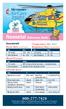 Operated by REACH Air Medical Services Assessment Heart Rate (beats/min.) Age Rate
How To Treat A Pregnant Woman With A Miscarriage
 Special Patient Populations Obstetrics EMR Education Standard Recognizes and manages life threats based on simple assessment findings for a patient with special needs while awaiting additional emergency
(C) AMBULANCE VICTORIA
 The Newborn Baby: Definitions and Contacts Newborn definition 'Newborn' refers to the first min to hours post birth. For the purpose of resuscitation, AV accepts up to the first 24 hours from birth in
BLS TREATMENT GUIDELINES - CARDIAC
 BLS TREATMENT GUIDELINES - CARDIAC CARDIOPULMONARY ARREST - NON-TRAUMATIC (SJ-B101) effective 07/01/99 Defibrillation CPR Apply S-AED and assess rhythm as trained. Defib as indicated Simultaneous OXYGEN:
LESSON ASSIGNMENT. Normal and Emergency Childbirth. After completing this lesson, you should be able to:
 LESSON ASSIGNMENT LESSON 2 Normal and Emergency Childbirth. LESSON ASSIGNMENT Paragraphs 2-1 through 2-25. LESSON OBJECTIVES After completing this lesson, you should be able to: 2-1. Define common terms
NRP 2012 Putting New Resuscitation Guidelines into Practice
 Outreach Education Online Video Library for Healthcare Professionals NRP 2012 Putting New Resuscitation Guidelines into Practice. Jeanette Zaichkin, RN, MN, NNP-BC December 2, 2010 Program Handouts This
Neonatal Reference Guide
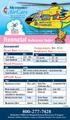 Operated by REACH Air Medical Services Assessment Heart Rate (beats/min.) Rate
SARASOTA MEMORIAL HOSPITAL NURSING PROCEDURE
 SARASOTA MEMORIAL HOSPITAL NURSING PROCEDURE TITLE: MAGNESIUM SULFATE ADMINISTRATION FOR ANTEPARTUM AND INTRAPARTUM PATIENTS WITH PRE-TERM LABOR DATE: REVIEWED: PAGES: 6/92 08/11 1 of 6 ISSUED FOR: Nursing
Obstetric Emergencies
 Obstetric Emergencies Dr. Si Lay Khaing Senior Lecturer/ O&G Specialist Faculty of Medicine University of Malaya 15 th March 2014 Abstract Life Saving, The obstetric patient is unique in medicine as two
First Responder (FR) and Emergency Medical Responder (EMR) Progress Log
 First Responder (FR) and Emergency Medical Responder (EMR) Progress Log Note: Those competencies that are for EMR only are denoted by boldface type. For further details on the National Occupational Competencies
CBT521-EMT11- OB/GYN Emergencies
 Seattle-King County EMS Seattle-King County Emergency Medical Services Division Public Health - Seattle/King County 401 5 th Avenue, Suite 1200 Seattle, WA 98104 (206) 296-4863 January 2011 CBT521-EMT11-
Labor is work, and it is hard work. Labor is an end to pregnancy and a beginning for a new human life in a newly shaped family."
 LABOR AND DELIVERY "The way we give birth to our young is that the muscular organ (the uterus) in which the offspring has been nurtured for nine months begins to contract. The contractions work to open
Pregnancy and Substance Abuse
 Pregnancy and Substance Abuse Introduction When you are pregnant, you are not just "eating for two." You also breathe and drink for two, so it is important to carefully consider what you put into your
Red Flags that should not be ignored
 Pregnancy that should not be ignored If a pregnant woman tells you she is experiencing any of the following symptoms during pregnancy, assist her to contact her emergency care professional right away.
MRC Medical Jeopardy Feud List of Treatments for Possible Injuries/Conditions
 List of Treatments for Possible Injuries/Conditions A. Apply cold compresses to affected area; elevate the area to reduce swelling and possible bleeding B. Apply direct pressure to wound area with sterile
Infant CPR. What You Need to Know. How to Do Infant CPR
 Infant CPR Infant CPR also called Cardiopulmonary resuscitation is emergency care given to a baby who has stopped breathing. This sheet has the steps for CPR for newborns or babies less than 1 year old.
Southern Stone County Fire Protection District Emergency Medical Protocols
 TITLE Pediatric Medical Assessment PM 2.4 Confirm scene safety Appropriate body substance isolation procedures Number of patients Nature of illness Evaluate the need for assistance B.L.S ABC s & LOC Focused
PATIENT HANDBOOK AND JOURNAL DAY OF SURGERY
 PATIENT HANDBOOK AND JOURNAL DAY OF SURGERY PREPARING YOUR SKIN BEFORE SURGERY PRE-OP HIBICLENS BATHING INSTRUCTIONS: General Information: Because the skin is not sterile, it is important to make sure
COALINGA STATE HOSPITAL. Effective Date: August 31, 2006
 COALINGA STATE HOSPITAL NURSING POLICY AND PROCEDURE MANUAL SECTION Emergency Procedures POLICY NUMBER: 715 Effective Date: August 31, 2006 SUBJECT: EMERGENCY CARE OF HEMORRHAGE 1. PURPOSE: The management
Registered Nurse Initiated Activities Decision Support Tool No. 8A: Obstetrical Emergencies Cord Prolapse
 Registered Nurse Initiated Activities Decision Support Tool No. 8A: Obstetrical Emergencies Cord Prolapse Decision support tools are evidenced-based documents used to guide the assessment, diagnosis and
(800) 786-7235 Cryo-Cell.com
 HEALTHCARE PROVIDER Instructions Keep these instructions in the kit [ When handling blood products, use personal protective measures, maintain aseptic techniques and adequate room for collection processes.
FROM THE AMERICAN COLLEGE OF NURSE-MIDWIVES
 FROM THE AMERICAN COLLEGE OF NURSE-MIDWIVES Giving Birth In Place : A Guide to Emergency Preparedness for Childbirth Deanne Williams, CNM, MSN EDITOR S NOTE What can midwives do to help women who are at
Streptococcal Infections
 Streptococcal Infections Introduction Streptococcal, or strep, infections cause a variety of health problems. These infections can cause a mild skin infection or sore throat. But they can also cause severe,
Water Birth Online Course. Women s Services
 Water Birth Online Course Women s Services 1 Water Birth Instructions for Online Class 1. Read through all the slides. 2. Print out the certificate at the end of the slides. 3. Sign and date the certificate.
All About Your Peripherally Inserted Central Catheter (PICC)
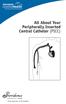 All About Your Peripherally Inserted Central Catheter (PICC) General Information Intravenous (IV) therapy is the delivery of fluid directly into a vein. An intravenous catheter is a hollow tube that is
NEONATAL RESUSCITATION PROVIDER (NRP) RECERTIFICATION TABLE OF CONTENTS
 NEONATAL RESUSCITATION PROVIDER (NRP) RECERTIFICATION TABLE OF CONTENTS NEONATAL FLOW ALGORITHM.2 INTRODUCTION 3 ANTICIPATION OF RESUSCITATION 4 TEMPERATURE CONTROL.4 CLEARING THE AIRWAY OF MECONIUM 5
California Correctional Health Care Services
 RN Protocol: I. POLICY A. Function: To facilitate and guide the Registered Nurse (RN) in the assessment and treatment of patients presenting with burns. B. Circumstances under which the RN may perform
 GUIDELINES FOR HOSPITALS WITH NEONATAL INTENSIVE CARE SERVICE : REGULATION 4 OF THE PRIVATE HOSPITALS AND MEDICAL CLINICS REGULATIONS [CAP 248, Rg 1] I Introduction 1. These Guidelines serve as a guide
PHSW Procedural Sedation Post-Test Answer Key. For the following questions, circle the letter of the correct answer(s) or the word true or false.
 PHSW Procedural Sedation Post-Test Answer Key 1 1. Define Procedural (Conscious) Sedation: A medically controlled state of depressed consciousness where the patient retains the ability to continuously
MINI - COURSE On TEMPERATURE CONTROL IN THE NEWBORN
 MINI - COURSE On TEMPERATURE CONTROL IN THE NEWBORN Instructions: Read each sheet and answer any questions as honestly as possible The first sheets have four questions to allow you to give your thoughts
Challenges of Foster Parents who Care for Infants with Neonatal Abstinence Syndrome
 Challenges of Foster Parents who Care for Infants with Neonatal Abstinence Syndrome All Health Care Providers are required by law to make a referral to the Department of Children s Services (DCS) Child
Standard of Care: High Risk Pregnancies Inpatient Physical Therapy Management of the Patient with High Risk Pregnancy Requiring Bedrest
 Department of Rehabilitation Services Physical Therapy Case Type / Diagnosis: This standard of care applies to the acute care management of any woman with a high risk pregnancy requiring bedrest to prevent
EMS Branch / Office of the Medical Director. Active Seziures (d) Yes Yes Yes Yes. Yes Yes No No. Agitation (f) No Yes Yes No.
 M07 Medications 2015-07-15 All ages EMS Branch / Office of the Medical Director Benzodiazepines Primary Intermediate Advanced Critical INDICATIONS Diazepam (c) Lorazepam (c) Midazolam (c) Intranasal Midazolam
Strengthening Exercises - Below Knee Amputation
 Strengthening Exercises - Below Knee Amputation These exercises will help you strengthen your muscles to best use your prosthetic leg. Do these exercises as directed by your therapist or doctor. Do the
Cerebral Palsy. In order to function, the brain needs a continuous supply of oxygen.
 Cerebral Palsy Introduction Cerebral palsy, or CP, can cause serious neurological symptoms in children. Up to 5000 children in the United States are diagnosed with cerebral palsy every year. This reference
Self- Lymphatic Massage for Arm, Breast or Trunk Lymphedema
 Self- Lymphatic Massage for Arm, Breast or Trunk Lymphedema Patient Education Improving health through education The lymphatic system is part of our circulatory system. It helps balance the fluids of our
Your Recovery After a Cesarean Delivery
 Your Recovery After a Cesarean Delivery It is normal to have many questions about your care after delivery. Cesarean delivery is surgery and your body needs time to heal and recover for the next 6 weeks,
Cerebral Palsy. 1995-2014, The Patient Education Institute, Inc. www.x-plain.com nr200105 Last reviewed: 06/17/2014 1
 Cerebral Palsy Introduction Cerebral palsy, or CP, can cause serious neurological symptoms in children. Thousands of children are diagnosed with cerebral palsy every year. This reference summary explains
Cardiac Arrest Pediatric Ventricular Fibrillation / Pulseless Ventricular Tachycardia Protocol revised October 2008
 Cardiac Arrest Pediatric Ventricular Fibrillation / Pulseless Ventricular Tachycardia Protocol revised October 2008 Preamble In contrast to cardiac arrest in adults, cardiopulmonary arrest in pediatric
Northwestern Health Sciences University. Basic Life Support for Healthcare Providers
 Northwestern Health Sciences University Basic Life Support for Healthcare Providers Pretest May 2005 This examination to be used only as a PRECOURSE TEST for BLS for Healthcare Providers Courses Based
Range of Motion. A guide for you after spinal cord injury. Spinal Cord Injury Rehabilitation Program
 Range of Motion A guide for you after spinal cord injury Spinal Cord Injury Rehabilitation Program This booklet has been written by the health care providers who provide care to people who have a spinal
General Guidelines. Neck Stretch: Side. Neck Stretch: Forward. Shoulder Rolls. Side Stretch
 Stretching Exercises General Guidelines Perform stretching exercises at least 2 3 days per week and preferably more Hold each stretch for 15 20 seconds Relax and breathe normally Stretching is most effective
Success Manual and Cheat Sheet Notes to Pass Your Basic Life Support (BLS) Course
 Success Manual and Cheat Sheet Notes to Pass Your Basic Life Support (BLS) Course Written by: Jay Snaric, MS And Kimberly Hickman, RN CPR St. Louis 44 Meramec Valley Plaza St. Louis MO 63088 www.stlcpr.com
PATIENT GUIDE. Care and Maintenance Drainage Frequency: Max. Drainage Volume: Dressing Option: Clinician s Signature: Every drainage Weekly
 PATIENT GUIDE Care and Maintenance Drainage Frequency: Max. Drainage Volume: Dressing Option: Every drainage Weekly Clinician s Signature: ACCESS SYSTEMS Pleural Space Insertion Site Cuff Exit Site Catheter
NRP Study Guide. This packet is intended for review only. Requirements to successfully complete NRP:
 This packet is intended for review only Requirements to successfully complete NRP: Completed NRP Pretest is required for admission to the course. Score 84% on the multiplechoice posttest. You may be allowed
Pre-operative Instructions for MIS Total Knee Stephen J Kelly, M.D.
 Pre-operative Instructions for MIS Total Knee Stephen J Kelly, M.D. 33 Sewall Street Portland, ME 04102 207.828.2100 800.439.0274 www.orthoassociates.com Pre-operative Pain Protocol Two days before surgery:
Pain Management for Labour & Delivery
 Pain Management for Labour & Delivery Departments of Anesthesia, Obstetrics, and Obstetrical Nursing December 2008 This pamphlet has been prepared to provide you, members of your family, and others who
To outline nursing management of patients receiving epidural anesthesia during labor (Includes walking epidurals and combined spinal-epidurals).
 HOSPITAL NAME INSTITUTIONAL POLICY AND PROCEDURE (IPP) Department: Manual: Section: TITLE/DESCRIPTION POLICY NUMBER LABOR: EPIDURAL EFFECTIVE DATE REVIEW DUE REPLACES NUMBER NO. OF PAGES APPROVED BY APPLIES
Addendum to the NRP Provider Textbook 6 th Edition Recommendations for specific modifications in the Canadian context
 Addendum to the NRP Provider Textbook 6 th Edition Recommendations for specific modifications in the Canadian context A subcommittee of the Canadian Neonatal Resuscitation Program (NRP) Steering Committee
Understand nurse aide skills needed to promote skin integrity.
 Unit B Resident Care Skills Essential Standard NA5.00 Understand nurse aide s role in providing residents hygiene, grooming, and skin care. Indicator Understand nurse aide skills needed to promote skin
Self Management Program. Ankle Sprains. Improving Care. Improving Business.
 Ankle Sprains Improving Care. Improving Business. What is an ankle sprain? Ligaments attach to the ankle bones and allow for normal movement and help prevent too much motion within the joint. Ankle sprains
AHA/AAP Neonatal Resuscitation Guidelines 2010: Summary of Major Changes and Comment on its Utility in Resource-Limited Settings
 AHA/AAP Neonatal Resuscitation Guidelines 2010: Summary of Major Changes and Comment on its Utility in Resource-Limited Settings Resuscitation step Recommendations (2005) Recommendations (2010) Comments/LOE
X-Plain Subclavian Inserted Central Catheter (SICC Line) Reference Summary
 X-Plain Subclavian Inserted Central Catheter (SICC Line) Reference Summary Introduction A Subclavian Inserted Central Catheter, or subclavian line, is a long thin hollow tube inserted in a vein under the
Delayed Cord Clamping
 ICEA Position Paper Delayed Cord Clamping Position The International Childbirth Education Association recognizes that the first minutes after birth are crucial to both mother and newborn. Optimal care
Summary of State Emergency Medical Control Committee (SEMCC) Approved Protocol Revisions September 1, 2015 NALOXONE
 October 22, 2015 Summary of State Emergency Medical Control Committee (SEMCC) Approved Protocol Revisions September 1, 2015 NALOXONE Summary: Expand Naloxone down to the Emergency Medical Technician (EMT)
Whelping Your Puppies
 Whelping Your Puppies Canine Birth: The Mother A comfortable area should be set aside for whelping and raising the puppies. The mother should feel at home here and should be able to come and go as she
UMBILICAL CORD CLAMPING FOR TERM INFANTS 37 WEEKS
 UMBILICAL CORD CLAMPING FOR TERM INFANTS 37 WEEKS This guideline refers to umbilical cord clamping in term infants (those 37 weeks gestational age) DEFINITION Immediate (early) cord clamping (ICC): the
Community Ambulance Service of Minot ALS Standing Orders Legend
 Legend Indicates General Information and Guidelines Indicates Procedures Indicates Medication Administration Indicates Referral to Other Protocol Indicates Referral to Online Medical Direction Pediatric
NEONATAL ABSTINENCE SYNDROME (NAS)- THE CARE YOUR BABY MAY NEED
 NEONATAL ABSTINENCE SYNDROME (NAS)- THE CARE YOUR BABY MAY NEED Information Leaflet Your Health. Our Priority. Page 2 of 8 Welcome to Stepping Hill Hospital Women's Unit The aims of this leaflet are to:
KNEE EXERCISE PROGRAM
 KNEE PROGRAM INTRODUCT ION Welcome to your knee exercise program. The exercises in the program are designed to improve your knee stability and strength of the muscles around your knee and hip. The strength
SOUTHERN WEST MIDLANDS NEWBORN NETWORK
 SOUTHERN WEST MIDLANDS NEWBORN NETWORK Hereford, Worcester, Birmingham, Sandwell & Solihull Title Person Responsible for Review Delayed Umbilical Cord Clamping Dr Andrew Gallagher Date Guideline Agreed:
What Does Pregnancy Have to Do With Blood Clots in a Woman s Legs?
 Patient s Guide to Prevention of Blood Clots During Pregnancy: Use of Blood-Thinning A Patient s Guide to Prevention of Blood Clots During Pregnancy: Use of Blood-Thinning Drugs to Prevent Abnormal Blood
BABIES BORN TO ADDICTED MOTHERS
 BABIES BORN TO ADDICTED MOTHERS PATRICA M. MESSERLE LICENSED CLINICAL PSYCHOLOGIST, M.A., ABSNP LICENSED SCHOOL PSYCHOLOGIST DIPLOMATE OF THE AMERICAN BOARD OF SCHOOL- NEUROPSYCHOLOGY 1 Signs and Symptoms
How To Stretch Your Body
 Exercise Module A New Leaf Choices for Healthy Living University of North Carolina at Chapel Hill 2007 Center for Health Promotion and Disease Prevention Physical Activity Exercises for Keeping Active
PROGRAMA PART PROGRAMME Birth Plan
 PART: Programa d Atenció i Respecte al part HospiTalari Servei de Medicina Maternofetal. Institut Clínic de Ginecologia, Obstetrícia i Neonatologia (ICGON) Servei d Anestesiologia, Reanimació i Terapèutica
Update on Neonatal Resuscitation
 Update on Neonatal Resuscitation Ola Didrik Saugstad MD, PhD, FRCPE Professor of Pediatrics Director Department of Pediatric Research Rikshospitalet, Faculty of Medicine University of Oslo NORWAY 1st.
Routine For: OT - General Guidelines/Energy Conservation (Caregiver)
 GENERAL GUIDELINES - 9 Tips for Exercise: Body Mechanics for Helper - To protect back, stay as upright as possible and keep head in line with trunk. - Always position yourself as close as possible to the
Human Growth and Reproduction
 Human Growth and Reproduction Sperm reach ovum and cluster around it Only one sperm is allowed to penetrate egg When the sperm penetrates the egg, the egg immediately releases a chemical creating a hard
Gastroschisis and My Baby
 Patient and Family Education Gastroschisis and My Baby Gastroschisis is a condition where a baby is born with the intestine outside the body. Learning about the diagnosis What is gastroschisis? (pronounced
EMT B Practice Test. Practice Questions:
 EMT B Practice Test Practice Questions: Questions 1 to 3 pertain to the following scenario: You and your partner are called to the home of a 75-year-old man complaining of severe pain in the chest and
38 Assisting with a General Physical Examination
 Learning Outcomes 38-2 38.1 Identify the purpose of a general physical. CHAPTER 38 Assisting with a General Physical Examination 38.2 Describe the role of the medical assistant in a general physical. 38.3
Physiotherapy Database Exercises for people with Spinal Cord Injury
 Physiotherapy Database Exercises for people with Spinal Cord Injury Compiled by the physiotherapists associated with the following Sydney (Australian) spinal units : Last Generated on Mon Mar 29 16:57:20
- NALOXONE/NARCAN. This training is designed to teach you about one action you can take in case of an overdose of opiates.
 OVERDOSE MANAGEMENT PROTOCOL - NALOXONE/NARCAN TRAINING This training is designed to teach you about one action you can take in case of an overdose of opiates. This training program will not make you a
404 Section 5 Shock and Resuscitation. Scene Size-up. Primary Assessment. History Taking
 404 Section 5 and Resuscitation Scene Size-up Scene Safety Mechanism of Injury (MOI)/ Nature of Illness (NOI) Ensure scene safety and address hazards. Standard precautions should include a minimum of gloves
Cord Blood Erythropoietin and Markers of Fetal Hypoxia
 July 21, 2011 By NeedsFixing [1] To investigating the relationship between cord blood erythropoietin and clinical markers of fetal hypoxia. Abstract Objective: To investigating the relationship between
CPR/AED for Professional Rescuers and Health Care Providers HANDBOOK
 CPR/AED for Professional Rescuers and Health Care Providers HANDBOOK TABLE OF CONTENTS SECTION 1: THE PROFESSIONAL RESCUER The Duty to Respond 2 Preventing the Spread of Bloodborne Pathogens 3 Taking Action
How To Choose Between A Vaginal Birth Or A Cesarean Section
 Be informed. Know your rights. Protect yourself. Protect your baby. What Every Pregnant Woman Needs to Know About Cesarean Section 2012 Childbirth Connection If you re expecting a baby, there s a good
11 Newborn Life Support
 11 Newborn Life Support Introduction Passage through the birth canal is a hypoxic experience for the fetus, since significant respiratory exchange at the placenta is prevented for the 50-75 s duration
DEPARTMENT OF HEALTH. Rheynn Slaynt. Jane Crookall Maternity Unit Noble s Hospital, Isle of Man INDUCTION OF LABOUR INFORMATION
 DEPARTMENT OF HEALTH Rheynn Slaynt Jane Crookall Maternity Unit Noble s Hospital, Isle of Man INDUCTION OF LABOUR INFORMATION Mr T. Ghosh, Consultant Obstetrician & Gynaecologist NH367 INDUCTION OF LABOUR
Exercise 1: Knee to Chest. Exercise 2: Pelvic Tilt. Exercise 3: Hip Rolling. Starting Position: Lie on your back on a table or firm surface.
 Exercise 1: Knee to Chest Starting Position: Lie on your back on a table or firm surface. Action: Clasp your hands behind the thigh and pull it towards your chest. Keep the opposite leg flat on the surface
Heat Production and Loss. Environmental Emergencies. Heat Regulation. Body Temperature Ranges. Focused Assessment: Your Patient: Heat Production
 Heat Production and Loss Environmental Emergencies Messing with Mother Nature Heat Production Basal Metabolism processes in the body that generate heat through nominal functions Activity, fever, metabolic
Premature Infant Care
 Premature Infant Care Introduction A premature baby is born before the 37th week of pregnancy. Premature babies are also called preemies. Premature babies may have health problems because their organs
Functional rehab after breast reconstruction surgery
 Functional rehab after breast reconstruction surgery UHN A guide for women who had DIEP, latissimus dorsi with a tissue expander or implant, or two-stage implant based breast reconstruction surgery Read
OPTIONAL LESSON Anaphylaxis and Epinephrine Auto-Injector
 OPTIONAL LESSON Anaphylaxis and Epinephrine Auto-Injector Lesson Length: 54 minutes GUIDANCE FOR THE INSTRUCTOR To complete this lesson and meet the lesson objectives, you must: Discuss all points in the
Physical & Occupational Therapy
 In this section you will find our recommendations for exercises and everyday activities around your home. We hope that by following our guidelines your healing process will go faster and there will be
Rehabilitation Exercises for Shoulder Injuries Pendulum Exercise: Wal Walk: Back Scratcher:
 Rehabilitation Exercises for Shoulder Injuries Begin these exercises when your pain has decreased about 25% from the time when your injury was most painful. Pendulum Exercise: Lean over with your uninjured
Neonatal Abstinence Syndrome. A Guide for Families
 Neonatal Abstinence Syndrome A Guide for Families Contents What is Neonatal Abstinence Syndrome (NAS)?...................... 4 When will my baby show signs of NAS?..................................................
A Stretch-Break Program for Your Workplace! www.healthyworkplaceweek.ca
 www.healthyworkplaceweek.ca A Stretch-Break Program for Your Workplace! Why is stretching at work important? Sitting at a desk or computer; or standing at your work station for extended periods of time
Fact sheet Exercises for older adults undergoing rehabilitation
 Fact sheet Exercises for older adults undergoing rehabilitation Flexibility refers to the amount of movement possible around a joint and is necessary for normal activities of daily living such as stretching,
CARDIAC REHABILITATION HOME EXERCISE ADVICE
 CARDIAC REHABILITATION HOME EXERCISE ADVICE Introduction Exercise is a very important as part of your rehabilitation and your future health. You will need to exercise at least three times per week, minimum,
EMERGENCY MEDICAL RESPONDER (EMR) PRACTICAL SKILLS EXAMINATION REPORT State Form 54407 (R / 5-13)
 EMERGENCY MEDICAL RESPONDER (EMR) PRACTICAL SKILLS EXAMINATION REPT State Form 54407 (R / 5-3) INDIANA DEPARTMENT OF HOMELAND SECURITY EMERGENCY MEDICAL SERVICES CERTIFICATION 302 West Washington Street,
STRATEGIES TO DEAL WITH THE HEAT IN COMPETITION HORSES
 STRATEGIES TO DEAL WITH THE HEAT IN COMPETITION HORSES The Normal Horse Heart Rate: 28-44 bpm Respiratory Rate: 8-16 bpm Dr Anushka Chaku BSc BVMS MANCVS Temperature: 37.0-38.5 C Membrane colour: pink,
The Well Woman Centre. Adult Urinary Incontinence
 The Well Woman Centre Adult Urinary Incontinence 1 Adult Urinary Incontinence... 3 Stress Incontinence Symptoms... 3 Urge Incontinence Symptoms... 4 Mixed Incontinence Symptoms... 5 Where to Start?...