
Multiple sclerosis (MS) has been found to
|
|
|
- Bartholomew Banks
- 10 years ago
- Views:
Transcription
1 Correlation of Physical Activity with Perceived Cognitive Deficits in Relapsing-Remitting Multiple Sclerosis Ruchika Shaurya Prakash, PhD; Erin M. Snook, PhD; Arthur F. Kramer, PhD; Robert W. Motl, PhD Cognitive difficulties represent a core symptom experienced by individuals with relapsing-remitting multiple sclerosis (RRMS). The field of gerontology has provided evidence that physical activity may moderate the decline in cognitive functioning that occurs with increasing age. Based on that evidence, we examined the association between physical activity and perceived cognitive impairment in people with RRMS. The study sample consisted of 82 individuals with RRMS who completed an initial battery of questionnaires, including the Perceived Deficits Questionnaire (PDQ), wore an accelerometer for 7 days, and then completed the Godin Leisure-Time Exercise Questionnaire (GLTEQ). Physical activity, measured by either an accelerometer or the GLTEQ, was inversely associated with overall PDQ scores, even after controlling for clinical and demographic factors. Additional studies are needed on physical activity as a modifiable behavior with a potential impact on cognitive impairment in individuals with RRMS. Int J MS Care. 2010;12:1 5. Multiple sclerosis (MS) has been found to result in impairment in cognitive functioning. 1-4 One recent meta-analysis of 57 studies showed that individuals with relapsing-remitting MS (RRMS) experience cognitive decline in nearly all cognitive domains, with the largest deterioration noted on tasks of motor functioning, memory, and attention/ concentration. 5 Such a ubiquitous decline in cognitive functioning underscores the importance of identifying factors that might slow cognitive deterioration in people with RRMS. Researchers in the field of cognitive neuroscience have provided a basis for considering physical activity as a modifiable behavioral factor that is positively associated with cognitive function in older adults. 6-8 Based on that literature, we previously provided evidence of an association between cardiorespiratory fitness and measures of cognitive functioning using neuroimaging and behavioral methods in individuals with RRMS. 9 From the Department of Psychology, Ohio State University, Columbus, USA (RSP); Department of Kinesiology, University of Massachusetts, Amherst, USA (EMS); and Beckman Institute & Department of Psychology (AFK) and Department of Kinesiology and Community Mental Health (RWM), University of Illinois at Urbana-Champaign, USA. Correspondence: Robert W. Motl, PhD, Department of Kinesiology and Community Mental Health, University of Illinois, 350 Freer Hall, Urbana, IL 61801; [email protected]. One limitation of that previous study was the use of cardiorespiratory fitness as a physiologic surrogate for physical activity rather than direct measurement of physical activity behavior using self-report surveys or motion sensors such as an accelerometer. Another limitation of our previous research was the lack of control for fatigue, depression, and disability status. Those variables are likely to be covariates of cardiorespiratory fitness, physical activity, and cognitive function in people with RRMS. Therefore, the present study examined the association between physical activity and perceived cognitive impairment in people with RRMS, after controlling for the covariance associated with demographic and clinical variables. The goal was to buttress the findings of our previous research 9 and provide support for further investigation of exercise training and cognitive function in people with RRMS. Methods Participants The sample of individuals with RRMS was recruited through contact with support groups of two Midwestern chapters of the National Multiple Sclerosis Society (NMSS). We attended 13 support group meetings and described the study as an examination of physical activity behavior in individuals with MS. All individuals 1

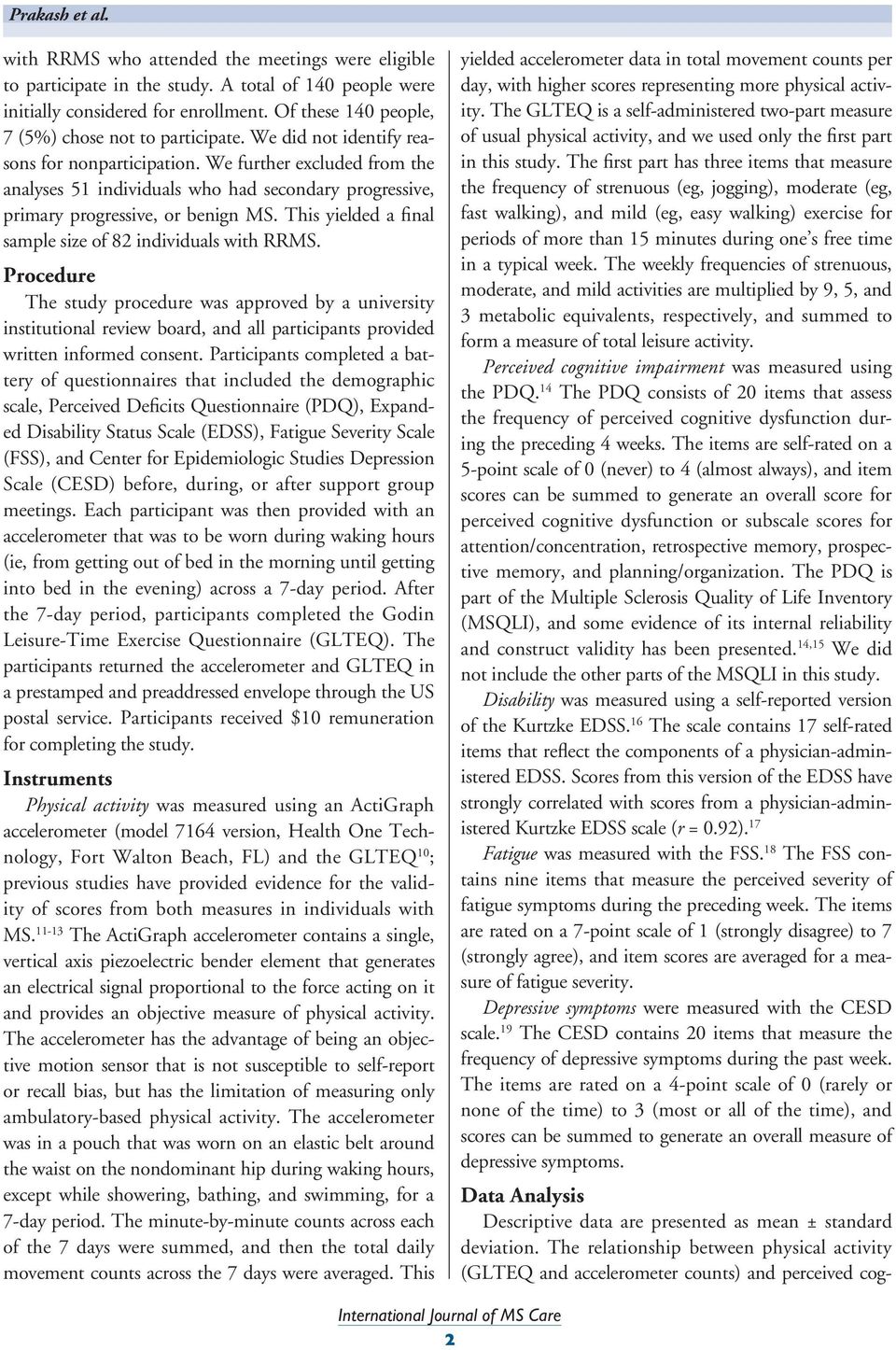
2 Prakash et al. Data Analysis Descriptive data are presented as mean ± standard deviation. The relationship between physical activity (GLTEQ and accelerometer counts) and perceived cogwith RRMS who attended the meetings were eligible to participate in the study. A total of 140 people were initially considered for enrollment. Of these 140 people, 7 (5%) chose not to participate. We did not identify reasons for nonparticipation. We further excluded from the analyses 51 individuals who had secondary progressive, primary progressive, or benign MS. This yielded a final sample size of 82 individuals with RRMS. Procedure The study procedure was approved by a university institutional review board, and all participants provided written informed consent. Participants completed a battery of questionnaires that included the demographic scale, Perceived Deficits Questionnaire (PDQ), Expanded Disability Status Scale (EDSS), Fatigue Severity Scale (FSS), and Center for Epidemiologic Studies Depression Scale (CESD) before, during, or after support group meetings. Each participant was then provided with an accelerometer that was to be worn during waking hours (ie, from getting out of bed in the morning until getting into bed in the evening) across a 7-day period. After the 7-day period, participants completed the Godin Leisure-Time Exercise Questionnaire (GLTEQ). The participants returned the accelerometer and GLTEQ in a prestamped and preaddressed envelope through the US postal service. Participants received $10 remuneration for completing the study. Instruments Physical activity was measured using an ActiGraph accelerometer (model 7164 version, Health One Technology, Fort Walton Beach, FL) and the GLTEQ 10 ; previous studies have provided evidence for the validity of scores from both measures in individuals with MS The ActiGraph accelerometer contains a single, vertical axis piezoelectric bender element that generates an electrical signal proportional to the force acting on it and provides an objective measure of physical activity. The accelerometer has the advantage of being an objective motion sensor that is not susceptible to self-report or recall bias, but has the limitation of measuring only ambulatory-based physical activity. The accelerometer was in a pouch that was worn on an elastic belt around the waist on the nondominant hip during waking hours, except while showering, bathing, and swimming, for a 7-day period. The minute-by-minute counts across each of the 7 days were summed, and then the total daily movement counts across the 7 days were averaged. This yielded accelerometer data in total movement counts per day, with higher scores representing more physical activity. The GLTEQ is a self-administered two-part measure of usual physical activity, and we used only the first part in this study. The first part has three items that measure the frequency of strenuous (eg, jogging), moderate (eg, fast walking), and mild (eg, easy walking) exercise for periods of more than 15 minutes during one s free time in a typical week. The weekly frequencies of strenuous, moderate, and mild activities are multiplied by 9, 5, and 3 metabolic equivalents, respectively, and summed to form a measure of total leisure activity. Perceived cognitive impairment was measured using the PDQ. 14 The PDQ consists of 20 items that assess the frequency of perceived cognitive dysfunction during the preceding 4 weeks. The items are self-rated on a 5-point scale of 0 (never) to 4 (almost always), and item scores can be summed to generate an overall score for perceived cognitive dysfunction or subscale scores for attention/concentration, retrospective memory, prospective memory, and planning/organization. The PDQ is part of the Multiple Sclerosis Quality of Life Inventory (MSQLI), and some evidence of its internal reliability and construct validity has been presented. 14,15 We did not include the other parts of the MSQLI in this study. Disability was measured using a self-reported version of the Kurtzke EDSS. 16 The scale contains 17 self-rated items that reflect the components of a physician-administered EDSS. Scores from this version of the EDSS have strongly correlated with scores from a physician-administered Kurtzke EDSS scale (r = 0.92). 17 Fatigue was measured with the FSS. 18 The FSS contains nine items that measure the perceived severity of fatigue symptoms during the preceding week. The items are rated on a 7-point scale of 1 (strongly disagree) to 7 (strongly agree), and item scores are averaged for a measure of fatigue severity. Depressive symptoms were measured with the CESD scale. 19 The CESD contains 20 items that measure the frequency of depressive symptoms during the past week. The items are rated on a 4-point scale of 0 (rarely or none of the time) to 3 (most or all of the time), and scores can be summed to generate an overall measure of depressive symptoms. 2
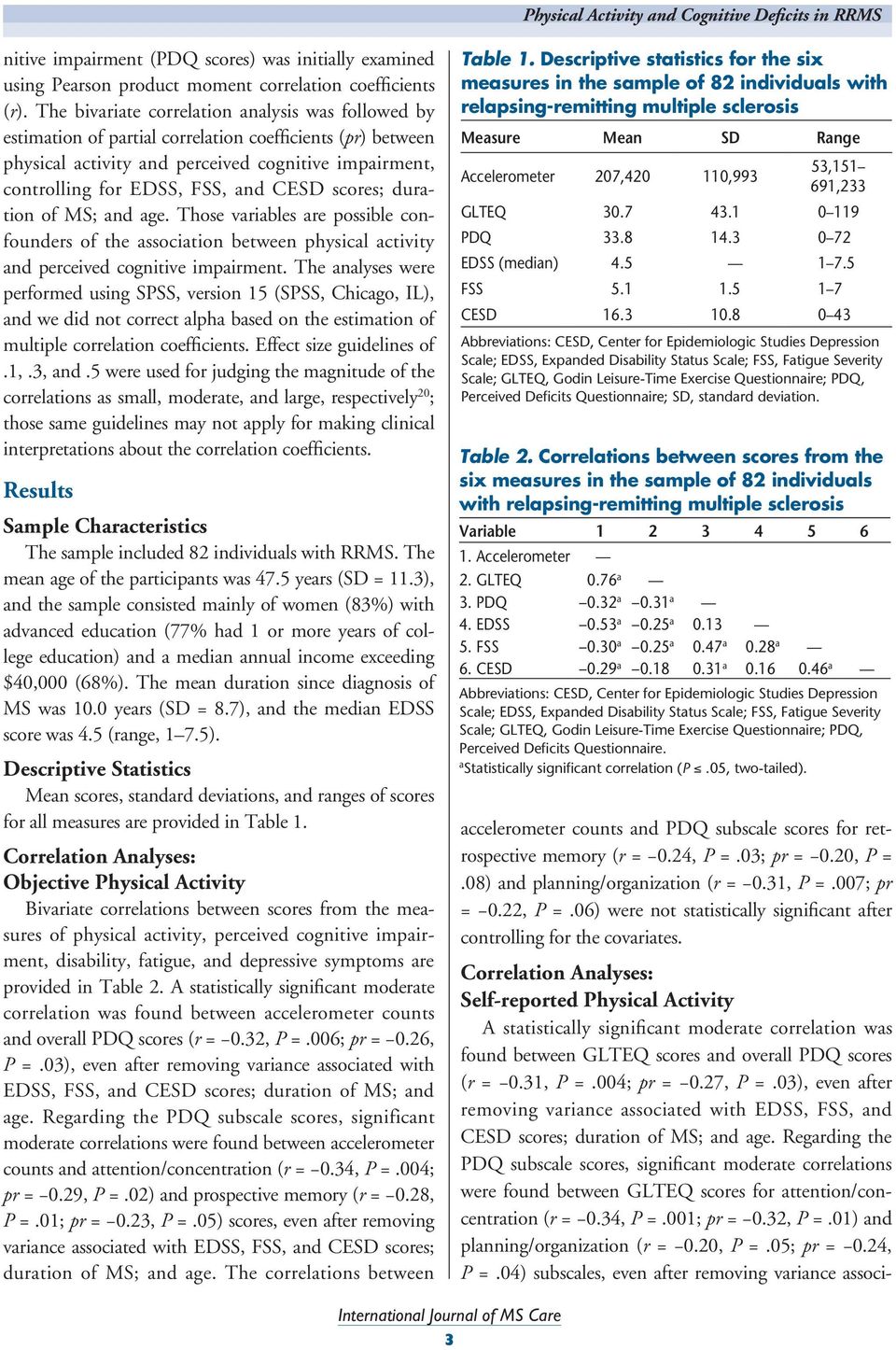
3 Physical Activity and Cognitive Deficits in RRMS Correlation Analyses: Self-reported Physical Activity A statistically significant moderate correlation was found between GLTEQ scores and overall PDQ scores (r = 0.31, P =.004; pr = 0.27, P =.03), even after removing variance associated with EDSS, FSS, and CESD scores; duration of MS; and age. Regarding the PDQ subscale scores, significant moderate correlations were found between GLTEQ scores for attention/concentration (r = 0.34, P =.001; pr = 0.32, P =.01) and planning/organization (r = 0.20, P =.05; pr = 0.24, P =.04) subscales, even after removing variance associnitive impairment (PDQ scores) was initially examined using Pearson product moment correlation coefficients (r). The bivariate correlation analysis was followed by estimation of partial correlation coefficients (pr) between physical activity and perceived cognitive impairment, controlling for EDSS, FSS, and CESD scores; duration of MS; and age. Those variables are possible confounders of the association between physical activity and perceived cognitive impairment. The analyses were performed using SPSS, version 15 (SPSS, Chicago, IL), and we did not correct alpha based on the estimation of multiple correlation coefficients. Effect size guidelines of.1,.3, and.5 were used for judging the magnitude of the correlations as small, moderate, and large, respectively 20 ; those same guidelines may not apply for making clinical interpretations about the correlation coefficients. Results Sample Characteristics The sample included 82 individuals with RRMS. The mean age of the participants was 47.5 years (SD = 11.3), and the sample consisted mainly of women (83%) with advanced education (77% had 1 or more years of college education) and a median annual income exceeding $40,000 (68%). The mean duration since diagnosis of MS was 10.0 years (SD = 8.7), and the median EDSS score was 4.5 (range, 1 7.5). Descriptive Statistics Mean scores, standard deviations, and ranges of scores for all measures are provided in Table 1. Correlation Analyses: Objective Physical Activity Bivariate correlations between scores from the measures of physical activity, perceived cognitive impairment, disability, fatigue, and depressive symptoms are provided in Table 2. A statistically significant moderate correlation was found between accelerometer counts and overall PDQ scores (r = 0.32, P =.006; pr = 0.26, P =.03), even after removing variance associated with EDSS, FSS, and CESD scores; duration of MS; and age. Regarding the PDQ subscale scores, significant moderate correlations were found between accelerometer counts and attention/concentration (r = 0.34, P =.004; pr = 0.29, P =.02) and prospective memory (r = 0.28, P =.01; pr = 0.23, P =.05) scores, even after removing variance associated with EDSS, FSS, and CESD scores; duration of MS; and age. The correlations between Table 1. Descriptive statistics for the six measures in the sample of 82 individuals with relapsing-remitting multiple sclerosis Measure Mean SD Range Accelerometer 207, ,993 53, ,233 GLTEQ PDQ EDSS (median) FSS CESD Abbreviations: CESD, Center for Epidemiologic Studies Depression Scale; EDSS, Expanded Disability Status Scale; FSS, Fatigue Severity Scale; GLTEQ, Godin Leisure-Time Exercise Questionnaire; PDQ, Perceived Deficits Questionnaire; SD, standard deviation. Table 2. Correlations between scores from the six measures in the sample of 82 individuals with relapsing-remitting multiple sclerosis Variable Accelerometer 2. GLTEQ 0.76 a 3. PDQ 0.32 a 0.31 a 4. EDSS 0.53 a 0.25 a FSS 0.30 a 0.25 a 0.47 a 0.28 a 6. CESD 0.29 a a a Abbreviations: CESD, Center for Epidemiologic Studies Depression Scale; EDSS, Expanded Disability Status Scale; FSS, Fatigue Severity Scale; GLTEQ, Godin Leisure-Time Exercise Questionnaire; PDQ, Perceived Deficits Questionnaire. a Statistically significant correlation (P.05, two-tailed). accelerometer counts and PDQ subscale scores for retrospective memory (r = 0.24, P =.03; pr = 0.20, P =.08) and planning/organization (r = 0.31, P =.007; pr = 0.22, P =.06) were not statistically significant after controlling for the covariates. 3
4 Prakash et al. ated with EDSS, FSS, and CESD scores; duration of MS; and age. The correlations between GLTEQ scores and PDQ subscale scores for retrospective memory (r = 0.28, P =.01; pr = 0.22, P =.06) and prospective memory (r = 0.20, P =.04; pr = 0.20, P =.08) were not statistically significant after controlling for the covariates. Discussion The current study supports an inverse association between physical activity and perceived cognitive impairment in individuals with RRMS. Those individuals with RRMS who were more physically active reported experiencing fewer perceived cognitive difficulties, and the relationships were statistically significant even after controlling for EDSS scores, duration of MS, age, depressive symptoms, and fatigue. These findings provide novel evidence for an association between physical activity behavior and perceived cognitive impairment in individuals with RRMS. Moreover, the results are consistent with our previous research that demonstrated an association between cardiorespiratory fitness as a surrogate for physical activity and measures of cognition in a small sample of people with RRMS. 9 Such results provide additional evidence for a possible role of physical activity in people with RRMS in the domain of cognitive functioning, although we acknowledge that this association is not causal and cognitive function could influence physical activity behavior. Indeed, physical activity is increasingly being recognized as a lifestyle factor that could mitigate the decline in cognitive function in people with MS, 21 thereby resulting in improved PracticePoints Individuals with relapsing-remitting MS (RRMS) who are more physically active have fewer perceived cognitive difficulties than those who are less active. These findings may demonstrate a prophylactic effect of physical activity on cognitive decline in individuals with MS. People with RRMS should be encouraged to modify their lifestyle to include increased physical activity as a means of maximizing their cognitive functioning. cognitive functioning and more efficient utilization of neural resources. 9 The strengths of this study include the measurement of physical activity using self-report and objective measures of physical activity as well as a relatively large sample of individuals with RRMS. Nevertheless, we recognize a rather significant limitation in the inclusion of a self-report measure of perceived cognitive impairment based on PDQ scores. Conflicting evidence exists regarding the validity of self-reported cognitive complaints based on correlations with scores from neuropsychological tests. For example, some researchers have indicated that self-reported cognitive complaints correlate significantly with objective measures of cognitive functioning, whereas other researchers have reported weak or nonsignificant correlations Our results should be interpreted with caution until they are verified using well-validated neuropsychological batteries. Moreover, we did not include data on quality of life, and the symptoms addressed were limited to fatigue and depression. Such factors might have influenced physical activity and/or perceived cognitive deficits. An additional limitation is the focus on RRMS; our results should not be extended to other types of MS until verified in subsequent research. Finally, we included a self-report version of the EDSS rather than a neurologist-administered EDSS for measuring disability. Our results suggest an inverse, cross-sectional association between physical activity and perceived cognitive impairment in individuals with RRMS. The veracity of this association should be evaluated in longitudinal observational studies that examine the link between changes in physical activity and cognitive functioning in RRMS. Such an examination will be a critical next step in providing further insights into the relationship between physical activity and cognition in people with RRMS, particularly in light of a recent review referring to this link as currently speculative. 21 Such a step is necessary before conducting intervention trials on exercise and cognitive function in RRMS. Nevertheless, further examinations of physical activity as a correlate of cognitive function in RRMS are warranted given the prevalence and severity of cognitive impairment and the relative dearth of alternative methods of staving off cognitive declines in this population. o Financial Disclosures: The authors have no conflicts of interest to disclose. 4
5 Physical Activity and Cognitive Deficits in RRMS 14. Sullivan JJL, Edgley K, Dehoux E. A survey of multiple sclerosis, 1: perceived cognitive problems and compensatory strategy use. Can J Rehabil. 1990;4: Fischer JS, LaRocca NG, Miller DM, Ritvo PG, Andrews H, Paty D. Recent developments in the assessment of quality of life in multiple sclerosis. Mult Scler. 1999;5: Kurtzke JF. Rating neurologic impairment in multiple sclerosis: an expanded disability status scale (EDSS). Neurology. 1983;33: Goodin DS. A questionnaire to assess neurological impairment in multiple sclerosis. Mult Scler. 1998;4: Krupp LB, LaRocca NG, Muir-Nash J, Steinburg AD. The Fatigue Severity Scale: application to patients with multiple sclerosis and systemic lupus erythematosus. Arch Neurol. 1989;46: Radloff LS. The CES-D scale: a self-report depression scale for research in the general population. Appl Psych Meas. 1977;1: Cohen J: Statistical Power Analysis for the Behavioral Sciences. 2nd ed. Hillsdale, NJ: Lawrence Erlbaum Associates; White LJ, Castellano V. Exercise and brain health: implications for multiple sclerosis. Sports Med. 2008;38: Beatty WW, Monson N. Metamemory in multiple sclerosis. J Clin Exp Neuropsychol. 2001;13: Benedict RHB, Cox D, Thompson LL, Foley F, Weinstock-Guttman B, Munschauer F. Reliable screening for neuropsychological impairment in multiple sclerosis. Mult Scler. 2004;10: Chiaravalloti N, DeLuca J. Assessing the behavioral consequences of multiple sclerosis: an application of the Frontal Systems Behavior Scale (FrSBe). Cogn Behav Neurol. 2003;16: Gold SM, Heesen C, Schulz H, Guder U, Monch A. Disease specific quality of life instruments in multiple sclerosis: validation of the Hamburg Quality of Life Questionnaire in Multiple Sclerosis (HAQUAMS). Mult Scler. 2001;7: Gold SM, Schulz H, Monch A, Schulz KH, Heesen C. Cognitive impairment in multiple sclerosis does not affect reliability and validity of self-report health measures. Mult Scler. 2003;9: Lovera J, Bagert B, Smoot KH, et al. Correlations of Perceived Deficits Questionnaire of Multiple Sclerosis Quality of Life Inventory with Beck Depression Inventory and neuropsychological tests. J Rehabil Res Dev. 2006;43: References 1. Rao SM, Leo GJ, Bermadin L, Unverzagt F. Cognitive dysfunction in multiple sclerosis: frequency, patterns, and prediction. Neurology. 1991;41: Thornton AE, Raz N. Memory impairment in multiple sclerosis: a quantitative review. Neuropsychology. 1997;11: Wishart H, Sharpe D. Neuropsychological aspects of multiple sclerosis: a quantitative review. J Clin Exp Neuropsychol. 1997;19: Zakzanis KK. Distinct neurocognitive profiles in multiple sclerosis subtypes. Arch Clin Neuropsychol. 2000;15: Prakash RS, Snook EM, Lewis J, Motl RW, Kramer AF. Cognitive impairments in relapsing remitting multiple sclerosis: a meta-analysis. Mult Scler. 2008;14: Colcombe SJ, Kramer AF, Erickson KI, Scalf P, McAuley E, Cohen NJ. Cardiovascular fitness, cortical plasticity, and aging. Proc Natl Acad Sci. 2004;101: Colcombe SJ, Kramer AF, Erickson KI, et al. Aerobic exercise training increases brain volume in aging humans. J Gerontol A: Biol Sci Med Sci. 2006;61: Kramer AF, Erickson KI. Capitalizing on cortical plasticity: influence of physical activity on cognition and brain function. Trends Cogn Sci. 2007;11: Prakash RS, Snook EM, Erickson KI, et al. Cardiorespiratory fitness: a predictor of cortical plasticity in multiple sclerosis. Neuroimage. 2007;38: Godin G, Shephard RJ. A simple method to assess exercise behavior in the community. Can J Appl Sport Sci. 1985;10: Gosney JL, Scott JA, Snook EM, Motl RW. Physical activity and multiple sclerosis: validity of self-report and objective measures. Fam Commun Health. 2007;30: Motl RW, McAuley E, Snook EM, Scott JA. Validity of physical activity measures in ambulatory individuals with multiple sclerosis. Disabil Rehabil. 2006;28: Motl RW, Zhu W, Park Y, McAuley E, Scott JA, Snook EM. Reliability of scores from physical activity monitors in adults with multiple sclerosis. Adapt MS_Ad_half_final.ai 2/24/09 10:32:59 PM Phys Activ Q. 2007;24: Naturally COOL (just like you) Polar s body cooling systems offer natural cooling relief to people with multiple sclerosis and other conditions that cause heat intolerance. C M Y CM With over 25 years of experience providing quality body cooling vests and systems our products are simply the best! The Polar system is lightweight and may be efficiently worn under clothes. Our cooling kits include the Kool Max vest, wraps for the neck and wrists plus extra packs for all. MY CY CMY K Contact us and be Naturally Cool. L TURA NA POLAR Products RELIEF 25 Years WORKING WITH MS UG FR EE Celebrating DR POLAR Products participates in MSAA s Cooling Program

Mellen Center Approaches: Identifying and managing cognitive disorders in MS
 Mellen Center Approaches: Identifying and managing cognitive disorders in MS Framework: Cognitive dysfunction is common in the MS population. It affects quality of life and correlates with worsened disease
Deirdre Dlugonski East Carolina University 160 Minges Coliseum 252.328.5266 [email protected]
 Deirdre Dlugonski East Carolina University 160 Minges Coliseum 252.328.5266 [email protected] Education PhD University of Illinois, Kinesiology, 2013 BS Pennsylvania State University, Kinesiology, 2005
Clinical Study Synopsis
 Clinical Study Synopsis This file is posted on the Bayer HealthCare Clinical Trials Registry and Results website. It is provided for patients and healthcare professionals to increase the transparency of
MULTIMODAL THERAPY FOR MS- ASSOCIATED COGNITIVE DYSFUNCTION
 MULTIMODAL THERAPY FOR MS- ASSOCIATED COGNITIVE DYSFUNCTION Michael K. Racke, MD Professor and Chairman in Neurology The Helen C. Kurtz Chair in Neurology Department of Neurology Ohio State University
This is an electronic reprint of the original article. This reprint may differ from the original in pagination and typographic detail.
 This is an electronic reprint of the original article. This reprint may differ from the original in pagination and typographic detail. Author(s): Viljanen, Anne; Mikkola, Tuija; Rantakokko, Merja; Kauppinen,
Multiple Sclerosis (MS) Aprile Royal, Novartis Pharma Canada Inc. September 21, 2011 Toronto, ON
 Multiple Sclerosis (MS) Aprile Royal, Novartis Pharma Canada Inc. September 21, 2011 Toronto, ON First-line DMTs Reduce Relapse Frequency by ~30% vs. Placebo Frequency of relapse with various DMTs, based
Fatigue in MS: 2005 update B. Colombo University of Milan - HSR
 Fatigue in MS: 2005 update B. Colombo University of Milan - HSR Fatigue in MS One of the more disabling symptoms Affects about 75/90 % of the patients May be the onset symptom Transient or chronic May
International Journal of Economics, Commerce and Management United Kingdom Vol. II, Issue 2, 2014
 International Journal of Economics, Commerce and Management United Kingdom Vol. II, Issue 2, 2014 http://ijecm.co.uk/ ISSN 2348 0386 HEALTHCARE MANAGEMENT AND PSYCHOLOGICAL WELL-BEING IN PATIENTS WITH
Effect of BEMER Magnetic Field Therapy on the Level of Fatigue in Patients with Multiple Sclerosis: A Randomized, Double-Blind Controlled Trial
 THE JOURNAL OF ALTERNATIVE AND COMPLEMENTARY MEDICINE Volume 15, Number 5, 2009, pp. 507 511 ª Mary Ann Liebert, Inc. DOI: 10.1089=acm.2008.0501 Effect of BEMER Magnetic Field Therapy on the Level of Fatigue
The Role of Neuropsychology in the Treatment of MS
 The Role of Neuropsychology in the Treatment of MS Jeffrey Wilken, Ph.D. Director of Research Neuropsychology Associates of Fairfax Assistant Professor of Neurology Georgetown University Medical Center
Habib Hadianfard MD, 2 Nahid Ashjazadeh MD, 1 Soodabe Feridoni BS, 1 Elham Farjam BS
 Neurology Asia 2015; 20(3) : 263 268 The role of psychological resilience, severity of disease and treatment adherence in the prediction of health-related quality of life in patients with multiple sclerosis
Medication Policy Manual. Topic: Aubagio, teriflunomide Date of Origin: November 9, 2012
 Medication Policy Manual Policy No: dru283 Topic: Aubagio, teriflunomide Date of Origin: November 9, 2012 Committee Approval Date: December 12, 2014 Next Review Date: December 2015 Effective Date: January
Objectives. Significant Costs Of Chronic Pain. Pain Catastrophizing. Pain Catastrophizing. Pain Catastrophizing
 Effectiveness of a Comprehensive Pain Rehabilitation Program in the Reduction of Pain Catastrophizing Michele Evans, MS, APRN-C, CNS, March 27, 2007 Mayo Foundation for Medical Education and Research (MFMER).
The Relationship Between Anhedonia & Low Mood
 Rebecca M. Floyd, Ph.D., Kimberly Lewis, Ph.D., Eliot Lopez, M.S., Thomas Toomey, B.A., Kena Arnold, B.A., and Lara Stepleman, Ph.D. The lifetime prevalence of depression in patients with MS is approximately
Curriculum Vita Molly E. K. McLaren, BS
 Curriculum Vita Molly E. K. McLaren, BS Contact Information Department of Clinical and Health Psychology University of Florida PO Box 100165 Phone: (608) 381-7243 Gainesville, Fl 32610-0165 Email: [email protected]
Personality traits in multiple sclerosis: association with mood and anxiety disorders in a Romanian patients sample
 Human & Veterinary Medicine International Journal of the Bioflux Society OPEN ACCESS Research Article Personality traits in multiple sclerosis: association with mood and anxiety disorders in a Romanian
Chemobrain. Halle C.F. Moore, MD The Cleveland Clinic October 3, 2015
 Chemobrain Halle C.F. Moore, MD The Cleveland Clinic October 3, 2015 Terminology Chemotherapy-associated cognitive dysfunction Post-chemotherapy cognitive impairment Cancer treatment-associated cognitive
New perception of disability including cognition, fatigue, pain and other impairments related to MS
 New perception of disability including cognition, fatigue, pain and other impairments related to MS Diego Cadavid, MD Director, MS Clinical Development Biogen Idec 1 Need for clarity on terminology for
indicates that the relationship between psychosocial distress and disability in patients with CLBP is not uniform.
 Chronic low back pain (CLBP) is one of the most prevalent health problems in western societies. The prognosis of CLBP is poor, as indicated by very low rate of resolution, even with treatment. In CLBP,
LOCUS OF CONTROL AND DRINKING BEHAVIOR IN AMERICAN INDIAN ALCOHOLICS AND NON-ALCOHOLICS
 LOCUS OF CONTROL AND DRINKING BEHAVIOR IN AMERICAN INDIAN ALCOHOLICS AND NON-ALCOHOLICS PAMELA JUMPER THURMAN, Ph.D., DEBORAH JONES-SAUMTY, M.S. and OSCAR A. PARSONS, Ph.D. Abstract: Many investigators
EpicRehab, LLC To re c ogniz e a nd de v e lop the v a l u e in e a c h of us.
 EpicRehab, LLC To re c ogniz e a nd de v e lop the v a l u e in e a c h of us. ABSTRACT Title: Situational Assessment as a Measure of Work-Related Executive Function Principal Investigator: Leonard N.
The Role of Neuropsychological Testing in Guiding Decision- Making Related to Dementia
 The Role of Neuropsychological Testing in Guiding Decision- Making Related to Dementia By Scott Knight, Director, SLR Diagnostics & Assessments, a division of Sibley & Associates Inc., and Konstantine
CRITICALLY APPRAISED PAPER (CAP)
 CRITICALLY APPRAISED PAPER (CAP) FOCUSED QUESTION What is the effect of life review through writing on depressive symptoms in older adults residing in senior residences? Chippendale, T., & Bear-Lehman,
ASSESSMENT: Coaching Efficacy As Indicators Of Coach Education Program Needs
 March, 2003 Volume 5, Issue 1 ASSESSMENT: Coaching Efficacy As Indicators Of Coach Education Program Needs Lena Fung, Ph.D. Department of Physical Education Hong Kong Baptist University Hong Kong, SAR
ß-interferon and. ABN Guidelines for 2007 Treatment of Multiple Sclerosis with. Glatiramer Acetate
 ABN Guidelines for 2007 Treatment of Multiple Sclerosis with ß-interferon and Glatiramer Acetate Published by the Association of British Neurologists Ormond House, 27 Boswell Street, London WC1N 3JZ Contents
Advanced Multiple Sclerosis: Progressive MS Epidemiology
 Advanced Multiple Sclerosis: Progressive MS Epidemiology CMSC 2007-Washington, DC Mitchell T. Wallin, MD, MPH Associate Director-Clinical Care VA MS Center of Excellence-East East Associate Professor of
WAKE-Up Pilot Study, Mental Training for patients with relapse-remitting multiple sclerosis and fatigue
 PLEASE NOTE: This trial has been registered retrospectively. Trial Description Title WAKE-Up Pilot Study, Mental Training for patients with relapse-remitting multiple sclerosis and fatigue Trial Acronym
Satisfaction with Life after Spinal Cord Injury: A look over 35 years. Stephanie Kolakowsky-Hayner, PhD Kimberly Bellon Jerry Wright, MS
 Satisfaction with Life after Spinal Cord Injury: A look over 35 years Stephanie Kolakowsky-Hayner, PhD Kimberly Bellon Jerry Wright, MS Disclosures This continuing education activity is managed and accredited
Supporting MS-Related Disability Claims to Private Insurers: The Physician s Role
 Supporting MS-Related Disability Claims to Private Insurers: The Physician s Role What Is This Guide? This guide was compiled by the National Multiple Sclerosis Society as an aid to health care professionals
Spinal Muscular Atrophy
 Maryam Oskoui, MD, MSc, FRCPC Pediatric Neurologist Spinal Muscular Atrophy Elise Historical Timeline In vitro and animal studies Werdnig and Hoffmann describe SMA 1 (Arch Psych Nervenkrankheiten) Disease
NATIONAL INSTITUTE FOR HEALTH AND CARE EXCELLENCE. Proposed Health Technology Appraisal
 NATIONAL INSTITUTE FOR HEALTH AND CARE EXCELLENCE Proposed Health Technology Appraisal Daclizumab for treating relapsing-remitting multiple Draft scope (pre-referral) Draft remit/appraisal objective To
WISC IV and Children s Memory Scale
 TECHNICAL REPORT #5 WISC IV and Children s Memory Scale Lisa W. Drozdick James Holdnack Eric Rolfhus Larry Weiss Assessment of declarative memory functions is an important component of neuropsychological,
Patient-reported outcome measures in Multiple Sclerosis
 Patient-reported outcome measures in Multiple Sclerosis A Riazi Address for correspondence: Dr. Afsane Riazi, Psychology Department, Royal Holloway, University of London, Egham, Surrey TW20 0EX, UK Tel:
A blood sample will be collected annually for up to 2 years for JCV antibody testing.
 Mellen Center Currently Enrolling Non-Treatment Trials STRATIFY-2 JCV Antibody Program in Patients with Relapsing Multiple Sclerosis Receiving or Considering Treatment with Tysabri Primary Investigator:
CNS Vital Signs Advancing Multiple Sclerosis Care
 CNS Vital Signs Advancing Multiple Sclerosis Care Adding Value to Your Practice by Providing Solutions for Measuring, Monitoring and www.cnsvs.com Contents Why CNS Vital Signs?... Why CNS Vital Signs in
06/06/2012. The Impact of Multiple Sclerosis in the Pacific Northwest. James Bowen, MD. Swedish Neuroscience Institute
 The Impact of Multiple Sclerosis in the Pacific Northwest James Bowen, MD Multiple Sclerosis Center Multiple Sclerosis Center Swedish Neuroscience Institute 1 2 Motor Symptoms of MS Weakness Spasticity
Committee Approval Date: December 12, 2014 Next Review Date: December 2015
 Medication Policy Manual Policy No: dru299 Topic: Tecfidera, dimethyl fumarate Date of Origin: May 16, 2013 Committee Approval Date: December 12, 2014 Next Review Date: December 2015 Effective Date: January
Understanding the Pain Trajectory During Treadmill Testing in Peripheral Artery Disease
 Understanding the Pain Trajectory During Treadmill Testing in Peripheral Artery Disease Diane Treat-Jacobson, PhD, RN, FAHA, FAAN Susan J. Henly, PhD, RN Ulf G. Bronas, PhD, ATC, ATR Arthur S. Leon, MD,
MS an Mental Health. Alison Carolan MS Mental Health Nurse Kings College Hospital. IMPARTS December 2013
 MS an Mental Health Alison Carolan MS Mental Health Nurse Kings College Hospital IMPARTS December 2013 MS and Mental Health MS is an autoimmune disease MS carries high risk of common mental disorders and
Stage A & C Sample Data Collection Form
 Stage A & C Sample Data Collection Form Instructions: Review a minimum of 20 patient charts (or another number determined to be appropriate) from patients most recently admitted, and complete this Data
Oncology Nursing Society Annual Progress Report: 2008 Formula Grant
 Oncology Nursing Society Annual Progress Report: 2008 Formula Grant Reporting Period July 1, 2011 June 30, 2012 Formula Grant Overview The Oncology Nursing Society received $12,473 in formula funds for
Effects of Gender Based Violence on Neurocognitive functioning in HIV positive individuals
 ORIGINAL ARTICLE Effects of Gender Based Violence on Neurocognitive functioning in HIV positive individuals 1 M. L. Imasiku and M. J. Hamweene ABSTRACT Background: Gender based violence is being recognized
PSYCHOLOGICAL AND NEUROPSYCHOLOGICAL TESTING
 Status Active Medical and Behavioral Health Policy Section: Behavioral Health Policy Number: X-45 Effective Date: 01/22/2014 Blue Cross and Blue Shield of Minnesota medical policies do not imply that members
CART Community Assessment of Risk Tool
 CART Community Assessment of Risk Tool 0 3-0 7. 2 0 1 2 D E M E N T I A L E A R N I N G E V E N T M U L L I N G A R PA R K H O T E L T U E S D AY 3 R D J U LY 2 0 1 2 D R R Ó N Á N O C A O I M H P R O
Optimization of treatment with interferon beta in multiple sclerosis. Usefulness of automatic system application criteria
 Optimization of treatment with interferon beta in multiple sclerosis. Usefulness of automatic system application criteria AUTHORS Juan Luis Ruiz-Peña, Pablo Duque, and Guillermo Izquierdo Address: Unidad
Cognitive Rehabilitation for Executive Dysfunction in Parkinson s Disease
 Calleo, J., Burrows, C., Levin, H., Marsh, L., Lai, E., York, M. (2012). Cognitive rehabilitation for executive dysfunction in Parkinson s disease: application and current directions., vol. 2012, Article
How To Use A Drug In Multiple Sclerosis
 Revised (2009) guidelines for prescribing in multiple sclerosis INTRODUCTION In January 2001, the (ABN) first published guidelines for the use of licensed disease modifying treatments (ß-interferon and
PRO BALLOON VENOPLASTY IS A PROMISING TECHNOLOGY FOR TREATMENT OF MS
 PRO BALLOON VENOPLASTY IS A PROMISING TECHNOLOGY FOR TREATMENT OF MS Manish Mehta MD MPH The Vascular Group The Institute for Vascular Health & Disease Albany Medical Center SVS 2012 DISCLOSURES Research,
Health-related quality of life in multiple sclerosis patients with bladder, bowel and sexual dysfunction
 http://informahealthcare.com/dre ISSN 0963-8288 print/issn 1464-5165 online Disabil Rehabil, 2014; 36(12): 987 992! 2014 Informa UK Ltd. DOI: 10.3109/09638288.2013.825332 RESEARCH PAPER Health-related
Measurement Issues in Short Term Clinical Trials. Brian Healy, PhD
 Measurement Issues in Short Term Clinical Trials Brian Healy, PhD Overview n In order to iden>fy treatment effects or predictors of disease course, measurement of disease course is required n Although
Running head: ASPERGER S AND SCHIZOID 1. A New Measure to Differentiate the Autism Spectrum from Schizoid Personality Disorder
 Running head: ASPERGER S AND SCHIZOID 1 A New Measure to Differentiate the Autism Spectrum from Schizoid Personality Disorder Peter D. Marle, Camille S. Rhoades, and Frederick L. Coolidge University of
LONG TERM HYPERBARIC OXYGENATION (HBO) RETARDS PROGRESSION IN MULTIPLE SCLEROSIS PATIENTS
 LONG TERM HYPERBARIC OXYGENATION (HBO) RETARDS PROGRESSION IN MULTIPLE SCLEROSIS PATIENTS Abstract: Analysis of703 MS patients showed that 300 HBO treatments (about one treatment a fortnight over 10-13
Adult Physical Activity
 NOO data factsheet Adult Physical Activity November 2012 Key points According to the Health Survey for England (self-reported data), 39% of men and 29% of women met the government s physical activity recommendations
Primary Endpoints in Alzheimer s Dementia
 Primary Endpoints in Alzheimer s Dementia Dr. Karl Broich Federal Institute for Drugs and Medical Devices (BfArM) Kurt-Georg-Kiesinger-Allee 38, D-53175 Bonn Germany Critique on Regulatory Decisions in
CRITICALLY APPRAISED PAPER (CAP)
 CRITICALLY APPRAISED PAPER (CAP) FOCUSED QUESTION Does a neurocognitive habilitation therapy service improve executive functioning and emotional and social problem-solving skills in children with fetal
Compositional Changes of B and T Cell Subtypes during Fingolimod Treatment in Multiple Sclerosis Patients: A 12-Month Follow-Up Study
 Compositional Changes of B and T Cell Subtypes during Fingolimod Treatment in Multiple Sclerosis Patients: A 12-Month Follow-Up Study Nele Claes 1 *; Tessa Dhaeze 1 *; Judith Fraussen PhD 1 ; Bieke Broux
Medication Policy Manual. Topic: Aubagio, teriflunomide Date of Origin: November 9, 2012
 Medication Policy Manual Policy No: dru283 Topic: Aubagio, teriflunomide Date of Origin: November 9, 2012 Committee Approval Date: December 11, 2015 Next Review Date: December 2016 Effective Date: January
ARE THE ICF ACTIVITY AND PARTICIPATION DIMENSIONS DISTINCT?
 J Rehabil Med 2003; 35: 145 149 ARE THE ICF ACTIVITY AND PARTICIPATION DIMENSIONS DISTINCT? Alan M. Jette, Stephen M. Haley and Jill T. Kooyoomjian From the Roybal Center for Enhancement of Late-Life Function,
Asymptomatic HIV-associated Neurocognitive Disorder (ANI) Increases Risk for Future Symptomatic Decline: A CHARTER Longitudinal Study
 Asymptomatic HIV-associated Neurocognitive Disorder (ANI) Increases Risk for Future Symptomatic Decline: A CHARTER Longitudinal Study Robert Heaton, PhD 1, Donald Franklin, BS 1, Steven Woods, PsyD 1,
Relapsing-remitting multiple sclerosis Ambulatory with or without aid
 AVONEX/BETASERON/COPAXONE/EXTAVIA/GILENYA/REBIF/TYSABRI Applicant must be covered on an Alberta Government sponsored drug program. Page 1 of 5 PATIENT INFMATION Surname First Name Middle Initial Sex Date
Rational basis for early treatment in MS. Bonaventura Casanova Estruch Unitat d Esclerosi Múltiple Hospital Universitari la Fe València
 Rational basis for early treatment in MS Bonaventura Casanova Estruch Unitat d Esclerosi Múltiple Hospital Universitari la Fe València Bonaventura Casanova Department of Neurology University Hospital La
The Effect of Physical Exercise on Depression; Case study: Professional and Nonprofessional
 Available online athttp://www.ijashss.com International Journal of Advanced Studies in Humanities and Social Science Volume 1, Issue 8, 2013: 1161-1165 The Effect of Physical Exercise on Depression; Case
Kantar Health, New York, NY 2 Pfizer Inc, New York, NY. Experiencing depression. Not experiencing depression
 NR1-62 Depression, Quality of Life, Work Productivity and Resource Use Among Women Experiencing Menopause Jan-Samuel Wagner, Marco DiBonaventura, Jose Alvir, Jennifer Whiteley 1 Kantar Health, New York,
Effect of Self-Efficacy on the Performance of Athletes
 Effect of Self-Efficacy on the of Athletes Singh 1, T.D., Bhardwaj 2, G. and Bhardwaj 3, V. 1 Lecturer in Physical Education, Kundan Vidhya Mandir, Ludhiana, Punjab 2 Director Physical Education, Guru
Sleep Deprivation and Post-Treatment (CBD)
 Population Authors & year Design Intervention (I) and Comparison (C) Mean age (SD) 1 Gender (%) Delivered to Dosage (total number of sessions) Primary Outcome domain (Measure(s)) Secondary Outcome domain
Special Populations in Alcoholics Anonymous. J. Scott Tonigan, Ph.D., Gerard J. Connors, Ph.D., and William R. Miller, Ph.D.
 Special Populations in Alcoholics Anonymous J. Scott Tonigan, Ph.D., Gerard J. Connors, Ph.D., and William R. Miller, Ph.D. The vast majority of Alcoholics Anonymous (AA) members in the United States are
A PROSPECTIVE EVALUATION OF THE RELATIONSHIP BETWEEN REASONS FOR DRINKING AND DSM-IV ALCOHOL-USE DISORDERS
 Pergamon Addictive Behaviors, Vol. 23, No. 1, pp. 41 46, 1998 Copyright 1998 Elsevier Science Ltd Printed in the USA. All rights reserved 0306-4603/98 $19.00.00 PII S0306-4603(97)00015-4 A PROSPECTIVE
Psoriasis, Incidence, Quality of Life, Psoriatic Arthritis, Prevalence
 1.0 Abstract Title Prevalence and Incidence of Articular Symptoms and Signs Related to Psoriatic Arthritis in Patients with Psoriasis Severe or Moderate with Adalimumab Treatment (TOGETHER). Keywords Psoriasis,
MULTIPLE SCLEROSIS AND DEPRESSION. Michael Racke, MD The Ohio State University Meera Narasimhan, MD University of South Carolina
 MULTIPLE SCLEROSIS AND DEPRESSION Michael Racke, MD The Ohio State University Meera Narasimhan, MD University of South Carolina MICHAEL RACKE, MD Disclosures!! Research/Grants: National Institute of Neurologic
Immunex Corporation Novantrone (Mitoxantrone HCL) P&CNS Advisory Committee Briefing Document. Page 020
 Page 020 4.0 Efficacy of Mitoxantrone in Multiple Sclerosis The efficacy of mitoxantrone in MS was demonstrated in two well-designed, randomized trials: Studies 901 and 902. The study design and efficacy
Frequently Asked Questions
 Frequently Asked Questions Business Office: 598 Airport Boulevard Suite 1400 Morrisville NC 27560 Contact: [email protected] Phone: 888.750.6941 Fax: 888.650.6795 www.cognitrax.com Diseases of the
Manufacturing Technology, Inc.
 Manufacturing Technology, Inc. MV IT I 70 READY AVENUE N.W. * FORT WALTON BEACH * FLORIDA 32548-3877 TEL: (850) 664-6070 * FAX: (850) 664-6007 ' N httpv://www. mtifwb.com 8 510(k) Summary 8.1 Submitter's
PCORI Workshop on Treatment for Multiple Sclerosis. Breakout Group Topics and Questions Draft 3-27-15
 PCORI Workshop on Treatment for Multiple Sclerosis Breakout Group Topics and Questions Draft 3-27-15 Group 1 - Comparison across DMTs, including differential effects in subgroups Consolidated straw man
Mellen Center for Multiple Sclerosis
 Mellen Center Cleveland Clinic Marie Namey, RN, MSN, MSCN Mellen Center Cleveland Clinic Cleveland, OH Home of. Mellen Center for Multiple Sclerosis Mellen Center Mission The Mellen Center remains committed