
M class j <script instruction(s)> type descriptions
|
|
|
- Kenneth Hensley
- 10 years ago
- Views:
Transcription
1 US A1 (19) United States (12) Patent Application Publication (10) Pub. No.: US 2014/ A1 Andres et al. (43) Pub. Date: NO. 20, 2014 (54) (71) (72) (73) (21) (22) (51) ARKUP LANGUAGE INTEGRATION AT RUNTIE Applicant: Oracle International Corporation, Redwood City, CA (US) Inventors: Ariel orelli Andres, Ciudad de Buenos Aires (AR); Ezequiel auro Bergamaschi, Ciudad de Buenos Aires (AR); Paulo Gustavo eiga, San artin (AR); Gustavo Battistoni, Olivos (AR) Assignee: Oracle International Corporation, Redwood City, CA (US) Appl. No.: 13/896,964 Filed: ay 17, 2013 Publication Classi?cation (52) U.S.Cl. CPC..... G06F 9/45512 ( ) USPC /115 (57) ABSTRACT ethods and apparatus for marshalling markup language objects into programming language objects in a scripting language runtime environment. A markup language integra tion method may be implemented in scripting runtime envi ronments that allows the use of simple and complex markup language structures in scripts. At runtime of a script, only classes for the schema structures that are referenced by the script are generated. Document Object odel (DO) objects may be incrementally constructed according to the schema structures referenced by the script, and bytecode may be generated corresponding to the schema structures according to class metadata for the schema structures. The bytecode may be dynamically linked in the runtime environment. The classes de?ned by the schema act as wrappers for the DO objects; when an object is updated by the script, a correspond ing DO object is also updated. Type checking may be Int. Cl. G06F 9/455 ( ) applied to catch script errors during development. report error(s) t USQl' E script Y schema class j <script instruction(s)> metadata type descriptions l scripting runtime engine class metadata generate or modify DO structure generate bytecode ll DO structure bytecode generator 120 m scripting.. ll runtime environment 100 class

2 Patent Application Publication Nov. 20, 2014 Sheet 1 of 8 US 2014/ A1 report error(s) > U89!"? script class i <script instruction(s)> m etada ta type scripting runtime engine m class metaclata generate or modify DO structure generate bytecode DO Structure bytecode generator scripting run time environment 100 class b ytecode Q FIG. 1

3 Patent Application Publication Nov. 20, 2014 Sheet 2 0f 8 US 2014/ A1 report error user generates or modi?es script and/or schema i execute script read and parse script instruction referencing a class i perform type checking generate class bytecode from class metadata m l load class from bytecode m generate or modify DO structure m script instructions? YES FIG. 2

4 Patent Application Publication Nov. 20, 2014 Sheet 3 0f 8 US 2014/ A1 report error ( start > > user generates or modi?es script and/or schema v compile script? 4 read and parse script instruction referencing a class v generate class bytecode from class metadata (if necessary) perform type checking? FIG. 3A

5 Patent Application Publication Nov. 20, 2014 Sheet 4 0f 8 US 2014/ A1 execute script? read and parse script instruction referencing a class Q 4 load class from bytecode? > generate or modify the DO structure for the class? script instructions? YES FIG. 3B

6 Patent Application Publication Nov. 20, 2014 Sheet 5 of 8 US 2014/ A1 script 400 def cust = new Customer(); Customer? (1 ) execution class loader Customer? (2) (6) script execution class loader? generate Customer class metadata (5) Customerclass? <c ass metadata> <bytecode> FIG. 4

7 Patent Application Publication Nov. 20, 2014 Sheet 6 of 8 US 2014/ A1 generate a request for a class execution class loader searches for the class 5_02 YES request for the class sent to script execution class loader 5_06 continue search catalog for class metadata? class metadata found? NO error generate bytecode for the class from the class metadata 5_12 inform the execution class loader 5_14 FIG. 5

8 Patent Application Publication Nov. 20, 2014 Sheet 7 of 8 US 2014/ A1 user i script class metadata _ I I w m l script instruction l l I script processing module l I w I l generate or : I modify object generate structure class object : y : object structure module class object module l w m I : v v : I object structure class object I I I m m l scripting runtime environment l l

9 Patent Application Publication Nov. 20, 2014 Sheet 8 of 8 US 2014/ A1 computer processor processor processor 1010a 1010b "' 1010n /O network input/output device(s) program data m instructions storage E wired and/or wireless network connection cursd 9 "" ' keyboard display(s) ev'ce FIG. 7

10 US 2014/ A1 Nov. 20, 2014 ARKUP LANGUAGE INTEGRATION AT RUNTIE BACKGROUND [0001] Scripting languages are programming languages that are interpreted at runtime rather than being precompiled as in compiled programming languages. For example, there are several conventional scripting languages for Java tech nology environments, for example the J ava Runtime Envi ronment (JRE ) in Java lrtual achine (J ) technol ogy. Some examples of scripting languages for Java technology (e.g., J ) environments include Groovy, Jruby, Scala, Fantom, and Jython (Python for J ). When executing scripts in a scripting language, there is often a need to bind markup language structures (e. g., Extensible arkup Language (XL) schema structures) to the programming language (e.g., the J ava programming language). Scripting languages may be used to develop scripting applications or scripting modules within applications. [0002] While there are many conventional data binding frameworks for binding Extensible arkup Language (XL) structures to the Java language (JiBX, Castor XL, JBind, XLBeans and Java Architecture for XL Binding (JAXB ), among others), JAXB is generally considered the de facto Java technology for binding XL structures to Java classes. Generally, these conventional data binding frameworks operate by generating Java classes from XL schema structures; the Java classes are then compiled to generate J ava types that represents the schema structures. Typically, using these conventional data binding frameworks, Java classes are generated for all the XL schema struc tures in a set of XL Schema De?nition (XSD)?les, even for XL schema structures that are not used in the code that is being compiled or script that is being interpreted. For example, in scripting languages, the XL schema structures needed by a script to be executed would generally be precom piled along with all other XL schema structures de?ned in a set of XSD?les using a data binding framework (e.g., JAXB) prior to executing the script. This need to precompile the XL schema prior to executing a script may be an issue, particularly in design and development environments where the XL schema structures and the scripts may frequently be modi?ed. Recompiling the entire XL schema every time the developer modi?es the XL schema or the script can be very time consuming. [0003] In addition, these data binding frameworks do not allow the manipulation of parsed Document Object odel (DO) structures. For example, JAXB builds the object structure by parsing XL. JAXB does not transform directly from a DO structure to the JAXB model, and thus cannot build the object tree directly from a parsed DO structure. If a DO structure is available, the DO structure must be serialized (or marshaled) to generate XL, and then the XL is deserialized (or unmarshaled) to the JAXB model. This need for serialization and deserialization can also be very time consuming, especially in proj ccts with large XL schemas. [0004] Java, JRE, J, and JAXB are trademarks or reg istered trademarks of Oracle, Inc. and/or its affiliates in the United States and other countries. SUARY [0005] Embodiments of methods and apparatus for mar shalling markup language (e.g., Extensible arkup Lan guage (XL)) objects into obj ect-oriented programming lan guage (e.g., Java technology programming language) objects when executing scripts in a scripting language runt ime environment are described. Embodiments of a markup language integration method that may be implemented by scripting runtime engines in scripting runtime environments are described that allow the use of simple and complex markup language (e.g., XL schema) structures in scripts. In at least some embodiments of a scripting runtime engine, XL Schema De?nition C(SD) elements and types are made accessible in scripting applications or scripting modules within applications. ia a scripting interface, users (e.g., developers, programmers, or other script users) may include and manipulate XL schema structures in scripts. [0006] In at least some embodiments, Java technology bytecode may be generated corresponding to the XL schema structure(s), for example from class metadata (e.g., class de?nitions) generated from the XL schema structure (s). The Java bytecode may then be dynamically linked in the runtime environment (e.g., J ava irtual achine (J ) technology runtime environment). [0007] In at least some embodiments, during runtime of a script, Document Object odel (DO) objects may be incre mentally constructed by the scripting runtime engine accord ing to the XL schema structure(s) referenced by the script. The XL classes de?ned by the structures in the schema act as wrappers for the DO structures; every time a?eld of a class object de?ned by an XL schema structure is updated by the script, the corresponding DO structure is also updated. [0008] In at least some embodiments, XL type descrip tions are made available in the scripting runtime environment, and thus type checking may be applied to script instructions referencing the XL schema structures to catch scripting errors during development. [0009] Embodiments of the scripting runtime engine gen erate object-oriented programming language (e.g., Java ) classes on demand in a type safe way, only generating classes for those markup language (e.g., XL) schema structures that are referenced by the script. In addition, embodiments may wrap object model (e.g., DO) objects in markup lan guage (e.g., XL) classes de?ned by the structures in the schema, thus not requiring serialization and deserialization of the markup language structures to generate the object model structures. Using embodiments of the scripting runtime engine, script developers may reference and modify markup language (e.g., XL) structures via a script while having a strong type checking mechanism to prevent coding errors. A developer may modify the markup language (e.g., XL) schema structures referenced by a script, and the script can be executed without requiring the recompilation of the entire schema as object-oriented programming language (e.g., Java ) classes are generated for only the schema structures referenced by the script, thus saving time. In addition, object model (e.g., DO) objects are directly generated for the developer in a type safe way. BRIEF DESCRIPTION OF THE DRAWINGS [0010] FIG. 1 is a block diagram of a scripting runtime environment including a scripting runtime engine that imple ments a markup language integration method, according to at least some embodiments.

11 US 2014/ A1 Nov. 20, 2014 [0011] FIG. 2 is a?owchart ofa method for markup lan guage integration at runtime in a scripting environment, according to at least some embodiments. [0012] FIGS. 3A and 3B are?owcharts of a method for markup language integration at runtime in a scripting envi ronment that involves compiling the script before executing the script, according to at least some embodiments. [0013] FIG. 4 is a block diagram ofclass loading at runtime in a scripting environment, according to at least some embodiments. [0014] FIG. 5 is a?owchart of a method for class loading at runtime in a scripting environment, according to at least some embodiments. [0015] FIG. 6 is a block diagram of an example implemen tation of a method for markup language integration at runtime in a scripting environment, according to at least some embodiments. [0016] FIG. 7 is a block diagram of a computing device, according to some embodiments. [0017] While the system is described herein by way of example for several embodiments and illustrative drawings, those skilled in the art will recognize that the system is not limited to the embodiments or drawings described. It should be understood, that the drawings and detailed description thereto are not intended to limit the system to the particular form disclosed but on the contrary, the intention is to cover all modi?cations, equivalents and alternatives falling within the spirit and scope of the present system as de?ned by the appended claims. The headings used herein are for organiza tional purposes only and are not meant to limit the scope of the description or the claims. As used throughout this appli cation, the word may is used in a permissive sense (i.e., meaning having the potential to), rather than the mandatory sense (i.e., meaning must). Similarly, the words, include, including, and includes mean including, but not limiting to. DETAILED DESCRIPTION OF THE EBODIENTS [0018] Embodiments of methods and apparatus for mar shalling markup language (e.g., Extensible arkup Lan guage (XL)) objects into obj ect-oriented programming lan guage (e.g., Java technology programming language) objects when executing scripts in a scripting language runt ime environment are described. Embodiments of a markup language integration method that may be implemented by scripting runtime engines in scripting runtime environments are described that allow the use of simple and complex markup language (e.g., XL schema) structures in scripts. In at least some embodiments of the scripting runtime engine, XL Schema De?nition (XSD) elements and types are made accessible in scripting applications or scripting modules within applications. ia a scripting interface, users (e.g., developers, programmers, or other script users) may include and manipulate XL schema structures in scripts. However, rather than compiling the entire XL schema prior to execu tion of the script as in conventional data binding frameworks, instances (e. g., Java technology bytecode) of just the XL schema structures referenced by the script may be created, type checked, and dynamically linked at runtime of the script. Thus, the compilation step is avoided, and only objects for the XL schema structures that are needed by the script are generated. [0019] In at least some embodiments, when a script is com piled or executed, Java bytecode may be generated corre sponding to the XL schema structure(s) referenced by the script, for example from class metadata (e.g., class de?ni tions) generated from the respective XL schema structure (s). During execution of the script, the Java bytecode may be dynamically linked in the runtime environment (e.g., Java irtual achine (J ) technology runtime environ ment). [0020] In at least some embodiments, Document Object odel (DO) structures (which may also be referred to as DO objects) may be passed as input arguments to a script and/or may be created by the script. In at least some embodi ments, during execution of a script, the DO objects may be incrementally constructed or modi?ed by the scripting runt ime engine according to the XL schema structure(s) refer enced by the script. The XL classes de?ned by the struc tures in the schema act as wrappers for the DO objects; when a?eld of a class object de?ned by an XL schema structure is updated by the script, the corresponding DO object is also updated. Thus, embodiments avoid the need for serialization and deserialization of the XL schema struc tures as in conventional data binding frameworks. [0021] In at least some embodiments, XL schema type de?nitions are made available in the scripting runtime envi ronment, and thus type checking may be applied to script instructions that reference the XL schema structures to catch errors during development. [0022] Thus, embodiments of the scripting runtime engine generate object-oriented programming language (e.g., Java ) classes on demand in a type safe way, only generating classes for those markup language (e. g., XL) schema struc tures that are referenced by the script. In addition, embodi ments may wrap object model (e.g., DO) objects in markup language (e.g., XL) classes as de?ned by the structures in the schema, thus not requiring serialization and deserializa tion of the markup language structures to generate the object model structures. Using embodiments of the scripting runt ime engine, scripts created or modi?ed by script developers may create, reference, and modify objects as de?ned by a schema while having a strong type checking mechanism to prevent coding errors. A developer may modify a script and/ or the schema structures referenced by a script, and the script can be executed without requiring the recompilation of the entire schema as classes are dynamically generated during script execution for only the schema structures referenced by the script, thus saving time. In addition, object model (e.g., DO) objects, which may be passed into the script as argu ments or created in response to script instructions, are wrapped in the classes de?ned by the schema and are directly manipulated by the script in a type safe way. Thus, the devel oper does not have to worry about the object model structure (e.g., the DO tree) or its validity. [0023] Embodiments of the scripting runtime engine may, for example, be implemented as or in a standalone scripting application or as a scripting module or plug-in in various application environments. An example process management application environment in which embodiments may be implemented is described later in this document in the section titled Example application. An example of a computing device in which embodiments may be implemented is illus trated in FIG. 7, described later in this document. [0024] While embodiments of the markup language inte gration method are generally described in the context of inte

12 US 2014/ A1 Nov. 20, 2014 grating XL at runtime in scripting programs in Java tech nology environments, speci?cally in the Java irtual achine (J ) technology runtime environment, it is to be noted that embodiments may be applied to other markup languages, other types of programs, other object-oriented programming languages, and/ or other types of runtime envi ronments. In addition, while embodiments are generally described in the context of wrapping Document Object odel (DO) objects with markup language (e.g., XL) schema structures, other object models than DO may be used in some embodiments. In addition, while embodiments are generally described in which the XL Schema De?nition (XSD) is used to de?ne the XL schema, other methods than XSD may be used to de?ne the XL schemas in some embodiments. [0025] FIG. 1 is a block diagram of a scripting runtime environment 100 including a scripting runtime engine 110 that implements a markup language integration method, according to at least some embodiments. In the scripting runtime environment 100, input to a scripting runtime engine 110 may include a script 104 and class metadata that may be accessed by the script. [0026] The class metadata may include type descriptions 108 that may, for example, be generated by parsing the XL structures as de?ned in a schema 106. The type descriptions 108 may be viewed as an intermediate model between the markup language structures de?ned in the schema 106 and the object model used at runtime of the script. An example XL schema or portion thereof is given below in the section titled Example schema. An example type description for an example schema structure is provided later in this document in the section titled apping of XL schema structures with type descriptions. In at least some embodiments, the schema 106 may be persistent, while the type descriptions 108 may only be generated from the schema 106 and maintained in the runtime environment. A collection of type descriptions 108 in the runtime environment may be referred to herein as a cata log. [0027] In at least some embodiments, a user 102 (e.g., a developer, programmer, or other user) may add new schema structures and/or modify existing schema structures in schema 106 via a user interface, for example prior to or during development a script 104. During script development in the runtime environment, when a schema structure is added to or modi?ed in schema 106, the schema 106 may be parsed to generate a type description for the schema structure in the catalog. In at least some embodiments, type descriptions are only updated in the catalog for schema structures that have been added to or modi?ed in the schema 106. Note that the catalog may include type descriptions for many objects, even thousands or more of type descriptions, while a given script may only reference a few of the objects from the catalog. [0028] The user 102 (e.g., a developer, programmer, or other script user) may create or modify a script 104, for example via user input to a scripting interface to a scripting runtime engine 110 provided by a standalone scripting appli cation or by a scripting module or plug-in in an application or program environment. The script 104 may include one or more interpretable script instructions according to a scripting language. During script development, the user 102 may add, delete, and/or modify the script instructions via the scripting interface. Examples of scripts are provided later in this docu ment, for example in the section titled Example script. [0029] A script instruction may reference one or more simple or complex markup language (e.g., XL) schema structures or elements as de?ned in a schema 106, for example an XL schema as de?ned in one or more XSD?les. An example XL schema orportion thereof is given below in the section titled Example schema. For example, a script instruction may reference a schema structure to create an instance of the class de?ned by the schema structure (also referred to as a class object), as in the following non-limiting example instructions. Note that the double slashes indicate comments: [0030] Shiporder.Shipto shiptoinew Shiporder.Shipto( ); // generate a Shiporder.Shipto object [003 1] Shiporder.Item iteml :new Shiporder.Item( ); //gen erate a Shiporder.Item object [0032] Shiporder orderinew Shiporder( ); // generate a Shiporder object [0033] As another example, a script instruction may refer ence class objects corresponding to schema structure(s) to set or get values of various element(s) of the class objects as de?ned by the schema structure(s), as in the following non limiting example instructions to set and get?elds in example class objects: [0034] shipto.addressi 123 ain Street ; // sets shipto.ad dress [0035] order.shipto:shipto; // sets order. shipto [0036] iteml.titlei Paper clips ; // sets iteml.title [0037] iteml.quantity:24; // sets iteml.quantity [0038] printin Item: +iteml.title+ ; Qty: +iteml.quan tity // gets iteml.title and iteml.quantity [0039] An execution of the script 104 may be initiated, for example by input (e.g., command line input) to a scripting user interface. In at least some embodiments, one or more arguments may optionally be provided for the script via the command line, as in the following non-limiting form: [0040] >myscript[ argument(s)] [0041] For example, a reference to an existing DO object corresponding to a schema structure may be input to a script as a command line argument. The script 104 may include one or more instructions to set and/or get?elds in DO objects that are input as arguments to the script. In addition, the script may output one or more arguments, for example a reference to a DO object generated by the script. [0042] In at least some embodiments, when a script is executed to which an existing DO object is input, a byte code generator 130 component may generate class bytecode 132 (i.e., a class object) corresponding to the input DO object from class metadata for the respective schema struc ture, for example from a class description contained in a catalog. In at least some embodiments, the class bytecode 132 may be generated according to a class de?nition that was generated by parsing the respective schema structure. The generated class bytecode 132 may be dynamically linked in the runtime environment. [0043] At runtime, the scripting runtime engine 110 may read and parse the script instructions in the input script 104, generally in sequential order from a?rst instruction to a last instruction. The engine 110 may also perform type checking when parsing the script instructions. As previously described, script instructions may reference a schema structure that de?nes a class to generate an instance of the schema structure (referred to as a class object) or to set or get values of?elds in class objects corresponding to the referenced schema struc ture.

13 US 2014/ A1 Nov. 20, 2014 [0044] An instruction being parsed by engine 110 may reference a schema structure that de?nes a class to generate an instance of the schema structure (referred to as a class object) as shown in the above examples. When the engine 110 encounters such an instruction, the engine 110 may access class metadata (e.g., class metadata maintained in a container or catalog) to obtain a type description for the respective schema structure. An example type description for an example schema structure is provided later in this document in the section titled apping of XL schema structures with type descriptions. If a type description for the referenced schema structure cannot be obtained, an error may be gener ated. If a type description for the referenced schema structure is obtained, the engine 110 may apply the type description to the instruction to determine if the instruction is correct according to the type description. If the instruction is not correct according to the type description, an error may be generated. [0045] If an error was generated when parsing the instruc tion, the error may be reported to the user 1 02, for example via an error message displayed to the user interface. The user 102 may then modify the script 104 and/or the schema 106 to correct the error. Note that, if a schema structure in the schema 106 is modi?ed by the user, the schema structure may be parsed to generate an updated class description corre sponding to the schema structure. After the user 102 has corrected the error, the script 104 may be re-executed from the beginning, or alternatively script execution may be continued from the instruction at which the respective error was encoun tered. [0046] Once an instruction that references a schema struc ture that de?nes a class to generate an instance of the schema structure has been successfully parsed, class bytecode 132 may be generated for the schema structure referenced in the instruction. Note that class bytecode 132 may also be referred to as a class object. In at least some embodiments, a bytecode generator 130 component may generate the class bytecode 132 from class metadata for the respective schema structure, for example from a class description contained in a catalog. In at least some embodiments, the class bytecode 132 may be generated according to a class de?nition that was generated by parsing the respective schema structure. FIGS. 4 and 5 illustrate a method for generating and loading bytecode for classes at runtime from class metadata using class loaders, according to at least one embodiment. However, other meth ods may be used to generate the class bytecode 132 in some embodiments. The generated class bytecode 132 may be dynamically linked in the runtime environment (e.g., Java irtual achine (J ) technology runtime environment). [0047] In addition, once an instruction that references a schema structure that de?nes a class to generate an instance of the schema structure has been successfully parsed, the engine 110 may generate a DO structure 120 according to the respective class metadata; the class metadata acts as a wrap per for the DO structure 120.An example DO structure is given below in the section titled Example DO output. Note that DO structure 120 may also be referred to as a DO object. [0048] As previously mentioned, a script instruction being parsed by engine 110 may modify a class object previously generated by the script for a schema structure as described above, or alternatively may modify a class object correspond ing to a DO object obtained as an input argument to the script. For example, the instruction may set a value of an element of the class object as de?ned by the schema structure corresponding to the class object. In at least some embodi ments, when the engine 110 encounters such an instruction, the engine 110 may type check the instruction according to the type description corresponding to the respective object type. If type checking detects an error in the instruction, the error may be reported to the user 1 02, for example via an error message displayed to the user interface. The user 102 may then modify the script 104 and/or the schema 106 to correct the error. Note that, if a schema structure in the schema 106 is modi?ed by the user 102, the schema structure may be parsed to generate an updated class description corresponding to the schema structure. After the user 102 has corrected the error, the script 104 may be re-executed from the beginning, or alternatively script execution may be continued from the instruction at which the respective error was encountered. [0049] Once the instruction that modi?es a class object parses successfully, then the script instruction may be executed to modify the class object. In executing the instruc tion, the DO structure 120 corresponding to the referenced class object is also modi?ed according to the instruction, for example by setting a value of an element in the DO struc ture 120 to a value indicated in the script instruction. Thus, each time a class object generated by the script is modi?ed by a script instruction, the underlying DO structure 120 is also modi?ed. [0050] FIG. 2 is a?owchart of a method for markup lan guage integration at runtime in a scripting environment, according to at least some embodiments. As indicated at 200, a user (e.g., a developer, programmer, or other script user) may create or modify a script, for example via user input to a scripting interface provided by an application that supports scripting. The user may add, delete, and/ or modify the script instructions via the scripting interface. [0051] At 200, the user may also add and/or modify schema structure(s) in the schema via the user interface. In at least some embodiments, each schema structure that is added or modi?ed may be parsed to generate a type description corre sponding to the respective object type. If the schema structure is determined to be invalid by the parser for some reason, an error may be reported to the user via the user interface and the user may correct the schema structure accordingly; the schema structure is then re-parsed. The generated type description(s) may, for example, be maintained as class meta data in a catalog for a project for which the script is being developed. In at least some embodiments, the type descrip tions are not persisted, and may only be generated from the schema and maintained in memory in the runtime environ ment. [0052] As indicated at 202, an execution of the script may be initiated, for example by input to the user interface. To execute the script, a scripting runtime engine may read and parse the script instructions in the script, generally in sequen tial order from a?rst instruction to a last instruction. Elements 204 through 218 may be iteratively performed during execu tion. [0053] As indicated at 204, a script instruction referencing a class may be read and parsed. For example, an instruction being parsed may reference a class de?ned by a schema structure to generate an instance of the class (also referred to as a class object), as in the following example script instruc tions: [0054] def shipinew Shiporder( ); // generate a Shiporder object [0055] def addressinew Address( ); // generate an Address object

14 US 2014/ A1 Nov. 20, 2014 [0056] As another example, a script instruction being parsed may reference a class object generated for a schema structure to set or get a value of an element of the class object as de?ned by the schema structure corresponding to the class object, as in the following example script instructions: [0057] address.street: l23 ain Street // sets address. street to the string 123 ain Street [0058] ship.addressiaddress // sets ship.address to refer ence the generated Address object [0059] printin ship.address.street // gets street and prints 123 ain Street [0060] As indicated at 206, type checking may be per formed for the instruction and the class(es) referenced by the instruction. In at least some embodiments, the instruction may be type checked according to the type description cor responding to the respective object type. [0061] At 208, if type checking detects an error in the instruction, the method may return to element 200. The error may be reported to the user, for example via an error message displayed to a user interface. The user may modify the script and/ or the schema to correct the error. If a schema structure in the schema is modi?ed by the user, the schema structure may be parsed to generate an updated class description corre sponding to the schema structure. After the user has corrected the error, the script may be re-executed from the beginning, or alternatively script execution may be continued from the instruction at which the respective error was encountered. [0062] At 208, if there is no error in the instruction, then at 210, if the referenced class needs to be loaded, elements 212 and 214 may be performed. As indicated at 212, bytecode for the class may be generated according to metadata for the class, if necessary. In at least some embodiments, the class bytecode may be generated according to a type description for the schema structure, for example a type description that was previously generated by parsing the schema structure. However, other methods may be used to generate the class bytecode in some embodiments. In at least some embodi ments, generated bytecode may be persisted between execu tions of the script, and thus bytecode may only be generated at 212 for classes for which the corresponding schema struc ture was created or modi?ed since the previous execution of the script. Note that the class bytecode may also be referred to as a class object. [0063] As indicated at 214, the class may be loaded into the runtime environment. In at least some embodiments, the class may be loaded according to a dynamic linking technique applied to the class bytecode. In at least some embodiments, the runtime environment (e. g., the J runtime environ ment) may provide a dynamic linking mechanism that may be leveraged to load the class from the bytecode. FIGS. 4 and 5 illustrate a method for generating and loading bytecode for classes at runtime using class loaders, according to at least one embodiment. [0064] As indicated at 216, a DO structure corresponding to the referenced class may be generated or modi?ed. If the instruction being parsed references a class de?ned by a schema structure to generate an instance of the class, then a DO structure for the class may be generated. If the script instruction being parsed references a class object to modify the class, for example to set a value of an element of the class object as de?ned by the respective schema structure, then a DO structure that already exists for the class may be modi?ed accordingly. Note that the DO structure that is modi?ed may have been passed into the script as an input argument or may have been generated in response to a previous script instruction. If the script instruction being parsed references a class object to get a value of an element of the class object as de?ned by the respective schema structure, then the DO structure is not modi?ed. [0065] At 218, if there are more script instructions to be read and parsed, then the method may return to element 204 to continue execution of the script. Otherwise, the method is done. [0066] Using the above method, the user (e.g., a program mer or developer) may execute the script. During execution of the script, type checking is applied to the instructions and the classes referenced by the instructions. Bytecode is dynami cally generated and linked for only the class(es) used in the script, so precompiling of the entire schema into class objects is not required as in conventional data binding frameworks. Type-safe DO structures are also incrementally constructed for the classes by the scripting runtime engine according to the script instructions. Thus, type-safe DO structures are made available to the user without requiring serialization and deserialization of the markup language structures as in con ventional data binding frameworks. The user may add instructions to or modify instructions in the script, and may also modify the schema structures referenced by the script as necessary or desired, and the script can be re-executed with out requiring recompiling of the entire schema, as the class objects and DO objects are dynamically generated for only those schema structures referenced by the script during script execution. [0067] The method as illustrated in FIG. 2 involves markup language integration at runtime when executing a script. However, some scripting languages (e.g., Groovy) allow scripts to be statically compiled prior to execution. In these scripting languages, an alternative method may be used. FIGS. 3A and 3B are?owcharts of a method for markup language integration at runtime in a scripting environment that involves compiling the script prior to executing the script, according to at least some embodiments. [0068] FIG. 3A is a?owchart of a compilation portion of the method for markup language integration, according to at least some embodiments. As indicated at 300, a user (e.g., a developer, programmer, or other script user) may create or modify a script, for example via user input to a scripting interface provided by an application that supports scripting. The user may add, delete, and/or modify the script instruc tions via the scripting interface. [0069] At 300, the user may also add and/or modify schema structure(s) in the schema via the user interface. In at least some embodiments, each schema structure that is added or modi?ed may be parsed to generate a type description corre sponding to the respective object type. If the schema structure is determined to be invalid by the parser for some reason, an error may be reported to the user via the user interface and the user may correct the schema structure accordingly; the schema structure is then re-parsed. The generated type description(s) may, for example, be maintained as class meta data in a catalog for a project for which the script is being developed. In at least some embodiments, the type descrip tions are not persisted, and may only be generated from the schema and maintained in memory in the runtime environ ment. [0070] As indicated at 302, a compilation of the script may be initiated, for example by input to the user interface. To compile the script, a compilation engine or module of the
![ned by the schema structure corresponding to the class object, as in the following example script instructions: [0057] address.street: l23 ain Street // sets address.](/docs-images/51/14088870/images/page_14.jpg "street to the string 123 ain Street [0058] ship.addressi")
15 US 2014/ A1 Nov. 20, 2014 scripting language may read and parse the script instructions in the script, generally in sequential order from a?rst instruc tion to a last instruction. Elements 304 through 312 may be iteratively performed during compilation. [0071] As indicated at 304, a script instruction referencing a class may be read and parsed. For example, an instruction being parsed may reference a class de?ned by a schema structure to generate an instance of the class (also referred to as a class object). As another example, a script instruction being parsed may reference a class object generated for a schema structure to set or get a value of an element of the class object as de?ned by the schema structure corresponding to the object. [0072] As indicated at 306, bytecode for the class may be generated according to metadata for the class, if necessary. In at least some embodiments, generated bytecode may be per sisted, and thus bytecode may only be generated for classes for which the corresponding schema structure was created or modi?ed since the previous compilation of the script. In at least some embodiments, the class bytecode may be gener ated according to a type description for the schema structure, for example a type description that was previously generated by parsing the schema structure. However, other methods may be used to generate the class bytecode in some embodi ments. [0073] As indicated at 308, type checking may be per formed for the instruction and the class(es) referenced by the instruction. In at least some embodiments, the instruction may be type checked according to the type description cor responding to the respective object type. [0074] At 310, if type checking detects an error in the instruction, the method may return to element 300. The error may be reported to the user, for example via an error message displayed to a user interface. The user may modify the script and/or the schema to correct the error. After the user has corrected the error, the script may be re-compiled from the beginning, or alternatively script compilation may be contin ued from the instruction at which the respective error was encountered. [0075] At 310, if there is no error in the instruction, the method proceeds to 312. At 312, if there are more script instructions to be compiled, then the method may return to element 304 to continue compilation of the script. Otherwise, the compilation is done, and the method may continue at element 320 of FIG. 3B. [0076] Note that the order of the elements in the?owchart of FIG. 3A may be varied. For example, in some embodi ments, generating bytecode at 306 may be performed after elements 308 and 310. [0077] FIG. 3B is a?owchart of an execution portion of the method for markup language integration, according to at least some embodiments. As indicated at 320, an execution of the script may be initiated, for example by input to the user interface. To execute the script, a scripting runtime engine may read and parse the script instructions in the script, gen erally in sequential order from a?rst instruction to a last instruction. Elements 322 through 330 may be iteratively performed during execution. [0078] As indicated at 322, a script instruction referencing a class may be read and parsed. For example, an instruction being parsed may reference a class de?ned by a schema structure to generate an instance of the class (also referred to as a class object). As another example, a script instruction being parsed may reference a class object generated for a schema structure to set or get a value of an element of the class object as de?ned by the schema structure corresponding to the object. [0079] At 324, if the class referenced by the instruction does not need to be loaded (i.e., the class is already loaded in the runtime environment), then the method proceeds to ele ment 328. Otherwise, at 324, if the class referenced by the instruction needs to be loaded, then as indicated at 326 the class may be loaded into the runtime environment. In at least some embodiments, the class may be loaded according to a dynamic linking technique applied to the class bytecode gen erated at element 306 when the script was compiled in FIG. 3A. In at least some embodiments, the runtime environment (e. g., the J runtime environment) may provide a dynamic linking mechanism that may be leveraged to load the class from the generated bytecode. FIGS. 4 and 5 illustrate a method for generating and loading bytecode for classes at runtime using class loaders, according to at least one embodi ment. Once the class is loaded at 326, the method proceeds to element 328. [0080] As indicated at 328, a DO structure corresponding to the referenced class may be generated or modi?ed. If the instruction being parsed references a class de?ned by a schema structure to generate an instance of the class, then a DO structure for the class may be generated. If the script instruction being parsed references a class object to modify the class, for example to set a value of an element of the class object as de?ned by the respective schema structure, then a DO structure that already exists for the class may be modi?ed accordingly. Note that the DO structure that is modi?ed may have been passed into the script as an input argument or may have been generated in response to a previous script instruction. If the script instruction being parsed references a class object to get a value of an element of the class object as de?ned by the respective schema structure, then the DO structure is not modi?ed. [0081] At 330, if there are more script instructions to be read and parsed, then the method may return to element 322 to continue execution of the script. Otherwise, the method is done. [0082] Using the above method, the user (e.g., a program mer or developer) may?rst compile and then the script. During compilation of the script, type checking is applied to the instructions and the classes referenced by the instructions, and bytecode is generated for only the class(es) used in the script, so precompiling of the entire schema into class objects is not required as in conventional data binding frameworks. During script execution, type-safe DO structures are incre mentally constructed for the classes by the scripting runtime engine according to the script instructions. Thus, type-safe DO structures are made available to the user without requir ing serialization and deserialization of the markup language structures as in conventional data binding frameworks. The user may add instructions to or modify instructions in the script, and may also modify the schema structures referenced by the script as necessary or desired, and the script can be recompiled and executed without requiring recompiling of the entire schema, as the bytecode (class objects) and DO objects are dynamically generated for only those schema structures referenced by the script at script runtime. [0083] FIG. 4 is a block diagram ofclass loading at runtime in a scripting environment, according to at least some embodiments. An example script 400 may include one or more instructions referencing a class or classes. An example

16 US 2014/ A1 Nov. 20, 2014 instruction to generate an object of a class Customer is shown. Alternatively, an input argument to the script may indicate a DO object for which a class object needs to be generated. During execution of the script 400, one or more class loaders (e.g., script execution class loader 420) may be created that may provide bytecode for classes that are not found by the execution class loader 410. [0084] Catalog 430 may contain class metadata (e.g., type descriptions generated from the schema) for any number of classes, for example classes used in a project or all classes that may be made available to an application that provides a script ing runtime environment. [0085] During execution of the script 400, the scripting runtime engine may read and parse an instruction that refer ences a class, as in the example instruction: [0086] def cust:new Customer( ); // generate an object of type Customer [0087] The scripting runtime engine may perform type checking of the instruction, and may generate or modify a DO structure for the class (e.g., Customer) as previously described. A request for the class (e. g., Customer) is received or obtained by the execution class loader 410, as indicated at (l). The execution class loader 410 may attempt to?nd the class, and if not successful, may pass the load request on to a script execution class loader 420, as indicated at (2). At (3) and (4), the script execution class loader 420 may access a catalog 430 to obtain class metadata for the class, for example a class description corresponding to the requested class (e.g., Customer). At (5), the script execution class loader 420 gen erates bytecode for the class (Customer.class 440) from the class metadata obtained from the catalog, for example according to a type description corresponding to the requested class. At (6), the script execution class loader 420 informs the execution class loader 410, which may then dynamically link the bytecode 440 for the class into the runt ime environment. Alternatively, the script execution class loader 420 may dynamically link the bytecode 440 into the runtime environment, and then inform the execution class loader 410 that the class is loaded. [0088] FIG. 5 is a?owchart of a method for class loading at runtime in a scripting environment, according to at least some embodiments. During execution of a script, one or more class loaders (which may be referred to as script execution class loaders) may be created that may provide bytecode for classes that are not found by an execution class loader of the runtime environment. As indicated at 500, a request for a class is generated. For example, a scripting runtime engine may encounter an instruction in a script being executed that refer ences the class.as indicated at 502, the execution class loader may receive the request and search for the requested class. At 504, if the execution class loader locates the class, then the execution class loader may handle loading the class if neces sary. At 504, if the execution class loader cannot locate the class, then at 506 the execution class loader sends the request to a script execution class loader. As indicated at 508, the script execution class loader may search a catalog for meta data for the requested class. The catalog may contain class metadata (e.g., type descriptions, etc.) for any number of classes, for example classes used in a project or all classes that may be made available to an application that provides a script ing runtime environment. [0089] At 510, if class metadata for the requested class is not found in the catalog, then an error may be generated. At 510, if class metadata for the requested class is found in the catalog, then at 512 the script execution class loader may generate bytecode for the class according to the respective class metadata, for example according to a type description corresponding to the requested class. In at least some embodi ments, the script execution class loader may dynamically link the bytecode into the runtime environment. As indicated at 514, the script execution class loader may then inform the execution class loader that the class is loaded. Alternatively, the script execution class loader may inform the execution class loader that the class bytecode has been generated, and the execution class loader may handle the dynamic linking of the class bytecode in the runtime environment. Example arkup Language C(L) Documents and Script [0090] The following provides an example XSD?le as an example XL schema, an example script that references XL structures in the example schema, and an example DO XL structure that may be generated by executing the script, according to at least some embodiments. Note that these examples are not intended to be limiting. Example Schema [0091] The following is an example of an XL schema or portion thereof as de?ned in an XSD?le (e.g., Shiporder. XSD). Note that this example is not intended to be limiting: Example Script [0092] The following is an example of a script or portion thereof that references elements in the above example schema. The script may specify Java classes using names (e.g., Shiporder, Shiporder.Shipto, Shiporder.ltem, etc.) to access and construct XL documents. Note that this example is not intended to be limiting: [0093] Shiporder.Shipto shiptoinew Shiporder.Shipto( ); [0094] shipto.address: 123 ain Street ;
![[0084] Catalog](/docs-images/51/14088870/images/page_16.jpg "430 may contain class metadata (e.g.")
17 US 2014/ A1 Nov. 20, 2014 [0095] shipto.city: Anywhere ; [0096] Shiporder.Item item 1 :new Shiporder.Item( ); [0097] item1.title: Paper Clips ; [0098] iteml.quantity:10; [0099] iteml.price:4.79; [0100] Shiporder.Item item2:new Shiporder.Item( ); [0101] item2.title: Permanent arkers ; [0102] item2.quantity:12; [0103] item2.price:7.99; [0104] Shiporder ordanew Shiporder( ); [0105] order.orderperson: John Q ; [0106] order. shipto:shipto; [01 07] order. item.add(iteml ); [0108] order.item.add(item2); Example DO Output [0109] The following is an example DO XL structure that may be incrementally constructed by the example script given above: <7xml version= l.0 encoding= UTF 8?> <Shiporder> <orderperson>john Q</orderperson> <shipto> <name/> <address>123 ain Street</add.ress> <city>anywhere</city> <country/> </shipto> <item> <title>paper Clips</title> <note/> <quantity>l O</quantity> <price>4.79</price> </item> <item> <title>permanent arkers</title> <note/> <quantity>12</quantity> <price>7.99</price> </item> </Shiporder> apping of XL Schema Structures with Type Descriptions [0110] In at least some embodiments, type descriptions may be used to represent basic data types (e.g., Strings, Inte ger, Decimal, etc.), as well as complex structures as objects (with attributes and methods). The type descriptions may be used, for example, in type checking script instructions being parsed by a scripting runtime engine and in generating byte code for a class as previously described. Type descriptions may be obtained from various sources (e.g., from Web Ser vices De?nition Language (WSDL)), and/or may be gener ated by parsing schema structures (e.g., the XL schema structures speci?ed in XSD?les). In some cases, type descriptions may be created or modi?ed by users (e.g., a developer). In at least some embodiments, to facilitate the use of schema components or structures in an application envi ronment, type descriptions may be created to model each structure declared in any schema used in the application envi ronment. In some cases there may be an obvious mapping from a schema structure or component to an existing type description, especially for basic or built-in types such us String, Integer, Date, etc. In general, however, new type descriptions speci?c to a schema that is being used may be required, and thus may be generated by parsing the schema structure(s) created or modi?ed by a user (e.g., a developer). [0111] The following is an example XL schema struc ture, and is not intended to be limiting: <xsd:schema xmlns:xsd= (URL) xmlns:nsl= (name space URL) targetnamespace= (name space URL) > <xsd:element name= Add.ress > <xsd:complextype> <xsd:sequence> <xsd:element name= street type= xsd:string /> <xsd:element name= city type= xsd:string /> <xsd:element name= state type= nsl :State /> </xsd:complextype> </xsd:element> <xsd:simpletype name= State > <xsd:restriction base= xsd:string > <xsd:enumeration value= BA /> <xsd:enumeration value= CD /> <xsd:enumeration value= SF /> </xsd:restriction> </xsd:simpletype> </xsd:schema> [0112] The following is an example type description gen erated according to the above example schema structure, and is not intended to be limiting: Address(xml, Object) Properties:{namespace=(name space URL), nativename=address, typeid=el (name space URL)lAddress} SuperTypes: Attributes: city:string country:string state:objectdynamicref(xobject::cl(name space URL)lState) [0113] In at least some embodiments, if a type description is referenced that is not a basic or built-in type and thus has been created for the schema, the type may be described as the following: [0114] ObjectDynamicRef(xobject:: typeid property of the created Type Description ) as in the above example for the state attribute: [0115] state:objectdynamicref(xobject: :Cl (name space URL) State) [0116] Note, however, that the above description for a type is given as an example, and is not intended to be limiting. [0117] An example type description for the state attribute is given below, and is not intended to be limiting: State(xml, Enum) Properties:{namespace=Enumeration, nativename=state, typeid=cl(name space URL)lState} Attributes: SelectAState:State(xml: :C I (name space URL) 1 State) BA:State(xml: :C I (name space URL) 1 State) CD:State(xml: :C I (name space URL) 1 State) SF:State(xml: :C I (name space URL) 1 State) [0118] Example script instructions for the example schema structure that may be type checked at runtime of the script according to the above type descriptions are given below: [0119] Address addressinew Address( ); //generate an Address object
![orderperson: John Q ; [0106] order. shipto:shipto; [01 07] order. item.](/docs-images/51/14088870/images/page_17.jpg "add(iteml ); [0108] order.item.add(item2); Example DO Output [0109] The following is an example DO XL structure that may be incrementally constructed by the example script given above: <7xml version= l.")
18 US 2014/ A1 Nov. 20, 2014 [0120] address.city: Buenos Aires ; // sets address.city to the indicated string [0121] State state:new State( ); // generate a State object [0122] address.stateistate; // sets address.state to the gener ated State object [0123] While not shown, get instructions may also be type checked. RuntimeiDO anipulation [0124] In at least some embodiments, XL classes or structures act as wrappers for the DO objects or structures. Each time a?eld of an XL class object is updated by an instruction in a script being executed, the corresponding DO structure is also updated by the scripting runtime engine. This avoids the need to perform serialization and deserialization of the XL structures to obtain and access the DO structures as in conventional data binding frameworks. [0125] The following provides example XL schemas, and is not intended to be limiting: <7xml version= l.0 encoding= ISO 8859 l?> <xs:schema xmlns:xs= (URL) xmlns= (nalnespace URL) targetnainespace="(nalnespace URL) > <xs:element name= shiporder > <xs :complextype> <xs :sequence> <xs :element nalne= orderperson type= xs:string /> <xs :element nalne= add.ress type= address /> <xs :element nalne= city type= xs:string /> <xs :element name= count_ry type= xs:string /> </xs :sequence> </xs :complextype> </xs :element> <xs:element name= address > <xs :complextype> <xs :sequence> <xs :element nalne= street type= xs:string /> </xs :sequence> </xs :complextype> </xs :element> </xs:schema> [0126] The following provides an example script that ref erences structures in the above schemas: [0127] def ship:new Shiporder( ); [0128] def addressinew Address( ); [0129] address.street: 123 ain Street [0130] ship.addressiaddress [0131] ship.city: Anywhere [0132] ship.country: USA [0133] ship.orderperson: Smith ; [0134] println The package will be send to +ship.addres. street [0135] println City: +ship.city++ship.country [0136] println to: +ship.orderperson [0137] The example script includes calls to both setter and getter methods. Any get operation returns a reference to an element, as in: [0138] customer.address.street: 123 ain Street //sets street to 123 ain Street [0139] println customer.address.street //gets street and prints 123 ain Street [0140] Any set operation stores a copy of the value: [0141] def ship:new Shiporder( ); // generate a Shiporder object [0142] def myaddressinew Address( ); //generate an Address object (myaddress) [0143] myaddress.street: 123 ain Street // set myad dress.street [0144] ship.addressimyaddress // stores a copy of myad dress to ship.address [0145] myaddress.street: 234 First Street //this does not modify ship.address [0146] println ship.address.street //prints 123 ain Street [0147] println myaddress.street //prints 234 First Street [0148] In the above example, when ship and myaddress class objects are generated, a DO structure is generated for each class object. When myaddress.street is set, the DO object corresponding to myaddress is modi?ed. When ship. address is set to myaddress, a copy of the myaddress DO structure (with the street set to 123 ain Street ) is gener ated in the DO structure corresponding to ship. When myaddress.street is then changed to 234 First Street, the DO structure corresponding to myaddress is modi?ed, but not the DO structure corresponding to ship. Example Application [0149] Embodiments of the methods for marshalling markup language (e.g., Extensible arkup Language QiL)) objects into programming language (e.g., Java ) objects when executing scripts in a scripting language runt ime environment as described herein may be used in any application that uses a scripting language to execute scripts that reference markup language schemas. However, an example application for embodiments is described below. [0150] Embodiments of the markup language integration method for integrating markup language structures at runtime in scripting environments may be used in business process management (BP) application environments.a BP appli cation may be used to design, simulate, and execute Business Process odel and Notation (BPN) processes, e. g. BPN 2.0 processes. BPN 2.0 is a standard for business process modeling that provides a graphical notation for specifying business processes in a Business Process Diagram (BPD) based on a?owcharting technique. The BPN 2.0 standard speci?es that processes can contain script tasks to enable users to include scripts in their processes or projects. BPN processes typically interact with many XL structures. [0151] Embodiments of the markup language integration method described herein may be used in a BP application to provide seamless integration in the script language to the XL structures when designing and executing BPN 2.0 script tasks in processes. Although each project or process developed via the BP application may include many XL structures, typically users (e.g., developers) will only use a small subset of those structures in a given script. As previ ously described, in contrast to scripting runtime environ ments that use conventional data binding frameworks, a scripting runtime engine used by the BP application that implements an embodiment of the markup language integra tion method described herein only processes the XL struc tures that are used in a script being executed. The markup language integration method also provides a type safe mecha nism to detect script errors during the development phase, as well as generating DO structures during script execution without requiring serialization and deserialization of the XL structures.
![RuntimeiDO anipulation [0124] In at least some embodiments, XL classes or structures act as wrappers for the DO objects or structures. Each time a?](/docs-images/51/14088870/images/page_18.jpg "eld of an XL class object is updated by an instruction in a script being executed, the corresponding DO structure is also updated by the scripting runtime engine.")
19 US 2014/ A1 Nov. 20, 2014 Example Implementation [0152] Embodiments of the methods for marshalling markup language (e.g., Extensible arkup Language (XL)) objects into programming language (e.g., Java ) objects when executing scripts in a scripting language runt ime environment as described above may, for example, be implemented as one or more modules, as illustrated in FIG. 6. Each module may be implemented in software, hardware, or a combination thereof. As illustrated in FIG. 6, an example embodiment of a scripting runtime environment 600 may include, but is not limited to, a script processing module 602, an object structure module 605, and a class object module 606. The script processing module 602 may sequentially pro cess instructions from a script 660. The instructions may reference one or more classes de?ned by respective markup language (e.g., XL) structures in a markup language schema that includes markup language structures for multiple classes. In processing a given instruction, the script process ing module 602 may determine that a current instruction being processed indicates that an instance of a class that is referenced by the current instruction is to be created. In response, the class object module 606 may obtain class meta data 670 (e.g., a class de?nition) for the class referenced by the instruction, generate an instance of the class as a class object (e.g., bytecode) according to the class metadata 670 for the class, and load the class object into a runtime environment (e.g., a Java runtime environment). In addition, the object structure module 604 may generate an object structure 610 (e.g., a DO object) for the class according to an object model. Alternatively, an object structure 610 for a class may be obtained as an input argument to the script 660. [0153] In processing a subsequent instruction, the script processing module 602 may determine that the instruction being processed indicates that the class object 612 for a class is to be modi?ed. In response, the object structure 610 (e.g., a DO object) for the class may also be modi?ed according to the instruction, for example by the object structure module 604. [0154] In at least some embodiments, the script processing module 602 may type check the current instruction being processed according to class metadata 670 for the class ref erenced by the current instruction, for example according to a type description for the class. Upon detecting an error in the script 660, the script processing module 602 may inform the user 650, for example via a user interface. The user 650 may then modify the script 660 and/ or the class metadata 670 and re-execute the script. In at least some embodiments, modify ing the class metadata 670 may involve modifying a schema structure corresponding to a class as de?ned in a schema, and regenerating the class de?nition for the respective class in class metadata 670. Example System [0155] arious components of embodiments of the meth ods for marshalling markup language (e.g., Extensible arkup Language QiL)) objects into programming lan guage (e.g., Java ) objects when executing scripts in a script ing language runtime environment as described herein may be executed on one or more computer systems or computing devices, which may interact with various other devices. One such computer system or computing device is illustrated by FIG. 7. In the illustrated embodiment, computer system 1000 includes one or more processors 1010 coupled to a system memory 1020 via an input/ output (I/O) interface Com puter system 1000 further includes a network interface 1040 coupled to I/ O interface 1030, and one or more input/ output devices 1050, such as cursor control device 1060, keyboard 1070, audio device 1090, and display(s) In some embodiments, it is contemplated that embodiments may be implemented using a single instance of computer system 1000, while in other embodiments multiple such systems, or multiple nodes making up computer system 1000, may be con?gured to host different portions, components, or instances of embodiments. For example, in one embodiment some elements may be implemented via one or more nodes of computer system 1000 that are distinct from those nodes implementing other elements. [0156] In various embodiments, computer system 1000 may be a uniprocessor system including one processor 1010, or a multiprocessor system including several processors 1010 (e. g., two, four, eight, or another suitable number). Processors 1010 may be any suitable processor capable of executing instructions. For example, in various embodiments, proces sors 1010 may be general-purpose or embedded processors implementing any of a variety of instruction set architectures (ISAs), such as the x86, PowerPC, SPARC, or IPS ISAs, or any other suitable ISA. In multiprocessor systems, each of processors 1010 may commonly, but not necessarily, imple ment the same ISA. [0157] In some embodiments, at least one processor 1010 may be a graphics processing unit. A graphics processing unit or GPU may be considered a dedicated graphics-rendering device for a personal computer, workstation, game console or other computer system. odern GPUs may be very ef?cient at manipulating and displaying computer graphics, and their highly parallel structure may make them more effective than typical CPUs for a range of graphical algorithms. For example, a graphics processor may implement a number of graphics primitive operations in a way that makes executing them much faster than drawing directly to the screen with a host central processing unit (CPU). The GPU(s) may imple ment one or more application programmer interfaces (APIs) that permit programmers to invoke the functionality of the GPU(s). Suitable GPUs may be commercially available from vendors such as NIDIA Corporation, ATI Technologies, and others. [0158] System memory 1020 may be con?gured to store program instructions and/or data accessible by processor In various embodiments, system memory 1020 may be implemented using any suitable memory technology, such as static random access memory (SRA), synchronous dynamic RA (SDRA), nonvolatile/flash-type memory, or any other type of memory. In the illustrated embodiment, program instructions and data implementing desired func tions, such as those described above for various embodiments of a markup language integration method, are shown stored within system memory 1020 as program instructions 1025 and data storage 1035, respectively. In other embodiments, program instructions and/or data may be received, sent or stored upon different types of computer-accessible media or on similar media separate from system memory 1020 or com puter system Generally speaking, a computer-acces sible medium may include storage media or memory media such as magnetic or optical media, e.g., disk or CD/DD RO coupled to computer system 1000 via I/O interface Program instructions and data stored via a computer accessible medium may be transmitted by transmission

20 US 2014/ A1 Nov. 20, 2014 media or signals such as electrical, electromagnetic, or digital signals, which may be conveyed via a communication medium such as a network and/ or a wireless link, such as may be implemented via network interface [0159] In one embodiment, I/O interface 1030 may be con?gured to coordinate I/O traf?c between processor 1010, system memory 1020, and any peripheral devices in the device, including network interface 1040 or other peripheral interfaces, such as input/output devices In some embodiments, I/ O interface 1030 may perform any necessary protocol, timing or other data transformations to convert data signals from one component (e.g., system memory 1020) into a format suitable for use by another component (e.g., proces sor 1010). In some embodiments, I/O interface 1030 may include support for devices attached through various types of peripheral buses, such as a variant of the Peripheral Compo nent Interconnect (PCI) bus standard or the Universal Serial Bus (U SB) standard, for example. In some embodiments, the function of I/O interface 1030 may be split into two or more separate components, such as a north bridge and a south bridge, for example. In addition, in some embodiments some or all of the functionality of I/O interface 1030, such as an interface to system memory 1020, may be incorporated directly into processor [0160] Network interface 1040 may be con?gured to allow data to be exchanged between computer system 1000 and other devices attached to a network, such as other computer systems, or between nodes of computer system In vari ous embodiments, network interface 1040 may support com munication via wired or wireless general data networks, such as any suitable type of Ethernet network, for example; via telecommunications/telephony networks such as analog voice networks or digital?ber communications networks; via storage area networks such as Fibre Channel SANs, or via any other suitable type of network and/or protocol. [0161] Input/ output devices 1050 may, in some embodi ments, include one or more display terminals, keyboards, keypads, touchpads, scanning devices, voice or optical rec ognition devices, or any other devices suitable for entering or retrieving data by one or more computer system ul tiple input/output devices 1050 may be present in computer system 1000 or may be distributed on various nodes of com puter system In some embodiments, similar input/out put devices may be separate from computer system 1000 and may interact with one or more nodes of computer system 1000 through a wired or wireless connection, such as over network interface [0162] As shown in FIG. 7, memory 1020 may include program instructions 1025, con?gured to implement embodi ments of the markup language integration method, and data storage 1035, comprising various data accessible by program instructions In one embodiment, program instructions 1025 may include software elements of embodiments of the markup language integration method, as illustrated in the above Figures. Data storage 1035 may include data that may be used in embodiments. In other embodiments, other or different software elements and data may be included. [0163] Those skilled in the art will appreciate that computer system 1000 is merely illustrative and is not intended to limit the scope of the markup language integration method as described herein. In particular, the computer system and devices may include any combination of hardware or soft ware that can perform the indicated functions, including com puters, network devices, internet appliances, PDAs, wireless phones, pagers, etc. Computer system 1000 may also be connected to other devices that are not illustrated, or instead may operate as a stand-alone system. In addition, the func tionality provided by the illustrated components may in some embodiments be combined in fewer components or distrib uted in additional components. Similarly, in some embodi ments, the functionality of some of the illustrated components may not be provided and/or other additional functionality may be available. [0164] Those skilled in the art will also appreciate that, while various items are illustrated as being stored in memory or on storage while being used, these items or portions of them may be transferred between memory and other storage devices for purposes of memory management and data integ rity. Alternatively, in other embodiments some or all of the software components may execute in memory on another device and communicate with the illustrated computer sys tem via inter-computer communication. Some or all of the system components or data structures may also be stored (e.g., as instructions or structured data) on a computer-acces sible medium or a portable article to be read by an appropriate drive, various examples of which are described above. In some embodiments, instructions stored on a computer-acces sible medium separate from computer system 1000 may be transmitted to computer system 1000 via transmission media or signals such as electrical, electromagnetic, or digital sig nals, conveyed via a communication medium such as a net work and/or a wireless link. arious embodiments may fur ther include receiving, sending or storing instructions and/or data implemented in accordance with the foregoing descrip tion upon a computer-accessible medium. Accordingly, the present invention may be practiced with other computer sys tem con?gurations. CONCLUSION [0165] arious embodiments may further include receiv ing, sending or storing instructions and/ or data implemented in accordance with the foregoing description upon a com puter-accessible medium. Generally speaking, a computer accessible medium may include storage media or memory media such as magnetic or optical media, e.g., disk or DD/ CD-RO, volatile or non-volatile media such as RA (e.g. SDRA, DDR, RDRA, SRA, etc.), RO, etc., as well as transmission media or signals such as electrical, electro magnetic, or digital signals, conveyed via a communication medium such as network and/or a wireless link. [0166] The various methods as illustrated in the Figures and described herein represent examples of embodiments of methods. The methods may be implemented in software, hardware, or a combination thereof. The order of method may be changed, and various elements may be added, reordered, combined, omitted, modi?ed, etc. [0167] arious modi?cations and changes may be made as would be obvious to a person skilled in the art having the bene?t of this disclosure. It is intended that the invention embrace all such modi?cations and changes and, accordingly, the above description to be regarded in an illustrative rather than a restrictive sense. What is claimed is: 1. A system comprising: one or more processors; and a memory storing program instructions, wherein the pro gram instructions are executable by the at least one of the one or more processors to implement:
![implemented via network interface 1040. [0159] In one embodiment, I/O interface 1030 may be con?gured to coordinate I/O traf?](/docs-images/51/14088870/images/page_20.jpg "c between processor 1010, system memory 1020, and any peripheral devices in the device, including network interface 1040 or other peripheral interfaces, such as input/output devices 1050.")
21
22
(71) Applicant: SPEAKWRITE, LLC,Austin, TX (US)
 US 20130304465Al (19) United States (12) Patent Application Publication (10) Pub. No.: US 2013/0304465 A1 Henry et al. (43) Pub. Date: NOV. 14, 2013 (54) METHOD AND SYSTEM FOR AUDIO-VIDEO (52) US. Cl.
Hay (43) Pub. Date: Oct. 17, 2002
 US 20020152322A1 (19) United States (12) Patent Application Publication (10) Pub. No.: US 2002/0152322 A1 Hay (43) Pub. Date: Oct. 17, 2002 (54) (76) (21) (22) (51) (52) METHOD AND APPARATUS FOR FACILITATING
software, and perform automatic dialing according to the /*~102
 US 20140105199A1 (19) United States (12) Patent Application Publication (10) Pub. No.: US 2014/0105199 A1 Tian (43) Pub. Date: (54) METHOD AND APPARATUS FOR AUTOMATIC DIALING ACCESS POINTS (71) Applicant:
\ \ \ connection connection connection interface interface interface
 US 20140122910A1 (19) United States (12) Patent Application Publication (10) Pub. No.: US 20140122910 A1 Chiu et al. (43) Pub. Date: May 1, 2014 (54) RACK SERVER SYSTEM AND OPERATION Publication Classi?cation
(12) Patent Application Publication (10) Pub. No.: US 2003/0035525 A1 Wu et al. (43) Pub. Date: Feb. 20, 2003
 (19) United States US 20030035525A1 (12) Patent Application Publication (10) Pub. No.: US 2003/0035525 A1 Wu et al. (43) Pub. Date: (54) (76) (21) (22) SYSTEM AND METHOD FOR DISTINGUISHING TELEPHONE NUMBER
(12) Patent Application Publication (10) Pub. No.: US 2013/0325512 A1 Kim et al. (43) Pub. Date: Dec. 5, 2013
 (19) United States US 20130325512Al (12) Patent Application Publication (10) Pub. No.: US 2013/0325512 A1 Kim et al. (43) Pub. Date: Dec. 5, 2013 (54) ELECTRONIC MEDICAL RECORD SYSTEM Publication Classi?cation
(30) Foreign Application Priority Data
 US 20040015727A1 (19) United States (12) Patent Application Publication (10) Pub. No.: US 2004/0015727 A1 Lahti et al. (43) Pub. Date: Jan. 22, 2004 (54) SYNCHRONIZATION METHOD (76) Inventors: Jerry Lahti,
(Us) (73) Assignee: Avaya Technology Corp. Je?' McElroy, Columbia, SC (US); (21) Appl. No.: 10/413,024. (22) Filed: Apr. 14, 2003 (57) ABSTRACT
 US 20040202300A1 (19) United States (12) Patent Application Publication (10) Pub. No.: US 2004/0202300 A1 Cooper et al. (43) Pub. Date: Oct. 14, 2004 (54) CALL HANDLING USING NON-SPEECH CUES VIA A PERSONAL
US 20020072350A1 (19) United States (12) Patent Application Publication (10) Pub. No.: US 2002/0072350 A1 Fukuzato (43) Pub. Date: Jun.
 US 20020072350A1 (19) United States (12) Patent Application Publication (10) Pub. No.: US 20020072350 A1 Fukuzato (43) Pub. Date: Jun. 13, 2002 (54) BACKUP METHOD OF APPLICATIONS OF PORTABLE CELLULAR PHONE
US 20120222106Al (19) United States (12) Patent Application Publication (10) Pub. No.: US 2012/0222106 A1 Kuehl (43) Pub. Date: Aug.
 US 20120222106Al (19) United States (12) Patent Application Publication (10) Pub. No.: US 2012/0222106 A1 Kuehl (43) Pub. Date: (54) AUTOMATED HYBRID CONNECTIONS (52) US. Cl...... 726/11 BETWEEN MULTIPLE
US 20090157756Al (19) United States (12) Patent Application Publication (10) Pub. No.: US 2009/0157756 A1 Sanvido (43) Pub. Date: Jun.
 US 20090157756Al (19) United States (12) Patent Application Publication (10) Pub. No.: US 2009/0157756 A1 Sanvido (43) Pub. Date: Jun. 18, 2009 (54) FILE SYSTEM FOR STORING FILES IN Publication Classi?cation
US 20070139188A1 (19) United States (12) Patent Application Publication (10) Pub. No.: US 2007/0139188 A1 Ollis et al. HOME PROCESSOR /\ J\ NETWORK
 US 20070139188A1 (19) United States (12) Patent Application Publication (10) Pub. No.: US 2007/0139188 A1 Ollis et al. (43) Pub. Date: Jun. 21, 2007 (54) (75) (73) (21) (22) METHOD AND APPARATUS FOR COMMUNICATING
US 20020141557A1 (19) United States (12) Patent Application Publication (10) Pub. No.: US 2002/0141557 A1 STRANDBERG (43) Pub. Date: Oct.
 ---- US 20020141557A1 (19) United States (12) Patent Application Publication (10) Pub. No.: US 2002/0141557 A1 STRANDBERG (43) Pub. Date: (54) SYSTEM AND METHOD FOR PROVIDING AN AUTOMATIC TELEPHONE CALL
US 20020174380A1 (19) United States (12) Patent Application Publication (10) Pub. N0.: US 2002/0174380 A1. Mannarsamy (43) Pub. Date: NOV.
 US 20020174380A1 (19) United States (12) Patent Application Publication (10) Pub. N0.: US 2002/0174380 A1 Mannarsamy (43) Pub. Date: NOV. 21, 2002 (54) HELPDESK SYSTEM AND METHOD (52) US. Cl...... 714/25
(12) United States Patent Edelen
 US008285799B2 (12) United States Patent Edelen (10) Patent N0.: (45) Date of Patent: Oct. 9, 2012 (54) QUOTA-BASED ARCHIVING (75) Inventor: James Edelen, Renton, WA (U S) (73) Assignee: Microsoft Corporation,
Levy Processing System 1_Q
 US 20130332350A1 (19) United States (12) Patent Application Publication (10) Pub. No.: US 2013/0332350 A1 Polk (43) Pub. Date: Dec. 12, 2013 (54) SYSTEMS AND METHODS FOR (52) US. Cl. PROCESSINIG LEIES
US 20120215907A1 (19) United States (12) Patent Application Publication (10) Pub. No.: US 2012/0215907 A1 Chung (43) Pub. Date: Aug.
 US 20120215907A1 (19) United States (12) Patent Application Publication (10) Pub. No.: US 2012/0215907 A1 Chung (43) Pub. Date: (54) SYSTEMS AND METHODS FOR (52) US. Cl...... 709/224 SELF-ADJUSTING LOGGING
UnitTestplans. plan. Fun ctional Specificatio. System Test plan 5. Performance (54) (75) (73) (21) (22) (86) (30) HLDILLD.
 US 20130067440Al (19) United States (12) Patent Application Publication (10) Pub. No.: US 2013/0067440 A1 Tendulkar (43) Pub. Date: Mar. 14, 2013 (54) (75) (73) (21) (22) (86) (30) SYSTEM AND METHOD FOR
/ \33 40 \ / \\ \ \ M / 32. 28f 1. (19) United States (12) Patent Application Publication Lawser et al. NETWORK \ 36. SERVlCE 'NTERNET SERVICE
 (19) United States (12) Patent Application Publication Lawser et al. US 20130336314A1 (10) Pub. N0.: US 2013/0336314 A1 (43) Pub. Date: Dec. 19, 2013 (54) (71) (72) (73) (21) (22) (63) METHOD FOR COMPLETING
(12) Unlted States Patent (10) Patent N0.2 US 7,428,664 B2 Sirbu (45) Date of Patent: Sep. 23, 2008
 US007428664B2 (12) Unlted States Patent (10) Patent N0.2 Sirbu (45) Date of Patent: Sep. 23, 2008 (54) PROTOCOL REPLAY SYSTEM 5,287,506 A * 2/1994 Whiteside..... 714/39 6,708,292 B1 * 3/2004 Mangasarian..
US 20130138485A1 (19) United States (12) Patent Application Publication (10) Pub. No.: US 2013/0138485 A1 ZOU et a]. (43) Pub. Date: May 30, 2013
![US 20130138485A1 (19) United States (12) Patent Application Publication (10) Pub. No.: US 2013/0138485 A1 ZOU et a]. (43) Pub. Date: May 30, 2013](/thumbs/39/19400451.jpg "US 20130138485A1 (19) United States (12) Patent Application Publication (10) Pub. No.: US 2013/0138485 A1 ZOU et a]. (43) Pub. Date: May 30, 2013") US 20130138485A1 (19) United States (12) Patent Application Publication (10) Pub. No.: US 2013/0138485 A1 ZOU et a]. (43) Pub. Date: May 30, 2013 (54) CONFIGURABLE BILLING WITH (52) US. Cl. SUBSCRIPTIONS
US 20130138485A1 (19) United States (12) Patent Application Publication (10) Pub. No.: US 2013/0138485 A1 ZOU et a]. (43) Pub. Date: May 30, 2013 (54) CONFIGURABLE BILLING WITH (52) US. Cl. SUBSCRIPTIONS
1,5 F., n M 3 My MM, 3 2. M5, ' 120 1. (21) App1.N0.: 13/789,334 M/WMWW W ~ 3> ( I INTERNET < 114. (71) ApplicantszRobert Monster, Sammamish, WA
 v US 2013023 8496A1 (19) United States (12) Patent Application Publication (10) Pub. No.: US 2013/0238496 A1 Monster et al. (43) Pub. Date: Sep. 12, 2013 (54) SYSTEM AND METHOD FOR DOMAN LEASNG, ACQUSTON
(12) United States Patent (16) Patent N6.= US 6,198,814 B1 Gill (45) Date of Patent: Mar. 6, 2001
 US006198814B1 (12) United States Patent (16) Patent N6.= Gill (45) Date of Patent: Mar. 6, 2001 (54) SYSTEM AND METHOD FOR ENTERING 5,621,790 * 4/1997 Grossman 6161...... 379/266 CALL OUTCOME RECORDS IN
(72) Inventors: Juergen RIEDL, Koenigsbrunn (DE); USPC ( 267/285)
 US 20130087957A1 (19) United States (12) Patent Application Publication (10) Pub. No.: US 2013/0087957 A1 RIEDL et al. (43) Pub. Date: Apr. 11, 2013 (54) DEVICE FOR DAMPING THE VIBRATIONS Publication Classi?cation
US 20130073440A1 (19) United States (12) Patent Application Publication (10) Pub. No.: US 2013/0073440 A1 Chen (57)
 US 20130073440A1 (19) United States (12) Patent Application Publication (10) Pub. No.: US 2013/0073440 A1 Chen (43) Pub. Date: Mar. 21, 2013 (54) PAYROLL SYSTEM AND METHOD Publication Classi?cation (76)
Naylor, Lake OsWego, OR (US) (51) Int_ CL
 US 20100023688A1 (19) United States (12) Patent Application Publication (10) Pub. No.: US 2010/0023688 A1 Crowther et al. (43) Pub. Date: (54) SYMMETRICAL STORAGE ACCESS ON (86) PCT No.: PCT/US2007/001542
(12) United States Patent Wen et a].
![(12) United States Patent Wen et a].](/thumbs/27/10120921.jpg "(12) United States Patent Wen et a].") ' US008719918B2 (12) United States Patent Wen et a]. (10) Patent N0.: () Date of Patent: May 6, 14 (54) (75) (73) (21) (22) (86) (87) () () (51) (52) (58) METHOD AND DEVICE FOR DISTRIBUTED SECURITY CONTROL
' US008719918B2 (12) United States Patent Wen et a]. (10) Patent N0.: () Date of Patent: May 6, 14 (54) (75) (73) (21) (22) (86) (87) () () (51) (52) (58) METHOD AND DEVICE FOR DISTRIBUTED SECURITY CONTROL
US 20130117218A1 (19) United States (12) Patent Application Publication (10) Pub. No.: US 2013/0117218 A1 Fan et al.
 US 20130117218A1 (19) United States (12) Patent Application Publication (10) Pub. No.: US 2013/0117218 A1 Fan et al. (43) Pub. Date: May 9, 2013 (54) CROSS-STORE ELECTRONIC DISCOVERY (75) Inventors: John
US 20130169877A1 (19) United States (12) Patent Application Publication (10) Pub. N0.: US 2013/0169877 A1 DANG (43) Pub. Date: Jul.
 US 20130169877A1 (19) United States (12) Patent Application Publication (10) Pub. N0.: US 2013/0169877 A1 DANG (43) Pub. Date: Jul. 4, 2013 (54) SUPPLEMENTAL AUDIO AND VISUAL (52) US. Cl. SYSTEM FORA VIDEO
etc.) (ERP) Computer System (e.g., columns, rows,?elds, r16 (e.g., Database) 24 Enterprise Resource Planning Table Objects Module 0 r26
 US 20120221582A1 (19) United States (12) Patent Application Publication (10) Pub. No.: US 2012/0221582 A1 Boross et al. (43) Pub. Date: Aug. 30, 2012 (54) SETTING AND DISPLAYING PRIMARY (52) US. Cl......
United States. (12) Patent Application Publication (10) Pub. No.: US 2013/0268350 A1 Koonce et al. (43) Pub. Date: Oct. 10, 2013 (19) (54) (71) (72)
 (19) United States US 20130268350A1 (12) Patent Application Publication (10) Pub. No.: US 2013/0268350 A1 Koonce et al. (43) Pub. Date: Oct. 10, 2013 (54) (71) (72) (21) (22) (63) SYSTEM AND METHOD FOR
(43) Pub. Date: Feb. 16, 2012
 US 20120041897A1 (19) United States (12) Patent Application Publication (10) Pub. No.: US 2012/0041897 A1 Teague et al. (43) Pub. Date: (54) (75) (73) (21) (22) (63) MARKET INDICATOR PROCESS AND METHOD
(12) United States Patent (10) Patent N0.: US 8,282,471 B1 Korner (45) Date of Patent: Oct. 9, 2012
 US008282471B1 (12) United States Patent (10) Patent N0.: US 8,282,471 B1 Korner (45) Date of Patent: Oct. 9, 2012 (54) COMPUTER-IMPLEMENTED SPORTS 2011/0003634 A1* 1/2011 Manteris..... 463/25 WAGERING
(12) United States Patent (10) Patent No.: US 7,142,661 B2 Erhart et al. (45) Date of Patent: Nov. 28, 2006
 US007142661B2 (12) United States Patent (10) Patent No.: US 7,142,661 B2 Erhart et al. (45) Date of Patent: Nov. 28, 2006 (54) METHOD AND APPARATUS FOR 2003/0061029 A1* 3/2003 Shaket..... 704/9 INTERACTIVE
(54) METHODS AND SYSTEMS FOR FINDING Publication Classi?cation CONNECTIONS AMONG SUBSCRIBERS TO AN EMAIL CAMPAIGN (51) Int- Cl
 US 201403 79420A1 (19) United States (12) Patent Application Publication (10) Pub. No.: US 2014/0379420 A1 Chestnut et al. (43) Pub. Date: Dec. 25, 2014 (54) METHODS AND SYSTEMS FOR FINDING Publication
(12) (10) Patent N0.: US 6,614,314 B2 d Haene et al. 45 Date 0f Patent: Se. 2 2003 (54) NON-LINEAR PHASE DETECTOR FOREIGN PATENT DOCUMENTS
 United States Patent US006614314B2 (12) (10) Patent N0.: US 6,614,314 B2 d Haene et al. 45 Date 0f Patent: Se. 2 2003 a (54) NON-LINEAR PHASE DETECTOR FOREIGN PATENT DOCUMENTS (75) Inventors: Wesley Calvin
United States Patent [191
 United States Patent [191 Fancy [54] REDUNDANT SIGNAL CIRCUIT [75] Inventor: Thomas A. Fancy, Westminster, Mass. [73] Assignee: General Electric Company, Schenectady, NY. [211 Appl. No.: 854,973 [22] Filed:
[11] [45] USER ANSWERS TELEPHONE CALL FOR CLIENT USING WEB-ENABLED TERMINAL 18 WEB-ENABLED TERMINAL 1B LOOKS UP CLIENT
![[11] [45] USER ANSWERS TELEPHONE CALL FOR CLIENT USING WEB-ENABLED TERMINAL 18 WEB-ENABLED TERMINAL 1B LOOKS UP CLIENT](/thumbs/27/10625613.jpg "[11] [45] USER ANSWERS TELEPHONE CALL FOR CLIENT USING WEB-ENABLED TERMINAL 18 WEB-ENABLED TERMINAL 1B LOOKS UP CLIENT") United States Patent [19] Waldner et al. [11] [45] US006141413A Patent Number: Date of Patent: Oct. 31, 2000 [54] [75] [73] TELEPHONE NUMBER/WEB PAGE LOOK-UP APPARATUS AND METHOD Inventors: Wayne Waldner,
United States Patent [19] Waldner et al. [11] [45] US006141413A Patent Number: Date of Patent: Oct. 31, 2000 [54] [75] [73] TELEPHONE NUMBER/WEB PAGE LOOK-UP APPARATUS AND METHOD Inventors: Wayne Waldner,
US 20130007621A1 (19) United States (12) Patent Application Publication (10) Pub. No.: US 2013/0007621 A1 Warren (43) Pub. Date: Jan.
 US 20130007621A1 (19) United States (12) Patent Application Publication (10) Pub. No.: US 2013/0007621 A1 Warren (43) Pub. Date: Jan. 3, 2013 (54) (76) (21) (22) (51) (52) SYSTEM FOR LEARNING NAMES OF
APACHE SLING & FRIENDS TECH MEETUP BERLIN, 26-28 SEPTEMBER 2012. APACHE SLING & SCALA Jochen Fliedner
 APACHE SLING & FRIENDS TECH MEETUP BERLIN, 26-28 SEPTEMBER 2012 APACHE SLING & SCALA Jochen Fliedner About the speaker Jochen Fliedner Senior Developer pro!vision GmbH Wilmersdorfer Str. 50-51 10627 Berlin
Filetto et al. [45] Date of Patent: Feb. 15, 2000
![Filetto et al. [45] Date of Patent: Feb. 15, 2000](/thumbs/39/20301551.jpg "Filetto et al. [45] Date of Patent: Feb. 15, 2000") US006025842A United. States Patent [19] [11] P a t en tn um b er: 6, 025, 842 Filetto et al. [45] Date of Patent: Feb. 15, 2000 [54] SYSTEM AND METHOD FOR WINDOW 5,046,001 9/1991 Barker et al...... 364/200
US006025842A United. States Patent [19] [11] P a t en tn um b er: 6, 025, 842 Filetto et al. [45] Date of Patent: Feb. 15, 2000 [54] SYSTEM AND METHOD FOR WINDOW 5,046,001 9/1991 Barker et al...... 364/200
: 2R5 ML OR 2. United States Patent [191. Fig-A3 [111 3,909,553. [451 Sept. 30, 1975 C54 ( T : Marshall. Laboratories Incorporated, Northlake, Ill.
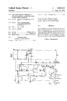 United States Patent [191 Marshall [111 3,909,553 [451 Sept. 30, 1975 I54] LINE CARD FOR KEY TELEPHONE SYSTEMS ADAPTED TO PROVIDE MUSIC DURING HOLD CONDITION [75] Inventor: Richard A. Marshall, Bensenville.
Srimuang (43) Pub. Date: Mar. 27, 2003
 US 20030061087A1 (19) United States (12) Patent Application Publication (10) Pub. No.: US 2003/0061087 A1 Srimuang (43) Pub. Date: Mar. 27, 2003 (54) CALENDAR SCHEDULING OF MULTIPLE PERSONS RESOURCES AND
Building Applications Using Micro Focus COBOL
 Building Applications Using Micro Focus COBOL Abstract If you look through the Micro Focus COBOL documentation, you will see many different executable file types referenced: int, gnt, exe, dll and others.
US 20100054637Al (19) United States (12) Patent Application Publication (10) Pub. N0.: US 2010/0054637 A1 TIRPAN (43) Pub. Date: Mar.
 US 20100054637Al (19) United States (12) Patent Application Publication (10) Pub. N0.: US 2010/0054637 A1 TIRPAN (43) Pub. Date: Mar. 4, 2010 (54) ENCLOSURE FOR ITEMS SUSCEPTIBLE TO (52) US. Cl...... 383/64
(12) United States Patent (16) Patent N6.= US 6,611,861 B1 Schairer et al. (45) Date of Patent: Aug. 26, 2003
 US006611861B1 (12) United States Patent (16) Patent N6.= Schairer et al. () Date of Patent: Aug. 26, 2003 (54) INTERNET HOSTING AND ACCESS SYSTEM Primary Examiner AyaZ Sheikh AND METHOD Assistant Examiner
US006282278B1 (12) United States Patent. (10) Patent N0.: US 6,282,278 B1 D0ganata et al. (45) Date 0f Patent: Aug. 28, 2001
 US006282278B1 (12) United States Patent (10) Patent N0.: US 6,282,278 B1 D0ganata et al. (45) Date 0f Patent: Aug. 28, 2001 (54) UNIVERSAL CONFERENCE CONTROL 5,758,281 * 5/1998 Emery et a1...... 455/428
(54) (71) (72) Vedelago (TV) (IT) (73) (21) (22) (30) Chirignago (VE) (IT); Alberto Al?er, Foreign Application Priority Data
 US 20130094227Al (19) United States (12) Patent Application Publication (10) Pub. No.: US 2013/0094227 A1 Scordino et al. (43) Pub. Date: Apr. 18, 2013 (54) (71) (72) (73) (21) (22) (30) MOUNTING DEVICE
US 20140244535A1 (19) United States (12) Patent Application Publication (10) Pub. No.: US 2014/0244535 A1 Costigan (43) Pub. Date: Aug.
 US 20140244535A1 (19) United States (12) Patent Application Publication (10) Pub. No.: US 2014/0244535 A1 Costigan (43) Pub. Date: (54) TRACKING SYSTEM FOR FOOD DONATION (52) US. Cl. PROGRAMS CPC.....
US 20030110248A1 (19) United States (12) Patent Application Publication (10) Pub. N0.: US 2003/0110248 A1 Ritchc (43) Pub. Date: Jun.
 US 20030110248A1 (19) United States (12) Patent Application Publication (10) Pub. N0.: US 2003/0110248 A1 Ritchc (43) Pub. Date: (54) (76) (21) (22) (51) (52) AUTOMATED SERVICE SUPPORT OF SOFTWARE DISTRIBUTION
llllllllllllllillllllllllllllllllllllllllllllllllllllllllllllllllllllllllll
 llllllllllllllillllllllllllllllllllllllllllllllllllllllllllllllllllllllllll USOO5535162A United States Patent [19] [11] Patent Number: 5,535,162 Uenoyama [45] Date of Patent: Jul. 9, 1996 [54] ELECTRICALLY
(12) United States Patent (10) Patent No.: US 8,429,267 B2 Thompson et al. (45) Date of Patent: Apr. 23, 2013
 US008429267B2 (12) United States Patent (10) Patent No.: US 8,429,267 B2 Thompson et al. (45) Date of Patent: Apr. 23, 2013 (54) WEB SERVICES ENABLED DEVICE AND 2004/0107025 A1* 6/2004 Ransom et al......
(21) (22) (57) ABSTRACT. Appl. No.: 10/752,736
 US 20050147216A1 (19) United States (12) Patent Application Publication (10) Pub. No.: US 2005/0147216 A1 J anakiraman et al. (43) Pub. Date: (54) AUTOMATED METHOD AND SYSTEM FOR INTERACTING WITH TELEPHONE
l / Normal End, client 1 granted access to " System 1
 US 20110252465A1 (19) United States (12) Patent Application Publication (10) Pub. No.: US 2011/0252465 A1 MILLER et al. (43) Pub. Date: Oct. 13, 2011 (54) (75) (73) (21) (22) (63) (60) SYSTEM AND METHOD
i VlRTUAL SERVER 1 \ VIRTUAL SERVER 2, _ 7
 US 20110225267A1 (19) United States (12) Patent Application Publication (10) Pub. No.: US 2011/0225267 A1 OHASHI (43) Pub. Date: Sep. 15, 2011 (54) SERVER SYSTEM FOR VIEWING IN-HOUSE INFORMATION, AND METHOD