
Author's personal copy
|
|
|
- Lee Harrington
- 10 years ago
- Views:
Transcription
1 Soc Indic Res (2013) 114: DOI /s Evidence-Based Well-Being/Positive Psychology Assessment and Intervention with Quality of Life Therapy and Coaching and the Quality of Life Inventory (QOLI) Michael B. Frisch Accepted: 18 January 2013 / Published online: 29 January 2013 Ó Springer Science+Business Media B.V Abstract Quality of Life Therapy and Coaching (also known as Quality of Life Therapy) is a comprehensive, manualized, theory-based, and, according to Diener (2013) and Seligman (Flourish, Free Press, NY, 2011, p. 292), evidence-based approach to well being, happiness, and positive psychology intervention suitable for both coaching and clinical applications. Clients are taught strategies and skills aimed at helping them to identify, pursue, and fulfill their most cherished needs, goals, and wishes in sixteen valued areas of life said to comprise human well-being and happiness. Quality of Life Therapy and Coaching is manualized in the form of the book entitled Quality of Life Therapy (Frisch 2006), providing step-by-step instruction in assessing well-being, tailoring interventions, and monitoring progress, outcome, and follow-up with the evidence-based well-being assessment, the Quality of Life Inventory or QOLI Ò. This article describes Quality of Life Therapy and Coaching and reviews developments and research since the publication of the manual in Randomized controlled trials bearing on the empirical support of Quality of Life Therapy and Coaching and the related assessment, the Quality of Life Inventory, are reviewed. The steps in Quality of Life Therapy and Coaching are delineated in the context of an illustrative case and an underlying theory which attempts to integrate findings from the fields of well-being, positive psychology, happiness, quality of life, social indicators research, psychotherapy, and coaching. Future applications and research are suggested which may identify the effective components of Quality of Life Therapy and Coaching and assess their direct impact on health and illness, encourage the use of evidence-based assessments and interventions on the part of well being coaches and therapists, and create health care delivery systems in which well being assessments and interventions are conducted concurrently with symptom-oriented tests and treatments. Keywords Happiness Well-being Subjective well-being Quality of life Life satisfaction Positive psychology, positive psychology intervention Coaching Organizational coaching Organizational psychology M. B. Frisch (&) Department of Psychology and Neuroscience, Baylor University, P.O. Box 97334, Waco, TX , USA [email protected]

2 194 M. B. Frisch 1 Evidence-Based Well-Being/Positive Psychology Assessment and Intervention with Quality of Life Therapy and Coaching and the Quality of Life Inventory (QOLI) 1.1 Introduction Quality of Life Therapy and Coaching (QOLTC) (also known as Quality of Life Therapy) is one of the very few comprehensive (Biswas-Diener and Dean 2007; Magyar-Moe 2009), manualized, theory-based, evidence-based and empirically validated (Biswas-Diener 2010; Seligman 2011, p. 292; Ed Diener, personal communication, January 2, 2013) approaches to well being/positive psychology assessment and intervention suitable for both coaching and clinical applications. QOLTC is a well being intervention approach in which clients are taught strategies and skills aimed at helping them to identify, pursue, and fulfill their most cherished needs, goals, and wishes in sixteen valued areas of life said to comprise human well-being or happiness. According to Tay and Diener (2011), QOLTC interventions address all three areas (or types) of happiness or subjective well-being, that is, high positive affect, low negative affect, and satisfaction with life. QOLTC uses an individualized assessment and a detailed well-being theory to offer a comprehensive and individually tailored package of well being interventions to clients instead of single, brief interventions offered to all clients. The QOLTC theory which undergirds the approach attempts to integrate the findings from the fields of positive psychology, well-being, happiness, quality of life and social indicators research, psychotherapy, Beck s cognitive therapy, and coaching. QOLTC has been taught as part of the curriculum of the Masters in Applied Positive Psychology Programs at the University of Pennsylvania and the University of East London along with the Universities of Utah, Kansas, and Houston, Baylor University, and programs of the American Psychological Association, the British Psychological Society, the International Society for Quality of Life Studies, and Ben Dean s MentorCoach program in positive psychology coaching. According to Magyar-Moe (2011), the book, Quality of Life Therapy, is a stand alone course or introduction to positive psychology and well being intervention suitable for either coaches or clinicians. Indeed, the book, Quality of Life Therapy (Frisch 2006), is the manual for how to conduct Quality of Life Therapy and Coaching, providing step-by-step instruction in assessing well-being, tailoring interventions, and monitoring progress, outcome, and follow-up with an evidence-based well-being assessment, the Quality of Life Inventory or QOLI Ò (Biswas-Diener and Dean 2007; Frisch et al. 2005; Furey 2007; Land 2006). In his review of the book, Robert Furey (2007) states: This author is a disciplined researcher and a passionate clinician. He is also a fervent educator (Positive Mentoring, para. 4). This article describes QOLTC and the QOLI and reviews developments and research since the publication of the manual in Are Quality of Life Therapy and Coaching and the Quality of Life Inventory Evidence-Based? 2.1 Evidence-Based Criteria for Interventions and Assessments According to founder, Seligman (2011), evidence-based research support or empirical validation is essential for a well-being/positive psychology intervention or assessment to be

3 Evidence-Based Well-Being/Positive 195 judged viable and worthy of widespread application. Indeed, this emphasis and even insistence upon empirical validation, distinguishes positive psychology/well-being from earlier humanistic approaches to human happiness, meaning and strengths. More specifically, Seligman has insisted upon randomized controlled trials and replication to establish the efficacy of well-being interventions, including his own positive psychotherapy. To be considered evidence based an approach like QOLTC must be found superior to a control group in two randomized controlled trials with at least one trial conducted in an independent lab, that is, outside of the lab of origin (e.g., the author s lab); this standard holds true for both clinical and coaching interventions and treatments (American Psychological Association Task Force 2006; Kazdin 2011; Seligman 2011). Scientific rigor may be enhanced if the studies are grant funded since their methodology is scrutinized in great detail before a grant study is approved for funding (American Psychological Association Task Force 2006). Quality of Life Therapy and Coaching has been empirically validated in two, separate NIH-grant funded studies in the laboratory of James Rodrigue of Beth Israel and Harvard Medical Centers, the results of which have been published in respected, refereed journals. In keeping with the highest standards, each of these studies include active and established treatment/intervention control groups, something missing from many similar evaluations of positive psychology techniques (Wood and Tarrier 2010). The results of a third randomized controlled trial conducted by a different team of researchers in Iran has been published by Abedi and Vostanis (2010). Neither the author of QOLTC or the QOLI nor anyone from his lab was involved in these trials. Additional grant-funded trials of QOLTC are currently underway by James Rodrigue and his colleagues among others. 2.2 NIH Lung Patient Study (Rodrigue et al. 2005, 2006) In a randomized controlled trial of QOLTC, patients with a mean of age of 48.7 years and severe lung disease awaiting lung transplants were randomly assigned to 8 12 weeks of individually-administered QOLTC (N = 17) or traditional supportive therapy (Rodrigue et al. 2005). The several years it usually takes to obtain a lung transplant is a very stressful time for lung patients and their families. Both the lengthy waiting time for a transplant and the demands of managing a serious chronic disease contribute to lowered well-being and quality of life as well as heightened stress, anxiety, uncertainty, and strained relationships with caregiving spouses or partners, making these patients and their loved ones prime candidates for well-being/positive psychology interventions. Data was collected by someone blind to both the nature of the treatments and to patients treatment condition. Traditional supportive therapy was designed to mirror the usual treatment for lung patients awaiting transplants, including emotional and educational support, empathically listening to concerns and discussing activities, and encouraging contact with friends, relatives, and other support systems. QOLTC here involved identifying areas of life on the QOLI deemed very important, but also unfulfilling or dis-satisfying. Next, interventions were administered in order to boost client s level of satisfaction with each of these areas of life. For example, relationship enhancement skills such as the Take a Letter Technique were applied to estranged relationships in order to reestablish contact and closeness. The Five Paths to Happiness or CASIO exercise was also employed, along with emotional control techniques aimed at minimizing negative affect. While the two groups did not differ significantly at baseline/pre-intervention, QOLTC patients were significantly more satisfied with their lives than supportive therapy patients at the two follow-up periods of 1 and 3 months (posttests were not conducted). In a measure

4 196 M. B. Frisch of clinical or practical significance (Kazdin 2003) that was also found to be statistically significant, 13 of 17 or % of the QOLTC patients moved to within the normal or average range on the QOLI for a non-clinical, functional, nationwide standardization sample at the 3-month follow-up, compared to only 5 of 18 or 27 % of supportive therapy patients. QOLTC patients reported significantly greater social intimacy and closeness with their caregiving spouses/partners at the 1-month follow-up and significantly less distress/ negative affect at the 3-month follow up assessment than supportive group patients. Changes in health status and therapy-therapist process ratings were comparable for each intervention group at the study s conclusion, making it less likely that these factors affected outcomes. In summary, the authors conclude: Three primary findings emerged from this study. First, a brief, targeted psychological intervention, that is, Quality of Life Therapy, leads to significant improvement in quality of life, mood disturbance, and social intimacy in lung patients awaiting a transplant. Second, improvements in quality of life and mood were maintained for as long as three months after treatment. Third, while the standard or usual supportive therapy appears to yield some short-term benefits in mood, Quality of Life Therapy is a more effective treatment overall (Rodrigue et al. 2005, p. 2430). The caregiving spouses or partners of patients assigned to the two groups took the same assessments at the same times as patients in an effort to see if positive treatment effects might be contagious to spouses or partners not in treatment themselves. These findings are reported in a separate article by Rodrigue et al. (2006). Relative to the caregivers of patients assigned to the supportive therapy condition, caregivers of patients assigned to the QOLTC condition reported significantly greater social intimacy at both the 1- and 3-month follow up assessments, along with greater life satisfaction/quality of life (QOLI) at the 1-month follow-up and significantly less distress/negative affect at the 3-month follow up. This pattern of results for spouse-partners on all three measures directly mirrors that of patients who received QOLTC training as reported in Rodrigue et al. (2005). That is, both patients receiving QOLTC and the spouse-partner-caregivers that they lived with while receiving QOLTC, significantly improved in their quality of life, mood, and social intimacy (relative to those involved in the supportive treatment group) after the QOLTC intervention was delivered: Caregivers whose patients received Quality of Life Therapy reported vicarious gains in quality of life, mood, and social intimacy, relative to those whose patients received supportive therapy (the usual or standard intervention). These findings suggest that Quality of Life Therapy has beneficial effects that extend beyond the patient to their caregivers Findings from this study suggest that Quality of Life Therapy provides an opportunity to improve the lives both of patients awaiting a lung transplant and their primary caregivers. Mood disturbance and social intimacy benefits for caregivers may last as long as three months following the patient s completion of psychological treatment (Rodrigue et al. 2006, p. 341). The vicarious gains of spouse-partners of QOLTC patients may be due to patients sharing and discussing QOLTC treatment ideas and homework assignments with their spouse or partner over the course of QOLTC. This may also reflect a social contagion effect seen in other studies (Miller and Frisch 2009). Finally, improvements in patients quality of life and mood as a result of QOLTC predicted higher functioning in their caregiving spouses or partners, thereby helping to maintain a crucial social support system.

5 Evidence-Based Well-Being/Positive NIH Kidney Patient Study (Rodrigue et al. 2011) The randomized controlled trial with lung patients was replicated in a second NIH-grant funded trial with adults with end-stage renal disease who were awaiting kidney transplantation (Rodrigue et al. 2011). Patients were randomly assigned to a no psychological treatment control group ( standard medical care N = 20) or to 8 weekly sessions of either QOLTC (N = 22) or supportive therapy (N = 20) which was an elaboration and expansion of that used in the lung patient study or first randomized trial of QOLTC. Patients assigned to the QOLTC group had significantly higher life satisfaction/quality of life scores than either supportive therapy or no treatment control patients at both posttreatment and 3-month follow up assessments. The QOLTC group mean moved from the low to the average range on the QOLI from pre-treatment/baseline to posttreatment and follow up. This move denotes clinically significant change in so far as patients moved to within the average range for a USA nationwide standardization sample of functional, nonclinical adults. Group means for the other two groups remained in the low or very low range at all times of assessment, indicating an inability to reach the mean (or above) for the functional, normal sample of non-clinical adults. 2.4 Follow-up Results Patients assigned to the QOLTC group had significantly higher SF-36 Mental Functioning levels/scores than either the supportive therapy or no treatment control group at the 3 month follow-up assessment. At follow up, patients assigned to the QOLTC group had significantly higher social intimacy (with caregiver) scores than no treatment control patients who failed to differ from supportive therapy patients; the same pattern was found on a key measure of negative affect. That is, QOLTC patients had significantly lower levels of negative affect, as measured by the Profile of Mood States-Short Form, at follow up than no treatment control patients who failed to differ from supportive therapy patients. Both QOLTC and supportive therapy patients had lower scores than no treatment control patients at follow up on two measures related to negative affect: the Hopkins Symptom Checklist-25, and the Hopkins Number of Unhealthy Mental Health Days in the past month. The authors summarize their findings: The current study found that the Quality of Life Therapy group had superior quality of life (that is, life satisfaction) outcomes relative to both supportive therapy and standard care (no treatment/intervention control) groups, and superior social intimacy outcomes relative to no treatment control patients. However, Quality of Life Therapy and supportive therapy were comparable in reducing psychological distress (or negative affect) The findings show that it is possible to improve quality of life, psychological functioning, and social intimacy with QOLTC while patients wait for transplantation (Rodrigue et al. 2011, p. 713). 2.5 Beleaguered Parents of OCD Children Study (Abedi and Vostanis 2010) The two NIH-grant supported studies of QOLTC by Rodrigue and his colleagues were replicated in a randomized controlled trial conducted by a different lab in a different country, using a heretofore untested population. This third trial involved the often beleaguered parents of children with a challenging DSM psychiatric/mental disorder, that is, Obsessive Compulsive Disorder (Abedi and Vostanis 2010). Forty parents living in Iran

6 198 M. B. Frisch were randomly assigned to QOLTC (N = 20) or a wait list control group (N = 20). Training in QOLTC was conducted in eight 90-min group sessions with ten participants each over a 4 week period. QOLTC consisted of strategies for identifying life goals and for increasing happiness and satisfaction in the sixteen areas of life seen to comprise overall quality of life. As part of the general CASIO or Five Paths to Happiness intervention, parents also learned to lower expectations, change life priorities, reduce perfectionism, and adopt a more positive attitude toward their children s symptoms. Beleaguered parents were also taught general time (or life ) management skills and the need for balance in their lives, including time for themselves away from the family. Relative to controls, parents with the training reported significantly higher quality of life or life satisfaction scores on the QOLI at posttest. Indeed, the mean QOLI scores of parents with the training moved from the very low range (first to 10th percentile scores) to well within the average range of the functional and non-clinical QOLI standardization sample (Frisch 1994, 2009), while the mean QOLI scores of parents in the control condition remained in the very low range throughout the study. This latter result signifies practical or clinically significant change and not merely statistically significant change because scores moved to within the average range of a functional sample (Kazdin 2003). In a replication of the Rodrigue et al. (2006) social contagion effect, parents gains in quality of life generalized to their children even though the children were not exposed to the training in QOLTC. Specifically, children of parents in QOLTC reported higher overall quality of life and quality of life in three of five specific childhood domains on a measure designed for children. Additionally, children of parents in QOLTC reported significant reductions (relative to children of control participants) in general anxiety and in the OCD symptoms with reductions reported on all thirteen OCD measures administered in the study, including overall symptoms, obsessions, compulsions, and ten specific items from the Children s Yale-Brown Obsessive Compulsive Scale. 2.6 Clinical Depression Study Given the difficulty at the time of finding enough purely depressed volunteers without comorbid conditions, adequate control groups were not possible in a trial of QOLTC with patients suffering from clinical depression (Grant et al. 1995). All patients underwent training in QOLTC. In turn, all patients showed statistically, practically, and clinically significant gains in quality of life or life satisfaction on the QOLI from pre-intervention to post-intervention assessments with gains being maintained at follow up. In terms of clinical significance, QOLI scores for this group of depressed participants moved from the very low (pre-intervention) to the average range (post-intervention and follow up) of the non-clinical, functional QOLI standardization sample of adults from across the USA. Scores on two depression scales were significantly reduced after QOLTC with gains being maintained at follow up. In this trial, all clinically depressed clients who received QOLTC were no longer depressed at posttest; one of the sixteen patients fit the criteria for depression at follow-up. While promising, this study bears replication in the context of a randomized controlled trial. 2.7 Coaching Versus Clinical Trials Biswas-Diener and Dean (2007; also see Peterson 2006; Diener 2006; Magyar-Moe 2011) find QOLTC equally applicable and effective when used with either coaching or clinical populations. Aside from the depression trial described here, it is unclear whether the remaining trials should be considered clinical or coaching trials. For example, while the

7 Evidence-Based Well-Being/Positive 199 two Rodrigue et al. trials involve medical patients awaiting a stressful medical procedure, that is the transplantation of a lung or kidney, these patients were not selected based upon psychiatric criteria such as severe anxiety or depression or any DSM disorder. The third trial involved the parents of children with a DSM psychiatric/mental disorder, that is, Obsessive Compulsive Disorder. Here too, the parents were not selected based on any psychiatric criteria applied to themselves. Because of this, these trials may be considered coaching trials and can be viewed as similar to interventions done with other non-clinical or non-psychiatric clients such as business professionals facing a stressful situation as in a major downsizing or selling of a company. Professional coaching clients usually enter individual coaching or coaching trials because of stressful situations that they face, although they are rarely assessed for anxiety, depression, or DSM disorders. These professional coaching clients may suffer from levels of anxiety or depression akin to those of medical patients awaiting a stressful medical procedure. On the other hand, the patients and parents of patients in studies reviewed here have been known to suffer from symptoms of stress, depression, and anxiety and therefore, may be considered by some as clinical samples which clearly benefited from well-being interventions despite warnings to the contrary by McNulty and Fincham (2012). 2.8 Quality of Life Inventory or QOLI as an Evidence-Based Assessment A cornerstone of QOLTC is the QOLI Ò or Quality of Life Inventory, a well-being and life satisfaction test used throughout QOLTC in planning and evaluating interventions (Frisch 2004, 2006, 2009). The QOLI meets the criteria for an evidence-based assessment as set forth by Jensen-Doss (2011) and Kazdin (2003). In terms of research support, the QOLI Ò was used in each of the four QOLTC trials reviewed here; in each case, the QOLI was found to be reliable and sensitive to intervention-related change (Rodrigue et al. 2005, 2006, 2011; Abedi and Vostanis 2010; Grant et al. 1995). Additional research findings in support of the psychometric soundness, that is, reliability and validity, of the QOLI are extensive, including the author s research and test manuals (Bailey et al. 2007; Frisch 1992, 1994, 2009; Frisch et al. 1992, 2005) as well as independent studies and evaluations by other researchers at other laboratories (for example, Biswas-Diener 2010; Biswas- Diener and Dean 2007; Danovitch and Endicott 2008; Diener et al. 2012b; Furey 2007; Henning et al. 2007; Land 2006; Magyar-Moe 2009; Morrison et al. 2011; Pavot and Diener 1993; Scogin et al. 2007; Seligman 2011; Kazdin 1993, 2003; Ogles et al. 1996; McAlinden and Oei 2006; Persons and Bertagnolli 1999; Peterson 2006; Sun et al. 2010). In addition to the trials reviewed here, the QOLI has been found to be sensitive to change in studies of well being and positive psychology coaching (e.g., Biswas-Diener 2010) and in studies of psychotherapy and medication effectiveness (e.g., Lopez et al. 2011; Crits-Christoph et al. 2008; Henning et al. 2007; Eng et al. 2001, 2005, Frisch et al. 2005). The QOLI was also found to be sensitive to change in the National Institute on Aging s PEARL (Project to Enhance Aged Rural Living) study of largely African- American, frail, rural, older (mean age of 75.4 years) adults lacking in education (mean number of years in school = 9.6 years; Scogin et al. 2007). In part of a study involving 3,927 clients, the predictive validity of the QOLI was supported in terms of its ability to predict academic retention in college students 1 3 years in advance (Frisch et al. 2005). Diener et al. (2012b) cite this predictive validity finding along with known-group validity studies of the QOLI as findings which bolster the validity of the QOLI, in particular, and life satisfaction measures, in general. Indeed, a review and study of myriad potential predictors of college success found the QOLI to be one of the

8 200 M. B. Frisch only well-being measures able to predict an objective academic outcome (Nickerson et al. 2011). The QOLI was chosen for inclusion in the American Psychiatric Association s 2008 Handbook of Psychiatric Measures as one of only four prominent and oft-cited (p. 127) measures that are broadly applicable to clients both clinical and coaching and laypersons (Danovitch and Endicott 2008): The primary advantages of the QOLI are the availability of norms and clear cutoff scores, the scale s brevity, its sixth-grade reading level, the ease of completion, scoring and interpretation, its sensitivity to both positive psychology- and treatmentrelated change, and its validity, including its ability to predict success in college one to three years in advance (pp ). In a study of two hundred seventeen psychiatric patients conducted by McAlinden and Oei (2006), the authors concluded that consistent evidence was also found to support the concurrent, discriminant, predictive, and criterion-related validity of the QOLI (p. 307). Ogles et al. (1996) concluded from their review that the most promising quality of life instrument available is the Quality of Life Inventory (p. 92). 2.9 Conclusion and Other Evaluations In conclusion, with three supportive randomized controlled trials conducted by two different laboratories (Abedi and Vostanis 2010; Rodrigue et al. 2005, 2006, 2011), including two grant-supported studies by the USA s National Institute of Health, Quality of Life Therapy and Coaching may be considered an evidence-based well-being intervention program in the strict sense of the word (Kazdin 2011; Seligman 2011). Seligman s (2011) independent evaluation of this research evidence led him to the same conclusion, that is, QOLTC is empirically validated and evidence-based (p. 292) (see also Biswas-Diener 2010; Biswas-Diener and Dean 2007; Morrison et al. 2011; Ed Diener, personal communication, January 2, 2013; Furey 2007; Land 2006; Magyar-Moe 2009, 2011). In their review of positive psychology interventions, Biswas-Diener and Dean (2007) cite QOLTC as one of only seven empirically validated happiness interventions in the literature. They further conclude that QOLTC is equally useful in coaching or clinical contexts and is the only empirically validated or evidence-based package of happiness interventions, in contrast to the myriad studies of single interventions such as a particular gratitude or forgiveness exercise. Recognizing that the QOLI assessment is integral to QOLTC, these authors go on to evaluate the QOLI as an empirically validated and evidence-based assessment in its own right (Biswas-Diener and Dean 2007). This conclusion with respect to the QOLI has been corroborated in other studies and independent evaluations of the measure reviewed here. 3 QOLTC Theory of Well Being, Quality of Life, and Subjective Well Being 3.1 Introduction The QOLTC theory which undergirds the approach attempts to integrate the findings from the fields of positive psychology, coaching, well-being, happiness, quality of life and social indicators research, psychotherapy, and Beck s cognitive therapy (Diener 2006; Land 2006; Frisch 2006). QOLTC theory consists of an empirically-based and empirically-

9 Evidence-Based Well-Being/Positive 201 validated model of well-being, quality of life, happiness, meaning, and life satisfaction applicable to clinical and coaching purposes. In terms of clinical (vs. coaching applications), the theory fits well with Beck s cognitive theory and therapy, allowing the integration of cognitive therapy with positive psychology assessment and intervention, according to Clark (2006) who wrote a forward to the manual (Frisch 2006). QOLTC may be just as easily integrated with non-cognitive modalities of psychotherapy, behavioral medicine, and even pharmacotherapy for DSM mental disorders, according to Furey (2007). QOLTC theory has been taught in many positive psychology programs and workshops (Magyar-Moe 2011) and has been used to conceptualize various DSM mental disorders, including PTSD (McHugh et al. 2012). 3.2 Happiness Rewards and Quality of Consciousness Well being, happiness, and quality of life may be defined, in part, as the quality of consciousness or the extent to which human inner experience (e.g., thoughts and feelings) is positive. It deals with the question, Are you basically happy, content, or satisfied with your life? Defining well-being in terms of inner, subjective, and personal experience can yield different research results from those obtained with a purely objective approach to well-being and its measurement, as when well-being is defined in terms of material wealth alone (Diener and Seligman 2004). At the same time, the inner experience or subjective approach never denies the relevance of our objective living conditions; however, as we shall see, such conditions are only a part of the happiness equation. In QOLTC theory, emotions and related satisfaction judgments are seen as adaptive in that they provide continuous feedback on progress toward personal goals. Pleasant or positive affects stem from the perception that important needs, goals, and wishes have been, or are about to be, met, achieved, or fulfilled, whereas unpleasant or negative affect signals setbacks or stagnation in the quest for fulfillment in valued areas of life (Kim-Prieto et al. 2005; Diener and Larsen 1993; Frisch 1998, 2006). In QOLTC theory, there are a trinity of happiness benefits (Frisch 2006) which accrue to happier people, including: (1) better health and longevity; (2) more rewarding relationships with others and; (3) greater success in work and retirement pursuits (Diener 2012; Diener and Chan 2011; Lyubomirsky et al. 2005a). 3.3 Defining Quality of Life In specific terms, quality of life refers to the degree of excellence in life (or living) relative to some expressed or implied standard of comparison, such as most people in a particular society (Oxford University Press 1989, quality entry; also see Veenhoven 1984; for similar definition). The degree, grade, or level to which the best possible way to live or the good life is attained can range from high to low or good to poor (Veenhoven 1984). Usually, quality of life is explicitly or implicitly contrasted with the quantity of life (e.g., years), which may or may not be excellent, satisfying, or enjoyable. The Stoic philosopher Seneca (c. 4 B.C. A.D. 65) clearly valued quality over quantity: it matters with life as with play; what matters is not how long it is, but how good it is (Hadas 1958, p. 63). In this vein, popular definitions center on excellence or goodness in aspects of life that go beyond mere subsistence, survival, and longevity; these definitions focus on domains or areas of life that make life particularly enjoyable, happy, and worthwhile, such as meaningful work, self-realization (as in the full development of talents and capabilities), and a good standard of living.

10 202 M. B. Frisch These popular definitions and the origins of the phrase, quality of life, may stem from the increased affluence and college education in Western societies following World War II and the accompanying attitude shift away from an emphasis on material wealth toward a concern with quality of life concerns (Campbell 1981; Inglehart 1990; Patterson 1996). Popular definitions of quality of life found their way into political discourse, resulting in efforts by affluent Western governments to study and improve the quality of life of their citizenry through a series of national surveys begun in the United States in 1959 (Cantril 1965; Gurin et al. 1960). Sociologists and economists created the Social Indicators Movement, in part, to supplement objective indices of quality of life (e.g., material well-being) with subjective measures of well being, perceived QOL, and personal happiness. As with the fields of sociology and economics, the discussion of quality of life issues in general medicine is a post-world War II phenomenon, dating from 1948 (Dimsdale and Baum 1995) but beginning in earnest during the 1960s (Kaplan 1988). Until recently, quality of life was equated with symptoms of disease (or morbidity) and length of survival from an illness (or mortality; Taylor 2002). While current conceptualizations include the constructs of happiness, well-being, subjective well-being, and life satisfaction, most emphasis is placed on behavioral competencies or functional ability (Dimsdale and Baum 1995; Spilker 1996; Ware 2004), which is often unrelated to well being or happiness (e.g., Diener et al. 1999; Frisch 1998; Safren et al. 1997). Functional ability can be defined as perceived behavioral competencies, that is, clients or medical patients perceived ability to function effectively and successfully in valued areas of daily life. Functional ability includes social role performance (e.g., as a parent, spouse, employee) and the daily living skills needed for dressing, eating, transportation, handling money, maintaining a home or apartment, and the like. Quality of life theory and measurement in gerontology began in the 1960s as part of an effort to define and to foster successful aging (Baltes and Baltes 1990; George and Bearon 1980). Quality of life in gerontology has been defined primarily as life satisfaction that is the primary outcome of successful aging from a variety of theoretical perspectives (Abeles et al. 1994; George and Bearon 1980). Gerontologists also define quality of life in terms of functional ability and, to a lesser extent, happiness, pain, energy level, personal control, and self-esteem (Stewart and King 1994). Clinical and health psychologists have only recently begun to recognize the potential contribution of quality of life theory and research both to the clinical enterprise (Frisch et al. 1992; Kazdin 1993, 1994; Land 2006; Ogles et al. 1996; Safren et al. 1997) and to nonclinical coaching interventions (Frisch 1998, 2006; Frisch et al. 1992). 3.4 Defining Happiness, Well-Being, Meaning, and Quality of Life The terms quality of life, perceived quality of life, subjective well-being, well-being, happiness, and life satisfaction have often been used interchangeably and have, for the most part, been defined in terms of affect, cognition, or a combination thereof (Andrews and Robinson 1991; Diener 1984; Diener et al. 1999, 2010; Lyubomirsky et al. 2005b). Affective theorists define happiness or well being as either positive affect alone or as a preponderance of positive affect (such as joy, contentment, or pleasure) over negative affect (e.g., sadness, depression, anxiety, or anger) in an individual s experience (Andrews and Robinson 1991; Bradburn 1969).

11 Evidence-Based Well-Being/Positive Life Satisfaction Approach Cognitive theorists use the life satisfaction approach to well being, defining happiness in terms of cognitive judgments as to whether a person s needs, goals, and wishes have been fulfilled (Campbell et al. 1976; Cantril 1965). Thus, life satisfaction is defined as a cognitive judgmental process dependent upon a comparison of one s circumstances with what is thought to be an appropriate standard (Diener et al. 1985, p. 71). According to this approach, the smaller the perceived discrepancy between one s aspirations and achievements, the greater the level of satisfaction (Frey and Stutzer 2001). Quality of life in psychology and psychiatry, and, to a lesser extent, in general medicine and cancer treatment is often equated with life satisfaction (Ferrans 2000; Frisch 1998, 2000; Rabkin et al. 2000; Snyder et al. 2000; Trivedi et al. 2006). When not defined solely in terms of life satisfaction, life satisfaction is almost always a component of quality of life theories and assessments (Gladis et al. 1999; Spilker 1996). Interestingly, quality of life in gerontology is often equated with life satisfaction; indeed, life satisfaction is the primary outcome of successful aging from a variety of theoretical perspectives (George and Bearon 1980; Stewart and King 1994; Santrock 2005). A plethora of predictive validity studies support the view that low life satisfaction may predict a number of problems and maladaptive behaviors (with adaptive behaviors and outcomes associated with moderate to high satisfaction), including job performance and satisfaction as much as 5 years in advance (Judge and Hulin 1993; Judge and Watanabe 1993); school performance (Frisch et al. 2005; Valois et al. 2001; Zullig et al. 2001); healthcare expenditures (e.g., treatment costs; Moreland et al. 1994; Stewart et al. 1992; Ware 1986); suicide (Koivumaa-Honkanen et al. 2001); deaths due to fatal injuries (Koivumaa-Honkanen et al. 2002); chronic pain syndrome (Dworkin et al. 1992); cardiovascular diseases such as myocardial infarction (Vitaliano et al. 1994; for a review); willingness to participate in prevention programs aimed at eliminating unhealthy behaviors like smoking (Wagner et al. 1990); adolescent substance abuse and aggressive behaviors (Gilman and Huebner 2000; Valois et al. 2001); anxiety, depression and somatoform disorders (Baruffol et al. 1995; Lewinsohn et al. 1991; Lundh and Sinonsson-Sarnecki 2001). Besides identifying risks for health problems and related expenditures, life satisfaction seems to predict a person s ability to function in major life tasks or social roles such as work. Life satisfaction relates to and, at times, predicts a person s satisfaction at work in the context of school, work includes the ability to stay in school and complete a degree, that is, academic retention making well being measures a potential screening device for employers and schools since those satisfied with their life generally are more likely to be successful in and satisfied with their work [see Diener et al. (1999) for review and Frisch et al. 2005]. Life satisfaction seems to be discriminable from the constructs of psychiatric symptoms, negative and positive affect, depression, and anxiety in both clinical and nonclinical samples, making it less likely that the relationships reviewed here merely reflect the influence of a third variable like depression (Crowley and Kazdin 1998; Diener 2000; Frisch et al. 1992; Gonzales et al. 1985; Headey et al. 1993; Lewinsohn et al. 1991; Lucas et al. 1996; McNamara and Booker 2000; Schimmack et al. 2002; Snyder et al. 2000). 3.6 Combined or Cognitive-Affective Approach to Well Being A consensus has emerged among some researchers who have found evidence for the cognitive theory of emotion, in general, and subjective well being, in particular, supporting

12 204 M. B. Frisch a combined cognitive-affective theory or definition of well-being based on numerous studies, including factor-analytic and large-scale national and cross-cultural studies (Andrews and Withey 1976; Diener 1984; Diener and Larsen 1993; Headey and Wearing 1992; Lazarus 1991; Michalos 1991; Veenhoven 1984; also see the cognitive theories of emotion posited by Beck et al.; Clark and Beck 1999; and by Lazarus 1991). According to this view and QOLTC theory, well-being is synonymous with personal happiness. Happiness, in turn, is defined in terms of three parts: life satisfaction, positive affect, and low negative affect. In high well being or happiness, there is high life satisfaction and a preponderance (in duration) of positive versus negative affective experience in consciousness. That is, our conscious experience consists of much more positive than negative emotional experiences (Diener 1984; Diener et al. 1999). In other words, our degree of happiness is a positive function of the degree of life satisfaction and of the extent of positive affect preponderance in a person s daily experience. 3.7 Three Happinesses Most recently, rather than speak of the three parts of happiness or subjective well-being, that is, satisfaction with life, positive affect, and low negative affect, some researchers are now speaking of these parts as three types of happiness (Diener et al. 2010; Kahneman 1999). Recent international studies (such as the Gallup World Poll) have yielded disparate results for each of these three elements or types of happiness (for example, see Diener et al. 2010; Tay and Diener 2011). These findings are reminiscent of earlier laboratory studies such as those reviewed in Diener (1984). 3.8 Positive Psychology Defined and a Clinical Broaden and Build Theory In QOLTC, positive psychology is defined as the science of the study and promotion of well-being, happiness, meaning in life, human strengths, and a better quality of life for all. One of the greatest human strengths is the ability to be what Lyubomirsky calls chronically happy or contented despite some inevitable fluctuations in mood and satisfaction in response to difficult circumstances and thwarted goal pursuits. Positive psychology can also be viewed as the study of what makes life worthwhile and of positive goal pursuits, the latter being part of a clinically oriented broaden and build theory offered by Clark and Beck (1999; also see review in Frisch 2006) which stands in contrast to the nonclinical theory offered by Fredrickson (e.g., Fredrickson and Branigan 2005). Beck and his colleagues go as far as to assert that lasting change in cognitive therapy for any disorder requires the identification and pursuit of positive (i.e., pursue a career or hobby, find a mate ) versus negative (i.e., feel less depressed) goals which activates what Beck calls the constructive or well-being mode of human emotion. For this reason, Clark (2006) applauds efforts aimed at well-being intervention which he and others (for example, Fava and his colleagues: Fava et al. 2004; Ruini and Fava 2009; Tomba et al. 2010) see as filling a void in psychotherapies and pharmacotherapies aimed at alleviating DSM mental disorders or psychological disturbances and preventing their relapse: Therapists and psychologists have exhibited a depressive thinking style in their theories, research and treatment of psychological disorders. We have tended to focus exclusively on the negative as in symptoms or what s wrong with people Our preoccupation has been the relief of suffering, the alleviation of negative emotions it is clearly not the whole story. Treating negative mood will not

13 Evidence-Based Well-Being/Positive 205 automatically lead to happiness in our patients. A new and expanded therapeutic perspective is needed that directly addresses issues of happiness, meaning, and contentment. At last psychologists like Ed Diener, Martin Seligman and Michael Frisch have begun to redress this imbalance (Clark 2006, pp. ix). 3.9 Meaning in Life At times, positive psychology or well-being is defined as the science of the study and promotion of meaning and positive life goals. In QOLTC parlance, meaning in life or a meaningful life comes from identifying and successfully pursuing cherished needs, goals, and wishes which give life a sense of purpose and direction. This sense of purpose and meaning enhances well-being and happiness. Since QOLTC explicitly aids clients in identifying and successfully achieving their life goals, it can be said to be a program aimed at enhancing meaning and success in reaching life goals in addition to the aim of boosting happiness and well-being Well-Being or Happiness Ingredients In QOLTC, overall happiness or subjective well being is likened to a salad or a stew with different ingredients for different people and tastes (Frisch 2006). QOLTC theory assumes that a finite number of areas of human aspiration and fulfillment may be identified that will be applicable to both clinical and nonclinical coaching populations; numerous researchers have found support for this assumption (e.g., Andrews and Withey 1976; Campbell et al. 1976; Diener 1984; Headey and Wearing 1992; Veenhoven 1984, 1993). That is, people tend to want the same things, although the areas valued by a particular individual will vary as will the subjective importance of those areas to that individual s overall life satisfaction or happiness. Thus, an area of life such as work may be highly valued by one individual but judged irrelevant to overall happiness by another who is retired. Based on an exhaustive review of the literature in general, cognitive mapping studies of human concerns (Andrews and Inglehart 1979; Andrews and Withey 1976) and studies identifying particular areas of life associated with overall life satisfaction and happiness (Andrews and Withey 1976; Campbell et al. 1976; Cantril 1965; Diener 1984; Flanagan 1978; Inglehart 1990; Michalos 1991; Veenhoven 1984), a comprehensive list of human concerns, domains, or areas of life was developed. Evidence for the importance of these chosen domains has accumulated since 1994 and the publication of the QOLI by Pearson formerly NCS Assessments; for example, purpose in life or Goals and Values in QOLTC parlance significantly predicted overall life satisfaction in a recent study by Diener et al. (2012a). An effort was made in QOLTC theory to be comprehensive but to limit the areas of life to those empirically associated with overall satisfaction and happiness. The sixteen areas of life assumed to make up overall well-being, happiness, and life satisfaction are listed in Table 1 (and make up the QOLI; Frisch 1994, 2009). According to QOLTC theory, after factoring out the % (Diener and Biswas-Diener 2008) of the variance in well-being attributable to genetic and temperament factors, % of our well-being stems from fulfillment of our needs, goals and wishes in the so-called Sweet 16 areas of life of QOLTC and the QOLI listed in Table 1. The essence well-being intervention in QOLTC is to identify areas of dissatisfaction in the Sweet 16 areas of Table 1 through testing with the Quality of Life Inventory or QOLI and then apply

14 206 M. B. Frisch Table 1 The Sweet 16 areas in Quality of Life Therapy and coaching and the Quality of Life Inventory or QOLI Ò : sixteen areas of life which may constitute a person s overall quality of life 1. Health is being physically fit, not sick, and without pain or disability 2. Self-Esteem means liking and respecting yourself in light of your strengths and weaknesses, successes and failures, and ability to handle problems 3. Goals-and-Values (or Philosophy of Life) are your beliefs about what matters most in life and how you should live, both now and in the future. This includes your goals in life, what you think is right or wrong, and the purpose or meaning of life as you see it. It may or may not include spiritual beliefs 4. Money (or Standard of Living) is made of three things. It is the money you earn, the things you own (like a car or furniture) and believing that you will have the money and things that you need in the future 5. Work means your career or how you spend most of your time. You may work at a job, at home taking care of your family, or at school as a student. WORK includes your duties on the job, the money you earn (if any), and the people you work with 6. Play (or Recreation) means what you do in your free time to relax, have fun, or improve yourself. This could include watching movies, visiting friends, or pursuing a hobby like sports or gardening 7. Learning means gaining new skills or information about things that interest you. LEARNING can come from reading books or taking classes on subjects like history, care repair, or using a computer 8. Creativity is using you imagination to come up with new and clever ways to solve everyday problems or to pursue a hobby like painting, photography, or needlework. This can include decorating your home, playing the guitar, or finding a new way to solve a problem at work 9. Helping (Social Service and Civic Action) means helping others in need or helping to make your community a better place to live. HELPING can be done on your own or in a group like a church, a neighborhood association, or a political party. HELPING can include doing volunteer work at a school or giving money to a good cause. HELPING means helping people who are not your friends or relatives 10. Love (or Love Relationship) is a very close romantic relationship with another person. LOVE usually includes sexual feelings and feeling loved, cared for, and understood 11. Friends (or Friendships) are people (not relatives) you know well and care about who have interests and opinions like yours. FRIENDS have fun together, talk about personal problems, and help each other out 12. Children means how you get along with your child (or children). Think of how you get along as you care for, visit, or play with your child 13. Relatives means how you get along with your parents, grandparents, brothers, sisters, aunts, uncles, and in-laws. Think about how you get along when you are doing things together like visiting, talking on the telephone, or helping each other out 14. Home is where you live. It is your house or apartment and the yard around it. Think about how nice it looks, how big it is, and your rent or house payment 15. Neighborhood is the area around your home. Think about how nice it looks, the amount of crime in the area, and how well you like the people 16. Community is the whole city, town, or rural area where you live (it is not just your neighborhood). Community includes how nice the area looks, the amount of crime, and how well you like the people. It also includes places to go for fun like parks, concerts, sporting events, and restaurants. You may also consider the cost of things you need to buy, the availability of jobs, the government, schools, taxes, and pollution Quality of Life Therapy copyright, Ó2006 John Wiley & Sons, All Rights Reserved evidence-based interventions to each of these areas of unhappiness such as love, work, relationships or play. Similarly, each counseling and life goal of a client is paired with a closely-related area of life in order to find and apply evidence-based interventions aimed at achieving these goals. For example, the goal of finding a marriage partner is matched with related interventions in the love relationship area of life in QOLTC and the QOLI.

15 Evidence-Based Well-Being/Positive Well-Being and Happiness from Goal Striving, Fulfillment, and Achievement QOLTC theory maintains that happiness comes largely from having our needs, wants, and goals fulfilled in the areas of life that we care about; this includes happiness as we meet subgoals in the journey toward fulfillment in valued areas of life, such as when college students make the grades they need to apply to graduate school later on. This assumption is supported by much research (see Diener 1984; Diener and Seligman 2004; Diener et al. 1999, 2012a; Diener and Biswas-Diener 2008; Nickerson et al for reviews). At times, these goals may consist of developmental tasks or milestones at certain ages including making friends, succeeding in school, and finding a life- or marital-partner in adulthood. Achievement in QOLTC theory is not equated with materialistic wealth, although this is important to many. Indeed, an undue emphasis on materialism may interfere with lasting happiness and contentment (see, e.g., Myers 2000). For example, besides achieving material wealth, we can achieve closeness in love relationships and friendships as well as proficiency in pastimes and hobbies as avenues to greater well being and happiness Five Path or CASIO Model of Life Satisfaction and Well Being Interventions The CASIO model of life satisfaction and well-being is a central part of QOLTC theory, providing the basis for the versatile Five Paths to Happiness intervention which is applicable to any and all of the sixteen areas of life that comprise human happiness and wellbeing in QOLTC. Figure 1 presents the CASIO model of life satisfaction that is then joined with Positive and Negative Affect to explain the concept of well being or happiness. The CASIO model in Fig. 1 is a linear, additive model of life satisfaction and wellbeing based on the empirical findings of numerous quality of life researchers such as Campbell et al. (1976), which assumes that an individual s overall life satisfaction consists largely of the sum of satisfactions with particular domains or areas of life deemed important by the individual. According to Land (2006), this additive assumption has been empirically validated in numerous studies and reviews (e.g., Andrews and Withey 1976; Campbell et al. 1976; Davis and Fine-Davis 1991; Diener and Diener 1995; Diener and Larsen 1993; Diener and Oishi 2003; Diener et al. 1999; Diener 2003; Evans 1994; Groenland 1990; Headey et al. 1985; Headey and Wearing 1992; Kozma and Stones 1978; Linn and McGranahan 1980; McGee et al. 1990; Michalos 1983, 1991; Rice et al. 1992; Fig. 1 Five paths (or CASIO) model of life satisfaction, well being and happiness, and positive psychology intervention. The O element of CASIO refers to the assumption that overall satisfaction may be increased by boosting satisfaction in any valued area of life, even areas Other than those of immediate concern. Interventions in any CASIO element may boost happiness in an area of life like love or work. Five Paths is also used as a guide for problem solving in Quality of Life Therapy and Coaching

16 208 M. B. Frisch Szalai and Andrews 1980). For example, when asked about the source of their global life satisfaction judgments, research participants spontaneously and consistently report basing these judgments on their satisfaction with particular domains or areas of their life that they deem important such as romantic relationships, family, health, and finances (Schimmack et al. 2002). A corollary to the additive assumption is that satisfying areas of life may compensate for areas of dissatisfaction or low satisfaction (Campbell et al. 1976; Diener 2003; Frisch 2006). For example, some working mothers may be more content than homemakers because satisfactions in one domain (e.g., work, family life) may mitigate the effects of dissatisfaction in other areas of life CASIO Elements of QOLTC Theory As illustrated in Fig. 1, a person s satisfaction with a particular area of life is made up of four parts: (1) the objective characteristics or circumstances of an area, (2) attitude or how a person perceives and interprets an area s circumstances, (3) the person s evaluation of fulfillment in an area based on the application of standards of fulfillment or achievement, and; (4) the value or importance a person places on an area regarding his or her overall happiness or well-being The C in the CASIO Model: Objective Characteristics and Living Conditions Objective life circumstances or living conditions refer to the objective physical and social characteristics of an area of life whose effects on well being are cognitively mediated. According to Michalos (1991), about half of the well being equation reflects a person s perception and evaluation of his or her circumstances, while his or her actual or objective circumstances constitute the other half. The objective characteristics of an area of life contribute to satisfaction judgments, such as when a person s satisfaction with work is based on the work itself, pay, relationships with coworkers and bosses, the work environment, and job security (Diener and Larsen 1993; Diener 2003; Frisch 2006). In QOLTC theory, objective living conditions vary in their rewarding-ness or potential for yielding human fulfillment or satisfaction. Reasonable rewarding-ness in a living environment is a prerequisite for well being enhancement (Diener 2012). When individuals accurately perceive the objective characteristics of an area of life as extremely impoverished or destructive to their well being, efforts to alter or remove themselves from the environment should take precedence over purely cognitive coping efforts, a point lost in some purely cognitive formulations of depression and well being The A in CASIO Model: Attitude In addition to objective characteristics, individuals subjective perception of an area s characteristics will also influence their satisfaction with the area as when they distort the objective reality of a situation in either a positive or negative way. In addition to this reality testing aspect, the Attitude component of CASIO satisfaction judgments includes how a person interprets reality or a set of circumstances once it is perceived. This interpretation includes deciding the implications that a given set of circumstances has for a person s self-esteem (e.g., causal attributions) and present or future well-being (Lazarus 1991).

17 Evidence-Based Well-Being/Positive 209 The role of perceptions and satisfaction judgments may help to explain the frequent lack of significant correlations between objective and subjective indices of well being such as wealth and housing after years of research carried out as part of the Social Indicators Movement (Davis and Fine-Davis 1991). By way of illustration, two people in identical circumstances will often respond differently to the circumstances as in the case of two janitors, one who appreciates her work conditions and enjoys her work, and another who sees the work as beneath him The S in the CASIO Model: Standards of Fulfillment The evaluated characteristics of an area of life in Fig. 1 refer to the application of personal standards to the perceived characteristics of an area. Specifically, the perceived characteristics of an area of life are evaluated through the application of standards of fulfillment that reflect a person s goals and aspirations for that particular area of life (Campbell et al. 1976; Diener 2003, 2012). That is, a person will decide whether his or her needs and aspirations have been met in a valued area of life. The level of achievement of standards for key characteristics in an area of life are combined subjectively via a hedonic calculus (Andrews and Withey 1976) to form an overall judgment of satisfaction for a particular area of life (i.e., Overall Satisfaction with the area in Fig. 1). People will feel more satisfied when they perceive that their standards of fulfillment have been met and less satisfied when they have not been met (Diener 2003; Schimmack et al. 2002). The standards, aspirations, and goals an individual holds for an area of life can dwarf the influence of objective living conditions in determining his or her satisfaction with an area as when goals and standards are set unrealistically high (i.e., not commensurate with functional abilities or the potential rewarding-ness of a given environment to provide rewards), a common scenario in depression (see, e.g., Ahrens 1987; Bandura 1986; Rehm 1988) The I in the CASIO Model: Weighing Area Satisfaction by Importance QOLTC theory proposes that a person s satisfaction with a particular area of life is weighed according to its importance or value to the person before the area s satisfaction enters into the subjective equation of overall life satisfaction (see Fig. 1). Thus, satisfaction in highly valued areas of life is assumed to have a greater influence on evaluations of overall life satisfaction than areas of equal satisfaction judged of lesser importance. For example, a person equally satisfied with work and recreational pursuits who values work more highly will have his or her overall judgments of life satisfaction influenced more by work than recreational satisfaction (see Schimmack et al. (2002) and Frisch (2006) for supportive theory and research). In QOLTC theory, the value or importance attributed to specific domains or areas of life reflects a person s most cherished goals and values; it also can dramatically affect overall judgments and ratings of satisfaction. In a clinical or coaching context, life satisfaction may increase when an extremely important area of dissatisfaction is deemphasized as less important in the process of reexamining life priorities as when persons who are exposed to unsolvable problems at work relegate work to a marginal place in their life and commit themselves instead to being a better spouse or parent (Frisch 2006).

18 210 M. B. Frisch 3.18 The O in the CASIO Model: Overall Satisfaction Since individuals overall satisfaction in life reflects, in part, the sum of satisfactions in all valued areas of life, they may boost their overall satisfaction by increasing satisfaction in any or all areas they value, even areas that are not of immediate concern or that have not been considered recently. The gist of the O positive psychology strategy is to focus on these areas of lesser concern in order to increase overall well being Five Paths to Happiness: Use of the CASIO Model in Formulating Positive Psychology Interventions One of the contributions that QOLTC makes to positive psychology and well being intervention programs is the CASIO rubric for problem solving and well being enhancement. QOLTC offers five general strategies that can boost satisfaction with any area of life. These general strategies flow from the underlying CASIO theory of life satisfaction and can be presented to clients in the following way: Quality of Life Theory says that our satisfaction with a each area of life is made up of five parts that can be transformed into Five (CASIO) Paths to Happiness, a popular exercise for boosting our happiness or satisfaction with any area of life. To apply the five paths or CASIO strategies to your situation, all you need to do is (1) identify the areas of life that you are unhappy with and want to change and; (2) creatively brainstorm ways to apply one or more of these five strategies with the goal of improving your satisfaction. Here are the five paths. First, you can improve your satisfaction in any area of life by actually changing your circumstances (the C in CASIO). You can also improve your satisfaction in an area by changing your attitudes about an area, the goals or standards of success you set for an area, and the priority you give an area in deciding how important it will be to you and your overall happiness. Finally, because your overall quality of life is made up of your happiness with all of the particular parts of life that you care about, you can increase your overall quality of life by doing what you can to boost your satisfaction in other areas you haven t thought about but are still important to you. These other areas are often not of great concern at the present time. Figure 2 illustrates how clients have actually applied the Five Path or CASIO strategies to improve their well being and solve problems in various areas of life Emotional Control and Life Management Skills Needed for Goal Striving In QOLTC theory, a modicum of proficiency in life management and (negative) emotional control skills is seen as essential to goal striving, and to basic happiness or positive mental health in both clinical and coaching populations. In keeping with Tay and Diener (2011), happiness includes life satisfaction (as measured by the QOLI) and the preponderance of positive to negative emotional experience. For a person to feel happy, the frequency of positive affect or feelings has to be much greater than the frequency of negative affect during a given period of time. Despite this widely held definition of happiness and wellbeing, early positive psychologists too often ignored the need for what QOLTC calls Negative Emotional Control. According to QOLTC, all of our positive psychology efforts to be happier can be vitiated by frequent episodes of negative affect. Control or management of Negative Affectivity or what Barlow et al. (2004) call Negative Affect

19 Evidence-Based Well-Being/Positive 211 Brainstorm possible solutions under each CASIO strategy, or, in other words, by listing attitudes or actions for managing or solving the problem. C A S I O Boost Satisfaction in Changing Circumstances Changing Attitudes Changing Goals and Standards Changing Priorities or What s Important Other Areas not Considered Before Basic Strategy: Basic Strategy: Basic Strategy: Basic Strategy: Basic Strategy: Problem solve to improve situation. I need to decide whether to make peace with Ashley and accept her overtures or keep blowing her off. Find out what is really happening and what it means for you and your future. My folks taught me garbage I don t have to listen to like I m no good. I think they were no good as parents. No kid is inherently bad! Just because Stan (husband) wants to sit around and watch the grass grow, doesn t mean I can t travel to see the kids and grandkids. Set realistic goals and experiment with raising and lowering standards. What new goals and standards can you come up with? Try for a grade of B in my class for one week and see if the sky falls. Try to just be kind and connect with a hello to folks/potential friends as I make a String of Pearls or a string of positive connections each day with folks I see. Re-evaluate priorities in life and emphasize what is most important and controllable. Feed my soul with reading a novel, making friends, and going to Temple. Without some Inner Abundance I m no good to anybody. Quit beating my head against the wall. I can t change Stan (husband). Stop trying and do your own thing more. Increase satisfaction in any areas you care about for an overall boost to happiness. Walking the mall, brings me to people and is the best antidepressant I got! Fig. 2 Five (CASIO) Paths to Happiness (or problem solving) exercise: excerpt with client examples Syndrome is seen as essential for goal striving and functioning in the postmodern world and therefore a required prerequisite to the successful pursuit of happiness. Additionally, clients and others need emotional control skills because high negative affect or emotion interferes with the complex social problem solving needed for goal striving in civilized society. Clients can gain control of their lives and make steady progress in solving problems and in achieving life goals and subgoals if they are reasonably organized in how they manage their day-to-day affairs and especially their time. If our time is planned and managed so that small steps of progress toward long-term goals are made every day, then we will feel happier and more content instead of dysphoric and frustrated, the feelings associated with unsuccessful goal-strivings and coping. In QOLTC, skills in managing our day-to-day affairs and time in the service of goal striving define Life Management Skills, (along with basic Relationship Skills see Frisch (2006) or social skills required for any level of goal attainment). A modicum of ability in these skills is seen as essential to happiness in QOLTC theory, since happiness goal strivings are likely to fail without them. 4 Intervention Steps in Quality of Life Therapy and Coaching 4.1 The Essence of QOLTC Quality of Life Therapy and Coaching (QOLTC) aims at boosting clients level of well being, happiness, meaning in their lives, quality of life, and positive goal success by: (1) matching up clients goals for coaching or therapy with interventions in one of the sweet sixteen areas of life said to comprise human happiness and meaning and by; (2) applying QOLTC interventions to any and all sweet sixteen areas of life that are valued as important to clients, understanding that overall happiness and meaning will be increased to the extent that any or all specific areas of life are enhanced. For example, interventions

20 212 M. B. Frisch from the Work and Retirement chapter of the QOLTC manual (Frisch 2006) have been successfully applied to clients work goals and general work dissatisfaction. Similarly, interventions from the relationship chapter of the QOLTC manual are designed to help in enhancing relationship satisfaction or in finding a new love relationship or friendship where none presently exists. The procedure is the same whether the venue is coaching, organizational psychology, mental health, or behavioral medicine. The manual for QOLTC which is the book entitled, Quality of Life Therapy (Frisch 2006), provides step-by-step instruction in and case illustrations of assessing well-being, planning and tailoring interventions, and monitoring progress, outcome, and follow-up with the evidence-based well-being assessment, the Quality of Life Inventory or QOLI (Frisch et al. 2005). The interventions include a compendium of state of the art (Diener 2006; Magyar- Moe 2011) positive psychology interventions such as gratitude and strengths exercises along with more innovative interventions based upon the integrative QOLTC theory and the author s coaching and therapy practice of 24 years, a time during which he supervised doctoral students at area agencies besides providing direct services to clients himself. After offering a rationale for well-being intervention and after an initial quality of life and life goal assessment, QOLTC interventions are prescribed for specific areas of dissatisfaction in order to raise clients overall quality of life and to further their life goals and goals for coaching or therapy. Only valued areas of life in the Sweet 16 which are deemed important to clients are addressed; these may include Goals-and-Values which may or may not include Spiritual Life, Self-Esteem, Health, Relationships (with friends, lovers, children, relatives, co-workers, deceased or unavailable loved ones, and the self), Work and Retirement, Play, Helping, Learning, Creativity, Money, and Surroundings (including Home, Neighborhood, Community). Specific definitions for each area (see Table 1) help clients map out targets for intervention. QOLTC includes use of the QOLI before, during and after intervention to establish a positive health baseline, plan and tailor interventions to the needs of a client, and document progress, outcome, and maintenance or follow-up in an evidence-based manner, that is, through the use of a psychometrically sound measure that has been empirically validated. 4.2 Specific Steps: Rationale and Trinity of Benefits from Well-Being Interventions What are the benefits of positive psychology interventions aimed at boosting clients life satisfaction, contentment, fulfillment, and quality of life? Certainly, feeling good, that is, being happy and satisfied with life, is its own reward. Other more tangible rewards accrue to the generally or consistently happy. For example, the generally happy in Western societies appear to have more rewarding and longer-lasting marriages, more friends, higher incomes, superior work performance, greater productivity and creativity at work, greater organizational citizenship and altruism at work, greater customer loyalty at work, lower employee turnover, lower healthcare costs, more community involvement and altruism, better mental and physical health, and even greater longevity relative to their less-happy peers (Diener 2012; Diener and Chan 2011; Lyubomirsky et al. 2005a). More satisfied workers even confer benefits upon the firms they work for in the form of higher share values relative to companies with less satisfied workers (Diener 2012). In QOLTC parlance, these empirically-based benefits are summarized as the trinity of happiness benefits (Frisch 2006). Specifically, clients are socialized to the approach and motivated to make the effort to practice and implement the approach in their daily lives by anticipating the benefits of: (1) better health and longevity; (2) more rewarding relationships with others and; (3) greater success in work, hobbies, and retirement pursuits. These points can be emphasized by coaches or therapists who assign related readings such as the author s client

21 Evidence-Based Well-Being/Positive 213 manual for QOLTC, entitled, Creating Your Best Life, and co-authored by a prominent practitioner coach (Miller and Frisch 2009). Similarly, coaches and therapists may discuss specific research findings such as prospective studies demonstrating that chronically happier people have higher incomes and are better liked by customers, bosses, and coworkers than less happy individuals. 4.3 Rationale for Coaching Versus Clinical Populations Greater happiness and contentment lead to the trinity benefits of greater success in life, better health, and more rewarding relationships (Diener 2012; Frisch 2006); clients need not be unhappy to benefit and grow from a positive psychology program like QOLTC, since any growth in happiness can affect these outcomes and make individuals more satisfied with life. This is the rationale for QOLTC with nonclinical, coaching, clients such as the professional groups of lawyers, teachers, businesspeople, physicians, clergy of all stripes and persuasions, university student life professionals, quality of life researchers and their students from around the world, and police or probation personnel who make up half of the author s positive psychology practice. Besides the trinity of benefits, clinical mental health clients may experience an increased acute care response when well-being interventions are added to typical psychotherapy and pharmacological treatments; well-being interventions may also prevent relapse, according to Fava and his colleagues (Fava et al. 2004; Ruini and Fava 2009; Tomba et al. 2010) and others (Magyar-Moe 2011; Clark 2006; see McNulty and Fincham 2012 for the opposing view). Two grant-supported studies (Rodrigue et al. 2005, 2011) reviewed here showed positive treatment effects for the QOLTC well-being intervention beyond the usual acute care and follow-up response to the usual treatments; additionally, treatment benefits exceeded expectations in so far as treatment effects spread to spousal caregivers who did not receive QOLTC in one of the two studies (Rodrigue et al. 2006). Treatment benefits exceeded expectations in a third randomized controlled trial reviewed here in so far as treatment effects spread to the children of those receiving QOLTC (Abedi and Vostanis 2010). 4.4 Specific Steps and Elements of QOLTC: Assessment and Intervention Planning QOLTC begins with a quality of life or well being assessment as illustrated in Fig. 3. This portion of QOLI results depicts overall well-being at the top of the page in terms of a nationwide USA standardization sample as well as a weighted satisfaction profile of satisfaction or dissatisfaction in the Sweet 16 areas of life with areas on right side of the graph denoting strength, fulfillment and satisfaction and areas on the left side denoting areas of dis-satisfaction in which important needs, goals, and wishes are not being fulfilled. The latter section s areas of dissatisfaction typically become targets for goal-setting and intervention in QOLTC. Initial QOLI results are used to develop a case conceptualization and intervention or treatment plan that can be shared with clients in an effort to form a common understanding and close collaborative relationship between clients and their coaches or therapists (Frisch 2006). In its simplest form, QOLTC case conceptualization and intervention planning is based on the underlying theory and amounts to conveying to clients that, since their overall contentment is made up of the sum of satisfactions in valued areas of life, interventions will be prescribed for their areas of unhappiness (as well as for other positive personal goals). Boosting satisfaction in these areas of un-fulfillment, will therefore, increase their overall contentment and quality of life. Clients are told that, as much as possible, the
22 214 M. B. Frisch interventions applied represent the state of the art (Diener 2006, pp. vii) in what we currently know about human happiness and fulfillment and how to foster the same. They are also told that the approach is research-supported and has already been helpful to many individuals around the world (Seligman 2011). 4.5 Intervention Strategies Interventions for each area of life include specific skills, attitudes (called Tenets of Contentment), and strategies. For example, QOLTC offers three area-specific strategies for INTRODUCTION The Quality of Life Inventory (QOLI) provides a score that indicates a person's overall satisfaction with life. People's life satisfaction is based on how well their needs, goals, and wishes are being met in important areas of life. The information in this report should be used in conjunction with professional judgment, taking into account any other pertinent information concerning the individual. (Raw Score: -0.3) T Score: 28 (%ile Score: 3) Overall Quality of Life VERY LOW LOW AVERAGE HIGH Weighted Satisfaction Profile -6 DISSATISFACTION SATISFACTION Health Self-Esteem Goals-&-Values Money Work Play Learning Creativity Helping Love Friends Children Relatives Home Neighborhood Community Health Self-Esteem Goals-&-Values Money Work Play Learning Creativity Helping Love Friends Children Relatives Home Neighborhood Community Fig. 3 Quality of Life Inventory Profile: excerpt from client profile report. Ó1994, 2013, Pearson Assessments, All Rights Reserved
23 Evidence-Based Well-Being/Positive 215 QOLI Profile Report ID: 45 07/13/2005, Page 3 OVERALL QUALITY OF LIFE CLASSIFICATION The client's satisfaction with life is Very Low. This person is extremely unhappy and unfulfilled in life. People scoring in this range cannot get their basic needs met and cannot achieve their goals in important areas of life. This person is at risk for developing physical and mental health disorders, especially clinical depression. This risk remains until the client's score reaches or exceeds the Average range. The client should be assessed and treated for any psychological disturbances. WEIGHTED SATISFACTION PROFILE The Weighted Satisfaction Profile helps to explain a person's Overall Quality of Life by identifying the specific areas of satisfaction and dissatisfaction that contribute to the QOLI raw score. Clinical experience suggests that any negative weighted satisfaction rating denotes an area of life in which the individual may benefit from treatment; ratings of -6 and -4 are of greatest concern and urgency. Specific reasons for dissatisfaction should be investigated more fully with the client in a clinical interview. The Manual and Treatment Guide for the Quality of Life Inventory suggests treatment techniques for improving patient satisfaction in each area of life assessed by the QOLI. The following weighted satisfaction ratings indicate areas of dissatisfaction for the client: Weighted Area Satisfaction Rating Self-Esteem -6 Health -4 Friends -4 Relatives -4 Money -3 Work -2 Play -2 Love -2 OMITTED ITEMS None omitted. End of Report Fig. 3 continued helping clients to improve their satisfaction with their surroundings, that is, their Home, Neighborhood, and Community. These three strategies are summarized as the Love It, Leave It, or Fix It strategy. The Love It strategy entails appreciating and accepting our surroundings. Sometimes clients can boost their satisfaction by learning to accept, appreciate, and enjoy what they have without pining for something different or better. Their satisfaction can grow as they explore and become more aware of positive aspects of their surroundings, as in the case of many clients who become more aware of recreational, educational, child development, or singles outlets in their Community, which they never knew existed. The Leave It strategy involves leaving our surroundings if necessary, such as when a family moves to a safer neighborhood after finding it impossible to reduce or
24 216 M. B. Frisch control the amount of crime in their old neighborhood. The Fix It strategy involves improving one s surroundings, as when clients clean up or redecorate their home, join neighborhood associations aimed at reducing the amount of crime, or organize a block party in order to get to know neighbors. Becoming a happier or more satisfied person in general or in most or all valued areas of life, is a versatile QOLTC strategy that is empirically based and applicable to many not just one areas of life, including Relationships, Health, Work, and Money or standard of living. This Get Happy In General strategy is popular with both coaching and clinical clients. Coaches and therapists also appreciate the simplicity of this strategy as it is operationalized as simply following the QOLTC approach with clients for all valued areas of life as outlined in the manual (Frisch 2006). For example, a client dissatisfied with Work and Money may be more effective and satisfied by following QOLTC prescriptions for all of their valued areas of life and not just Work and Money. In a play on the old aphorism that money can t buy you happiness, it seems that greater happiness can buy you money. That is, happier people seem to have more initiative and productivity at work and their customers are more satisfied as well (in comparison to more unhappy workers; Frisch 2006). Additionally, people that are more contented have been found to have greater annual incomes than those less happy and less satisfied with life (Diener and Seligman 2004). 4.6 Tenets of Contentment Some strategies for boosting happiness are called The Tenets of Contentment in QOLTC. They consist of core concepts, attitudes, skills, strengths, and positive schemas or beliefs (healthy mirror opposites to negative schemas or irrational beliefs ) aimed at promoting lasting happiness, contentment, and satisfaction with life. A Tenet can be seen as a personal strength of a client in the positive psychology sense if clients act on it consistently in everyday life. Many Tenets are based on years of research, representing the state of the art in positive psychology (Diener 2006); indeed, the Tenets of Contentment could be called, What We Know about Happiness. A key intervention or Tenet of Contentment prescribed for greater satisfaction with Play or recreation is the Frivolous Flow Principle which holds that it is important for clients of all ages to search for and carry out flow activities that do nothing to enhance our income or prestige (Frisch 2006). Such hobbies or pastimes are for the purpose of fun, recreation, and play only. These frivolous flows give us joy by engaging us totally and by calling on us to use our skills in a challenging way, while doing nothing for our reputation or pocketbooks. Frivolous flows are empirically associated with successful or contented aging according to the longitudinal research of Vaillant (2002). The Happiness Range Tenet alerts us to the need to accept some limitations in terms of how happy and positive we can become even with strenuous intervention. We all seem to have a happiness set point and potential range of happiness that we inherit from our parents much like intelligence. About % of our happiness is outside our control due to heritable set points and ranges for happiness according to Diener and Biswas-Diener (2008) and others. In terms of QOLTC theory, this means that % of happiness reflects our success in having our most cherished needs, goals, and wishes fulfilled. The four central Tenets of Contentment earmarked for greater satisfaction with Relationships are: Emotional Honesty, Favor Bank, Expert Friend, and String of Pearls. In summary form, Favor Bank urges us to regularly do favors for the important people in our lives, so as to build up a bank account of good will such that these people will help us
25 Evidence-Based Well-Being/Positive 217 when it is needed. Expert Friend tells clients to cultivate one or more friends who are in their same life situation such as young parent or single person or cancer survivor and who are doing well at handling the challenges and minefields associated with this situation and time of life. Expert Friends can make clients more fulfilled by offering friendship and social support along with sage advice for coping with challenges; such friends may also be vital to Aging Well, according to Harvard psychiatrist George Vaillant (2002). With String of Pearls, therapists/coaches encourage clients to think of every day as a series of interactions with others from loved ones to strangers. The String of Pearls Principle says that the goal each day is to be mindful of every social interaction; paying attention as one interaction starts, unfolds, stops, and another begins. With each interaction, clients should try to be kind and responsive to the other person. If clients succeed at this, they can judge that interaction as a positive pearl for their necklace for the day (Boys and men sometimes prefer to think of chokers made of shark teeth). The goal is to make as many pearls as possible each day. This technique is also useful in enhancing satisfaction with Helping or service to others. Frisch s (2006) Balanced Life or Lifestyle Tenet has been identified as crucial to well being training by Sirgy and Wu (2009) who criticize Seligman (2011) for not adding the concept of the balanced life to the constructs of the pleasant, engaged, and meaningful life. This tenet rests upon the assumption that since all valued areas of life contribute to people s overall well being, they must all be honored and included in our life priorities if we wish to feel happier. This can be crucial to finding a balance between work and home life and to satisfying different types of needs at once such as growth and basic needs (Sirgy and Wu 2009). There also may be limit to the well-being that people can derive from a single area of life or life domain. 4.7 Use of the Three Pillars in Periodic Assessment, Goal-Setting, and Maintaining Gains The Three Pillars (or key QOLTC strategies) amount to happiness habits that, if practiced on a regular basis, will renew and refresh clients emotionally and keep them on track in terms of pursuing meaningful life goals. With the Three Pillars, clients learn the importance of self-caring (Inner Abundance Principle or Tenet) along with the necessity for meaningful life goals and values (including some that go beyond the self) for cultivating and maintaining chronic or stable well being, contentment, and happiness. With Quality Time (Principle or Tenet), clients also learn to set time aside to relax and review their progress toward important life goals. In this way, QOLTC includes the step of selfevaluation of change efforts which can lead to fine tuning interventions that are not having their intended effects. 4.8 Toolbox of Well Being Exercises for Clients While the book/manual for conducting QOLTC no longer contains an accompanying CD- ROM of exercises, it now includes a companion Toolbox website with the same forty-five handouts of exercises and prescriptions for greater fulfillment and satisfaction in the Sweet 16 areas of life; the website can be found at the publisher s website, that is: Coaches and therapists who purchase the mannual (Frisch 2006) may legally download, edit, adapt, personalize, and distribute these Toolbox exercises to clients. When done outside of sessions as part of clients homework, the Toolbox exercises are designed to add to the effectiveness of in-session interventions by having clients
26 218 M. B. Frisch think about and implement in-session ideas and techniques between sessions and even after coaching or therapy is over. In this way clients learn how to be their own coach or therapist, although booster sessions in QOLTC are recommended whenever clients backslide into old kill-joy or happiness-depleting routines. Such setbacks are often associated with negative life events or stressors such as a failed marriage or layoff from a job. 4.9 Emotional Control and Life Management Skills: Protective Factors or Immunities Needed for Goal Striving In QOLTC theory, a modicum of proficiency in life management and (negative) emotional control skills is seen as essential to goal striving, and to basic happiness, well-being, or positive mental health in both clinical and coaching populations. Toward this end, QOLTC offers numerous cognitive therapy and mindfulness tools for Negative Emotional Control along with skills in managing day-to-day affairs and time in the service of goal striving (called Life Management Skills). According to Tay and Diener (2011), QOLTC interventions address all three areas (or types) of happiness or well-being, that is, positive affect, negative affect, and satisfaction with life. While (negative) emotional control skills are aimed at minimizing negative affect, interventions aimed at improving relationships, time in flow, and learning new skills and ideas can be expected to increase positive affect. Among other things, money or standard of living, one s home, and conveniences can all directly influence the life satisfaction part of happiness (Tay and Diener 2011) Applications in Coaching, Organizational Psychology, Mental Health, Behavioral Medicine QOLTC and the related QOLI have been applied to myriad coaching and organizational psychology clients and settings including businesses and non-profit organizations interested in well-being training to make their employees more satisfied and productive in their work. On an individual level, clients have been helped in starting new businesses and in managing and enriching existing jobs, businesses, and professions including real estate, remodeling, banking, teaching, and criminal justice and mental health. QOLTC has been used to boost the well-being and productivity of lawyers, physicians, probation and parole officers, and bankers. In the field of mental health and counseling, QOLTC and the QOLI has been used in couples and marital therapy, group therapy, drug and alcohol abuse counseling, and with caregivers of people with DSM mental disorders. It has also been integrated with treatments for depression, bipolar disorders, and anxiety disorders, among other DSM disorders. With respect to medicine and so called general medical conditions, that is, non-psychiatric conditions, QOLTC and the QOLI have been used in cases of heart disease, COPD, kidney disease, diabetes, chronic pain, obesity, cancer, TBI/traumatic brain injury, and organ transplantation. In each case QOLTC has been applied to both patients and their caregivers and families. In the same vein, it has been used in the contexts of occupational therapy, physical therapy, bariatric surgery, and cardiac rehabilitation. Cases illustrating most of these applications can be found in the QOLTC manual (Frisch 2006). 5 Clinical and Coaching Case Illustration The following disguised case history involves clinical symptoms stemming from a pedestrian being hit by a car, making this a clinical illustration of the use of QOLTC. If this
27 Evidence-Based Well-Being/Positive 219 aspect of the case is removed from consideration, the case may be used as an illustrative non-clinical or coaching case. The case of Texas involves a 43 year old white female engineer who aided in retrofitting and redesigning large airplanes for the US government and wealthy private individuals, including Saudi Arabian princes. The client approached the author for coaching on ways to make her job more satisfying and for help in recovering from an accident in which she was hit by a truck in a school drop off zone while delivering her 6 year old daughter, Annie, to school. The client missed her childhood home of Vermont and hated Texas and native Texans, saying that suicide in Texas was redundant, hence the pseudonym here of Texas. Each of these problem areas revealed themselves on her pre-intervention QOLI with scores of dis-satisfaction in the areas of Work, Health, and Community as well as low scores in Goals and Values ( I have no goals. ), Play ( Who has time? ), Friends ( I have been here 6 years and have no friends. ), Helping, Learning, Creativity, and Relatives. Texas scored in the very low range on the QOLI, putting her at risk for health problems and for difficulties in the two other trinity areas of work and relationships. The author warned Texas of these risks even as she abruptly terminated coaching/therapy, saying I am an engineer and just don t believe in this psychological mumbo jumbo. Two weeks later, Texas returned for counseling impressed that the author had predicted correctly: she was indeed feeling more depressed and anxious, was seriously behind in her work and was increasingly at odds with co-workers and her husband. As part of the Vision Quest Exercise in the area of Goals and Values and as part of going over her QOLI results with respect to Work along with a Work chapter handout about characteristics of Work That Satisfies or leads to high well-being, Texas identified goals for her work: (1) as is so common, she had been promoted out of the job duties she most enjoyed and experienced as high flow. She wanted to do more graphic design of plane interiors for retrofitting and less supervision of young engineers as their project manager.; (2) as one of the few female engineers in the firm she was stuck on many grievance committees as a token woman ; she would much rather get involved in community outreach, finding a way to encourage young women in area high schools to pursue careers in engineering, science, and math. Myriad relationship skills from the Relationship chapter of the QOLTC manual were identified, rehearsed, and practiced in preparation for a series of meetings with bosses and superiors during which Texas renegotiated her job, making it more of a high flow passionate calling that even let her meet some Helping needs as she encouraged and mentored others. Ultimately, Texas was successful in her job enrichment program, achieving both of her goals. In keeping with guidelines presented in the manual (Frisch 2006), QOLTC interventions were added to imaginal and in vivo exposure therapy, an evidence-based therapy for PTSD, in order to boost Texas well being, prevent relapse, and even alleviate her symptoms of PTSD and depression in response to her being hit by a truck in a school dropoff zone. In CASIO terms, Texas attitudes about the accident were noted, challenged and changed. Besides Five Path/CASIO worksheets, she completed QOLTC thought record forms from the chapter on Emotional Control and came to new understanding of her accident. For example, while first seeing herself as a failure as a parent, she came to appreciate that she had effectively shielded her daughter from the truck that hit her and was, in fact, a strong woman for surviving this ordeal. She also decided that the accident was presented to her for a reason; it was now her job to be a safety advocate for the school and community, arranging for crosswalks and crossing guards at schools throughout the community. As is typical in QOLTC, Texas husband was enlisted as a helpmate in this and in all aspects of coaching and therapy. Texas volunteer efforts as a school safety
28 220 M. B. Frisch advocate met some of her needs in the area of Helping; helping, service, and altruistic acts boost well being and can often have powerful antidepressant and anti-anxiety effects. Finally, Texas utilized forgiveness and take a letter relationship exercises at a Yom Kippur service to begin the process of forgiving her perpetrator whom Texas decided was inattentive and dumb rather than thoroughly mean, evil, and malevolent. Indeed, Texas had the opportunity to collect data to bolster her position; that is, she was able to observe additional incidents of inattentive driving in the person who struck her. QOLTC interventions (too numerous to mention) resulted in dramatic gains in well being in the areas of Play, Friends, Learning, Creativity, and Relatives. Expert friends (Frisch 2006) from the East Coast of the USA met at a local health club and provided much needed friendship to Texas and schooled her in ways to make her community more livable as she regaled herself with lectures, concerts, and plays at the local university, took up jewelry making (and in the process made friends with the native Texan teacher who did not fit her stereotype of a tobacco-chewing dumb bubba without a clue ), and resolved to visit her sisters from the East Coast weekly for one or two hours via Skype. Texas also experienced a huge happiness boost in the area of Helping when she resolved to conduct oral histories and write biographies of the mentors and teachers who encouraged her to become an engineer; instructions in Frisch (2012b, 2008) gave her sufficient training to carry this to fruition. Finally, Texas surprised the author when she took up the new hobby of shooting the crap out of stuff at a local gun club called Guns R Us. She pursued this hobby with her husband and couples friends who included both native Texans and immigrants from other states. Texas QOLI score moved into the average range at post-intervention and into the high range at a 1-year follow-up conducted by the client herself and reported to the author. This movement out of the low or very low range indicated to her that she was no longer at risk for problems in the trinity areas of health, relationships, and work. Texas no longer met the DSM criteria for PTSD or Major Depressive Disorder at posttest and at a 6-month follow-up assessment conducted by the author. As part of termination counseling, Texas prepared to honor all of the sixteen areas of life in QOLTC as she set and pursued personal goals near and dear to her heart in each area of life. Whenever QOLI overall and area scores dipped into the low or dissatisfied range, Texas took it upon herself to review and implement the QOLTC strategies that had worked during counseling. While she had no DSM disorders or symptoms at these times and her QOLI scores were in the average range, the author applauded Texas for being proactive about preventing relapse into old kill-joy habits. Finally, she was encouraged to schedule booster sessions with the author should her self-help efforts prove insufficient for quelling a relapse into lasting unhappiness or dissatisfaction with life. 6 Future Applications and Research Now that it is established that Quality of Life Therapy and Coaching is evidence-based as a whole (Seligman 2011), Kazdin s (2003) recommended dismantling strategy for randomized controlled trials may be employed to test which components or elements of QOLTC are most efficacious. Future trials could be improved by incorporating longer term follow-up assessments and by testing innovative maintenance strategies as when client s test their own well-being on a regular basis, say every 6 12 months after a desired level has been achieved. For example, QOLTC clients may now monitor their own maintenance and growth efforts by obtaining the QOLI directly from the publisher themselves. The use
29 Evidence-Based Well-Being/Positive 221 of smart phone applications, web exercises, chat groups, and indigenous expert friends (Frisch 2006) and support groups may effectively supplement traditional coaching and clinical delivery systems, making well-being interventions and assessments more available to a broader array of clients of varying income levels who live in both rural and urban areas. The efficiency and effectiveness of interventions may be enhanced through matching interventions to particular clients in ways discussed by Layous and Lyubomirsky (in press) and McNulty and Fincham (2012). Finally, QOLTC may be used and tested as a preventative public health intervention aimed at mental health promotion in the manner suggested by Kobau et al. (2011). Above all, sophisticated methods such as the use of experimental designs and randomized controlled trials with long-term follow-ups and even longitudinal studies of interventions with at risk groups are needed to move the field forward. According to Seligman (2011) and others (Frisch 2012a and b; Diener 2006, 2012; Biswas-Diener 2010), empirical validation of theories, assessments, and interventions is the most important distinguishing feature of the field of well being or positive psychology. Despite this aspiration, the field is trivialized by those who ignore or merely pay lip service to the need for evidence-based practice. A similar problem has existed for some time in the field of clinical psychology, general medicine, and other mental health disciplines (American Psychological Association Task Force 2006; Kazdin 2011). A concerted effort needs to be made to educate well being coaches and therapists to use evidence-based assessments and interventions primarily or exclusively in their practices. Training programs in well being or positive psychology practice need coursework in research methods, techniques of empirical validation, and the ethics of evidence-based practice (which is already part of the APA Ethics Code). Ways need to be found and tested to support evidence-based practice on the part of well being coaches and therapists throughout their careers. These efforts must include increasing the availability and affordability of training in evidence-based approaches like QOLTC and the QOLI which are too often difficult or impossible to find; in this way, efforts by Ben Dean and others to provide online training are to be commended. Creative ways must also be found to publically criticize and sanction those who eschew evidence-based well being practice; the use of ethical complaints in such bodies as the International Coach Federation or American Psychological Association is but one approach that needs testing. In terms of traditional health care, integrated service delivery systems in which well being assessments and interventions are considered co-equal with and are conducted concurrently with symptom-oriented assessments and interventions should be evaluated in terms of treatment planning utility [see Frisch (2012a) and Hayes et al. (1987) for suggestions] and outcome. Since it is the goal of all health care interventions to maintain or enhance well being and quality of life in addition to effecting a cure for a disorder or disease, the addition of routine well being assessment and intervention procedures to psychology and medicine can be expected to improve clients and patients well being and quality of life. An intriguing possibility raised by Diener and Chan (2011; also see Frisch 1998) is that well being interventions may improve health directly, that is, impact the symptoms of disorder/disease, even when such well being interventions are not directly related to the disease or disorder.
30 222 M. B. Frisch References Abedi, M. R., & Vostanis, P. (2010). Evaluation of quality of life therapy for parents of children with obsessive-compulsive disorders in Iran. European Child and Adolescent Psychiatry, 19(7), doi: /s Abeles, R. P., Gift, H. C., & Ory, M. G. (Eds.). (1994). Aging and quality of life. New York: Springer. Ahrens, A. H. (1987). Theories of depression: The role of goals and the self-evaluation process. Cognitive Therapy and Research, 11, American Psychological Association Task Force. (2006). Evidence-based practice in psychology. American Psychologist, 61(4), doi: / x Andrews, F. M., & Inglehart, R. F. (1979). The structure of wellbeing in nine western societies. Social Indicators Research, 6, Andrews, F. M., & Robinson, J. P. (1991). Measures of subjective well-being. In J. P. Robinson, P. R. Shaver, & L. S. Wrightsman (Eds.), Measures of personality and social psychological attitudes (pp ). San Diego, CA: Academic Press. Andrews, F. M., & Withey, S. B. (1976). Social indicators of well being: American s perceptions of life quality. New York: Plenum Press. Bailey, T. C., Eng, W., Frisch, M. B., & Snyder, C. R. (2007). Hope and optimism as related to life satisfaction. The Journal of Positive Psychology, 2(3), doi: / Baltes, P. B., & Baltes, M. M. (Eds.). (1990). Successful aging: Perspectives from the behavioral sciences. New York: Cambridge University Press. Bandura, A. (1986). Social foundations of thought and action: A social-cognitive theory. Englewood Cliffs, NJ: Prentice-Hall. Barlow, D. H., Allen, L. B., & Choate, M. L. (2004). Toward a unified treatment for emotional disorders. Behavior Therapy, 35, Baruffol, E., Gisle, L., & Corten, P. (1995). Life satisfaction as a mediator between distressing events and neurotic impairment in a general population. Acta Psychiatrica Scandinavica, 92, Biswas-Diener, R. (2010). Practicing positive psychology coaching. Hoboken, NJ: Wiley. Biswas-Diener, R., & Dean, B. (2007). Positive psychology coaching. Hoboken, NJ: Wiley. Bradburn, N. M. (1969). The structure of psychological wellbeing. Chicago: Aldine. Campbell, A. (1981). The sense of well-being in America. New York: McGraw-Hill. Campbell, A., Converse, P. E., & Rogers, W. L. (1976). The quality of American life. New York: Russell Sage. Cantril, H. (1965). The pattern of human concerns. New Brunswick, NJ: Rutgers University. Clark, D. A. (2006). Foreword. In M. B. Frisch (Ed.), Quality of Life Therapy (pp. xi x). Hoboken, NJ: Wiley. Clark, D. A., & Beck, A. T. (1999). Scientific foundations of cognitive theory and therapy of depression. New York: Wiley. Crits-Christoph, P., Gibbons, M., Ring-Kurtz, S., Gallop, R., Stirman, S., Present, J., et al. (2008). Changes in positive quality of life over the course of psychotherapy. Psychotherapy: Theory, Research, Practice, Training, 45(4), doi: /a Crowley, M. J., & Kazdin, A. E. (1998). Evaluation in clinical practice: Clinically sensitive and systematic methods of treatment delivery. Journal of Child and Family Studies, 7, Danovitch, I., & Endicott, J. (2008). Quality of life measures. In A. J. Rush & H. A. Pincus (Eds.), Handbook of psychiatric measures (2nd ed., pp ). Washington, DC: American Psychiatric Association. Davis, E. E., & Fine-Davis, M. (1991). Social indicators of living conditions in Ireland with European comparisons. Social Indicators Research, 25, Diener, E. (1984). Subjective well-being. Psychological Bulletin, 95, Diener, E. (2000). Subjective well-being: The science of happiness and a proposal for a national index. American Psychologist, 55, Diener, E. (2003). What is positive about positive psychology: The curmudgeon and Pollyanna. Psychological Inquiry, 14, Diener, E. (2006). Foreword. In M. B. Frisch (Ed.), Quality of Life Therapy (pp. vii viii). Hoboken, NJ: Wiley. Diener, E. (2012). New findings and future directions for subjective well-being research. Invited Distinguished Scientist Award address to the Annual Meeting of the American Psychological Association, Orlando, Florida. Diener, E., & Biswas-Diener, R. (2008). Happiness: Unlocking the mysteries of psychological wealth. Malden: Blackwell Publishing. doi: /
31 Evidence-Based Well-Being/Positive 223 Diener, E., & Chan, M. Y. (2011). Happy people live longer: Subjective well-being contributes to health and longevity. Applied Psychology: Health and Well-Being, 3(1), Diener, E., & Diener, M. (1995). Cross-cultural correlates of life satisfaction and self-esteem. Journal of Personality and Social Psychology, 68, Diener, E., Emmons, R. A., Larsen, R. J., & Griffin, S. (1985). The satisfaction with life scale. Journal of Personality Assessment, 49, Diener, E., Fujita, F., Tay, L., & Biswas-Diener, R. (2012a). Purpose, mood, and pleasure in predicting satisfaction judgments. Social Indicators Research, 105(3), doi: /s Diener, E., Inglehart, R., & Tay, L. (2012b). Theory and validity of life satisfaction scales. Social Indicators Research. doi: /s y. Diener, E., & Larsen, R. J. (1993). The experience of emotional well-being. In M. Lewis & J. M. Haviland (Eds.), Handbook of emotions (pp ). New York: Guilford Press. Diener, E., Ng, W., Harter, J., & Arora, R. (2010). Wealth and happiness across the world: Material prosperity predicts life evaluation, whereas psychosocial prosperity predicts positive feeling. Journal of Personality and Social Psychology, 99(1), doi: /a Diener, E., & Oishi, S. (2003). Are Scandinavians happier than Asians? Issues in comparing nations on subjective wellbeing. In E. Columbus (Ed.), Politics and economics of Asia. Nova Science: Hauppauge, NY. Diener, E., & Seligman, M. E. P. (2004). Beyond money: Toward an economy of well-being. Psychological Science in the Public Interest, 5, Diener, E., Suh, E. M., Lucas, R. E., & Smith, H. L. (1999). Subjective well-being: Three decades of progress. Psychological Bulletin, 125, Dimsdale, J. E., & Baum, A. (Eds.). (1995). Quality of life in behavioral medicine research. Hillsdale, NJ: Erlbaum. Dworkin, R. H., Hartstein, G., Rosner, H. L., Walther, R. R., Sweeney, E. W., & Brand, L. (1992). A highrisk method for studying psychosocial antecedents of chronic pain: The prospective investigation of herpes zoster. Journal of Abnormal Psychology, 101, Eng, W., Coles, M., Heimberg, R., & Safren, S. (2001). Quality of life following cognitive behavioral treatment for social anxiety disorder: Preliminary findings. Depression and Anxiety, 13(4), Eng, W., Coles, M., Heimberg, R., & Safren, S. (2005). Domains of life satisfaction in social anxiety disorder: Relation to symptoms and response to cognitive-behavioral therapy. Journal of Anxiety Disorders, 19(2), Evans, D. R. (1994). Enhancing the quality of life in the population at large. Social Indicators Research, 33, Fava, G., Ruini, C., Rafanelli, C., Finos, L., Conti, S., & Grandi, S. (2004). Six-year outcome of cognitive behavior therapy for prevention of recurrent depression. The American Journal of Psychiatry, 161(10), doi: /appi.ajp Ferrans, C. E. (2000). Quality of life as an outcome of cancer care. In C. Yarbro, M. Frogge, & M. Goodman (Eds.), Cancer nursing: Principles and practice (5th ed., pp ). Boston: Jones and Bartlett. Flanagan, J. C. (1978). A research approach to improving our quality of life. American Psychologist, 33, Fredrickson, B. L., & Branigan, C. (2005). Positive emotions broaden the scope of attention and thoughtaction repertoires. Cognition and Emotion, 19, Frey, B. S., & Stutzer, A. (2001). Happiness and economics: How the economy and institutions affect human well-being. Princeton, NJ: Princeton University Press. Frisch, M. B. (1992). Use of the quality of life inventory in problem assessment and treatment planning for cognitive therapy of depression. In A. Freeman & F. Dattilio (Eds.), Comprehensive casebook of cognitive therapy (pp ). New York: Plenum Press. Frisch, M. B. (1994). Quality of Life Inventory manual and treatment guide. Minneapolis, MN: NCS Pearson and Pearson Assessments. Frisch, M. B. (1998). Quality of life therapy and assessment in health care. Clinical Psychology: Science and Practice, 5, Frisch, M. B. (2000). Improving mental and physical health care through quality of life therapy and assessment. In E. Diener & D. R. Rahtz (Eds.), Advances in quality of life theory and research (pp ). New York: Kluwer Academic. Frisch, M. B. (2004). Use of the QOLI Ò or Quality of Life Inventory in Quality of Life Therapy and assessment. In M. E. Maruish (Ed.), The use of psychological testing for treatment planning and outcomes assessment: Volume 3: Instruments for adults (3rd ed., pp ). Mahwah, NJ, US: Lawrence Erlbaum Associates Publishers. Frisch, M. B. (2006). Quality of Life Therapy. Hoboken, New Jersey: Wiley.
32 224 M. B. Frisch Frisch, M. B. (2008). The Oral History and Education Project of the International Society for Quality of Life Studies and the Gallup Institute for Global Well being: A way to honor distinguished researchers and to preserve their legacies the Alex Michalos interviews. Applied Research in Quality of Life, 2(4), Frisch, M. B. (2009). Quality of Life Inventory handbook: A guide for laypersons, clients, and coaches. Minneapolis, MN: NCS Pearson and Pearson Assessments. Frisch, M. B. (2012a). Quality of life and well-being in general medicine, mental health and coaching. In K. C. Land, A. C. Michalos, & M. J. Sirgy (Eds.), Handbook of social indicators and quality of life research (pp ). New York: Springer. Frisch, M. B. (2012b). Pioneers in quality of life research: Section introduction. Applied Research in Quality of Life, 7(3), doi: /s Frisch, M. B., Clark, M. P., Rouse, S. V., Rudd, M. D., Paweleck, J., & Greenstone, A. (2005). Predictive and treatment validity of life satisfaction and the quality of life inventory. Assessment, 12(1), Frisch, M. B., Cornell, J., Villanueva, M., & Retzlaff, P. J. (1992). Clinical validation of the quality of life inventory: A measure of life satisfaction for use in treatment planning and outcome assessment. Psychological Assessment: A Journal of Consulting and Clinical Psychology, 4, Furey, R. (2007). Beyond feeling better: Adding happiness to the treatment plan. Psyccritiques, 52(5). doi: /a George, L., & Bearon, L. (1980). Quality of life in older persons. New York: Human Sciences Press. Gilman, R., & Huebner, E. S. (2000). Review of life satisfaction measures for adolescents. Behavior Change, 3, Gladis, M. M., Gosch, E. A., Dishuk, N. M., & Crits-Christoph, P. (1999). Quality of life: Expanding the scope of clinical significance. Journal of Consulting and Clinical Psychology, 67, Gonzales, L. R., Lewinsohn, P. M., & Clarke, G. N. (1985). Longitudinal follow-up of unipolar depressives: An investigation of predictors of relapse. Journal of Consulting and Clinical Psychology, 53(4), Grant, G., Salcedo, V., Hynan, L. S., & Frisch, M. B. (1995). Effectiveness of quality of life therapy. Psychological Reports, 76, Groenland, E. (1990). Structural elements of material wellbeing: An empirical test among people on social security. Social Indicators Research, 22, Gurin, G., Veroff, J., & Feld, S. C. (1960). Americans view their mental health. New York: Basic Books. Hadas, M. (Ed.). (1958). The stoic philosophy of Seneca: Essays and letters of Seneca. New York: Doubleday. Hayes, S. C., Nelson, R. O., & Jarrett, R. B. (1987). The treatment utility of assessment: A functional approach to evaluating assessment quality. American Psychologist, 42, Headey, B. W., Holmstrom, E. L., & Wearing, A. J. (1985). Models of well-being and ill-being. Social Indicators Research, 17, Headey, B., Kelley, J., & Wearing, A. (1993). Dimensions of mental health: Life satisfaction, positive affect, anxiety, and depression. Social Indicators Research, 19, Headey, B., & Wearing, A. (1992). Understanding happiness: A theory of subjective well-being. Melbourne, Australia: Longman Cheshire. Henning, E., Turk, C., Mennin, D., Fresco, D., & Heimberg, R. (2007). Impairment and quality of life in individuals with generalized anxiety disorder. Depression and Anxiety, 24(5), Inglehart, R. (1990). Culture shift in advanced industrial society. Princeton, NJ: Princeton University Press. Jensen-Doss, A. (2011). Practice involves more than treatment: How can evidence-based assessment catch up to evidence-based treatment? Clinical Psychology: Science and Practice, 18(2), doi: /j x. Judge, T. A., & Hulin, C. L. (1993). Job satisfaction as a ref lection of disposition: A multiple source causal analysis. Organizational Behavior and Human Decision Processes, 56, Judge, T. A., & Watanabe, S. (1993). Another look at the job satisfaction-life satisfaction relationship. Journal of Applied Psychology, 78, Kahneman, D. (1999). Objective happiness. In D. Kahneman, E. Diener, & N. Schwarz (Eds.), Well-being: The foundations of hedonic psychology (pp. 3 25). New York: Russell Sage Foundation. Kaplan, R. M. (1988). Health-related quality of life in cardiovascular disease. Journal of Consulting and Clinical Psychology, 56, Kazdin, A. E. (1993). Evaluation in clinical practice: Clinically sensitive and systematic methods of treatment delivery. Behavior Therapy, 24, Kazdin, A. E. (1994). Methodology, design, and evaluation in psychotherapy research. In A. E. Bergin & S. L. Garfield (Eds.), Handbook of psychotherapy and behavior change (4th ed., pp ). New York: Wiley.
33 Evidence-Based Well-Being/Positive 225 Kazdin, A. E. (2003). Research design in clinical psychology (4th ed.). Boston: Allyn & Bacon. Kazdin, A. E. (2011). Evidence-based treatment research: Advances, limitations, and next steps. American Psychologist, 66(8), doi: /a Kim-Prieto, C., Diener, E., Tamir, M., Scollon, C., & Diener, M. (2005). Integrating the diverse definitions of happiness: A time-sequential framework of subjective well-being. Journal of Happiness Studies, 6(3), doi: /s Kobau, R., Seligman, M. P., Peterson, C., Diener, E., Zack, M. M., Chapman, D., et al. (2011). Mental health promotion in public health: Perspectives and strategies from positive psychology. American Journal of Public Health, 101(8), e1 e9. doi: /ajph Koivumaa-Honkanen, H., Honkanen, R., Koskenvuo, M., Viinamaki, H., & Kaprio, J. (2002). Life dissatisfaction as a predictor of fatal injury in a 20-year follow-up. Acta Psychiatrica Scandinavia, 105, Koivumaa-Honkanen, H., Honkanen, R., Viinamaki, H., Heikkila, K., Kaprio, J., & Koskenvuo, M. (2001). Life satisfaction and suicide: A 20-year follow-up study. American Journal of Psychiatry, 158, Kozma, A., & Stones, M. J. (1978). Some research issues and findings in the study of psychological wellbeing in the aged. Canadian Psychological Review, 19, Land, K. C. (2006). Quality of Life Therapy for all!: A review of Frisch s approach to positive psychology, Quality of Life Therapy. SINET (Social Indicators Network News), 85, 1 4. Layous, K., & Lyubomirsky, S. (in press). The how, who, what, when, and why of happiness: Mechanisms underlying the success of positive interventions. In J. Gruber & J. Moskowitz (Eds.), Light and dark side of positive emotion. Oxford: Oxford University Press. Lazarus, R. S. (1991). Emotion and adaptation. New York: Oxford University Press. Lewinsohn, P., Redner, J., & Seeley, J. (1991). The relationship between life satisfaction and psychosocial variables: New perspectives. In F. Strack, M. Argyle, & N. Schwartz (Eds.), Subjective well-being (pp ). New York: Plenum Press. Linn, J. G., & McGranahan, D. A. (1980). Personal disruptions, social integration, subjective well-being, and predisposition toward the use of counseling services. American Journal of Community Psychology, 8, Lopez, C., Antoni, M., Penedo, F., Weiss, D., Cruess, S., Segotas, M., et al. (2011). A pilot study of cognitive behavioral stress management effects on stress, quality of life, and symptoms in persons with chronic fatigue syndrome. Journal of Psychosomatic Research, 70(4), doi: / j.jpsychores Lucas, R. E., Diener, E., & Suh, E. (1996). Discriminant validity of well-being measures. Journal of Personality and Social Psychology, 71, Lundh, L., & Sinonsson-Sarnecki, M. (2001). Alexithymia, emotion, and somatic complaints. Journal of Personality, 69, Lyubomirsky, S., King, L., & Diener, E. (2005a). Happiness is a good thing: A model of the benefits of chronic positive affect. Psychological Bulletin, 131(6), Lyubomirsky, S., Sheldon, K. M., & Schkade, D. (2005b). Pursuing happiness: The architecture of sustainable change. Review of General Psychology, 9(2), Magyar-Moe, J. L. (2009). Therapist s guide to positive psychological interventions. New York: Academic Press. Magyar-Moe, J. L. (2011). Incorporating positive psychology content and applications into various psychology courses. The Journal of Positive Psychology, 6(6), doi: / McAlinden, N., & Oei, T. (2006). Validation of the quality of life inventory for patients with anxiety and depression. Comprehensive Psychiatry, 47(4), McGee, H. M., O Boyle, C. A., Hickey, A., O Malley, K., & Joyce, C. R. B. (1990). Assessing the quality of life of the individual: The SEIQoL with a healthy gastroenterology unit population. Psychological Medicine, 21, McHugh, T., Forbes, D., Bates, G., Hopwood, M., & Creamer, M. (2012). Anger in PTSD: Is there a need for a concept of PTSD-related posttraumatic anger? Clinical Psychology Review, 32(2), doi: /j.cpr McNamara, J. R., & Booker, D. J. (2000). The abuse disability questionnaire: A new scale of assessing the consequences of partner abuse. Journal of Interpersonal Violence, 15, McNulty, J. K., & Fincham, F. D. (2012). Beyond positive psychology? Toward a contextual view of psychological processes and well-being. American Psychologist, 67(2), doi: / a
34 226 M. B. Frisch Michalos, A. C. (1983). Satisfaction and happiness in a rural northern resource community. Social Indicators Research, 13, Michalos, A. C. (1991). Global report on student well-being: Vol. I. Life satisfaction and happiness. New York: Springer. Miller, C. A., & Frisch, M. B. (2009). Creating your best life: The ultimate life list guide. New York: Sterling Publishing Co., Inc. Moreland, K. L., Fowler, R. D., & Honaker, L. M. (1994). Future directions in the use of psychological assessment for treatment planning and outcome evaluation: Recommendations and predictions. In M. E. Maruish (Ed.), The use of psychological testing for treatment planning and outcome assessment (pp ). Hillsdale, NJ: Erlbaum. Morrison, M., Tay, L., & Diener, E. (2011). Subjective well-being and national satisfaction: Findings from a worldwide survey. Psychological Science, 22(2), doi: / Myers, D. (2000). The funds, friends, and faith of happy people. American Psychologist, 55(1), Nickerson, C., Diener, E., & Schwarz, N. (2011). Positive affect and college success. Journal of Happiness Studies, 12(4), doi: /s Ogles, B. M., Lambert, M., & Masters, K. (1996). Assessing outcome in clinical practice. Boston: Allyn & Bacon. Oxford University Press. (1989). Oxford English Dictionary. Oxford, England: Oxford University Press. Patterson, J. T. (1996). Grand expectations: The United States, New York: Oxford University. Pavot, W., & Diener, E. (1993). Review of the satisfaction with life scale. Psychological Assessment, 5(2), doi: / Persons, J. B., & Bertagnolli, A. (1999). Inter-rater reliability of cognitive-behavioral case formulations of depression: A replication. Cognitive Therapy and Research, 23, Peterson, C. (2006). Back cover. In M. B. Frisch (Ed.), Quality of life therapy (pp. back cover of book). Hoboken, NJ: Wiley. Rabkin, J. G., Griffin, K. W., & Wagner, G. (2000). Quality of life measures. In A. J. Rush & H. A. Pincus (Eds.), Handbook of psychiatric measures. Washington, DC: American Psychiatric Association. Rehm, L. P. (1988). Self-management and cognitive processes in depre In L. B. Alloy (Ed.), Cognitive processes in depression (pp ). New York: Guilford Press. Rice, R. W., Frone, M. R., & McFarlin, D. B. (1992). Work-nonwork conflict and the perceived quality of life. Journal of Organizational Behavior, 13, Rodrigue, J. R., Baz, M. A., Widows, M. R., & Ehlers, S. L. (2005). A randomized evaluation of Quality of Life Therapy with patients awaiting lung transplantation. American Journal of Transplantation, 5(10), Rodrigue, J. R., Mandelbrot, D. A., & Pavlakis, M. (2011). A psychological intervention to improve quality of life and reduce psychological distress in adults awaiting kidney transplantation. Nephrology, Dialysis, Transplantation, 26(2), doi: /ndt/gfq382. Rodrigue, J. R., Widows, M. R., & Baz, M. A. (2006). Caregivers of patients awaiting lung transplantation: Do they benefit when the patient is receiving psychological services? Progress in Transplantation, 16, Ruini, C., & Fava, G. (2009). Well-being therapy for generalized anxiety disorder. Journal of Clinical Psychology, 65(5), doi: /jclp Safren, S. A., Heimberg, R. G., Brown, E. J., & Holle, C. (1997). Quality of life in social phobia. Depression and Anxiety, 4, Santrock, J. W. (2005). Life-span development (10th ed.). New York: McGraw-Hill. Schimmack, U., Diener, E., & Oishi, S. (2002). Life-satisfaction is a momentary judgment and a stable personality characteristic: The use of chronically accessible and stable sources. Journal of Personality, 70, Scogin, F., Morthland, M., Kaufman, A., Burgio, L., Chaplin, W., & Kong, G. (2007). Improving quality of life in diverse rural older adults: A randomized trial of a psychological treatment. Psychology and Aging, 22(4), Seligman, M. E. P. (2011). Flourish. NY: Free Press. Sirgy, M. J., & Wu, J. (2009). The pleasant life, the engaged life, and the meaningful life: What about the balanced life? Journal of Happiness Studies, 10, Snyder, A. G., Stanley, M. A., Novey, D. M., Averill, P. M., & Beck, J. G. (2000). Measures of depression in older adults with generalized anxiety disorder: A psychometric evaluation. Depression and Anxiety, 11, Spilker, B. (1996). Quality of life and pharmacoecomonics in clinical trials (2nd ed.). New York: Lippincott-Raven Press.
35 Evidence-Based Well-Being/Positive 227 Stewart, A. L., & King, A. C. (1994). Conceptualizing and measuring quality of life in older populations. In R. P. Abeles, H. C. Gift, & M. G. Ory (Eds.), Aging and quality of life (pp ). New York: Springer. Stewart, A. L., Ware, S. E., Sherbourne, C. D., & Wells, K. B. (1992). Psychological distress/well-being and cognitive functioning measures. In A. L. Stewart & J. E. Ware (Eds.), Measuring functioning and wellbeing: The medical outcomes study approach (pp ). Durham, NC: Duke University Press. Sun, F., Kosberg, J. I., Kaufman, A. V., & Leeper, J. D. (2010). Coping strategies and caregiving outcomes among rural dementia caregivers. Journal of Gerontological Social Work, 53(6), doi: / Szalai, A., & Andrews, F. M. (Eds.). (1980). The quality of life: Comparative studies. Beverly Hills, CA: Sage. Tay, L., & Diener, E. (2011). Needs and subjective well-being around the world. Journal of Personality and Social Psychology, 101(2), doi: /a Taylor, S. E. (2002). Health psychology. New York: McGraw-Hill. Tomba, E., Belaise, C., Ottolini, F., Ruini, C., Bravi, A., Albieri, E., et al. (2010). Differential effects of well-being promoting and anxiety-management strategies in a non-clinical school setting. Journal of Anxiety Disorders, 24(3), doi: /j.janxdis Trivedi, M. H., Rush, A. J., Wisniewski, S. R., Warden, D., McKinney, W., Downing, M., et al. (2006). Factors associated with health-related quality of life among outpatients with major depressive disorder: A STAR*D report. Journal of Clinical Psychiatry, 67, Vaillant, G. (2002). Aging well. New York: Basic Books. Valois, R. F., Zullig, K. J., Huebner, E. S., & Drane, J. W. (2001). Relationship between life satisfaction and violent behaviors among adolescents. American Journal of Health Behavior, 25, Veenhoven, R. (1984). Conditions of happiness. Boston: Reidel. Veenhoven, R. (1993). Happiness in nations: Subjective appreciation of life in 55 nations Rotterdam, The Netherlands: RISBO Erasmus University. Vitaliano, P. P., Dougherty, C. M., & Siegler, I. C. (1994). Biopsychosocial risks for cardiovascular disease in spouse caregivers of persons with Alzheimer s disease. In R. P. Abeles, H. C. Gift, & M. G. Ory (Eds.), Aging and quality of life (pp ). New York: Springer. Wagner, E. H., Schoenbach, V. J., Orleans, C. T., Grothaus, L. C., Saunders, K. W., Curry, S., et al. (1990). Participation in a smoking cessation program: A population-based perspective. American Journal of Preventive Medicine, 6, Ware, J. E. (1986). The assessment of health status. In C. H. Aiken & D. Mechanic (Eds.), Applications of social science to clinical medicine and health policy (9th ed.). New Brunswick, NJ: Rutgers University Press. Ware, J. E. (2004). SF-36 health survey update. In M. R. Maruish (Ed.), The use of psychological testing for treatment planning and outcome assessment: Vol. 3. Instruments for adults (3rd ed., pp ). Mahwah, NJ: Erlbaum. Wood, A. M., & Tarrier, N. (2010). Positive clinical psychology: A new vision and strategy for integrated research and practice. Clinical Psychology Review, 30(7), doi: /j.cpr Zullig, K. J., Valois, R. F., Huebner, E. S., Oeltmann, J. E., & Drane, J. W. (2001). Relationship between perceived life satisfaction and adolescents substance abuse. Journal of Adolescent Health, 29,
Michael B. Frisch. Soc Indic Res DOI 10.1007/s11205-012-0140-7. Accepted: 18 January 2013 Ó Springer Science+Business Media B.V.
 Soc Indic Res DOI 10.1007/s11205-012-0140-7 Evidence-Based Well-Being/Positive Psychology Assessment and Intervention with Quality of Life Therapy and Coaching and the Quality of Life Inventory (QOLI)
Positive psychology in practice
 http://www.health.harvard.edu/newsweek/positive-psychology-in-practice.htm Positive psychology in practice (This article was first printed in the May 2008 issue of the Harvard Mental Health Letter.) Positive
Applied Psychology. Course Descriptions
 Applied Psychology s AP 6001 PRACTICUM SEMINAR I 1 CREDIT AP 6002 PRACTICUM SEMINAR II 3 CREDITS Prerequisites: AP 6001: Successful completion of core courses. Approval of practicum site by program coordinator.
PhD. IN (Psychological and Educational Counseling)
 PhD. IN (Psychological and Educational Counseling) I. GENERAL RULES CONDITIONS: Plan Number 2012 1. This plan conforms to the regulations of the general frame of the programs of graduate studies. 2. Areas
What Is Art Therapy?
 MALCHIODI, Cathy, (1998) The art therapy sourcebook, Los Angeles, Lowell House. pp. 1-6. What Is Art Therapy? Art can be said to be and can be used as the externalized map of our interior self. Peter London,
Presently, there are no means of preventing bipolar disorder. However, there are ways of preventing future episodes: 1
 What is bipolar disorder? There are two main types of bipolar illness: bipolar I and bipolar II. In bipolar I, the symptoms include at least one lifetime episode of mania a period of unusually elevated
What are Cognitive and/or Behavioural Psychotherapies?
 What are Cognitive and/or Behavioural Psychotherapies? Paper prepared for a UKCP/BACP mapping psychotherapy exercise Katy Grazebrook, Anne Garland and the Board of BABCP July 2005 Overview Cognitive and
Types of Psychology. Alex Thompson. Psychology Class. Professor Phelps
 Running Head: PSYCHOLOGY 1 Types of Psychology Alex Thompson Psychology Class Professor Phelps March 4, 2014 PSYCHOLOGY 2 Types of Psychology Developmental psychology Developmental psychology entails the
ADVANCED DIPLOMA IN COUNSELLING AND PSYCHOLOGY
 ACC School of Counselling & Psychology Pte Ltd www.acc.edu.sg Tel: (65) 6339-5411 9 Penang Road #13-22 Park Mall SC Singapore 238459 1) Introduction to the programme ADVANCED DIPLOMA IN COUNSELLING AND
Client Intake Information. Client Name: Home Phone: OK to leave message? Yes No. Office Phone: OK to leave message? Yes No
 : Chris Groff, JD, MA, Licensed Pastor Certified Sex Addiction Therapist Candidate 550 Bailey, Suite 235 Fort Worth, Texas 76107 Client Intake Information Client Name: Street Address: City: State: ZIP:
Course Descriptions Psychology
 Course Descriptions Psychology PSYC 1520 (F/S) General Psychology. An introductory survey of the major areas of current psychology such as the scientific method, the biological bases for behavior, sensation
Meditation as Viable
 "Treatment of the Relapse Process using Mindfulness and Meditation as Viable Techniques" Christopher Shea, MA, CRAT, CAC-AD, LCC Adjunct Professor, Towson University Dir. Campus Ministry, St. Mary's Ryken
SATISFACTION WITH LIFE SCALE
 SATISFACTION WITH LIFE SCALE Reference: Diener, E., Emmons, R. A., Larsen, R. J., & Griffin, S. (1985). The Satisfaction with Life Scale. Journal of Personality Assessment, 49, 71-75. Description of Measure:
Understanding. Depression. The Road to Feeling Better Helping Yourself. Your Treatment Options A Note for Family Members
 TM Understanding Depression The Road to Feeling Better Helping Yourself Your Treatment Options A Note for Family Members Understanding Depression Depression is a biological illness. It affects more than
Positive Psychology On Campus
 N O E L Strengths Academy Positive Psychology On Campus Azusa Pacific University Presentation Objectives Identify the two major discoveries in positive psychology and discuss how they inform college student
Applied Positive Psychology Therapy (APPT) 703-4
 Tel Aviv University The Bob Shapell School of Social Work MA in Coping with Stress, Crisis and Trauma Applied Positive Psychology Therapy (APPT) 703-4 Semester I, 2010-2011 Wednesday, 12:15-13:45 Instructor:
Quality of Life The Priorities of Older People with a Cognitive Impairment
 Living in a Nursing Home Quality of Life The Priorities of Older People with a Cognitive Impairment Compiled by Suzanne Cahill PhD and Ana Diaz in association with Dementia Services Information and Development
Positive Psychology & all of us
 Positive Psychology & all of us Koong Hean Foo, PhD Lecturer, James Cook University, Singapore Consultant Psychologist, CBT Psychotherapist, Positive Psychology Centre 28 February 2009 Content Psychology
Depression & Multiple Sclerosis
 Depression & Multiple Sclerosis Managing specific issues Aaron, diagnosed in 1995. The words depressed and depression are used so casually in everyday conversation that their meaning has become murky.
Department of Psychology
 270 Department of sychology Department of sychology Chairperson: Kazarian, Shahe S. rofessors: Dietrich, Arne; Kazarian, Shahe S. Associate rofessor: Harb, Charles W. Assistant rofessors: El-Jamil, Tima;
Target Audience: Special Education Teachers, Related Service Providers, School Psychologists.
 The Power Card Strategy: Using Special Interest to Teach Social and Behavior Expectations Presenter: Elisa Gagnon, MS.Ed. This training introduces the use of the Power Card Strategy to motivate students
Reality Therapy Chapter 11
 Chapter 11 Dr. Sheila K. Grant... it is what you choose to do in a relationship, not what others choose to do, that is the heart of reality therapy. Biography of Born 1925 & educated at Case Western Reserve
SPECIALIST ARTICLE A BRIEF GUIDE TO PSYCHOLOGICAL THERAPIES
 SPECIALIST ARTICLE A BRIEF GUIDE TO PSYCHOLOGICAL THERAPIES Psychological therapies are increasingly viewed as an important part of both mental and physical healthcare, and there is a growing demand for
Depression. What Causes Depression?
 National Institute on Aging AgePage Depression Everyone feels blue now and then. It s part of life. But, if you no longer enjoy activities that you usually like, you may have a more serious problem. Feeling
IHMH - PG Diploma in School Psychology
 Be inspired, be ambitious and be prepared for a successful and high-level career and the journey starts here. Overview Purpose of the course Duration of the course Requirement for Admission Learning Highlights
SOCIAL WORK RESEARCH ON INTERVENTIONS FOR ADOLESCENT SUBSTANCE MISUSE: A SYSTEMATIC REVIEW OF THE LITERATURE
 SOCIAL WORK RESEARCH ON INTERVENTIONS FOR ADOLESCENT SUBSTANCE MISUSE: A SYSTEMATIC REVIEW OF THE LITERATURE By: Christine Kim Cal State University, Long Beach May 2014 INTRODUCTION Substance use among
Contents. Overview Treatments Inpatient Services Day Programs The Clinic What are the Costs? How to Get Started How to Find Us
 Lakeside Clinic Contents Overview Treatments Inpatient Services Day Programs The Clinic What are the Costs? How to Get Started How to Find Us Overview At some point in their lives, as many as one-in-five
Winning Leadership in Turbulent Times Developing Emotionally Intelligent Leaders
 Working Resources is a Leadership Consulting, Training and Executive Coaching Firm Helping Companies Assess, Select, Coach and Retain Emotionally Intelligent Leaders; Emotional Intelligence-Based Interviewing
why happiness is good for business
 why happiness is good for business Martyn Newman Ph.D. Randstad consulting psychologist In today s business world, driven by competitive advantage, success and wealth, happiness can easily be relegated
General Hospital Information
 Inpatient Programs General Hospital Information General Information The Melbourne Clinic is a purpose built psychiatric hospital established in 1975, intially privately owned by a group of psychiatrists
Social and Emotional Wellbeing
 Social and Emotional Wellbeing A Guide for Children s Services Educators Social and emotional wellbeing may also be called mental health, which is different from mental illness. Mental health is our capacity
These slides can be downloaded from www.positivepsychology.dk/ecpp.html
 These slides can be downloaded from www.positivepsychology.dk/ecpp.html POSITIVE PSYCHOLOGY COACHING - USING RESEARCH IN COACHING PRACTICE AUTHORIZED PSYCHOLOGIST, MAPP EBBE LAVENDT DEPARTMENT OF LEADERSHIP
Substance Abuse Treatment Alternatives
 Substance Abuse Treatment Alternatives What You Should Know Tim Chapman, CSAC February 1 4, 2009 Introduction The purpose of this white paper is to provide information that will help you better understand
Making sense of cognitive behaviour therapy (CBT)
 Making sense of cognitive behaviour therapy (CBT) Making sense of cognitive behaviour therapy What is cognitive behaviour therapy? 4 How does negative thinking start? 6 What type of problems can CBT help
WHICH talking therapy for depression?
 WHICH talking therapy for depression? A guide to understanding the different psychological therapies you may be offered to treat your depression 1 Contents Introduction 3 Cognitive Behavioural Therapy
Table of Contents. Preface...xv. Part I: Introduction to Mental Health Disorders and Depression
 Table of Contents Visit www.healthreferenceseries.com to view A Contents Guide to the Health Reference Series, a listing of more than 16,000 topics and the volumes in which they are covered. Preface...xv
Psychology. Mission. Outcomes
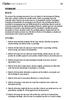 233 Psychology Mission The mission of the psychology department is to assist students in the development of lifelong professional, spiritual, scholarly and scientific talents. Talents in psychology involve
Professional Reference Series Depression and Anxiety, Volume 1. Depression and Anxiety Prevention for Older Adults
 Professional Reference Series Depression and Anxiety, Volume 1 Depression and Anxiety Prevention for Older Adults TA C M I S S I O N The mission of the Older Americans Substance Abuse and Mental Health
USING DIALECTICAL BEHAVIOR THERAPY WITH SUBSTANCE ABUSE DISORDERS
 USING DIALECTICAL BEHAVIOR THERAPY WITH SUBSTANCE ABUSE DISORDERS PRESENTERS: GEOFF WECKEL, PSYD MARK FOSTER, MA, LPC 550 BAILEY AVE, SUITE 302, FORT WORTH, TEXAS WWW.RESTORATIONCEC.COM Dialectical Behavior
Psychology Externship Program
 Psychology Externship Program The Washington VA Medical Center (VAMC) is a state-of-the-art facility located in Washington, D.C., N.W., and is accredited by the Joint Commission on the Accreditation of
Clinical Practice Guidelines: Attention Deficit/Hyperactivity Disorder
 Clinical Practice Guidelines: Attention Deficit/Hyperactivity Disorder AACAP Official Action: OUTLINE OF PRACTICE PARAMETERS FOR THE ASSESSMENT AND TREATMENT OF CHILDREN, ADOLESCENTS, AND ADULTS WITH ADHD
Effectiveness of positive psychology training in the increase of hardiness of female headed households
 Effectiveness of positive psychology training in the increase of hardiness of female headed households 1,2, Ghodsi Ahghar* 3 1.Department of counseling, Khozestan Science and Research Branch, Islamic Azad
Evidence Based Approaches to Addiction and Mental Illness Treatment for Adults
 Evidence Based Practice Continuum Guidelines The Division of Behavioral Health strongly encourages behavioral health providers in Alaska to implement evidence based practices and effective program models.
PSYCHOLOGY DEPARTMENT GOALS, OBJECTIVES, AND MEASURES
 PSYCHOLOGY DEPARTMENT GOALS, OBJECTIVES, AND MEASURES The goals and directives for the psychology major are taken directly from the work of the Task Force on Undergraduate Psychology Major competencies
College of Agriculture, School of Human Environmental Sciences
 251 PERSONAL AND ILY FINANCE. (3) Management of personal and family financial resources throughout the lifespan. A study of individual and family finances as related to planning, credit, savings, investment,
Quality of Life of Children
 Quality of Life of Children with Mental Illness Martha J. Molly Faulkner, PhD, CNP, LISW University of New Mexico Health Sciences Center Children s Psychiatric Center Outpatient Services Objectives History
Utilizing Positive Psychology in Advising:
 Utilizing Positive Psychology in Advising: Sustaining Advisors and Uplifting Students Jeana L. Magyar-Moe, Ph.D. Associate Professor of Psychology University of Wisconsin Stevens Point [email protected]
What is Child Well-being?: Does It Matter How We Measure It?
 What is Child Well-being?: Does It Matter How We Measure It? Presented to the National Council on Family Relations Annual Conference, San Antonio, Texas November 7, 2013 1 Child well-being represents
Case Formulation in Cognitive-Behavioral Therapy. What is Case Formulation? Rationale 12/2/2009
 Case Formulation in Cognitive-Behavioral Therapy What is Case Formulation? A set of hypotheses regarding what variables serve as causes, triggers, or maintaining factors for a person s problems Description
YALE CLINICAL PSYCHOLOGY: TRAINING MISSION AND PROGRAM STRUCTURE RESEARCH TRAINING
 YALE CLINICAL PSYCHOLOGY: TRAINING MISSION AND PROGRAM STRUCTURE The Clinical Psychology Program at Yale University aspires to educate the next generation of leading academic and research psychologists
Handbook for Postdoctoral Fellows at The Menninger Clinic 2016-2017
 Handbook for Postdoctoral Fellows at The Menninger Clinic 2016-2017 Thomas Ellis, PsyD, director of Psychology Patricia Daza, PhD, director of Psychology Training 1 Overview The psychology discipline became
Take Care of Yourself: Identifying and Responding to Caregiver Compassion Fatigue. February 18, 2015 2:00-3:30 p.m. ET
 Take Care of Yourself: Identifying and Responding to Caregiver Compassion Fatigue February 18, 2015 2:00-3:30 p.m. ET Moderator Pam Clark Program Associate National Center for Youth in Custody Webinar
Lone Star College-Tomball Community Library 30555 Tomball Parkway Tomball, TX 77375 http://www.lonestar.edu/library.
 Lone Star College-Tomball Community Library 30555 Tomball Parkway Tomball, TX 77375 http://www.lonestar.edu/library.htm 832-559-4211 PSYCHOLOGY Scholarly ELECTRONIC Electronic JOURNAL Journals LIST The
POSTGRADUATE DIPLOMA IN COGNITIVE BEHAVIOURAL THERAPY
 Department for Continuing Education with Oxford Cognitive Therapy Centre Inspiring Excellence in CBT Training, Therapy & Research POSTGRADUATE DIPLOMA IN COGNITIVE BEHAVIOURAL THERAPY A ONE-YEAR PART-TIME
BRIEF REPORT: Short Form of the VIA Inventory of Strengths: Construction and Initial Tests of Reliability and Validity
 International Journal of Humanities Social Sciences and Education (IJHSSE) BRIEF REPORT: Short Form of the VIA Inventory of Strengths: Construction and Initial Tests of Reliability and Validity Hadassah
Flourishing or Floundering? Using Positive Psychology Principles to Shape New Learning Paradigms for Students in Transition
 Flourishing or Floundering? Using Positive Psychology Principles to Shape New Learning Paradigms for Students in Transition Corrie Harris The University of Alabama SIT Conference 2013 Objectives of the
POSITIVE EDUCATION: NURTURING THRIVING TEACHERS & FLOURISHING STUDENTS
 POSITIVE EDUCATION: NURTURING THRIVING TEACHERS & FLOURISHING STUDENTS Positive psychology is an emerging applied science that is beginning to have a significant impact on schools and classroom interventions.
Wellness for People with MS: What do we know about Diet, Exercise and Mood And what do we still need to learn? March 2015
 Wellness for People with MS: What do we know about Diet, Exercise and Mood And what do we still need to learn? March 2015 Introduction Wellness and the strategies needed to achieve it is a high priority
Clinic. Richard Smith, LCSW Leonard Savage, Consumer Steven I. Aronin, MD FACP, Program Director
 Positive Psychology Peer Led Programs Waterbury Hospital Infectious Disease Clinic Richard Smith, LCSW Leonard Savage, Consumer Steven I. Aronin, MD FACP, Program Director Ryan White All Grantee Meeting
What was one takeaway from watching Positive Psychology Part I? Objectives. Positive Psychology. Acknowledgements. Participant Response: Chat Box
 Objectives Positive Psychology Online Chat March 4, 2015 3:00-4:00 EST 1 Part I (March 4: http://flpbs.fmhi.usf.edu/archived_monthly_online_chats.cfm): ü Participants will demonstrate an understanding
M.A. in School Counseling / 2015 2016
 M.A. in School Counseling / 2015 2016 Course of Study for the Master of Arts in School Counseling Initial License (Pre K 8 or 5 12) Candidates for the degree of Master of Arts in School Counseling are
Therapy and Professional Training Specialists. www.mifamilytherapy.com
 Therapy and Professional Training Specialists www.mifamilytherapy.com Help When it s Needed Everyone at some point is faced with challenges that require extra thought and attention. Most of the time people
Protection of the Rights of Children and Women Suffering from Drug Addiction in the Family and Society - Shelter Don Bosco, Mumbai, India -
 Protection of the Rights of Children and Women Suffering from Drug Addiction in the Family and Society - Shelter Don Bosco, Mumbai, India - Article 24 of the Convention on the Rights of the Child recognizes
NEW YORK STATE TEACHER CERTIFICATION EXAMINATIONS
 NEW YORK STATE TEACHER CERTIFICATION EXAMINATIONS TEST DESIGN AND FRAMEWORK September 2014 Authorized for Distribution by the New York State Education Department This test design and framework document
THE LONG WEEKEND: TRANSITION AND GROWTH IN RETIREMENT. M Cecil Smith
 1 THE LONG WEEKEND: TRANSITION AND GROWTH IN RETIREMENT M Cecil Smith Department of Educational Psychology, Counseling, & Special Education Northern Illinois University Talk presented at the NIU Annuitants
Prepared by:jane Healey (Email: [email protected]) 4 th year undergraduate occupational therapy student, University of Western Sydney
 1 There is fair (2b) level evidence that living skills training is effective at improving independence in food preparation, money management, personal possessions, and efficacy, in adults with persistent
INDIVIDUAL CHANGE Learning and the process of change in what ways can models of
 INDIVIDUAL CHANGE Learning and the process of change in what ways can models of learning help us understand individual change? The behavioural approach to change how can we change people s behaviour? The
Positive Constructivist Psychology. Jerald R. Forster University of Washington
 Positive Constructivist Psychology Jerald R. Forster University of Washington I have been primarily focused on psychology since 1961 when I started graduate school in Counseling Psychology at the University
College of Education. Rehabilitation Counseling
 * 515 MEDICAL AND PSYCHOSOCIAL ASPECTS OF DISABILITIES I. (3) This course is designed to prepare rehabilitation and mental health counselors, social works and students in related fields with a working
INTRODUCTION TO INDUSTRIAL ORGANIZTIONAL PSYCHOLOGY
 SUBJECT INTRODUCTION TO INDUSTRIAL ORGANIZTIONAL PSYCHOLOGY SESSION 1 INTRODUCTION TO INDUSTRIAL ORGANIZATIONAL PSYCHOLOGY Subject: Introduction Industrial Organizational Psychology Session 1 What Is Industrial
Winter 2013, SW 713-001, Thursdays 2:00 5:00 p.m., Room B684 SSWB
 1 Winter 2013, SW 713-001, Thursdays 2:00 5:00 p.m., Room B684 SSWB DIALECTICAL BEHAVIOR THERAPY SOCIAL WORK PRACTICE IN MENTAL HEALTH EMPERICALLY SUPPORTED TREATMENT FOR INDIVIDUALS WITH SEVERE EMOTION
Interview Questions for Psychology Students
 Interview Questions for Psychology Students Sample Practicum Interview Questions General Questions 1. Tell me about yourself. 2. Why do you want to work here? Why do you feel this site would be a good
Lisa R. Fortuna, MD, MPH Michelle V. Porche, Ed. D Sripallavi Morampudi, MBBS Stanley Rosenberg, PhD Douglas Ziedonis, MD, MPH
 CBT for Youth with Co-Occurring Post Traumatic Stress Disorder and Substance Disorders Lisa R. Fortuna, MD, MPH Michelle V. Porche, Ed. D Sripallavi Morampudi, MBBS Stanley Rosenberg, PhD Douglas Ziedonis,
DRUGS? NO THANKS! What are some of the leading factors that cause you to. become interested in experimenting with illegal drugs?
 DRUGS? NO THANKS! What are some of the leading factors that cause you to become interested in experimenting with illegal drugs? It is easily available: During adolescence, you are trying to figure out
Psychology. Academic Requirements. Academic Requirements. Career Opportunities. Minor. Major. Mount Mercy University 1
 Mount Mercy University 1 Psychology The psychology major presents a scientific approach to the study of individual behavior and experience. The goal of the major is to provide an empirical and theoretical
Caring for depression
 Caring for depression Aetna Health Connections SM Disease Management Program Get information. Get help. Get better. 21.05.300.1 B (6/08) Get back to being you How this guide can help you Having an ongoing
MASTER S DEGREE IN PROFESSIONAL COUNSELING 2009-2010 http://pc.ed.utah.edu/
 MASTER S DEGREE IN PROFESSIONAL COUNSELING 2009-2010 http://pc.ed.utah.edu/ UPDATED: JUNE 1, 2009 Professional mental health counselors facilitate the growth and development of individuals, families, and
Appendix Health Service Psychology: Preparing Competent Practitioners
 Appendix Health Service Psychology: Preparing Competent Practitioners This document is copyrighted by the American Psychological Association or one of its allied publishers. Advances in psychological science
Depression is a medical illness that causes a persistent feeling of sadness and loss of interest. Depression can cause physical symptoms, too.
 The Family Library DEPRESSION What is depression? Depression is a medical illness that causes a persistent feeling of sadness and loss of interest. Depression can cause physical symptoms, too. Also called
PROFESSIONAL MASTER DEGREE IN COGNITIVE BEHAVIOR THERAPY A TWO YEAR PART-TIME ACADEMIC ROGRAM
 PROFESSIONAL MASTER DEGREE IN COGNITIVE BEHAVIOR THERAPY A TWO YEAR PART-TIME ACADEMIC ROGRAM This program aims to expand the scope of clinical training opportunities available in the Department of Psychiatry
Education. Clinical Experience
 Kesia Constantine, Ph.D. Clinical Associate Professor Department of Applied Psychology New York University 246 Greene Street, room 709 New York, NY 10003 [email protected] Ph.D. in Counseling Psychology
ANTISOCIAL PERSONALITY DISORDER
 ANTISOCIAL PERSONALITY DISORDER Antisocial personality disorder is a type of chronic mental illness in which your ways of thinking, perceiving situations and relating to others are dysfunctional. When
Positive and Negative Affect, and Grit as predictors of Happiness and Life Satisfaction
 5 40 Journal of the Indian Academy of Applied Psychology, April 2008, Vol. 34, Special Issue, 40-45. Positive and Negative Affect, and Grit as predictors of Happiness and Life Satisfaction Kamlesh Singh
Nursing s Social Policy Statement
 CHAPTER 1 Nursing s Social Policy Statement Catherine E. Neuman, MSN, RN, NEA-BC Overview Nursing is a part of the society from which it grew and continues to evolve. As a profession, nursing is valued
Claudia A. Zsigmond, Psy.D. FL. License # PY7297
 Claudia A. Zsigmond, Psy.D. FL. License # PY7297 EDUCATION 9/1989- State University of New York at Buffalo, Buffalo, NY 6/1993 Bachelor of Arts, Psychology, cum laude 9/1995- Illinois School of Professional
Problem Gambling: The Hidden Addiction
 Problem Gambling: The Hidden Addiction Gambling in America Americans annually spend more money on legal forms of gambling than on movies, music, sporting events, theme parks and video games combined. All
NEDS A NALYTIC SUMMARY
 N ATIONAL E VALUATION D ATA SERVICES NEDS A NALYTIC SUMMARY Summary #21 July 2001 Highlights Effectiveness of Women s Substance Abuse Treatment Programs: A Meta-analysis The meta-analysis revealed few
MASTER OF SCIENCE IN COUNSELING PSYCHOLOGY COURSE DESCRIPTIONS DEPARTMENT OF PSYCHOLOGY AND COUNSELING SOUTHERN NAZARENE UNIVERSITY 2014-15
 MASTER OF SCIENCE IN COUNSELING PSYCHOLOGY COURSE DESCRIPTIONS DEPARTMENT OF PSYCHOLOGY AND COUNSELING SOUTHERN NAZARENE UNIVERSITY 2014-15 CORE COURSES (SEMESTER 1) PSY 5333 - Introduction to Counseling
A Sierra Tucson Report. Best Practices of Top Psychiatric Hospitals
 A Sierra Tucson Report Best Practices of Top Psychiatric Hospitals 0 Introduction Since the day Sierra Tucson opened for business in 1981, we have placed great importance on adhering to the highest standards
Alcohol and Drug Counseling
 108 Alcohol and Drug Counseling Alcohol and Drug Counseling Degrees, Certificates and Awards Associate in Arts: Alcohol and Drug Counseling Certificate of Achievement: Alcohol and Drug Counseling Certificate
Codependency. Kenneth E. Gagnon. Rasmussen College. Author Note
 Running head: CODEPEDENCY 1 Codependency Kenneth E. Gagnon Rasmussen College Author Note This research paper is being submitted on November 27, 2011 for Gloria Englund s G148/PSY 1012 General Psychology-Fall,
Major Depressive Disorders Questions submitted for consideration by workshop participants
 Major Depressive Disorders Questions submitted for consideration by workshop participants Prioritizing Comparative Effectiveness Research Questions: PCORI Stakeholder Workshops June 9, 2015 Patient-Centered
to a Degree in Mental Health Nursing
 to a Degree in Mental Health Nursing Let s Talk About Mental Health Mental health affects us all. Why? Because the way we think and feel about ourselves and our lives affects our behaviour and our ability
Client: Date: Bern Inventory of Treatment Goals (US - 1.0) Goals Checklist
 Client: Date: Therapist: Bern Inventory of Treatment Goals (US - 1.0) Goals Checklist Setting goals is an important part of psychotherapy. That s why we d like to learn about your personal goals for therapy.
INFORMATION FOR CLIENTS
 INFORMATION FOR CLIENTS Psychotherapy Practice Information Brochure Kate Miller, PsyD, HSPP Clinical Psychologist Director, Under the Umbrella, LLC 4315 E. 3 rd St. Bloomington, IN 47401 (812) 614-2040
Master of Arts, Counseling Psychology Course Descriptions
 Master of Arts, Counseling Psychology Course Descriptions Advanced Theories of Counseling & Intervention (3 credits) This course addresses the theoretical approaches used in counseling, therapy and intervention.
Minnesota Co-occurring Mental Health & Substance Disorders Competencies:
 Minnesota Co-occurring Mental Health & Substance Disorders Competencies: This document was developed by the Minnesota Department of Human Services over the course of a series of public input meetings held
Spinal Cord Injury and Returning to Your Life
 Spinal Cord Injury and Returning to Your Life A spinal cord injury is one of the most devastating and traumatic events. You have a loss of all or some of your movement and it is common to have health problems