
Your Money: Keeping It Safe and Secure
|
|
|
- Brice Kelly
- 10 years ago
- Views:
Transcription
1 In this unit, you will: Become familiar with the various types of financial services providers Examine how a savings account works Practice using a checking account and debit card Explain how a credit card is used to make purchases Explore the features of automated financial services Respond to situations involving identify theft and deceptive practices Your Money: Keeping It Safe and Secure Once you ve started earning money, you have to figure out the best way to spend it. Not what to spend it on necessarily you already did that with your spending plan in Unit 2. But how you re going to spend it how you re going to actually pay bills and make purchases, including those big ones you ve saved for. We have more options than ever before when it comes to financial services different types of accounts and financial institutions and different ways of moving money around. They all come with their pros and cons, and choosing the right one for you can seem overwhelming. So this unit covers all the bases of financial services. You ll learn about savings and checking accounts and debit and credit cards. We ll also look at how automated services can make your life easier and consider hazards to look out for, such as identity theft. To learn more, visit hsfpp.nefe.org. 59

2 What Do You Think? 1 More than % of teens have a savings account.? 2 % of teens ages have a checking account. % of those ages have one. 3 Likewise, only % of teens ages have a debit card. % of those ages have one. 4 Among teens ages 16 17, % have one of their parents credit cards. 5 % of teens ages have their own credit card. Source: Teen Research Unlimited 2005 Who s Who in Financial Services When it comes to taking care of your basic financial needs, the first step is finding a bank or credit union. A bank is a for-profit company, owned by investors in its stock. These stockholders elect a paid board of directors to manage the bank for them. Anyone can walk up to a bank and open an account. Credit unions are financial institutions owned by their customers, who are also called members. These members elect a volunteer board of directors (who are also members) to manage the credit union for them. But credit unions have membership qualifications. By law, each credit union must serve a defined segment of the population. To join a credit union, you have to work for or have a family member who works for an employer in that segment. Aside from an employer-sponsored credit union, you may be able to join another type of credit union by becoming a member in a church or social group, by having a certain type of job (say, a school teacher), or by living or working in a certain community. Despite their differences, both banks and credit unions can meet your needs. Both provide a variety of basic financial services, including savings and checking accounts, issuing credit and debit cards, and providing loans for cars, homes, and other purposes. 60 UNIT FIVE Your Money: Keeping It Safe and Secure

3 Exercise 5A: What Do They Offer? Visit the Web sites of at least two financial services providers. List the services provided and be prepared to share what you have learned. Assignment 5-1: Shopping for My Financial Services Provider Use the decision-making process to select a financial services provider for your personal use. Be sure to consider your criteria as you compare the services of at least three providers. YOU CAN DO IT! A savings account (at a bank) or share account (at a credit union) is a place to deposit money you don t plan to spend right away. You ll remember that we discussed savings accounts in Unit 3. When it comes to setting aside money for your financial goals, you can get cash out of a savings account quickly and without penalty. This makes a savings account a good place for short- to medium-term financial goals. Finally, some banks and credit unions make it easy to save by allowing you to set up an automatic savings plan, where money is automatically transferred from your checking to your savings account every month. Fees for savings accounts are usually pretty minimal, but be sure to read the fine print before you open an account. And check out Figure 5-1 for more information on what fees to watch for. Opening a savings account is a cinch. Take cash or a check made out to the financial institution of your choice for your first deposit. You ll also need to bring picture identification, such as a driver s license, passport, or student ID. Check with the financial institution to find out what and how many forms of ID it requires. Make sure you also take your Social Security number. You will be asked to fill out a few forms with your address and phone number, date of birth, and maybe some current employment information. You will also have to sign what s called a signature card to verify that a signature is yours later if necessary. Once you make your first deposit, you ll receive monthly statements showing your account balance. This is simply a total of your deposits, withdrawals, and interest earned. And when you re ready to spend money in your savings account, you can fill out a withdrawal slip and get cash, fill out a transfer slip and move money to your checking account, or possibly withdraw your money through an automated teller machine (ATM). Your biggest responsibility with a savings account is to keep your account number and information in a safe place. You also need to review your monthly statement and make sure all of the deposits and withdrawals listed on your statement are correct and that there are no unauthorized withdrawals or errors. It s rare, but mistakes do happen. Banks and credit unions are responsible for keeping your money safe and giving it to you, with interest, whenever you ask. Your bank also agrees to continue to carry government insurance to protect up to $100,000 of your deposits. To learn more, visit hsfpp.nefe.org. 61

4 Exercise 5B: Read the Fine Print Read a sample agreement for a savings account. What are the features of the account? What are the conditions of using the account? Exercise 5C: Make the Deposit Imagine that you received $100 in cash for your birthday and decide to deposit the money in a savings account for one of your goals. Use the form below to fill out a savings deposit slip. Use for the account number. DEPOSIT CHECKING SAVINGS Today s Date CASH Customer Name CHECK Customer Address, City, State, Zip TOTAL FROM OTHER SIDE Sign Here (If cash is received from this deposit) X ACCOUNT NUMBER SUBTOTAL LESS CASH TOTAL $ Check in With Checking Accounts There are many reasons to open a checking account, called share draft accounts at credit unions. Maybe you don t feel safe walking around with a lot of cash and want a safe place that offers easy access to your money. Or maybe you just know that cash in your pocket is too easily spent! Whatever the reason, many people like to use a checking account to manage their day-to-day finances. Like a savings account, you simply take cash or a check made out to the bank to open an account and make your first deposit. And remember to take your Social Security number and two or more forms of picture identification. Again, you ll have to fill out a few forms with some basic information. Once you open the account, you ll receive a box of checks in the mail, preprinted with your name and address, along with a check register to record your transactions. You ll also begin getting monthly statements. 62 UNIT FIVE Your Money: Keeping It Safe and Secure

5 Writing a check is like creating a mini-contract between you and the person or business you re paying. When you sign at the bottom of the check, you re agreeing to pay the person, named on the Pay to the Order of line, the amount you specified, on demand. On demand means that your bank must honor your check by paying the specified amount to the payee (the person or business to whom you wrote the check) when she or he cashes it as long you have enough money in your account to cover it. Get into the habit of recording each check you write into your checkbook register, along with your deposits and withdrawals. And always write all checks in ink. When you receive a check, the process works in reverse. You take the check to your bank or credit union, and sign (or endorse) it on the back. Your bank or credit union will cash the check or credit your account for that amount, and the funds will be transferred from the payer s bank or credit union over to yours. Sometimes, if the check is for a large amount or from an out-of-state bank, your deposit may be held a few days before you can have access to your money. In this way, the bank has time to verify that the payer actually has enough money to cover the check. There are many benefits to using a checking account: Convenience. If you use checks, you don t always have to have cash before making a purchase. And you shouldn t send cash through the mail, just checks, to pay bills. Also, you can usually access your checking account by using your debit card at an ATM. Safety. You don t have to carry a big wad of cash when you go shopping. Also, stolen checks can be replaced. Lost or stolen cash cannot it is, simply, gone. Easier Budgeting. A checking account can also help you budget your money. When you use your check register to record whom you wrote checks to, you re automatically keeping track of where your money is going making it easier to evaluate your spending habits. Proof of Payment. Checks provide written proof that you made a payment to someone or a business. Each time you write a check that ultimately clears your account (when the money is taken from your account and added to the payee s account), there will be several records of it making it easier to prove that you did in fact make a payment, should anyone ever challenge you about it. The catch is you usually pay for these benefits in the form of fees automatically deducted from your account. While you may see ads for free checking accounts, you should know that no checking account is completely free. Even if there is no monthly fee, you could end up paying some of the fees described in Figure 5-1. Follow the Bouncing Check David wrote a check for $65 to a clothing store, figuring he would cover the purchase by depositing his paycheck the next day. But when the store deposited David s check into its account, instead of receiving payment from David s bank, his check bounced back to the clothing store due to insufficient funds in his account. The store then sent David a notice stating that he still needs to pay the $65, plus another $25 for writing a bad check. Additionally, David s bank deducted an insufficient funds fee of $30 from his account, drawing it down to only $20. But David was on a spending spree. He wrote another check to an auto parts store that same day for $25. So that check bounced, and the auto parts store sent him a notice stating that he still needs to pay the $25, plus another $25 for writing a bad check. And David s bank deducted another insufficient funds fee of $30 from his account, drawing it down to $10. Prior to all this happening, had David written any check that had not yet cleared, it too would bounce, and he d rack up more rounds of bad check and insufficient funds fees. But even if nothing else happens, David will have written two bad checks totaling $90, paid $110 in penalties, for a total cash outlay of $200! To learn more, visit hsfpp.nefe.org. 63

6 Of course, you re responsible for making sure your account information and checks are stored in a safe place. And while everyone makes an occasional mistake, it is your responsibility to keep track of your balance and make sure you have enough money in your account when you write a check. The consequences of misusing a checking account can be far greater than just paying fees. If the bank decides you have an excessive number of overdrafts, it may close your checking account. This could be reported to the credit bureaus. A history of checking account abuse can prevent you from obtaining another checking account and damage your credit history. And intentionally writing checks without enough funds to cover them is considered check fraud a serious crime. Some other things to consider when you open an account at a bank or credit union include: Along with these account responsibilities come your rights. You can get your money whenever you ask. Your deposits are insured for up to $100,000. And, you can expect to be apprised of any changes in fees or terms of your account. If you find a mistake when you check your monthly statement say, a withdrawal you didn t make, a duplicate purchase, or an incorrect deposit amount you have the right to ask your bank to investigate the error. And if the bank finds an error, you have the right to have your account corrected. It is definitely safer to carry checks than cash, but of course, you still have to be careful. People who find blank checks you ve lost can try to alter them or forge your signature. So it s smart to take a few precautions: 1 Always write checks in ink. Is it convenient for you? Will you be able to get there during the hours it s open if need be? Does it have ATM locations in neighborhoods you frequent? Does it let you use other banks ATMs free of charge, several times a month? Does it offer other services you re interested in, such as online banking? Do you meet the institution s age requirement for a checking account? If not, you ll need an adult co-signer to open an account. 2 Once you endorse a check (sign the back of it), anyone can cash it. So don t endorse checks you plan on depositing until you get to the bank or credit union. As an added measure of security, some people like to write For Deposit Only and their account number underneath their endorsement. 3 Keep unused checks in a safe place. 4 Check your statement every month to make sure there are no withdrawals you didn t authorize and that your activity matches what you recorded in your checkbook register. 64 UNIT FIVE Your Money: Keeping It Safe and Secure

7 Exercise 5D: Keeping Track Record the following transactions in the checkbook register. Is your final balance $201.65? Monday Tuesday Wednesday Thursday Friday Saturday Opened checking account with cash deposit, $200 Automatic withdrawal to pay for personalized checks, $20 Wrote Check #100 at Fine Foods to buy groceries, $23.11 Wrote Check #101 to buy books at Wayne s Book World, $13.50 Wrote Check #102 to self for Cash to have spending money for the weekend, $30 Automatic withdrawal for monthly phone bill, $25.50 Deposited paycheck, $ NUMBER OR CODE DATE TRANSACTION DESCRIPTION PAYMENT AMOUNT FEE $ $ DEPOSIT AMOUNT $ BALANCE Exercise 5E: Does It Balance? Reconcile Ryan s checking account to ensure that his records match his credit union s records. Use the checking account information and statement provided by your instructor to complete this exercise. The DNA of Debit Cards Debit cards, sometimes called check cards, have credit card logos on them but are very different. Instead of drawing on a line of credit, debit cards act like a check, deducting the amount of your purchase from your checking account. The good news is there s usually no interest associated with your debit card purchases because you re not actually borrowing money (you re drawing down your checking account instead). When you flip over a debit card, the first thing you ll probably notice is the black magnetic strip. That s basically the intelligence center of the card. It stores data such as your name, account number, personal identification number (PIN), and financial limits. So you should be careful to protect it! If you accidentally wash the card, place it too close to a magnet, or scratch the strip, your card may not work anymore. To learn more, visit hsfpp.nefe.org. 65

8 When you re at a store buying something with a debit card, you usually have to choose one of two options: to use it as a credit card including having to sign for your purchase or to use it as a debit card. In both cases, you or the cashier will have to swipe your card through an electronic terminal. But if you choose to use it as a debit card, you ll be prompted to enter your PIN. (And you may be asked if you want to get cash back, a handy way of making a withdrawal along with your purchase.) The terminal will then indicate whether the transaction was approved. If it was not, you must find another way to pay for your items. Debit cards offer many of the conveniences of a credit card. They re particularly useful to people who don t like to carry a lot of cash and don t want to be tempted into accumulating too much debt. Compared with checks, there s less to carry, and checkout transactions usually go faster. But if you re not diligent about recording your debit card purchases and withdrawals in your checkbook register, you can end up with too little money to pay bills or a bounced check. And of course, someone who steals your debit card can use it to wipe out your account before you even know it s gone. So how do you get a debit card? You will usually be asked if you want one when you open your checking or savings account. But you ll have to wait until you receive the card in the mail before you can actually use it. For security purposes, you ll receive your PIN in a separate letter. Once you get your debit card, you can use it at one of your bank s or credit union s ATMs to make deposits into your account, or you can use it at almost any ATM to withdraw money. Simply swipe the card, enter your PIN, and follow the instructions on the ATM screen. But remember accurate record keeping is key. So whether you use the card to deposit, withdraw, or make purchases, make sure you record what the transaction was and how much it was for. There s usually no additional charge to get a debit card for your account. But there may be charges for using it. Always read the terms of the debit card agreement carefully to find out what kinds of charges you might be assessed and for how much. Some of the fees you may encounter are outlined in Figure 5-1. However, fees vary widely, so it pays to do your homework to find out the least expensive ways to use your debit card. Your rights and responsibilities with a debit card are virtually identical to those of a checking account, with the added responsibility of immediately reporting a lost or stolen debit card. Even without your PIN, someone can steal and use your debit card as if it were a stack of blank checks. As you can imagine, this wreaks havoc on your checking account if you don t notice the theft right away wiping out all the money you ve earned to pay for bills and life s little necessities. Unfortunately, you have less protection against fraud with a debit card than with a credit card. If you report a missing card within two business days after you realize that it s missing, you ll only be responsible for up to $50 of unauthorized charges. Wait longer than that, though, and you could lose up to $500. And if you see an unauthorized transaction on your monthly statement and wait more than 60 days to report it, you could be liable for the entire amount. In short, if you do lose your debit card or find unauthorized uses on your monthly statement, it is critical to report them to the card issuer right away. 7 Signs of Smart Debit Card Use 1 Memorizing and protecting your PIN (don t choose something obvious like your house address, phone number, or birthday) and not carrying it in your purse, wallet, or pocket. Remember, theft of your PIN can wipe out your account and leave you with overdraft fees. 2 Immediately recording purchases and withdrawals in your check register. 3 Signing the back of your card to make it harder for others to use. 4 Keeping receipts to check against your statement. 5 Using your institution s ATM machines to avoid fees. 6 Being aware of your surroundings when you use your debit card, especially at an ATM at night. 7 Immediately reporting lost or stolen cards. 66 UNIT FIVE Your Money: Keeping It Safe and Secure

9 Figure 5 1: Fast Facts About Financial Services Fees Types of Fees Monthly service fees Accounts They Affect Savings and checking accounts When They May Be Charged If you don t meet certain qualifications, such as maintaining a monthly minimum balance or limiting the amount of checks you write Withdrawal fees Savings accounts If you exceed a certain number of monthly withdrawals ATM or debit fees Savings and checking accounts accessed by a debit card By your bank when you use an ATM machine. May be waived if you use your financial institution s own machines Third-party ATM fees Savings and checking accounts If you use another bank s ATM, a charge assessed by that bank Returned check fees Savings accounts If a check deposited into your account is returned for insufficient funds Check fees Checking accounts When you purchase your own checks preprinted with your name and address Insufficient funds or overdraft fees Checking accounts When you write a check but don t have enough money in your account to cover it Stop payment fees Checking accounts When you ask your financial institution to stop a check drawn on your account from being cashed Point-of-sale fees Debit card accounts When you use your debit card as a debit card at a store or gas station Over-the-limit fees Credit cards If you go over your spending limit Annual fees Credit cards Charged by some credit card companies for the yearly use of their credit cards To learn more, visit hsfpp.nefe.org. 67

10 Assignment 5-2: YOU Use a Checking Account CAN Practice recording two months of checking account transactions. At the end of each DO IT! month, reconcile your balance with the monthly statement balance. Use the checking account information provided by your instructor to complete this assignment. Credit Card Confidential While debit cards give you access to your own money, a credit card is a separate supply of money. When you use a credit card, you are simply taking a loan from the company that issued the card (the issuer ). Your purchases are then totaled and sent to you in a monthly bill or statement. In most cases, if you pay your bill in full and on time, you'll owe no interest. Visa, MasterCard, and Discover are all examples of major credit cards. We talked in Unit 4 about places to look when you re ready to get your first credit card. Your current bank or credit union and retail stores are usually your best bet. Or instead, you could ask a parent to co-sign on your first card. Whatever route you choose, you ll have to provide basic information about yourself on the application, including your employer and annual income. Some stores will phone in your application and make a credit decision on the spot. With banks and credit unions, you may have to wait a couple days to find out whether or not your application is approved. Every credit card has a credit limit the maximum amount that you can have charged on the card at any one time. Be sure to sign the back of your card before you put it in your wallet. This will help stores verify your signature. If the card allows you to withdraw cash, you will also receive a PIN in the mail. But unlike a debit card, you ll pay interest immediately on credit-card cash withdrawals. In fact, sometimes you ll pay a higher rate of interest for cash withdrawals charged to your credit card than for purchases. So that s another reason to read carefully the terms and conditions that arrive along with your new card. When you make a purchase, you or the cashier will swipe your card through an electronic terminal. The charge will be added to your account, reducing the available credit limit left on your card, and you ll receive a receipt for your purchase. You should save your receipt until you reconcile it with your monthly statement. Your purchases are totaled on a monthly bill or statement. If you have a balance from the previous month, your monthly bill will display a finance charge added to your balance. Any payment you make is then deducted from your total balance. And that balance, subtracted from your credit limit, indicates what your available credit is (the amount you can still spend on the card without going over your limit). Always avoid going over your credit limit, and try to pay off the entire balance each month to avoid interest and fees. Unlike your debit card, your credit card issuer won t necessarily deny a charge that will put you over your credit limit. It may just accept it and then hit you with an over-the-limit fee. Each time you receive a bill, check to make sure that your previous month s payment has been credited to your account. It s also important to review all listed charges for accuracy. If you ve been saving your receipts, it ll be easier to remember your purchases and to clear up any confusion if the business name on your credit card bill isn t familiar to you. It ll also help you discover any errors or unauthorized charges. If you do find an unauthorized charge, contact your credit card company immediately. 68 UNIT FIVE Your Money: Keeping It Safe and Secure

11 Exercise 5F: What Would You Do? What would you do if your credit card was stolen? Are you responsible for any unauthorized purchases? Read the terms of a credit card to learn what to do if your card is stolen. As with other financial services, you agree to certain responsibilities and rights as an account holder. The same holds true for your credit card account. You agree not to let anyone else use your credit card. You promise to repay the entire amount you charge, with interest, and to make at least a minimum payment on time each month. And you agree to notify the issuer promptly if the card is lost or stolen, or if you suspect that it s being used without your permission. Of course, you have rights as well. You have the right to know how the finance charges on your account are calculated. If you contact the company about a possible error on your account, you have the right to get your account corrected or receive an explanation within 90 days. If you have a problem with the quality of products or services you bought with the card, you may have the right of not paying the remaining amount due. Say you re looking at your bill one month and see a couple of charges you don t recognize from someplace in Brazil. You know you ve never bought anything from Brazil, much less been there. What do you do? First, look for the customer service phone number on your credit card statement. Call it and tell the representative that your bill has several charges that you don t recognize, and identify which ones they are. The credit card company should open an investigation by contacting the business that posted the charges to your account and getting more information about who made the charges to your account. In the meantime, your credit card company should remove the questionable charges from your bill so you don t have to pay interest on them. In about 30 to 60 days, you ll receive a letter letting you know the results of the investigation. If the credit card company finds out that the charges were due to an error or to fraud, it won t do anything further (because it already took them off your bill). But if it finds out that you did in fact make the charges, the credit card company will add them back to your bill, plus interest. Of course, if your credit card is ever lost or stolen, you should not wait for your monthly bill to arrive before you report it. Find the customer service phone number on a previous bill or the company s Web site and call it immediately. A company representative will look to see if anyone has used your card since you noticed it missing, then cancel your account. In about a week or so, you ll get a new card with a new account number in the mail. But in the meantime, no one can use your current account. By law, your liability is limited to $50 if your credit card is lost or stolen so the credit card company can t make you pay any more of the fraudulent charges than that if you report the theft promptly. Assignment 5-3: Choosing a Credit Card Compare at least three credit cards, and choose the one that has the best deal. YOU CAN DO IT! To learn more, visit hsfpp.nefe.org. 69

12 Automating Access to Your Money Like everything else, the Internet has revolutionized financial services. ATM machines provide 24 7 access to cash anywhere in the world. Depending on the machine s services, you might also be able to check your account balance, make deposits, transfer money between checking and savings accounts, and even buy postage stamps. Online banking means you can view your savings and checking account activity, transfer money between accounts, and even pay bills with just a few clicks of the mouse. Once you have access to your account online, you can log on and do your financial business from any Internet-enabled computer in the world. EFT stands for electronic funds transfer. It allows employers to deposit your paycheck directly into your account instead of giving you an old-fashioned paper check that you need to deposit in person. It connects your drugstore purchase made with a debit card to your bank or credit union, then transfers money from your institution to the drugstore s account. It s also behind making transfers to your creditors when you make online bill payments from your checking account. And sometimes when you pay a business with a check, it uses EFT to do what s known as electronic check conversion. This converts a paper check into an electronic payment and immediately deducts the amount of the purchase from your account. So be sure to keep enough money in your account to cover any EFT payments so they don t bounce. Exercise 5G: The Pros and Cons of Automated Services What do you think the benefits of automated services are? What do you think are the concerns of using automated services? In short, automated services offer: Convenience. You can access your money virtually anytime, anywhere. Personal Safety. You don t ever have to carry a lot of cash with you. Knowledge. You can track exactly how much is in your account on a daily basis. Time Savings. You can make more time for fun using direct deposits and paying bills online. Don t forget that automated services may come with fees, and there is no common practice. So again, it really pays to do your research before choosing a financial services institution. And comparison shop from time to time afterward to make sure you re still getting a good deal. And of course, security is an issue. You re responsible for keeping your personal information safe. Credit unions and banks know that customers expect their transactions to be secure, so they take great care to ensure that conducting financial business with them is secure no matter where you do it. But security issues do arise, and the chances of your information being stolen increase when you use these automated services. 70 UNIT FIVE Your Money: Keeping It Safe and Secure

13 Assignment 5-4: What Are the Trends? What s happening in the world of online financial services? Select an online financial service that is of interest to you. Learn about the features of the service, and share YOU CAN DO IT! what you have learned. So Many Choices Different types of accounts, a variety of features, big differences in fees all the factors in choosing financial services can be overwhelming. So let s revisit the decision-making process again. 1 Set goals. What do you plan to use the account for? What features would be most useful to you? 2 Establish criteria. What financial products and services do you want and need? 3 Explore your options. Which type of account is best suited to your goals? Compare the services of several providers on requirements, features, fees, and convenience. 4 Weigh the pros and cons of the options. Decide which financial services provider offers the best services for your goals. 5 Make a decision. Apply to open the account. Set up new files to stash the terms and conditions and, later, your monthly statements. 6 Evaluate your decision. Are you getting what you expected out of the account? Has the provider changed any of the terms? If it has been a while since you chose a provider, are there any better deals now? Using financial services software along with online account services such as online banking can be the next step in automating your financial record keeping. Software can make it easier to track your finances and create and adjust your spending plan. When you enter checks and deposits into the software as they occur, it can practically reconcile your account for you. Many financial institutions allow you to download checking and credit card statements directly into the software to minimize data entry. There are many personal finance software programs. To learn more, visit hsfpp.nefe.org. 71

14 When Fraud Comes Knocking Identity theft occurs when someone uses your name, Social Security number, credit card number, or other personal information without your permission. It is a very serious crime. People whose identities have been stolen can spend months or years and thousands of dollars cleaning up the mess thieves leave behind. In the meantime, victims of identity theft may lose job opportunities, be turned down for loans, and even get arrested for crimes they didn t commit. Whether your personal information is accidentally disclosed or deliberately stolen, it can result in big trouble for you if it ends up being used for identity theft. Some of the many ways identity thieves can create problems for you are: Opening new credit card accounts in your name. When thieves use the credit cards and don t pay the bills, the delinquent accounts show up on your credit report. Opening a new account in your name and writing bad checks on the account. Forging your signature on blank checks or authorizing electronic transfers in your name, draining all the money from your accounts. Filing for bankruptcy under your name to avoid paying debts they ve incurred under your name or to avoid eviction. Buying a car by taking out an auto loan in your name. Getting identification, such as a driver s license, issued in your name but with their picture. Giving your name to the police during an arrest. If the impostor doesn t show up for the court date, an arrest warrant is issued in your name. Unfortunately, identity theft has become big business all around the world. Sometimes you have no control over your personal information falling into thieves hands. If an employee steals your records or a hacker breaks into a business or government agency s database, you could be in for some problems. And yet, crafty thieves can sometimes get their information directly from you. Ways you may unwittingly give them access include: Throwing away account statements and receipts with your full account number listed. Also, tossing pre-approved credit card offers that come in the mail (which have your name and address all over them). Identity thieves know that dumpster diving can yield a bounty of personal information. So shred or tear up these items before you trash them. Giving them your credit or debit card numbers in a practice known as skimming. Thieves may swipe your card for an actual purchase through their own data storage device, or attach the device to an ATM machine where you swipe your card. This is harder to protect against, but your best bet is to avoid letting your card out of your sight during a transaction. Giving out your information over the telephone. Known as pretexting, thieves call to tell you there s a problem with one of your financial accounts. Then they ask for your account number or other personal information to verify your identity. Any legitimate company that you have an account with may call to discuss your account and need to verify your identity, but will do so in ways other than asking for your personal information (e.g., your mother s maiden name). Still, protect yourself by asking for a number at which to call the person back, then calling the company s customer service number to find out if there really is a problem with your account. Changing the billing address on your credit card account (or by completing a change of address form at the post office), then running up charges on it. Because your bills are being sent to a different address, it may be some time before you realize there s a problem. 72 UNIT FIVE Your Money: Keeping It Safe and Secure

15 When it comes to the Internet, people tend to worry about the security of making online purchases. But the bigger danger is, again, unintentionally giving criminals your personal information. Some popular schemes include: Phishing can appear in the form of an or pop-up message. It looks like it s from a credit union, bank, credit card company, or online store, indicating that there s some type of problem with your account. This time, the or pop-up message prompts you to click on a link to update or verify your information. Don t do it. Legitimate companies never ask for this information via or pop-up message. If you re concerned that a company is actually trying to contact you, call it directly instead, using a phone number listed on your monthly statement or the company s Web site. You can also forward phishing s to [email protected] and to the organization impersonated. Free software or freeware can also be a scam to get your personal information. While any type of free software can pose a problem, file-sharing software is particularly problematic. Yes, it can give you access to a wealth of goodies such as music and games, but sometimes it comes loaded with a bad bonus a criminal s free rein of your computer. If you don t check the software s sharing permissions (usually found under the Properties, Preferences, Options, or Settings menus), you may unknowingly provide access to your entire hard drive including tax returns, messages, medical records, photos, or other personal documents. Not all free software is bad, but you do have to be careful. If you decide to download it, set it up carefully and take the time to read the end-user licensing agreement to be sure you understand what you re saying yes to by using the software. Spyware is a bad side effect of free downloads even those forwarded by friends or sent by businesses you know. Some downloads install spyware onto your hard drive without your consent, which monitors or controls your computer use. Spyware may be used to send you pop-up ads, redirect your computer to unwanted Web sites, monitor your Internet surfing, or record your keystrokes, which can lead to identity theft. The best way to avoid spyware is to resist the urge to install any software unless you know exactly what it is and the reputation of the company offering it. And if your anti-virus software doesn t include a spyware blocker, install separate anti-spyware software, use it, and learn how to update it regularly. Exercise 5H: Luring You In Read the messages below. You might view these or similar messages when you surf the Net or read . How do you think each message might be used in a deceptive way? We suspect an unauthorized transaction on your account. To ensure that your account is not compromised, please click the link below and confirm your identity. The bank s technical department is performing a scheduled software upgrade to improve the quality of its services. By clicking on the link below, you will begin the procedure of the user details confirmation. You ve won a free copy of xxxx software! Click here to begin your free download. To learn more, visit hsfpp.nefe.org. 73

16 Exercise 5I: Deal With Deception What would you do if you suspected that someone might be trying to deceive you? Respond to scenarios that involve suspicious behavior. In each situation, describe what you should do to avoid or deal with the suspicious activity. 1 You walk up to an ATM and a guy walks up behind you who appears to be waiting his turn. But he s uncomfortably close right over your shoulder as you get ready to enter your PIN. 2 You re at a cash register in a store and have given the clerk your credit card. She holds on to it, probably to verify your signature. But then she says she needs to grab something from the back and starts to walk away with your card in hand. 3 A caller says she s from your credit card company and wants to offer you a higher credit limit for being such a good customer. You reply, Great, what do I have to do? And she tells you to give her your Social Security number for verification. 4 You ve found a pair of shoes at a great price on a Web site you just found. You start the check-out process and notice that the padlock at the bottom of your computer screen is open and that the Web page address starts with http instead of https. 5 You get an from an online bookstore you frequently buy from. It says that the credit card on your account has expired and gives you a link to update your information. 6 Your friend sends you an about cool new software that lets you share music with others for free. He sends you the link to download the software, which is from a site you ve never heard of. 7 You re bummed out about losing in an online auction. But then you get an stating the winner backed out and that you can have the item if you still want it, and to just send your credit card information via UNIT FIVE Your Money: Keeping It Safe and Secure

17 So how do you keep your personal information secure in the midst of all these threats? Ten smart steps to take are: 1 Don t leave your wallet or credit card statements lying around even at home. The Federal Trade Commission (FTC) estimates that one in four 6 Review all of your monthly statements carefully, and report unauthorized charges and other activity immediately. victims knows the identity thief. 7 When it s time to clean out your financial files, 2 Sign new credit cards as soon as you receive them, cut up and discard expired cards, and shred shred anything that has your Social Security number or credit card numbers on it. or tear up unwanted pre-approved credit card applications. 8 On your computer, install and use firewall, anti-virus, and anti-spyware software, and learn 3 When you sign receipts, draw a line through any how to keep them all up to date. blank spaces above the total. Save your receipts until you reconcile them with your statement, then either rip them up or keep them and any carbon copies in a safe place. 9 Don t fall for phishing or pretexting scams. Legitimate businesses that contact you should not have to ask for your account number or Social Security number. If you think there really might be 4 Never give your credit card number or Social Security number to anyone over the phone unless you initiate a call to a business to discuss your an issue with an account, get a customer service number from your statement, and call the business back. account. And never send these numbers by it is rarely secure. 10 When you buy something on the Internet, check that the page is secure before entering your credit 5 Always keep PINs for your credit and debit cards completely confidential. Don t write PINs on your cards or carry them with you. card number. You should either see an icon of a closed padlock or unbroken key in the bottom browser bar or that the site s address begins with https (notice the s ) to show it s secure. To learn more, visit hsfpp.nefe.org. 75

18 Despite all your best efforts, the worst may still happen. Maybe your wallet gets stolen with your Social Security card inside it. Or you get a letter from a company stating that your information may have been accessed by a hacker. Placing an initial fraud alert on your credit report can help prevent an identity thief from opening any more accounts in your name. To place the alert, call the toll-free fraud number of any one of the three nationwide credit reporting bureaus Equifax, Experian, and TransUnion and tell the bureau you suspect you have been, or are about to become, the victim of identity theft. You ll have to provide appropriate proof of your identity, which may include your Social Security number, name, address, and other personal information requested by the credit reporting agency. Luckily, one call does it all the credit reporting agency you contact must contact the other two. Then each agency must place an alert on its version of your report. For the next 90 days, businesses will see the alert on your credit report and must verify your identity before issuing credit in your name which usually means contacting you directly. Once you place the alert, you ll get information about ordering a free credit report from each of the credit agencies. Your best bet, though, is to wait about a month from the time your information was stolen before you order the reports because suspicious activity may not show up right away. Once you get the reports, look for questionable activity such as inquiries from companies you didn t contact, accounts you didn t open, and debits on your accounts that you can t explain. Also check that information like your Social Security number, address(es), your name, and your employer s name is correct. Continue to check your credit reports periodically over the next year to make sure no new fraudulent activity has occurred. If you do find that your information has been misused, immediately close any compromised accounts and file a police report. This report is proof of the crime and may be important to have later the credit reporting agencies usually require it when you place an extended fraud alert on your credit reports. You should also file a complaint with the FTC at This can help law enforcement officials across the country in their identity theft investigations. Assignment 5-5: Online Warnings Create an alert notice that can be posted near your computer at home or near the computer stations at the local library. This notice should give Internet users tips on how to avoid or deal with suspicious online messages. YOU CAN DO IT! 76 UNIT FIVE Your Money: Keeping It Safe and Secure

19 Assessment 5-1: Using Financial Services Use what you learned in Unit 5 to practice selecting and dealing with various financial services. Show what you have learned by reflecting on how financial services fit into your financial plan. Adding It Up We ve covered a lot of topics in this unit, all related to the theme of financial services. You ve learned about various types of financial services providers you may need. You should know the ins-and-outs of using basic services from savings and checking accounts to debit and credit cards to manage your money more efficiently. And you now understand how automated services can make life much easier. Of course, we also visited the dark side of financial services identity theft. Although not a fun topic, it s an important one. And now you should have a better idea of how to prevent it and how to respond if it does happen to you. Next, we ll talk about another way to protect your wallet. This time, though, it s protecting yourself from big losses with insurance. For more tips, tools, and articles about financial institutions, visit hsfpp.nefe.org. To learn more, visit hsfpp.nefe.org. 77

20 Unit Assessment 5-1: Using Financial Services Use what you learned in Unit 5 to practice selecting and dealing with various financial services. Show what you have learned by reflecting on how financial services fit into your financial plan. Competency: Demonstrate how to use various financial services. Directions: Preview the Required Criteria to plan your activities for this assessment. Complete the unit assignments as assigned by your instructor. Write two to three paragraphs to reflect on how financial services fit into your financial plan so you meet your financial goals. For example, consider how and which services can help you stick with your budget or be used for saving or investing goals. Required Criteria Status 1. You use the decision-making process to compare providers of complete not complete financial services [Assignment 5-1] 2. You use and reconcile a checking account over a two-month cycle complete not complete [Assignment 5-2] 3. You use the decision-making process to compare credit card plans complete not complete [Assignment 5-3] 4. You share what you learned about a trend in online financial services complete not complete [Assignment 5-4] 5. You create a notice to alert others about how to deal with deceptive complete not complete online practices [Assignment 5-5] 6. You write two to three paragraphs reflecting on how financial complete not complete services fit into your financial plan 7. You specify at least three criteria related to financial services that complete not complete you need and/or want now and in the near future 8. Your reflection paragraphs include a list of financial services that complete not complete apply to your current and near-future situation 9. You summarize strategies you will implement to be a wise user of complete not complete financial services Feedback: Score /20 Name Date 78 UNIT FIVE Your Money: Keeping It Safe and Secure

When Fraud Comes Knocking
 When Fraud Comes Knocking Identity theft occurs when someone uses your name, Social Security number, credit card number, or other personal information without your permission. It is a very serious crime.
CHECKING BASICS101. 701.255.0042 www.capcu.org
 CHECKING BASICS101 701.255.0042 www.capcu.org This book is intended as a general guide to the topics discussed, and it does not deliver accounting, personal finance, or legal advice. It is not intended,
INTRODUCTION. Identity Theft Crime Victim Assistance Kit
 Identity Theft Crime Victim Assistance Kit INTRODUCTION In the course of a busy day, you may write a check at the grocery store, charge tickets to a ball game, rent a car, mail your tax returns, change
I dentity theft occurs
 1.3.1.F1 Identity Family Economics and Financial Education W h at i s I d e n t i t y T h e f t? I dentity theft occurs when someone wrongfully acquires and uses a consumer s personal identification, credit,
Information carelessly discarded into the trash can be stolen when a thief digs through the garbage.
 Identity theft occurs when someone wrongfully acquires and uses a consumer s personal identification, credit, or account information. Identity theft can wreak havoc on an individual s credit report, cause
Why Credit is Important
 Page 1 Why Credit is Important Page 6 How to Protect Yourself from Identity Theft Page 7 Cosigning and Money Lending Tips Page 8 How to Avoid Credit Card Interest Why Credit is Important Learning to build
Credit Cards. The Language of Credit. Student Loans. Installment Loans 12/17/2015. Quick Response. Unit 4 - Good Debt, Bad Debt: Using Credit Wisely
 Quick Response Explain how you think credit cards work. How much do you have to pay every month? What happens if you pay late? What kinds of fees are involved? Unit 4 - Good Debt, Bad Debt: Using Credit
Intercepting your mail. They can complete change of address forms and receive mail that s intended for you.
 At SunTrust, we re committed to protecting your accounts and identity. That s why we ve created this Identity Theft Guide. This guide provides information about online fraud and identity theft, as well
Identity Theft PROTECT YOUR INFORMATION AND YOUR IDENTITY HIGHLIGHTS
 This publication is intended to provide general information only and is not a substitute for legal advice. HIGHLIGHTS 1 PROTECT YOUR INFORMATION AND YOUR IDENTITY 3 BE VIGILANT 3 CORRECTING INFORMATION
Fraud and Identity Theft. Megan Stearns, Credit Counselor
 Fraud and Identity Theft Megan Stearns, Credit Counselor Agenda Fraud and identity theft statistics Fraud Identity theft Identity theft prevention Protecting your Social Security Number Online prevention
Protection. Identity. What should I do if I m. Common ID Theft TACTICS. a criminal obtains your personal information and uses it for his/her own gain.
 Common ID Theft TACTICS. HOW DOES IT HAPPEN? Identity What should I do if I m a Protection PROTECT YOURSELF: OLD-FASHIONED STEALING: Criminals steal your wallet or purse. > Never leave your wallet or purse
Anytime Adviser Checking Account Coach
 Anytime Adviser Checking Account Coach Welcome. This interactive guide coaches you in managing your checking account. You may move from chapter to chapter by selecting headings from the left. Click on
Identity Theft Assistance Kit A self-help guide to protecting yourself and your identity
 Identity Theft Assistance Kit A self-help guide to protecting yourself and your identity Stillman Bank works hard to serve and protect our customers identities and ensure their safety. That s why we have
Security Breaches. There are unscrupulous individuals, like identity thieves, who want your information to commit fraud.
 IDENTITY THEFT Security Breaches Our economy generates an enormous amount of data. Most users of that information are from honest businesses - getting and giving legitimate information. Despite the benefits
Share Draft/Checking Account Basics
 Goals Share Draft/Checking Account Basics By the end of this session, students will be able to explain and understand: How and why checks are used What factors to compare when shopping for an account How
How To Protect Yourself From Identity Theft
 Learn about identity theft Investor education Protecting a vital asset: Your identity A 2013 report on identity theft by Javelin Strategy & Research found that more than 12 million Americans were the
Identity Theft, Fraud & You. Prepare. Protect. Prevent.
 Prepare. Protect. Prevent. Identity Theft, Fraud & You Fraud and identity theft incidents claimed fewer victims in 2010 than in previous years. But don t get too comfortable. Average out-of-pocket consumer
What is Identity Theft?
 What is Identity Theft? Identity theft is a crime in which someone obtains key pieces of personal information, such as Social Security or driver's license numbers, in order to impersonate someone else.
Online Fraud and Identity Theft Guide. A Guide to Protecting Your Identity and Accounts
 A Guide to Protecting Your Identity and Accounts As part of SunTrust s commitment to protecting your accounts and identity, we ve created the Online Fraud & Identity Theft Guide, which provides information
I know what is identity theft but how do I know if mine has been stolen?
 What is identity theft? You might hear stories on the news about stolen identities, but what is identity theft? When someone uses the personal information that identifies you, like your name, credit card
EL/Civics Lesson Plan
 Program Name Staff Responsible for Lesson MVCTC EL/Civics Program Mary Ann Oatney Date(s) Used 11/2007 Civics Category Civics Objective Time Frame to Complete Lesson EFL(s) II. Civics Participation II.
Citi Identity Theft Solutions
 Identity Theft what you need to know Citi Identity Theft Solutions At Citi, we want to keep you informed about all of the issues that can affect your financial life. We re bringing you helpful information
Checking Account. Money Smarts for Kids. Money Skills for Life. Member FDIC. Welcome! What Is a Checking Account? Why Is a Checking Account So Great?
 Checking Account Welcome! Welcome to Young Americans Bank, the only bank in the world designed specifically for young people! Mr. Bill Daniels started Young Americans Bank in 1987 because he thought it
Instructor Guide Building: Knowledge, Security, Confidence FDIC Financial Education Curriculum
 Check It Out Building: Knowledge, Security, Confidence FDIC Financial Education Curriculum TABLE OF CONTENTS Page Module Overview 1 Purpose 1 Objectives 1 Time 1 Materials and Equipment Needed to Present
Information to Protect Our Customers From Identity Theft
 Our Customers From Identity Theft Identity (ID) Theft Capital One understands that ID Theft is a growing concern of our customers, and that it is a frustrating experience for victims. We share these concerns
Banking Basics 101. How to Manage Your Finances and Still Have Money Left Over For Pizza. Course objectives learn about:
 Banking Basics 101 Course objectives learn about: Using a checking account Various types of payment vehicles Benefits of a savings account How to Manage Your Finances and Still Have Money Left Over For
PROTECT YOURSELF AND YOUR IDENTITY. Chase Identity Theft Tool Kit
 PROTECT YOURSELF AND YOUR IDENTITY Chase Identity Theft Tool Kit USE THESE IMPORTANT CONTACTS TO KEEP YOURSELF PROTECTED CHASE CONTACTS Customer Protection Group Credit Cards 1-888-745-0091 Other Account
Tips and Answers: Banking Basics Case Studies Case Study: The Piggy Bank
 Tips and Answers: Banking Basics Case Studies Case Study: The Piggy Bank Twins Emma and Emmett are excited to be starting college next year. Emma is leaving home behind and heading to college in Florida
How to manage manage your your checking checking account. account.
 How How to manage to manage your your checking checking account. account. Introduction Welcome to Desert Schools Federal Credit Union. Congratulations on your first checking account! It s the perfect time
Identity Theft Protection
 Identity Theft Protection Learning Objectives Discuss the aspects of identity theft Discuss the signs of recognizing when your identify has been stolen Understand the steps to take to reclaim your identity
Identity Theft Grade Level 10-12
 Identity Theft Grade Level 10-12 Take Charge of Your Finances Materials provided by: Karen Dawson, Family and Consumer Sciences Educator, Skyview High School, Billings, Montana Time to complete: 75 minutes
Participant Guide Building: Knowledge, Security, Confidence FDIC Financial Education Curriculum
 Check It Out Building: Knowledge, Security, Confidence FDIC Financial Education Curriculum TABLE OF CONTENTS Page Determining Your Checking Account Needs 1 Checking Account Fees 2 Practice Exercise: Choosing
IDENTITY THEFT RESOURCE KIT
 IDENTITY THEFT RESOURCE KIT TABLE OF CONTENTS Introduction 2 What To Do Now 3 Key Agencies to Contact 3 Other Important Contacts 4 Action Taken Form 6 Sample Letters 7 How Identity Theft Can Occur 9 What
PROTECT YOURSELF AND YOUR IDENTITY CHASE IDENTITY THEFT TOOL KIT
 PROTECT YOURSELF AND YOUR IDENTITY CHASE IDENTITY THEFT TOOL KIT At Chase, we work hard to pro v help prepare you for whatever h Convenient Reference for Important Contacts: Chase Identity Theft Center
Learn to protect yourself from Identity Theft. First National Bank can help.
 Learn to protect yourself from Identity Theft. First National Bank can help. Your identity is one of the most valuable things you own. It s important to keep your identity from being stolen by someone
Checking Account Management
 Checking Account Management 595 Market Street, 16th Floor San Francisco, CA 94105 888.456.2227 www.balancepro.net Whether you have a history of overdraft or nonsufficient funds charges or you just want
Personal Banking 101 Interested in learning about how to manage your money? Personal Banking 101 will help you understand the financial fundamentals.
 Personal Banking 101 Interested in learning about how to manage your money? Personal Banking 101 will help you understand the financial fundamentals. Checking Account If you need a safe place to keep your
IdentityTheft HOW IDENTITY THEFT HAPPENS PROTECTING YOURSELF RECOVERING FROM IDENTITY THEFT
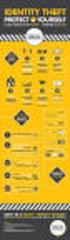 CREDIT What You Should Know About... IdentityTheft HOW IDENTITY THEFT HAPPENS PROTECTING YOURSELF RECOVERING FROM IDENTITY THEFT YourMoneyCounts You may have heard of a crime called identity theft, but
Identity Theft. Occurs when someone uses your personal information without your permission for personal gain.
 Identity Theft Identity Theft Occurs when someone uses your personal information without your permission for personal gain. Someone uses your personal information to open a department store credit account
Identity Theft Protection
 Identity Theft Protection Email Home EDUCATION on DANGER ZONES Internet Payments Telephone ID theft occurs when someone uses your personal information with out your knowledge to commit fraud. Some terms
Identity Theft. Emergency Repair Kit
 Identity Theft Emergency Repair Kit 2012 Beavercreek Marketing, a division of Beavercreek Inc. All rights reserved. Any duplication or reproduction is strictly prohibited. Identity Theft Emergency Repair
Credit Card Fraud Training
 Credit Card Fraud Training Lesson Plan A Consumer Action Publication Consumer Action created this project in partnership with Chase 2009 Consumer Action Credit Card Fraud Training Lesson Plan (For the
Protecting Yourself from Identity Theft
 Protecting Yourself from Identity Theft Guide 4 Because you don t have to be the next victim Desert Schools Money Matters Series Guiding you toward financial success Table of Contents How ID theft happens.............................
THINGS YOU SHOULD KNOW ABOUT IDENTITY THEFT
 THINGS YOU SHOULD KNOW ABOUT IDENTITY THEFT Compliments of: Fripp Island Security and FIPOA Security Committee November 2013 1 INTRODUCTION Identity theft is a serious crime. It occurs when your personal
Retail/Consumer Client. Internet Banking Awareness and Education Program
 Retail/Consumer Client Internet Banking Awareness and Education Program Table of Contents Securing Your Environment... 3 Unsolicited Client Contact... 3 Protecting Your Identity... 3 E-mail Risk... 3 Internet
PROTECTING YOURSELF FROM IDENTITY THEFT. The Office of the Attorney General of Maryland Identity Theft Unit
 PROTECTING YOURSELF FROM IDENTITY THEFT The Office of the Attorney General of Maryland Identity Theft Unit CONTENTS 1) What is Identity Theft? 2) How to Protect Yourself From ID Theft. 3) How to Tell If
Online Banking Customer Awareness and Education Program
 Online Banking Customer Awareness and Education Program Electronic Fund Transfers: Your Rights and Responsibilities (Regulation E Disclosure) Indicated below are types of Electronic Fund Transfers we are
According to the Federal Trade Commission (FTC): The FTC is a government agency that promotes consumer protection
 According to the Federal Trade Commission (FTC): IDENTITY THEFT occurs when someone wrongfully acquires and uses a consumer s personal identification, credit, or account information The FTC is a government
Protect Your Personal Information. Tips and tools to help safeguard you against identity theft
 Protect Your Personal Information Tips and tools to help safeguard you against identity theft Trademark of Visa International Service Association; Visa Canada Association is a licensed user. What is Identity
Take our Fraud Quiz and see what you know about frauds and scams in Canada. Test yourself on
 Take our Fraud Quiz and see what you know about frauds and scams in Canada. Test yourself on Are you a Target? On-Line Scams Credit/Debit Card Investment Identity Theft Frauds Scams Mark the following
How child identity theft happens.
 How child identity theft happens. Facts you should know about identity theft. What is identity theft? Identity theft is the act of using someone s personal information such as an account number, driver
IMPORTANT ACCOUNT INFORMATION FOR OUR CUSTOMERS from
 IMPORTANT ACCOUNT INFORMATION FOR OUR CUSTOMERS from First Security Bank of Deer Lodge 311 Milwaukee Ave P.O. Box 629 Deer Lodge, MT 59722 (406)846-2300 ELECTRONIC FUND TRANSFERS YOUR RIGHTS AND RESPONSIBILITIES
1. Any email requesting personal information, or asking you to verify an account, is usually a scam... even if it looks authentic.
 Your identity is one of the most valuable things you own. It s important to keep your identity from being stolen by someone who can potentially harm your good name and financial well-being. Identity theft
Choosing and Using a Checking Account
 LESSON 8 Choosing and Using a Checking Account Introduction Buying a new mp3 player is not a snap decision. You have to know the storage capacity of the player the larger the capacity, the more music and
The Merchant. Skimming is No Laughing Matter. A hand held skimming device. These devices can easily be purchased online.
 1 February 2010 Volume 2, Issue 1 The Merchant Serving Florida State University s Payment Card Community Individual Highlights: Skimming Scam 1 Skimming at Work 2 Safe at Home 3 Read your Statement 4 Useful
SAFEGUARDING YOUR CHILD S FUTURE. Child Identity Theft. Protecting Your Child s Identity
 SAFEGUARDING YOUR CHILD S FUTURE Child Identity Theft Child identity theft happens when someone uses a minor s personal information to commit fraud. A thief may steal and use a child s information to get
Savings and Bank Accounts
 LESSON 2 Savings Savings and Bank Accounts Quick Write Suppose a relative gives you a generous gift of $1,000 for your sixteenth birthday. Your parent or guardian says that you can spend $50 on things
Protect Yourself From Identity Theft
 Protect Yourself From Identity Theft Identity theft occurs when a criminal uses another person's personal information to take on that person's identity. Identity theft is much more than misuse of a Social
A crash course in credit
 A crash course in credit Ever get the feeling that you re being watched? That someone s keeping an eye on how you handle your money? Well, you re not just imagining things. Banks, credit card companies,
Application for Bank of Pontiac NetTeller Services Internet Banking and Bill Pay
 Application for Bank of Pontiac NetTeller Services Internet Banking and Bill Pay Please print, complete, and bring this form to any Bank of Pontiac location. You will receive your User ID and PIN via regular
Do s & Don ts Reference website. www.farmersidentityshield.com
 What is identity theft? How do thieves steal an identity? What do thieves do with a stolen identity? How can you find out if your identity was stolen? How long can the effects of identity theft last? What
ELECTRONIC FUND TRANSFERS AGREEMENT AND DISCLOSURE
 ELECTRONIC FUND TRANSFERS AGREEMENT AND DISCLOSURE This Electronic Fund Transfers Agreement and Disclosure is the contract which covers your and our rights and responsibilities concerning the electronic
IDENTITY THEFT BROCHURE 2 6/3/05 3:07 PM Page 1 IDENTITY THEFT PROTECT YOUR IDENTITY IT S POSSIBLE@ LEARN HOW TO PROTECT YOUR PRIVATE INFORMATION
 IDENTITY THEFT BROCHURE 2 6/3/05 3:07 PM Page 1 IDENTITY THEFT PROTECT YOUR IDENTITY IT S POSSIBLE@ protection center LEARN HOW TO PROTECT YOUR PRIVATE INFORMATION @ What Is Identity Theft? IDENTITY THEFT
Electronic Banking. Federal Trade Commission ftc.gov
 Electronic Banking Federal Trade Commission ftc.gov For many people, electronic banking means 24-hour access to cash through an automated teller machine (ATM) or Direct Deposit of paychecks into checking
Standard 4: The student will demonstrate the ability to balance a checkbook and reconcile financial accounts. Standard 4.
 TEACHER GUIDE 4.1 MANAGING A BANK ACCOUNT PAGE 1 Standard 4: The student will demonstrate the ability to balance a checkbook and reconcile financial accounts. Standard 4. Tracking Your Money Priority Academic
How to Prevent It What to Do If You Are a Victim
 How to Prevent It What to Do If You Are a Victim www.tn.gov/consumer www.tn.gov/safety Tennessee Division of Consumer Affairs Identity theft happens when someone steals your personal information and uses
ELECTRONIC FUND TRANSFERS YOUR RIGHTS AND RESPONSIBILITIES
 ELECTRONIC FUND TRANSFERS YOUR RIGHTS AND RESPONSIBILITIES Indicated below are types of Electronic Fund Transfers we are capable of handling, some of which may not apply to your account. Please read this
IDENTITY THEFT PROTECT YOUR IDENTITY IT S POSSIBLE@ LEARN HOW TO PROTECT YOUR PRIVATE INFORMATION
 IDENTITY THEFT IT S POSSIBLE@ PROTECT YOUR IDENTITY protection center LEARN HOW TO PROTECT YOUR PRIVATE INFORMATION IT S POSSIBLE @ What Is Identity Theft? According to the FBI, identity theft is the fastest
Standard 4: The student will demonstrate the ability to balance a checkbook and reconcile financial accounts. Standard 4.
 STUDENT MODULE 4.1 MANAGING A BANK ACCOUNT PAGE 1 Standard 4: The student will demonstrate the ability to balance a checkbook and reconcile financial accounts. Standard 4. Tracking Your Money Alexis stops
suntrust.com 800.SUNTRUST
 suntrust.com 800.SUNTRUST SunTrust Bank is an Equal Housing Lender. Member FDIC. 2010 SunTrust Banks, Inc., SunTrust, Live Solid. Bank Solid., SunTrust Rewards, and Signature Advantage Checking, are federally
IMPORTANT ACCOUNT INFORMATION FOR OUR CUSTOMERS from. State Bank 25 North Chestnut Ave New Hampton, IA 50659-0070 (319)352-6000
 IMPORTANT ACCOUNT INFORMATION FOR OUR CUSTOMERS from State Bank 25 North Chestnut Ave New Hampton, IA 50659-0070 (319)352-6000 ELECTRONIC FUND TRANSFERS YOUR RIGHTS AND RESPONSIBILITIES Indicated below
Payment Systems Department
 v Note: Please follow these guidelines for your safety as you enjoy the convenience of technology. However these guidelines are general; therefore, specific precautions may be taken as warranted by the
ELECTRONIC FUNDS TRANSFER AGREEMENT AND DISCLOSURE
 ELECTRONIC FUNDS TRANSFER AGREEMENT AND DISCLOSURE This Electronic Funds Transfer Agreement is the contract which covers your and our rights and responsibilities concerning the electronic funds transfer
Identity Theft. Protecting Your Credit Identity 1.3.1.G1
 Identity Theft Protecting Your Credit Identity Identity Theft The dollar loss suffered because of identity theft from consumers was 343 million in 2002. Federal Trade Commission The number of identity
How To Get Help From The Police Department
 IDENTITY THEFT A Quick Reference Guide Hawthorne Police Department Identity theft is when somebody uses your personal identifying information such as your name, address, telephone number, taxpayer identification
Dear Concerned Consumer,
 Dear Concerned Consumer, Identity theft is a growing problem of the Information Age. You have already taken the first important step in combating the problem by contacting HomeStar Bank & Financial Services.
ELECTRONIC FUNDS TRANSFERS AGREEMENT YOUR RIGHTS AND RESPONSIBILITIES
 ELECTRONIC FUNDS TRANSFERS AGREEMENT YOUR RIGHTS AND RESPONSIBILITIES Indicated below are types of Electronic Funds Transfers we are capable of handling, some of which may not apply to your account. Please
Consumer Decision Making Contest 2001-2002 Study Guide ATM/Debit Cards
 Consumer Decision Making Contest 2001-2002 Study Guide ATM/Debit Cards The popularity of ATM (automated teller machine) and debit cards is rising. ATM cards have a longer history than debit cards, but
Helping you to protect yourself against fraud and financial crime
 Helping you to protect yourself against fraud and financial crime first direct takes fraud & other financial crimes very seriously. Even though we have market-leading fraud detection systems, we want you
ELECTRONIC FUND TRANSFERS AGREEMENT AND DISCLOSURE
 ELECTRONIC FUND TRANSFERS AGREEMENT AND DISCLOSURE This Electronic Fund Transfers Agreement and Disclosure is the contract which covers your and our rights and responsibilities concerning the electronic
Protect Your Personal Information. Tips and tools to help safeguard you against identity theft
 Protect Your Personal Information Tips and tools to help safeguard you against identity theft Trademark of Visa International Service Association; Visa Canada Association is a licensed user. WHAT IS IDENTITY
ELECTRONIC FUNDS TRANSFER AGREEMENT AND DISCLOSURE
 ELECTRONIC FUNDS TRANSFER AGREEMENT AND DISCLOSURE This Electronic Funds Transfer Agreement is the contract which covers your and our rights and responsibilities concerning the electronic funds transfer
H. ELECTRONIC FUNDS TRANSFERS
 H. ELECTRONIC FUNDS TRANSFERS This part of this Agreement contains important information about some of our electronic banking services. The terms of this part include the instructions and other material
Standard 9: The student will identify and explain consumer fraud and identity theft.
 TEACHER GUIDE 9.2 FRAUD AND IDENTITY THEFT PAGE 1 Standard 9: The student will identify and explain consumer fraud and identity theft. Beware! Identity Theft Priority Academic Student Skills Personal Financial
IDENTITY THEFT: MINIMIZING YOUR RISK
 IDENTITY THEFT: MINIMIZING YOUR RISK What is Identity Theft? Identity theft occurs when someone uses another person s information to commit fraud or other crimes. Information such as your name, Social
ELECTRONIC FUND TRANSFERS AGREEMENT AND DISCLOSURE
 ELECTRONIC FUND TRANSFERS AGREEMENT AND DISCLOSURE This Electronic Fund Transfers Agreement and Disclosure is the contract which covers your and our rights and responsibilities concerning the electronic
SCAMS. Action: Throw out the letter and contact Social Security directly by phone at 1-800-441-2555 or visit their website. http://www.ssa.
 SCAMS SOCIAL SECURITY SCAMS You use your Social Security number for your identity, to get a job, and to apply for Medicare and Social Security as you become older. Unfortunately though, there are a lot
ELECTRONIC FUND TRANSFERS AGREEMENT AND DISCLOSURE
 ELECTRONIC FUND TRANSFERS AGREEMENT AND DISCLOSURE This Electronic Fund Transfers Agreement and Disclosure is the contract which covers your and our rights and responsibilities concerning the electronic
IMPORTANT ACCOUNT INFORMATION FOR OUR CUSTOMERS from. First National Bank 729 W 7th (Home Office) SPEARMAN, TX 79081 (806)659-5544
 IMPORTANT ACCOUNT INFORMATION FOR OUR CUSTOMERS from First National Bank 729 W 7th (Home Office) SPEARMAN, TX 79081 (806)659-5544 ELECTRONIC FUND TRANSFERS YOUR RIGHTS AND RESPONSIBILITIES Indicated below
Avoid completing forms in email messages that ask for personal financial information.
 INTERNET FRAUD Online scams and viruses are constantly evolving and they threaten the security of computers worldwide. As criminals evolve their tactics, you need to keep your PC's security software (virus
To all GRSB debit and credit card customers:
 To all GRSB debit and credit card customers: A data breach at the Target Corporation may have exposed 40 million credit/debit cards to potential fraudulent activity. If you made purchases in a Target store
Checking 101. Property of Penn State Federal Credit Union
 Checking 101 Checking 101 Checking Account Basics A check is a written order that represents cash Credit Union checking accounts are also called SHARE DRAFT accounts A share draft is equivalent to a check,